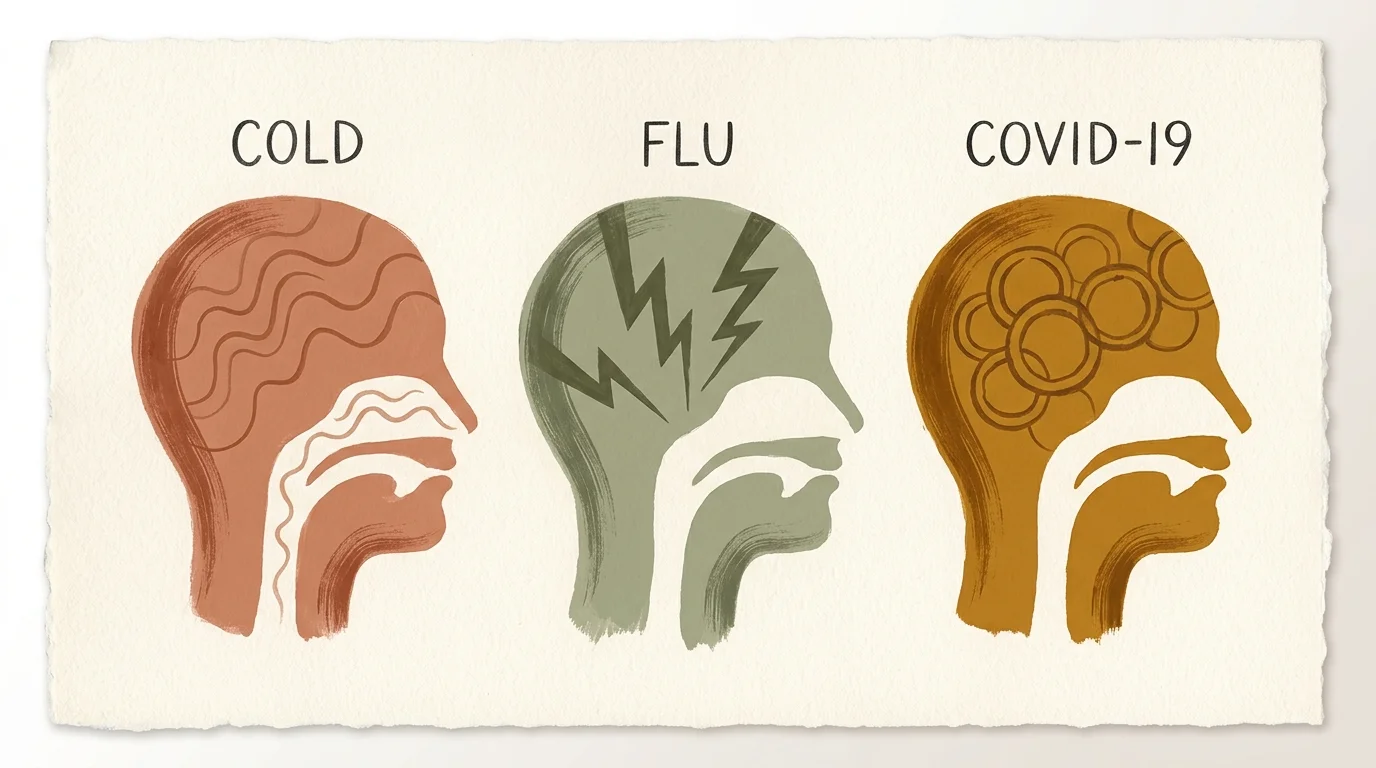
A scratchy throat and sudden fatigue can leave you guessing whether your household is facing a cold, flu or COVID. Comparing onset speed, fever patterns, and upper-airway signs gives you immediate clues to protect your family.
Even experienced clinicians cannot separate COVID vs flu symptoms on sight alone, which makes smart home testing essential. Learning how each virus behaves helps you decide when to swab, when to rest, and when to call a doctor.
Use this guide to decode respiratory illness symptoms, time antiviral prescriptions accurately, and keep loved ones safe at home.
Why Cold, Flu, and COVID-19 Look So Similar
How Common Respiratory Viruses Spread Each Year
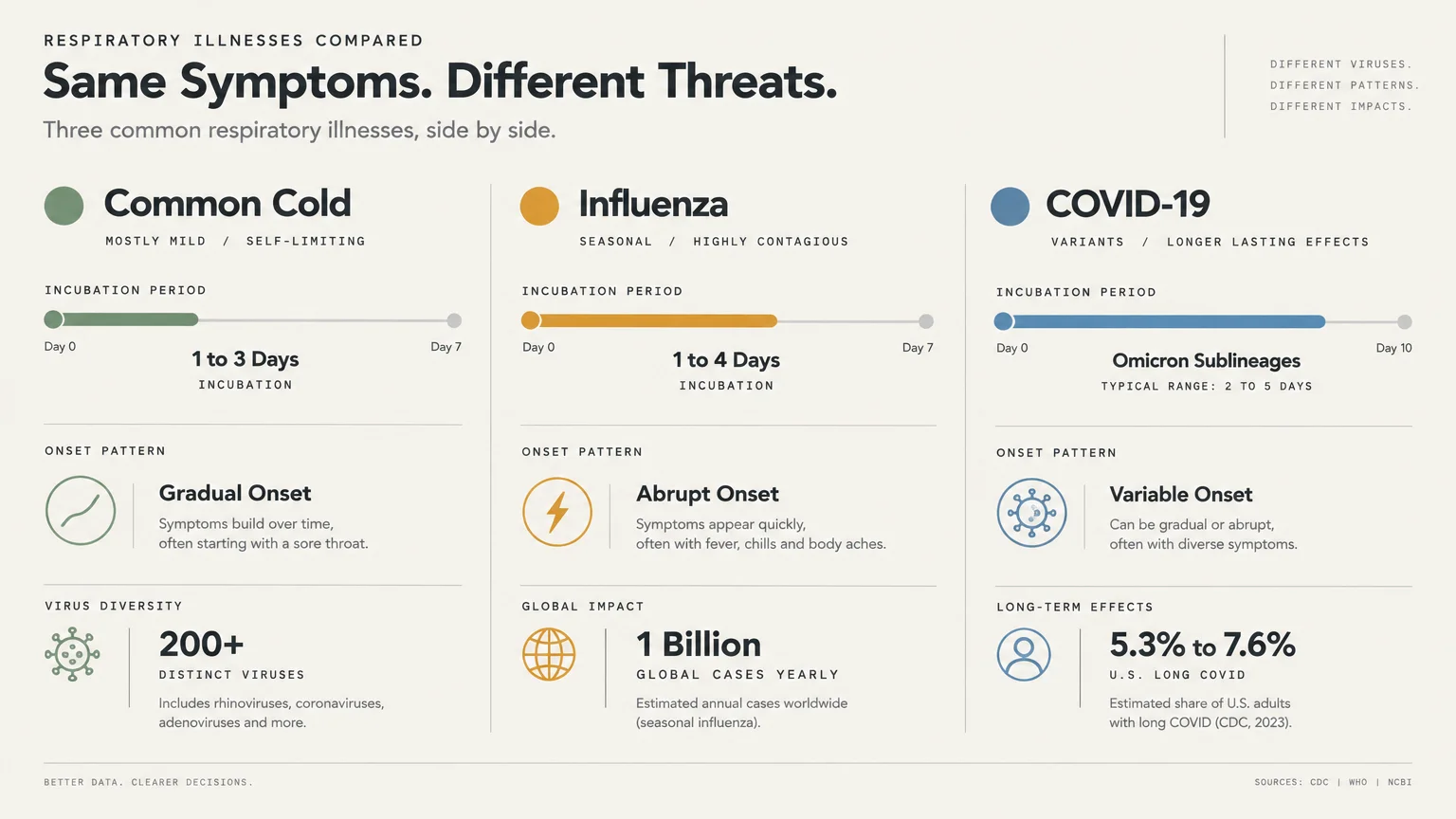
More than 200 distinct viruses cause the common cold, with rhinoviruses triggering the majority of infections.
U.S. adults catch an average of 2 to 3 colds each year, while infants and children under age 2 experience 6 to 10 colds annually, according to the Centers for Disease Control and Prevention and Mayo Clinic.
Seasonal influenza carries a far heavier global toll than most families realize. The seasonal influenza fact sheet from the World Health Organization estimates roughly 1 billion flu cases worldwide each year, including 3 to 5 million severe illnesses and 290,000 to 650,000 respiratory deaths.
In the United States, an average of 8% of the population gets sick with influenza annually, ranging from 3% to 11% depending on the year. Between 2010 and 2025, annual U.S. totals spanned 9.4 million to 51 million illnesses and 120,000 to 710,000 hospitalizations.
Recent winters show how sharply flu severity can climb when immunity lags. A CDC summary from March 12, 2026 reported that the high-severity 2024–2025 U.S. flu season caused an estimated 51 million illnesses, 23 million medical visits, 710,000 hospitalizations, 45,000 deaths, and a record 289 pediatric deaths.
Early circulation in the 2026–2027 season also accelerated unusually fast. By mid-November 2026, the CDC recorded over 3% of outpatient visits for flu-like illness, 7 states at high activity, and early totals reaching at least 2.6 million illnesses, 36,000 hospitalizations, and 2,100 deaths.
Meanwhile, SARS-CoV-2 continues circulating year-round alongside colds and seasonal influenza. Dominant Omicron sublineages in 2025 and 2026—including JN.1 descendants XFG, NB.1.8.1, and BA.3.2—have not caused a fundamentally different symptom pattern or higher severity.
Even mild COVID-19 infections deserve respect because recovery does not always end when the fever breaks. A systematic review of 429 studies estimated global pooled Long COVID prevalence at 36%.
Closer to home, a 2026 Patient-Led Research Collaborative fact sheet noted that 5.3% to 7.6% of U.S. adults reported living with Long COVID between 2022 and 2024. That same report found 17% of Omicron-infected study participants developed lingering Long COVID symptoms.
Incubation Windows and Speed of Onset
Tracking when your symptoms started after a crowded event or sick classroom exposure offers your first reliable clue. Each virus follows a distinct timeline from initial exposure to your first sneeze or chill.
Common cold symptoms typically begin 1 to 3 days after exposure, averaging just under 2 days for rhinovirus infections. They build gradually over a day or two, peak within 1 to 3 days, and usually resolve within 7 to 10 days.
Some cold symptoms—especially a nagging cough or mild nasal congestion—can stretch to 10 to 14 days or occasionally up to 3 weeks. Despite the inconvenience, most colds leave you able to handle light daily routines.
Influenza arrives on a much tighter, sharper schedule. Flu symptoms develop 1 to 4 days after exposure—averaging 2 days—and usually start abruptly, leaving you feeling exhausted within a few hours.
Most healthy adults and children recover from uncomplicated flu in about a week, typically within 3 to 7 days. Fatigue, however, can linger after your fever clears.
COVID-19 spans the broadest incubation window of the three illnesses. While the CDC lists a range of 2 to 14 days after exposure, Omicron-era studies show a median incubation period of 3 to 4 days.
Most people infected in 2026 notice their first COVID-19 symptoms within 2 to 5 days of exposure. Typical acute illness lasts 5 to 10 days, depending on your age, vaccination status, and overall health.
Decoding Respiratory Illness Symptoms Head to Toe
Cold Symptoms Centered in Your Nose and Throat
Classic common cold symptom and care overview from Mayo Clinic guidance emphasizes that cold symptoms stay concentrated in your upper respiratory tract. Sneezing, a runny or stuffy nose, and a scratchy or sore throat dominate the experience.
You may notice a mild cough or slight body aches as your immune system responds. Unlike flu or COVID-19, severe full-body exhaustion rarely accompanies a standard cold.
Stomach upset also helps rule out a routine cold. Vomiting and diarrhea do not typically occur with common cold viruses in adults or older children.
Check your thermometer before assuming a cold is actually flu. Fever in adults with a common cold is rare and mild when it appears at all, according to the CDC and Mayo Clinic.
Flu Symptoms and Sudden Whole-Body Exhaustion
Influenza feels like a systemic storm rather than a simple head cold. Sudden fever or chills, deep muscle or body aches, throbbing headaches, a dry cough, and pronounced fatigue define typical flu presentations.
You might also notice a sore throat or runny nose alongside body aches, though nasal congestion is less dominant than with a cold. Many people describe feeling too weak to get out of bed during the first two days.
Gastrointestinal distress can accompany respiratory complaints during flu season. Vomiting and diarrhea sometimes occur with influenza, appearing most often in sick children rather than adults.
Clinically, fever is defined as a temperature above 100.4°F (38°C). Keep in mind that the CDC notes not everyone with flu develops a measurable fever.
COVID vs Flu Symptoms and Subtle Clues
Current Omicron sublineages produce symptoms that closely resemble a bad cold or seasonal flu. Sore throat, nasal congestion, runny nose, cough, fatigue, headache, muscle aches, and fever or chills frequently overlap across both infections.
Digestive complaints do not separate the two illnesses cleanly either. Nausea, vomiting, and diarrhea can occur with COVID-19 as well as with influenza.
One sensory clue still leans noticeably toward SARS-CoV-2. New loss of taste or smell occurs less often now than during early pandemic waves, yet its sudden appearance still points more toward COVID-19 than toward a cold or flu.
Pay close attention if flavors or scents vanish when your nose feels completely clear. Loss of smell without severe nasal blockage remains a strong prompt to swab for COVID-19 right away.
Even with that clue, both the CDC and Mayo Clinic warn that flu and COVID-19 share too many overlapping signs to diagnose by symptoms alone. Knowing how to tell flu from COVID reliably requires testing rather than symptom checklists.
When You Can Spread Each Virus to Others
All three respiratory viruses can spread silently before anyone in your home feels sick. Understanding contagious windows helps you shield newborns, older relatives, and immunocompromised neighbors before symptoms peak.
With a common cold, you become most contagious during the first 3 days of symptoms. However, you can shed cold viruses 1 to 2 days before symptoms appear and remain contagious for up to 2 weeks, according to Cleveland Clinic and Healthline.
Adults infected with influenza can spread the virus starting 1 day before symptoms begin and continuing 5 to 7 days after falling ill. Contagiousness peaks during the first 3 to 4 days of sickness, per the CDC.
Certain groups shed influenza longer than healthy adults. Young children and immunocompromised individuals can remain contagious for 10 days or longer after their symptoms start.
Silent flu infections also contribute to household spread. A 2017–2023 CDC household study found that 8% of people who tested positive for influenza had no symptoms at all.
According to the 2026 edition of the CDC Yellow Book, people with COVID-19 can transmit SARS-CoV-2 from 1 to 2 days before symptom onset and up to 8 to 10 days afterward. Most transmission happens in the 1 to 2 days before symptoms start and during the first few symptomatic days.
Age shapes silent transmission with COVID-19 as well. The CDC notes that children are more likely than adults to remain asymptomatic while infected, making timely testing valuable after school exposures.
Smart Testing Rules and Red Flags That Require Care
How to Use At-Home COVID-19 and Combo Tests
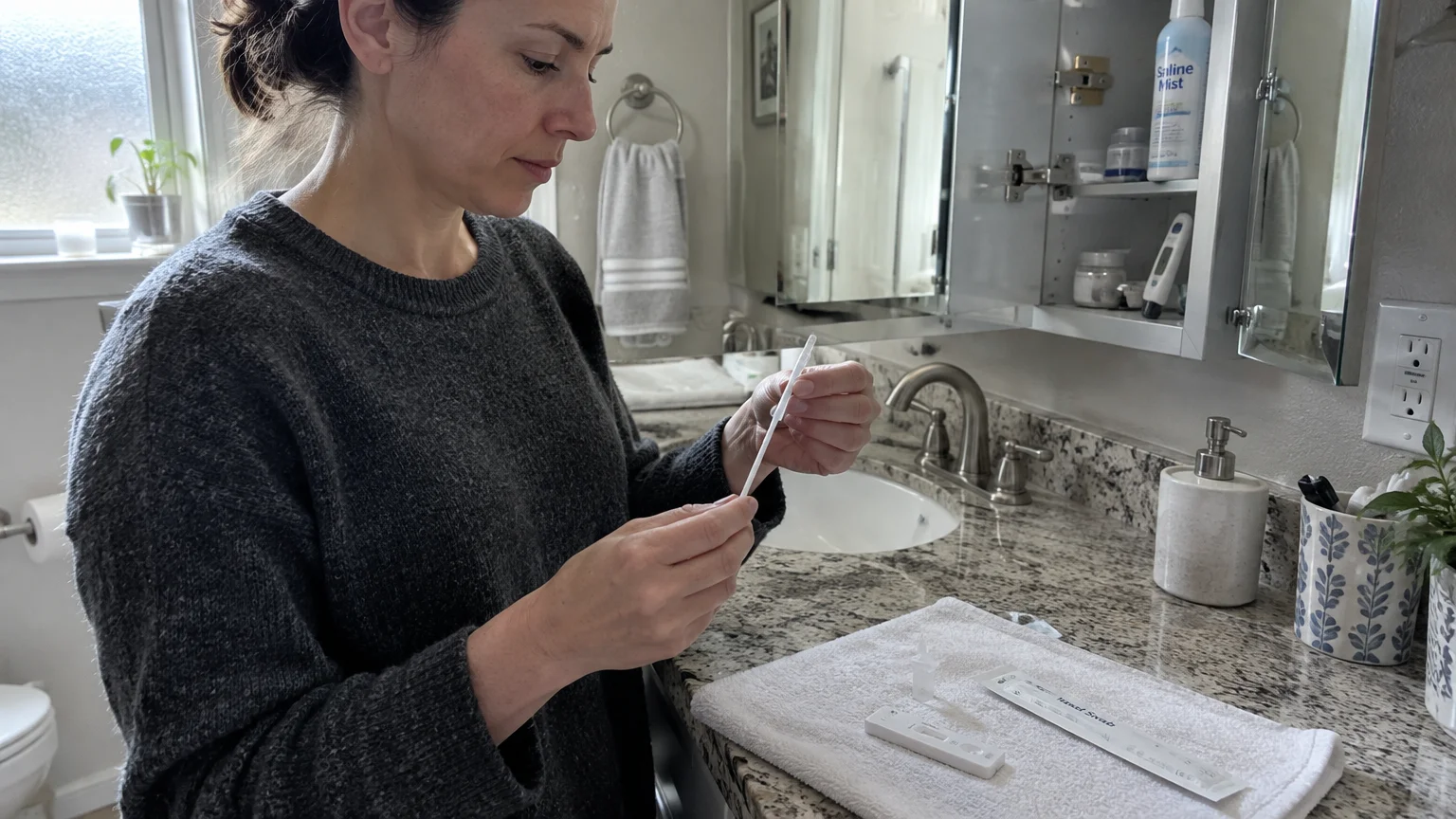
Rapid antigen swabs put fast answers in your kitchen drawer, yet timing determines how accurate those lines are. Antigen tests catch high viral loads well, while early infections sometimes slip past a single swab.
Following at-home diagnostic testing guidance from the U.S. Food and Drug Administration prevents false negatives from guiding your plans. When an initial test comes back negative, repeat testing closes the accuracy gap.
If you have symptoms and test negative on a home COVID-19 antigen kit, the FDA and CDC instruct you to swab again 48 hours later. Taking at least 2 tests over 3 days confirms whether your symptoms stem from SARS-CoV-2.
If you had an exposure without symptoms, patience matters before opening your first test box. Wait at least 5 full days after exposure to take your first antigen test, then repeat every 48 hours for at least 3 tests over 5 days if results remain negative.
Over-the-counter combination tests now check for influenza A, influenza B, and COVID-19 from one nasal swab. On October 7, 2024, the FDA granted full premarket authorization for the Healgen Rapid Check COVID-19/Flu A&B Antigen Test alongside existing emergency-use combo kits.
These combo tests deliver results in 10 to 30 minutes—typically 15 minutes—and cost roughly $10 to $12 per test, according to the FDA and Emory News. They are eligible for Health Savings Account and Flexible Spending Account reimbursement.
Teens 14 and older can perform the nasal swab themselves using authorized combo kits. Adults can also use these tests to swab children starting at age 2, saving anxious trips to crowded waiting rooms.
Remember that a negative home flu swab does not rule out influenza if you feel severely ill. Because rapid flu antigen tests can miss cases early on, call your clinician if high-risk family members develop sudden fever and body aches.
Warning Signs That Mean Calling a Doctor or Seeking Emergency Care
Most uncomplicated viral infections respond well to rest, hydration, and patience at home. Knowing clear medical thresholds ensures you escalate care promptly when a simple virus takes a dangerous turn.
Mayo Clinic advises adults to call a doctor for a cold-related fever above 101.3°F (38.5°C) lasting more than 3 days. You should also call your clinician if a fever returns after a fever-free stretch, which can signal a secondary bacterial complication.
Infants require immediate caution whenever temperatures rise. Mayo Clinic instructs parents to seek immediate medical care for a fever of 100.4°F (38°C) or higher in any newborn up to 12 weeks old.
High-risk adults and children should also contact a healthcare provider early when COVID-19 or flu symptoms begin. People age 65 and older, pregnant patients, and anyone with asthma, heart disease, diabetes, or weakened immunity benefit from rapid clinical triage.
Certain severe warning signs bypass routine clinic scheduling altogether. Call 911 or head to the nearest emergency department immediately for trouble breathing or persistent pain or pressure in the chest, as outlined by the CDC.
Other CDC emergency red flags include new confusion, inability to wake or stay awake, and pale, gray, or blue-colored skin, lips, or nail beds depending on skin tone. Treat these neurological or oxygen-deprivation signs as urgent emergencies regardless of test results.
Treatment Windows, Safe Symptom Relief, and Everyday Prevention
Acting Fast for Prescription Antivirals
Identifying flu or COVID-19 quickly matters most when someone in your household qualifies for prescription antivirals. These targeted medications work best before viruses multiply unchecked across the respiratory tract.
For COVID-19, oral Paxlovid (nirmatrelvir and ritonavir) must be started within 5 days of symptom onset and taken twice daily for 5 days. The CDC notes it is approved or authorized for high-risk patients age 12 and older weighing at least 88 pounds (40 kilograms).
Because Paxlovid interacts with several common heart, cholesterol, and blood-thinner prescriptions, share your full medication list with your prescriber or pharmacist. They can safely pause or adjust conflicting drugs during the five-day course.
Prompt testing also unlocks influenza antiviral treatment recommendations from the CDC. Four FDA-approved prescription flu antivirals exist: oseltamivir, zanamivir, peramivir, and baloxavir marboxil.
Flu antivirals perform best when started within 1 to 2 days—within 48 hours—of your first symptoms. Starting treatment within that window can shorten illness by about 1 day and reduce severe complications like pneumonia or hospitalization.
Clinicians sometimes prescribe flu antivirals beyond 48 hours for hospitalized patients or those at high risk of serious illness. Calling your doctor as soon as sudden fever and body aches strike gives you the widest treatment options.
Safe Over-the-Counter Care and Antibiotic Limits
Walk down any pharmacy aisle and you will see dozens of multi-symptom syrups promising fast relief. Reading labels carefully protects your family from rebound congestion, accidental double-dosing, and age-restricted ingredients.
First, skip pressing your doctor for antibiotics when a cold, flu, or COVID-19 strikes. Antibiotics target bacteria rather than viruses, and Mayo Clinic notes that only about 5% of clinically diagnosed cold cases involve a bacterial infection.
Do not judge infection type by tissue color either. Nasal mucus turning thick, yellow, or green happens naturally as white blood cells clear viral debris and is not proof of a bacterial infection.
Be careful with medicated nasal sprays when congestion disrupts your sleep. Mayo Clinic advises adults to use over-the-counter decongestant nasal sprays for no more than 5 days to prevent rebound swelling, and children under 6 should never use them.
Exercise strict caution with combination cough and cold syrups for kids. Mayo Clinic warns against giving over-the-counter cough and cold medicines to young children due to serious hazards, including fatal overdoses in children under age 2.
Age limits apply to single-ingredient fever reducers as well. MedlinePlus states that aspirin must never be given to children or teenagers because of rare but life-threatening complications.
For infants, consult your pediatrician before reaching for the medicine cabinet. Mayo Clinic advises against giving acetaminophen to babies under 3 months without a doctor evaluation, and ibuprofen should never be given to infants under 6 months.
Isolation Rules, Return to Activity, and Daily Prevention
Clear household rules reduce transmission without keeping families guessing about exact day counts. Unified respiratory virus guidance from the Centers for Disease Control and Prevention now applies evenly across COVID-19, flu, RSV, and colds in non-healthcare settings.
Stay home and away from others while your symptoms are active. You may resume normal activities when, for at least 24 hours, both your symptoms are improving overall and you remain fever-free without using fever-reducing medication.
Exiting isolation does not mean dropping every safeguard immediately. Follow your return to normal activities with 5 days of added precautions, such as wearing a mask indoors, improving air circulation, keeping physical distance, practicing hand hygiene, or testing before visiting high-risk relatives.
Healthcare personnel follow stricter timelines to protect vulnerable patients. Under CDC guidance updated September 11, 2026, healthcare workers with suspected or confirmed respiratory infections must stay off work until at least 3 days after symptom onset or a first positive test.
Those workers must also be fever-free for 24 hours without medication, show improving symptoms, feel well enough to work, and wear source control masks through at least day 7.
Preventing severe illness starts long before anyone develops a cough. For the 2026–2027 season, the CDC recommends annual flu shots for everyone 6 months and older, ideally by the end of October because protection takes about 2 weeks to develop.
All 2026–2027 U.S. flu vaccines are trivalent and updated across all three components, including protection against A/H3N2 subclade K.
Adults 50 and older also have the option of a newly approved mRNA flu vaccine called mFLUSIVA, according to CDC and Johns Hopkins Medicine updates from September 2026.
COVID-19 vaccine formulas also match circulating variants closely. Following May 2026 FDA guidance for a monovalent vaccine targeting the JN.1-lineage XFG variant, September 23, 2026 CDC guidance recommends the 2026–2027 COVID-19 vaccine for all adults 18 and older.
That same CDC update recommends vaccination for moderately or severely immunocompromised children ages 6 months to 17 years, and supports shared clinical decision-making for other children in that age group.
Pair immunizations with reliable daily hygiene habits at home and school.
Wash hands thoroughly with soap and water for at least 20 seconds, keep roughly 2 meters of distance when feeling unwell, wear a surgical or filtering mask around others if symptomatic, and open windows to ventilate indoor rooms for about 10 minutes every hour.
Community Resources and Affordable Care Options
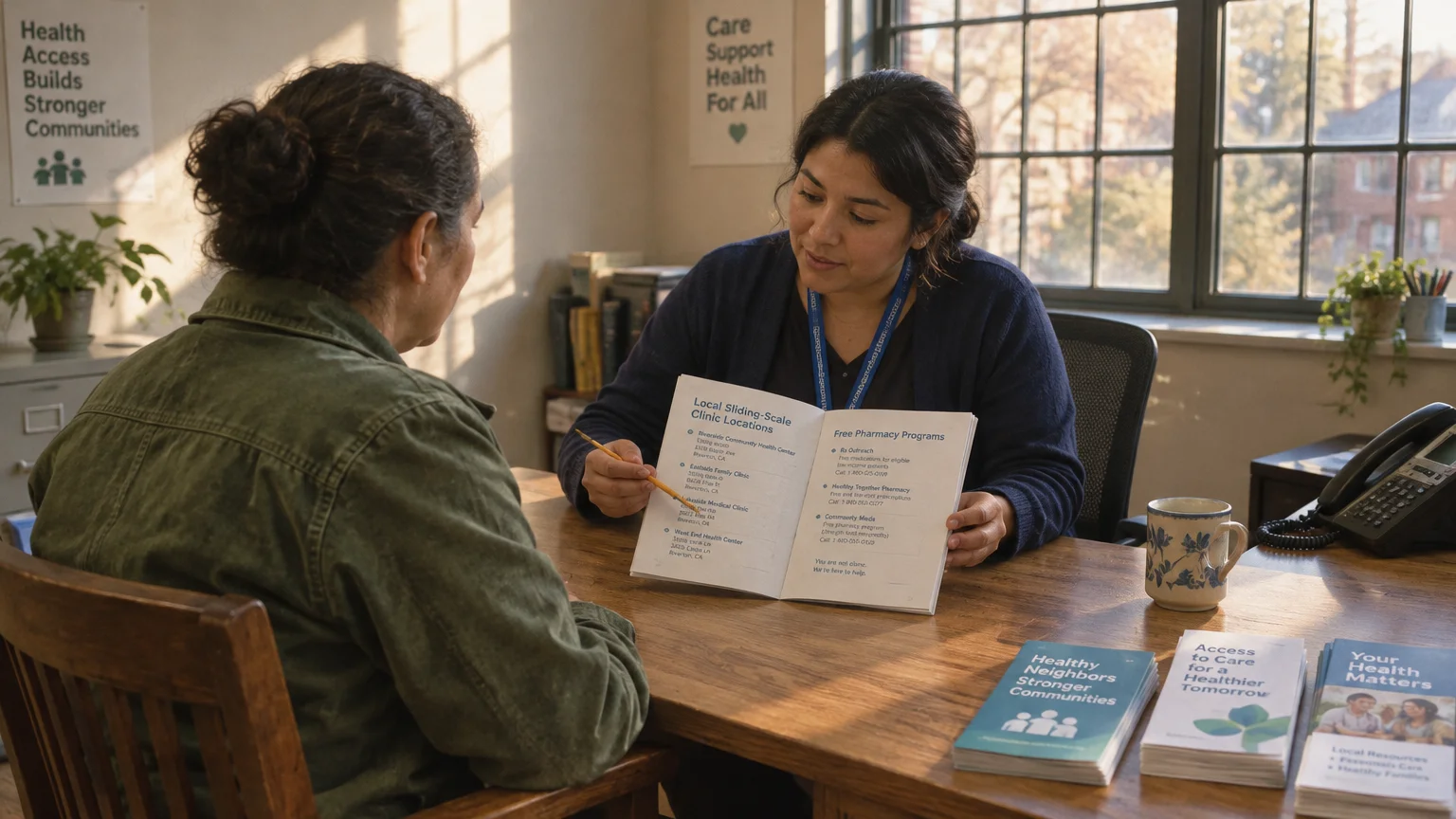
Cost barriers should never delay accurate diagnosis or timely antiviral prescriptions for your household. Public assistance programs and local clinics help families access tests and medications without financial strain.
Uninsured patients, eligible publicly insured individuals, and underinsured Medicare beneficiaries (effective March 1, 2025) can receive no-cost Paxlovid through the U.S. government Patient Assistance Program. According to the CDC, this assistance remains active through December 31, 2028, or until supplies run out.
Keeping two or three $10 to $12 combination flu/COVID antigen kits on hand turns late-night fevers into manageable problems. Using pre-tax HSA or FSA dollars lowers your out-of-pocket expense while ensuring you can swab before a 48-hour flu antiviral window closes.
If your regular pediatrician or primary care clinic has no same-day openings, check local pharmacies, federally qualified community health centers, or your insurer’s 24-hour telehealth nurse line.
Many telehealth providers can review a photo of your positive home combo test and transmit an antiviral prescription directly to a nearby pharmacy.
State and county health departments also post seasonal respiratory dashboards tracking local flu and COVID-19 surges. Checking regional trends helps you decide when indoor masking in crowded venues makes practical sense for high-risk family members.
Common Questions About Cold, Flu, and COVID-19
Can you have flu and COVID-19 at the same time?
Yes, co-infections can occur when influenza and SARS-CoV-2 circulate heavily during the same autumn or winter weeks. Because dual infections can worsen symptoms and strain recovery, using an over-the-counter combo swab helps your clinician prescribe the right antiviral treatment quickly.
Does green or yellow mucus mean I need an antibiotic?
No, thicker yellow or green nasal discharge reflects normal immune activity rather than proof of a bacterial sinus infection. Only about 5% of clinically diagnosed colds involve bacterial infection, so reserve antibiotics for persistent or worsening symptoms confirmed by your doctor.
What if my fever goes away for a day and then comes back?
A fever that clears and suddenly rebounds can signal a secondary bacterial infection, such as pneumonia or an ear infection. Mayo Clinic advises adults to contact a doctor whenever a fever above 101.3°F (38.5°C) lasts beyond 3 days or returns after a fever-free period.
When can my child safely return to school after a viral illness?
Wait until your child meets both parts of the CDC 24-hour benchmark: overall symptoms must be improving, and they must stay fever-free for a full 24 hours without acetaminophen or ibuprofen. Afterward, reinforce 5 days of added precautions like 20-second handwashing and wearing a mask if tolerated.
Building Your Family Respiratory Action Plan
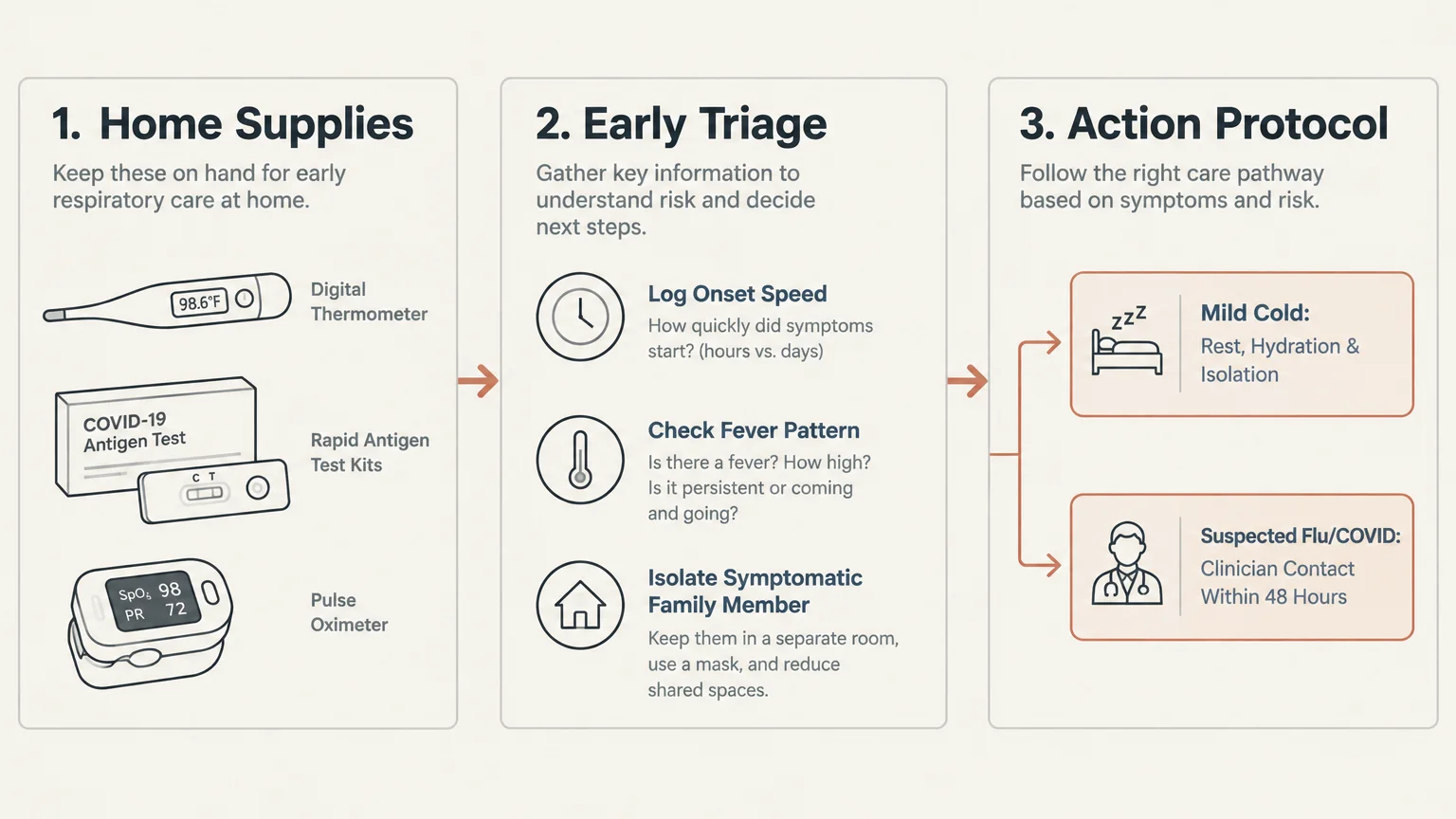
Preparation turns winter sick days from stressful guesswork into calm, step-by-step care. Check your medicine cabinet this week to verify thermometer batteries, remove expired syrups, and stock two or three combination flu/COVID antigen tests.
Write down your primary clinic’s after-hours number, your preferred pharmacy address, and any daily medications that could interact with COVID-19 or flu antivirals. Keeping those details in one place saves precious hours inside 48-hour and 5-day treatment windows.
Confirm your household’s 2026–2027 flu and COVID-19 vaccination plans with your doctor or local pharmacist. Staying informed on respiratory illness symptoms empowers you to protect vulnerable loved ones and guide your family back to health with confidence.