Major updates to Medicare in 2027 will reshape what you pay for prescription drugs, outpatient doctor visits, and chronic care programs. Understanding these federal rule changes early ensures you protect your retirement budget and keep your preferred medical providers.
While lower drug price caps provide essential financial relief, rising monthly premiums and plan restructuring demand proactive management. Taking simple comparison steps this autumn will keep your coverage dependable and cost-effective.
Here are the ten crucial Medicare changes arriving in 2027, along with practical strategies to help you navigate your health care choices with confidence.
Part D Prescription Drug Coverage Updates for 2027
In this article10 items
- 1.The Part D Out-of-Pocket Spending Cap Adjusts to $2,400
- 2.Higher Maximum Deductible for Part D Plans
- 3.Rising Premiums and Elimination of $0-Premium Stand-Alone Plans
- 4.Essential Open Enrollment Deadlines for 2027 Plans
- 5.CMS Maximum Fair Prices Take Effect for Cycle Two Drugs
- 6.The Medicare GLP-1 Bridge Program for Weight Loss
- 7.The ACCESS Care Model for Chronic Health Conditions
- 8.Extended Telehealth Access and Virtual Diabetes Prevention
- 9.Projected Adjustments to the Standard Part B Premium
- 10.Updated Eligibility Rules, Security Upgrades, and Rural Programs
The Part D Out-of-Pocket Spending Cap Adjusts to $2,400
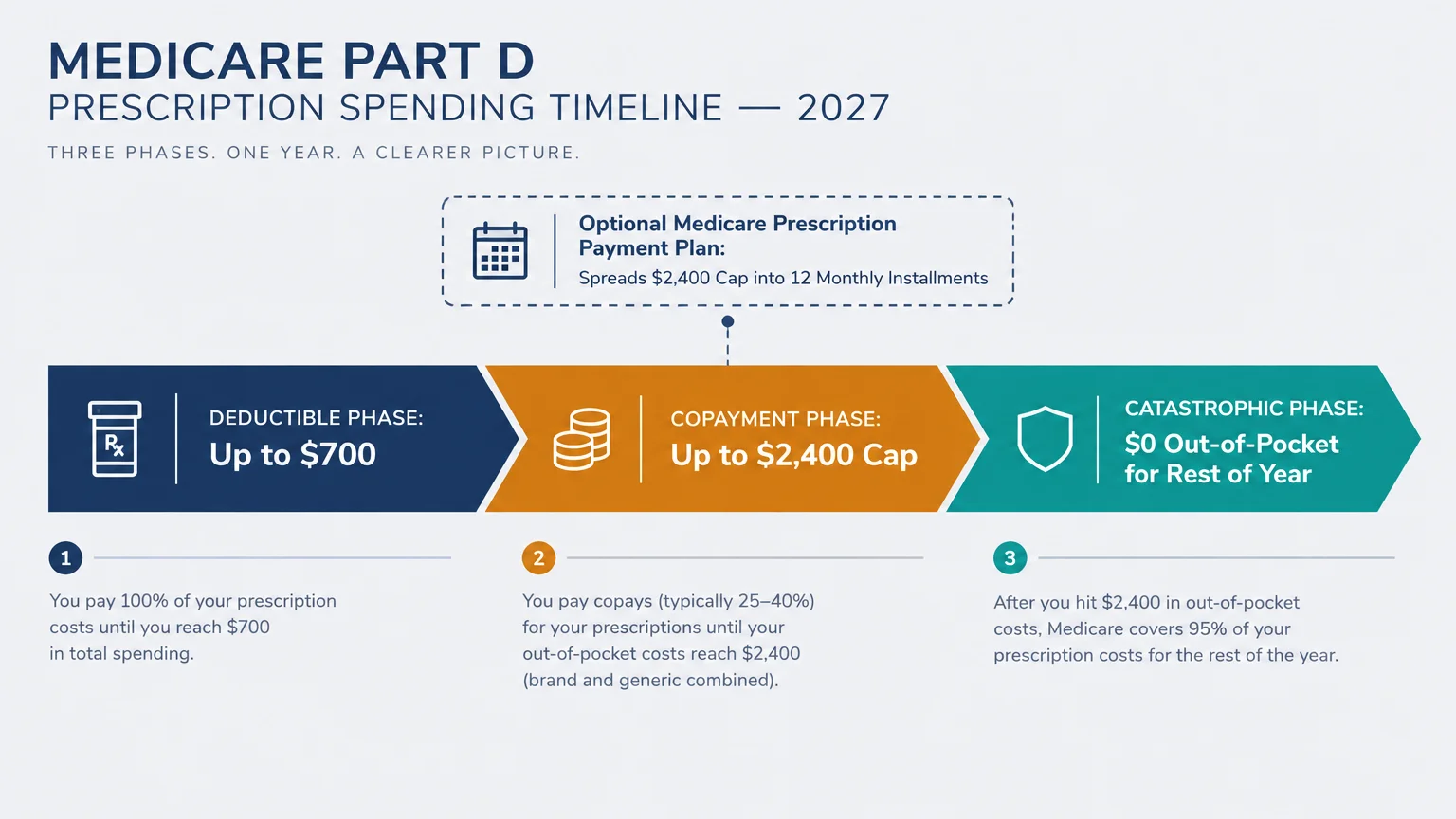
Federal law establishes a new annual out-of-pocket spending maximum for Medicare Part D prescription drug coverage in 2027. Your out-of-pocket prescription expenses will cap at $2,400 for the year, an increase from $2,100 in 2026.
Once your payments for deductibles and copayments hit this $2,400 threshold, you pay $0 for covered formulary medications for the rest of the calendar year. This cap prevents catastrophic prescription costs if you take expensive specialty drugs.
Beneficiaries can also utilize the Medicare Prescription Payment Plan to manage these expenses. This payment option spreads your pharmacy bills into predictable monthly installments throughout the year rather than requiring large payments upfront in January.
Higher Maximum Deductible for Part D Plans
The maximum allowable deductible for Part D prescription drug plans is increasing to $700 in 2027. This change marks an $85 increase from the 2026 deductible limit of $615.
Insurance carriers can require you to pay this full deductible before your plan begins paying its share for brand-name drugs. Many plans offer partial or zero-dollar deductibles on generic tiers, making formulary reviews vital.
Rising Premiums and Elimination of $0-Premium Stand-Alone Plans
Stand-alone Part D plan premiums are facing significant upward pressure in 2027. The federal Part D Premium Stabilization Demonstration, which capped monthly premium increases at $50 and subsidized private insurers, expires on December 31, 2026.
Without these federal stabilization subsidies, an independent Kaiser Family Foundation analysis projects average monthly stand-alone Part D premiums will jump 50% from $34 in 2026 to $51 in 2027.
Monthly rates will vary widely across national carriers, ranging from $6 to $204 per month. Insurers have also eliminated all $0-premium stand-alone drug plans for 2027 for beneficiaries who do not receive low-income subsidies.
Essential Open Enrollment Deadlines for 2027 Plans
Medicare’s Annual Open Enrollment Period for 2027 coverage runs from October 15 through December 7, 2026. Any coverage updates or new plan selections you make during this window take effect on January 1, 2027.
You should review your Annual Notice of Change letter as soon as your insurer mails it in September. Comparing local options prevents automatic renewals into plans with sharply increased monthly premiums or dropped medication coverage.
Worked Example: Navigating 2027 Drug Costs
Consider Eleanor, a 71-year-old retiree who takes three brand-name medications that cost $450 out-of-pocket every month. In previous years, her pharmacy expenses continued throughout all twelve months.
In 2027, Eleanor pays her plan’s $700 deductible in January and February. By late May, her ongoing copayments push her total out-of-pocket spending to the $2,400 cap.
From June through December, Eleanor pays $0 for her covered prescriptions at the pharmacy counter. By opting into the Medicare Prescription Payment Plan, she divides that $2,400 total into twelve even monthly payments of $200.
| Medicare Cost Metric | 2026 Rate | 2027 Rate |
|---|---|---|
| Part D Out-of-Pocket Maximum | $2,100 | $2,400 |
| Part D Maximum Allowable Deductible | $615 | $700 |
| Average Stand-Alone Part D Monthly Premium | $34 | $51 (projected) |
| Standard Part B Monthly Premium | $202.90 | $209.50 (projected) |