Recent Medicare updates have fundamentally altered how you receive approval for common medical procedures and outpatient surgeries. These changes introduce faster turnaround times for private plans and pilot approval programs for traditional coverage.
If you need spinal injections, joint procedures, or specialized medical equipment, your doctor may now need permission before scheduling your care. Knowing these rules helps you prevent costly billing disputes and dangerous treatment delays.
This guide explains exactly which treatments require prior authorization in 2026, how the rules differ by plan, and what practical steps you should take today.
How Prior Authorization Rules Changed in 2026
Prior authorization requires your healthcare provider to secure approval from your insurer before administering a specific medical service. Insurers use this process to evaluate whether a requested service is medically necessary and meets standard coverage guidelines.
Historically, prior authorization was primarily an issue for beneficiaries enrolled in private Medicare Advantage (MA) plans. Original Medicare rarely required advance permission before you received outpatient medical care.
That dynamic shifted on January 1, 2026. The Centers for Medicare & Medicaid Services (CMS) introduced distinct policy overhauls affecting both forms of Medicare coverage.
For Medicare Advantage members, new federal regulations cut decision turnaround times in half. The government also created stronger safeguards against arbitrary coverage denials.
Meanwhile, beneficiaries with Original Medicare in six specific states now encounter prior authorization requirements for 14 targeted outpatient procedures.
If you help manage healthcare for aging parents, identifying their exact coverage type is your crucial first step. Rules that protect a Medicare Advantage enrollee do not apply to someone on traditional fee-for-service Medicare.
Understanding which system governs your care helps you anticipate scheduling delays and out-of-pocket billing risks.
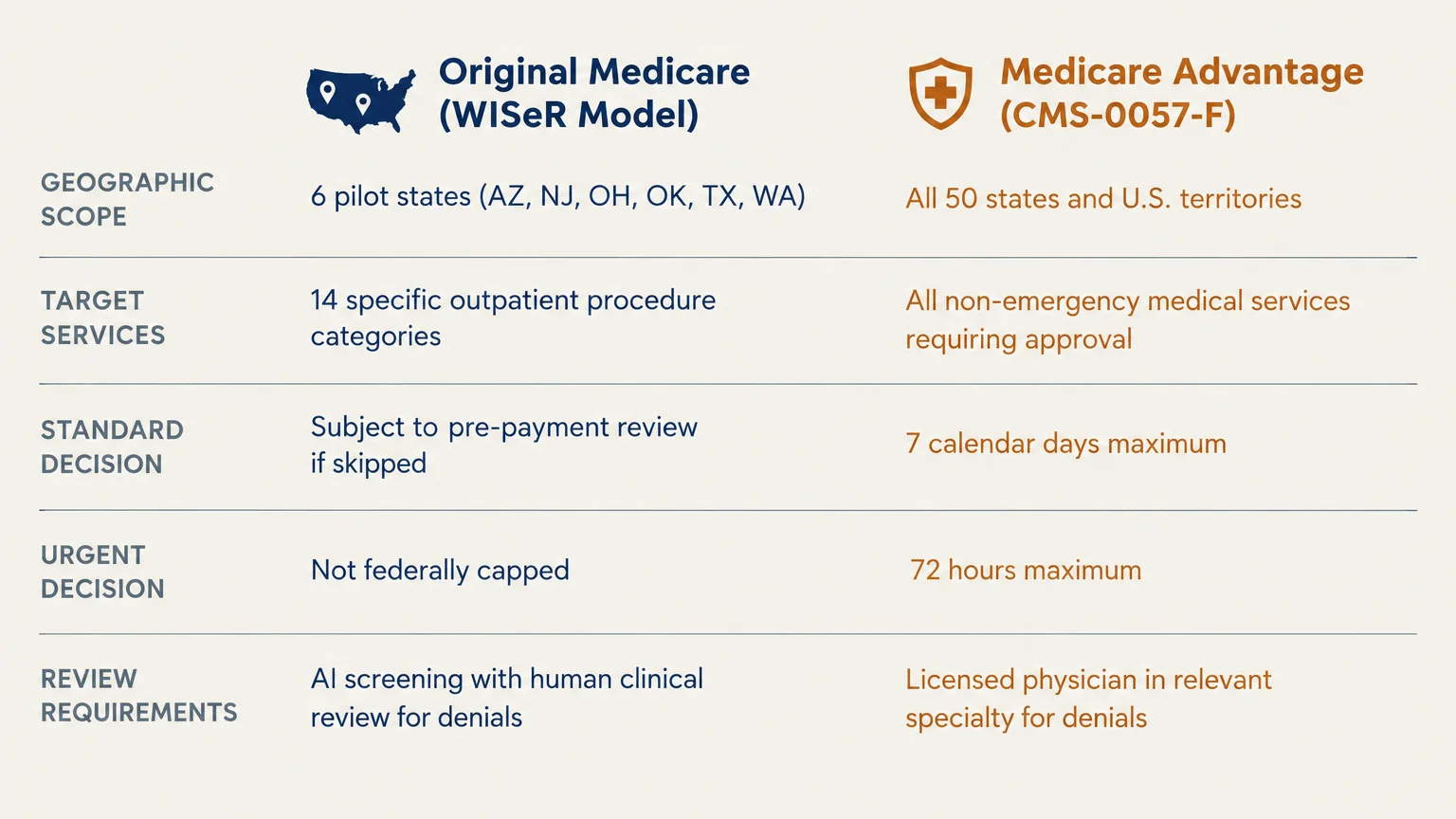
| Coverage Feature | Original Medicare (WISeR Model) | Medicare Advantage (CMS-0057-F) |
|---|---|---|
| Geographic Scope | 6 pilot states (AZ, NJ, OH, OK, TX, WA) | All 50 states and U.S. territories |
| Target Services | 14 specific outpatient procedure categories | All non-emergency medical services requiring approval |
| Standard Decision Time | Subject to pre-payment review if skipped | 7 calendar days maximum |
| Urgent Decision Time | Not federally capped | 72 hours maximum |
| Review Requirements | AI screening with human clinical review for denials | Licensed physician in relevant specialty for denials |
Both policy shifts reflect federal efforts to curb improper billing and unnecessary medical procedures. However, each framework establishes distinct rights and responsibilities for patients and medical providers.