Choosing between Original Medicare and Medicare Advantage shapes your medical costs, doctor choices, and healthcare access for the coming year. Beneficiaries must weigh national provider freedom against private plan convenience.
Original Medicare provides standard government-administered benefits with nationwide provider access. In contrast, Medicare Advantage bundles hospital, outpatient, and prescription drug services into private managed care networks.
Understanding these trade-offs helps protect your health and retirement budget. Here is how each option works so you can select coverage tailored to your medical needs.
Understanding the Core Differences Between Original Medicare and Medicare Advantage
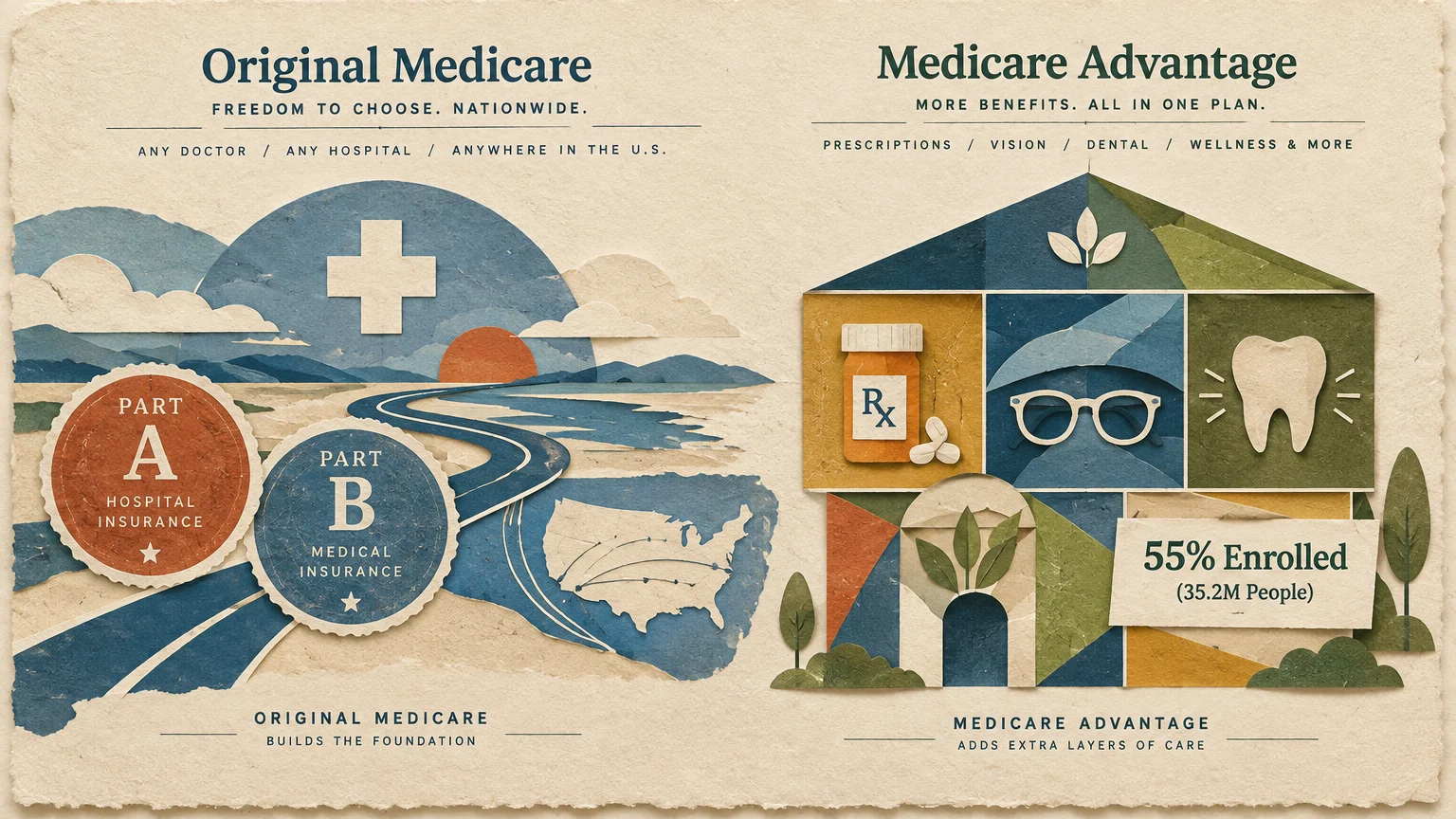
Original Medicare is the traditional, federally administered program created in 1965. It consists of Part A (Hospital Insurance) and Part B (Medical Insurance).
Original Medicare lets you visit any doctor or hospital across the United States accepting Medicare. The federal government pays providers directly for covered services.
Medicare Advantage, also called Medicare Part C, offers an alternative private insurance path managed by commercial insurers approved by the federal government.
By law, Medicare Advantage plans must provide all Part A and Part B benefits. Most plans bundle prescription drug coverage alongside dental, vision, or hearing benefits.
Private plans continue expanding nationwide. In 2026, 55% of eligible Medicare beneficiaries—representing 35.2 million out of 64.2 million people—enrolled in Medicare Advantage plans.
Despite this popularity, private plans operate under managed care restrictions differing substantially from federal Medicare. You must evaluate whether provider networks and pre-approval rules align with personal healthcare preferences.
| Coverage Feature | Original Medicare (Parts A & B) | Medicare Advantage (Part C) |
|---|---|---|
| Provider Network | Any doctor or hospital nationwide accepting Medicare | Local HMO or PPO network; fees apply outside network |
| Referrals & Approvals | No referrals; rarely requires prior authorization | Frequent prior authorization; referrals often required |
| Standard Monthly Premium (2026) | $202.90 for Part B (projected $209.50 in 2027) | Part B premium plus plan premium (average $14.37 in 2026) |
| Out-of-Pocket Spending Limit | No annual spending cap without Medigap | Mandatory annual cap ($9,250 in-network ceiling in 2026) |
| Drug Coverage | Requires a separate Part D prescription plan | Usually bundled directly into the health plan |
When you turn 65, federal law grants a six-month Medigap Open Enrollment Period. During this window, private insurers cannot deny supplemental coverage or charge higher rates for pre-existing conditions.