Provider Networks, Prior Authorization, and Care Flexibility
Accessing Doctors and Specialists
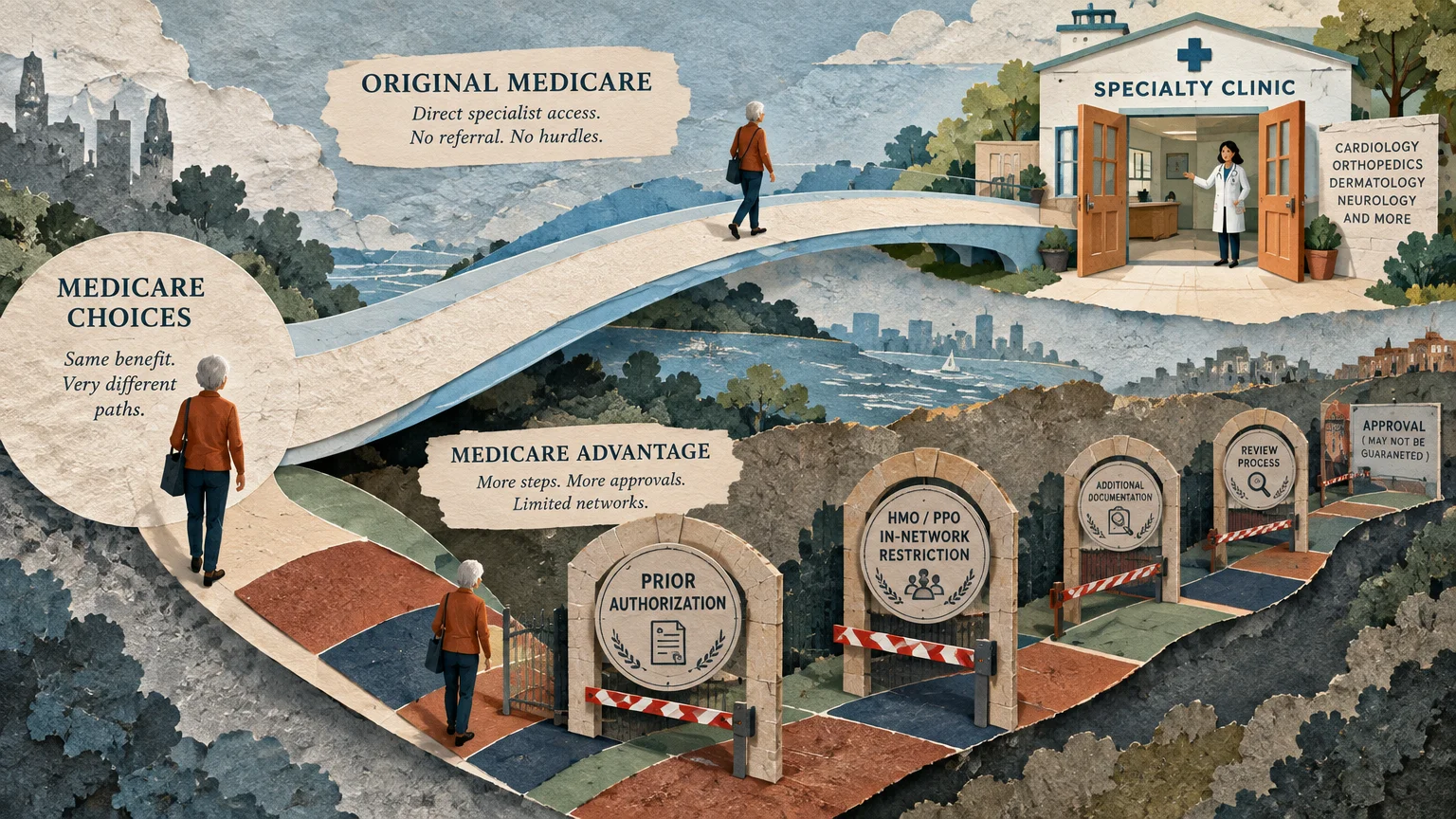
Your healthcare experience depends heavily on how easily you access preferred doctors. Original Medicare provides unrestricted national access without geographic boundaries.
You can schedule appointments with any healthcare provider accepting Medicare assignment, without needing a primary care referral for specialist visits.
Medicare Advantage relies on Health Maintenance Organization (HMO) or PPO networks. HMO plans require selecting providers from a strict local directory.
Seeing a doctor outside an HMO network usually means paying full costs yourself. PPO plans allow out-of-network care, but impose higher coinsurance and separate deductibles.
Prior Authorization and Plan Exits
Medicare Advantage plans frequently require prior authorization for advanced treatments, inpatient therapies, or diagnostic scans. These administrative reviews can delay or deny specialized care.
In contrast, Original Medicare rarely mandates prior authorization. Your treating physician determines clinical necessity, and Medicare processes claims accordingly.
Insurers also adjust plan offerings and service areas annually. Due to market exits and business shifts, roughly 3.1 million Medicare Advantage prescription drug enrollees will have their plans terminated at the end of 2026.
Rural and semi-rural markets face substantial contraction for 2027. According to a KFF policy analysis, 193 U.S. counties across 16 states will have zero general-enrollment Medicare Advantage prescription plans in 2027.
If an insurer terminates your plan, Medicare grants a Special Enrollment Period (SEP) to select another private plan or return to Original Medicare.
Every September, private insurers send an Annual Notice of Change (ANOC) detailing modifications for the upcoming calendar year. Review this document closely to check whether doctors, medications, or copays change for 2027.