You can continue seeing your doctors virtually from home throughout 2027. Federal legislation extended key Medicare telehealth flexibilities through December 31, 2027, ensuring your access remains uninterrupted.
Whether you need routine checkups, mental health counseling, or physical therapy, you do not have to travel to a clinic. Medicare Part B covers these virtual appointments anywhere across the United States.
This guide explains what virtual care Medicare covers this year, what out-of-pocket costs to expect, and how to access care from home.
Current Rules for Medicare Telehealth at Home
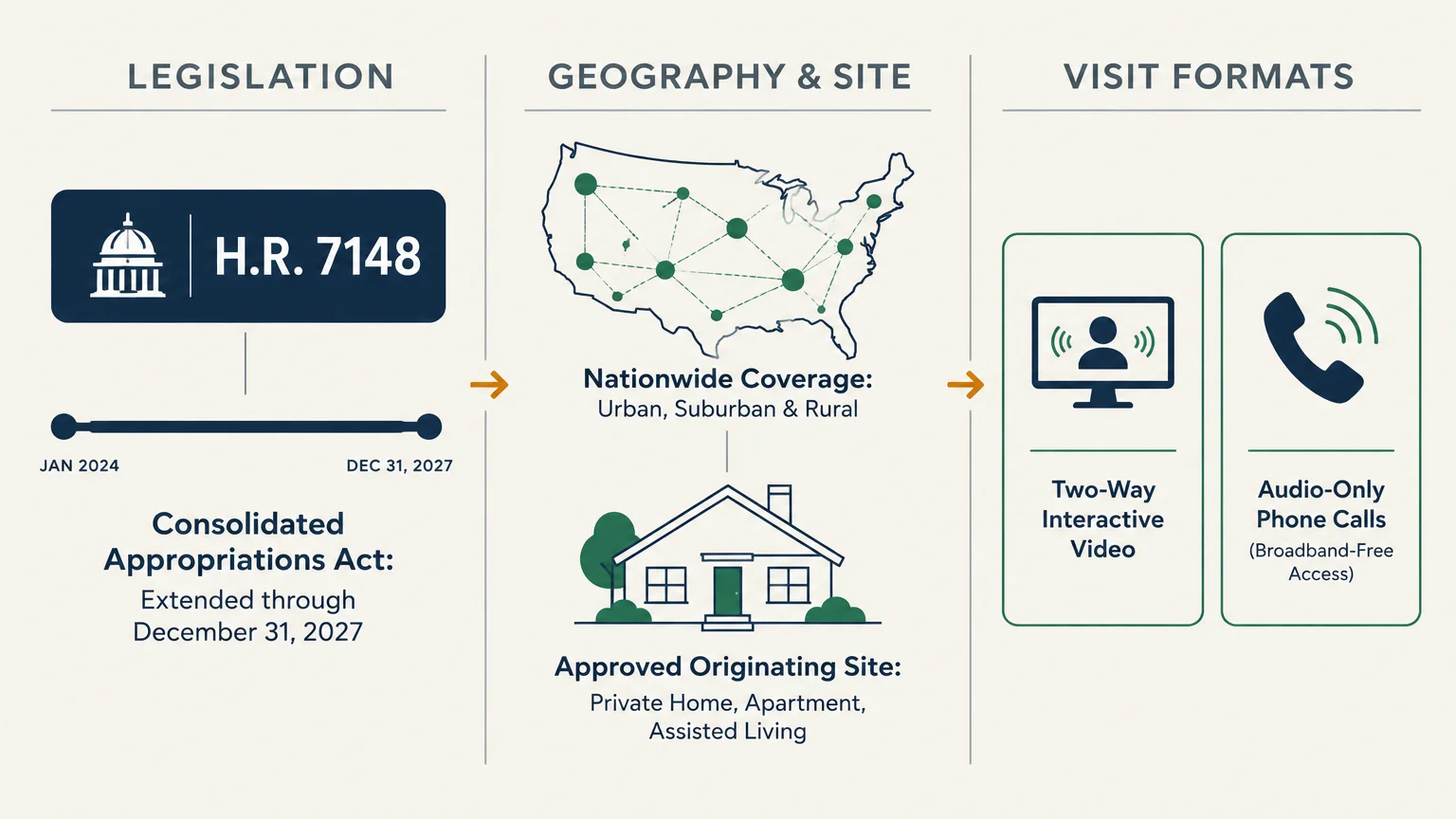
For years, older adults worried that virtual visits would vanish once temporary emergency declarations ended. Fortunately, Congress passed the Consolidated Appropriations Act of 2026 (H.R.
7148) on February 3, 2026.
Congress acted after coverage interruptions shook beneficiary confidence in late 2025 and January 2026. The two-year extension provides stability so you can schedule virtual checkups with peace of mind.
This legislation protected your telehealth access by extending major flexibilities through December 31, 2027. Beneficiaries do not have to worry about sudden policy cancellations disrupting ongoing medical appointments this year.
No Geographic Restrictions
Before these waivers, Original Medicare restricted home telehealth almost exclusively to people in designated rural areas. Beneficiaries living in cities or suburbs could rarely receive covered virtual care at home.
Through December 31, 2027, geographic limitations remain waived. You can connect with your healthcare providers regardless of whether you live in a rural county, a major city, or a suburban community.
Your Home as an Approved Originating Site
In Medicare terminology, an originating site is the location where a patient receives care. Historically, Medicare required patients to travel to an approved clinical site, such as a doctor’s office or hospital.
Under current law, your private home, apartment, or assisted living facility remains an approved originating site. You do not need special permission or a hardship exemption to log in from home.
Video Visits Versus Audio-Only Phone Calls
Most virtual doctor visits rely on two-way, interactive audio and video platforms. You speak directly with your clinician while seeing them on your computer screen, tablet, or smartphone.
However, not everyone owns a computer or has reliable broadband internet. Recognizing this barrier, Medicare covers non-behavioral medical appointments conducted over basic telephone lines through December 31, 2027.
Federal rules also permanently permit audio-only calls from home if your provider offers video capability, but you cannot use video or choose not to consent to it.