Medicare covers continuous positive airway pressure (CPAP) therapy for obstructive sleep apnea, paying 80% of approved costs after your deductible. If your doctor suspects sleep apnea, Medicare helps pay for your diagnostic sleep study and your breathing equipment.
Securing full coverage requires completing specific clinical assessments and meeting strict usage benchmarks during your initial three months. Missing these rigid deadlines can trigger sudden claim denials and leave you with unexpected bills.
This practical guide outlines Medicare CPAP rules, out-of-pocket costs, and compliance benchmarks so you can breathe easier without financial surprises.
01 How Medicare Covers Sleep Apnea Testing and Diagnosis
Medicare Part B helps pay for diagnostic sleep testing when you display common symptoms of obstructive sleep apnea (OSA). These clinical indicators often include loud snoring, gasping for air during sleep, morning headaches, or excessive daytime drowsiness.
While several physical changes make it harder to sleep as you age, frequent nighttime waking and chronic fatigue often point to a more serious clinical disorder.
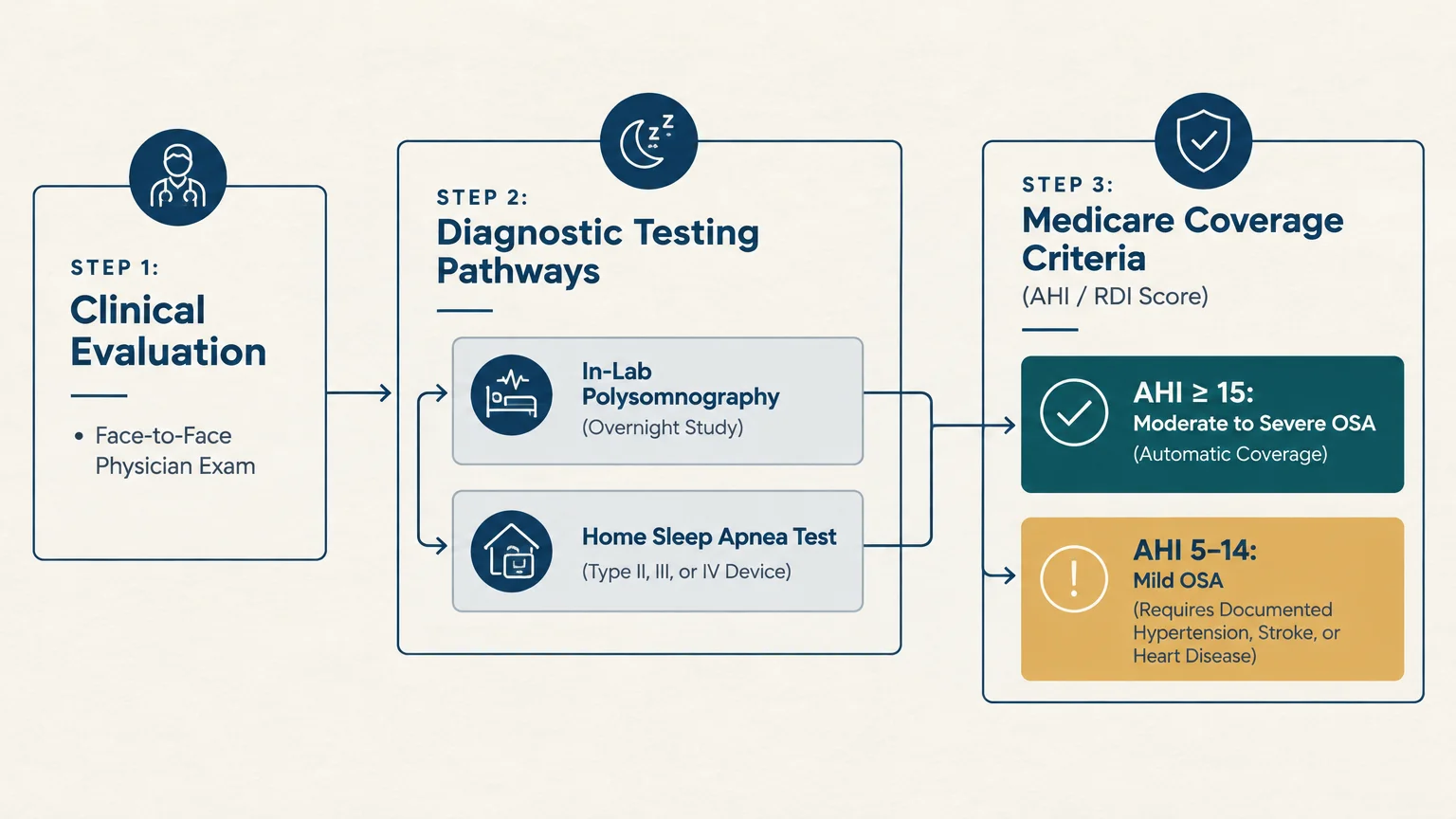
Before ordering any diagnostic test, your treating physician must conduct a comprehensive, face-to-face clinical evaluation. During this visit, your doctor documents your medical history and establishes the medical necessity for formal sleep testing.
Medicare covers two primary forms of diagnostic testing: in-laboratory polysomnography and unattended home sleep apnea tests. Both testing pathways must meet strict federal standards to qualify for coverage.
An overnight laboratory study remains the gold standard for diagnosing sleep-related breathing disorders. You spend the night in a specialized sleep center while trained technicians record brain activity, oxygen levels, heart rate, and breathing patterns.
Medicare also covers convenient home sleep tests if your doctor determines a home study is clinically appropriate. To qualify for Medicare payment, the home monitor must be an approved Type II, Type III, or Type IV diagnostic device.
Test results determine your eligibility for equipment coverage by calculating your Apnea-Hypopnea Index (AHI) or Respiratory Disturbance Index (RDI). These clinical scores measure how many times your breathing pauses or slows per hour of sleep.
Medicare approves CPAP therapy if your test reveals an AHI or RDI of 15 or greater events per hour. This frequency indicates moderate to severe obstructive sleep apnea.
Medicare also covers CPAP therapy for mild sleep apnea, defined as an index between 5 and 14 events per hour. However, your physician must document secondary medical conditions, such as hypertension, stroke history, daytime sleepiness, or heart disease.