05 Replacement Supplies and Alternative Sleep Apnea Treatments
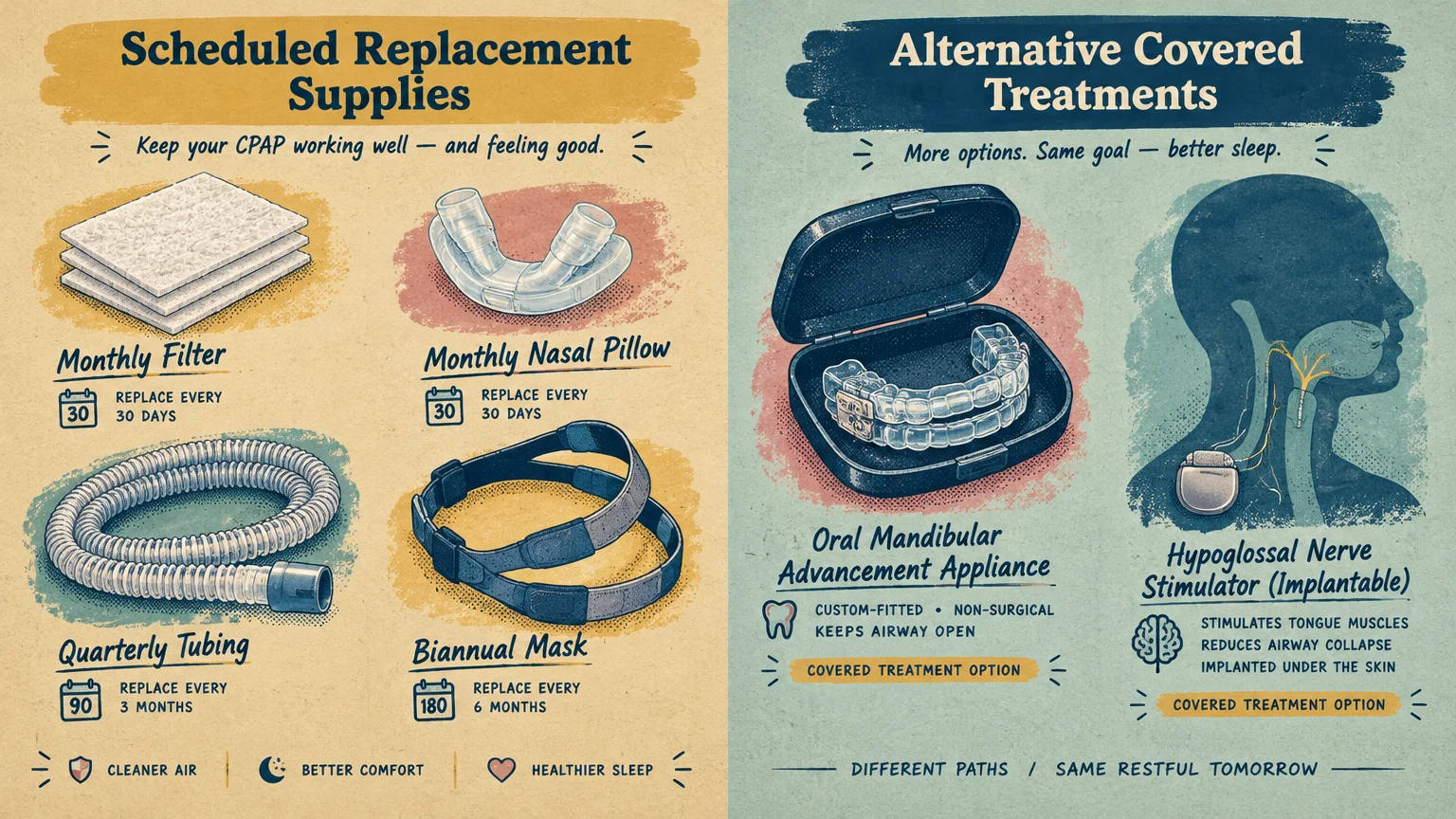
Effective sleep therapy requires periodic replacement of mask components, tubing, and filters to maintain proper hygiene and equipment seals. Medicare Part B covers these replacement supplies according to a standardized national replacement schedule.
Medicare covers two nasal cushions or one full-face cushion each month. You can also receive replacement tubing and a new headgear assembly every three to six months.
Medicare helps pay for disposable air filters twice per month, while non-disposable filters receive coverage every six months. Humidifier water chambers are eligible for replacement once every six months to prevent mineral buildup and contamination.
Your supplier will verify your ongoing CPAP usage before processing automated shipments of replacement supplies. You can consult medicareinteractive.org for detailed coverage rules on medical supply intervals.
If you cannot tolerate traditional CPAP therapy, Medicare covers select clinical alternatives. Medicare Part B covers custom-fitted oral appliances when prescribed by a physician and fabricated by a licensed dental professional.
Beginning in 2026, Medicare Part D plans also provide coverage for FDA-approved glucagon-like peptide-1 (GLP-1) medications for obstructive sleep apnea. Drugs such as tirzepatide (Zepbound) are approved to treat moderate-to-severe OSA in adults with obesity.
Although Medicare launched a $50 per month GLP-1 Bridge program on July 1, 2026, for general weight management, sleep apnea patients receive coverage through standard Part D plans. These prescriptions apply directly toward your annual out-of-pocket Part D spending limit.
In 2026, the Medicare Part D out-of-pocket maximum is $2,100 per calendar year. This annual spending threshold is scheduled to rise to $2,400 in 2027, protecting you against catastrophic medication expenses.