Medicare scammers deploy sophisticated calls, text messages, and deceptive mailers to steal your benefits and personal identity. Learning to spot these warning signs immediately protects your healthcare coverage and your hard-earned savings.
Federal agencies report dramatic spikes in aggressive impersonation schemes, particularly around key annual enrollment deadlines. Criminals use modern technology like artificial intelligence and spoofed caller IDs to sound convincing.
This guide details current fraud alerts, reveals common scam scripts, and shows you practical steps to defend your Medicare account today.
Why Medicare Scams Surge and How Criminals Target You
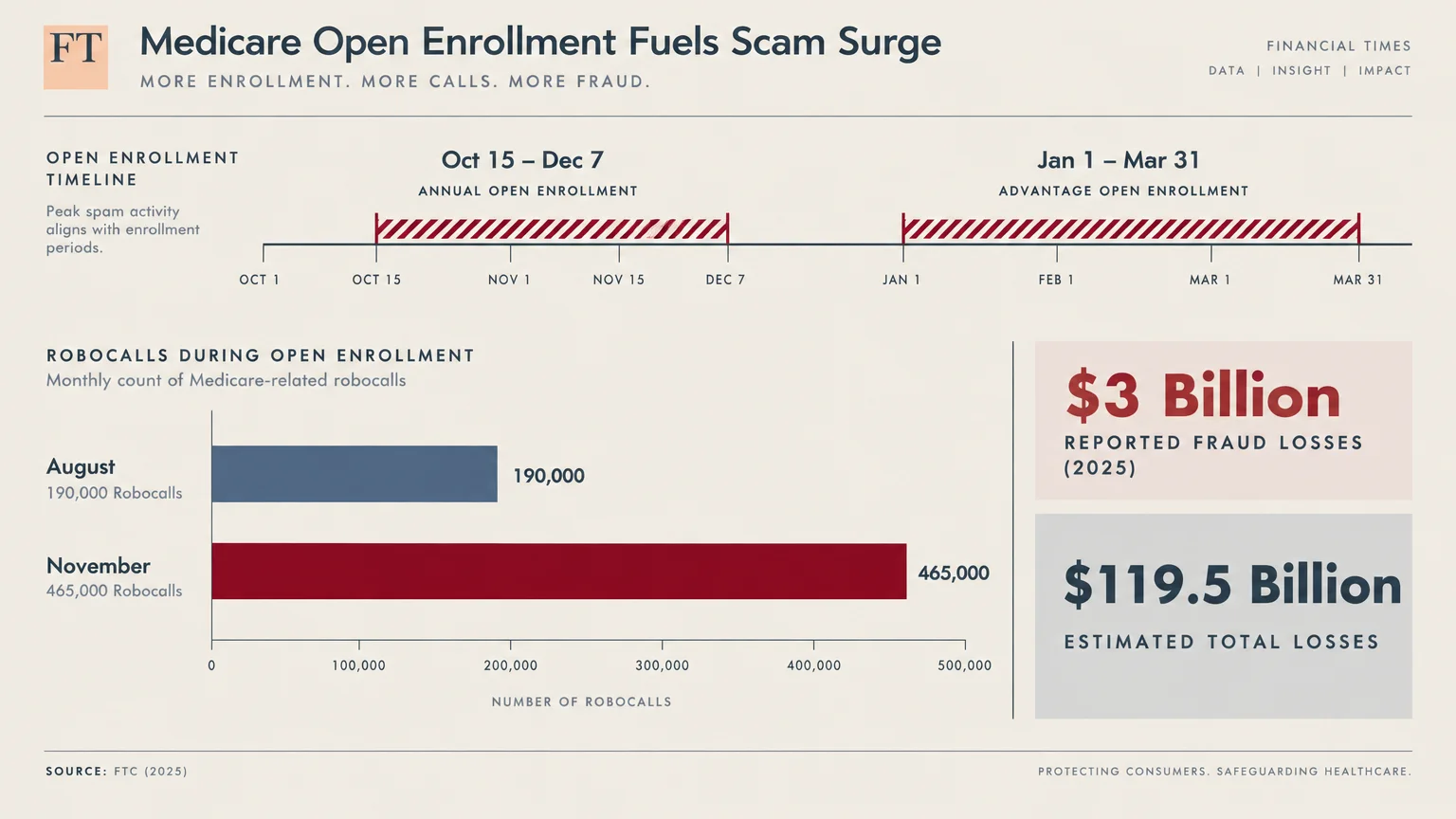
Medicare fraud intensifies every autumn during the annual Open Enrollment Period. Between October 15 and December 7, 2026, millions of beneficiaries review coverage options for 2027.
Understanding the legitimate Medicare changes coming in 2027 helps beneficiaries recognize when scammers are pitching fake policy updates.
Scammers exploit this enrollment rush because they know you anticipate updates regarding your healthcare. A second wave follows during the Medicare Advantage Open Enrollment Period from January 1 through March 31, 2027.
Robocall-blocking service Nomorobo documented a 25% spike in Medicare spam calls between August and September 2026. In the previous cycle, monthly robocalls doubled from roughly 190,000 in August to 465,000 in November.
According to the Federal Trade Commission (FTC) Protecting Older Consumers 2025–2026 report, adults aged 60 and older reported losing $3 billion to fraud in 2025.
This reported loss represents a fivefold increase from $600 million in 2020. Accounting for unreported incidents, the FTC estimates total 2025 fraud losses for older adults reached $119.5 billion.
Impersonation fraud accounted for $3.5 billion in losses across all age groups in 2025. Nearly one in three fraud reports sent to the FTC involved government or business impersonators.
Data Breaches Fueling Targeted Schemes
Modern fraud operations do not rely on random phone numbers. Instead, criminal networks actively purchase stolen personal information leaked through massive private-sector cyberattacks.
The Change Healthcare breach compromised sensitive records belonging to approximately 192.7 million individuals. Scammers weaponize these leaked medical files to make fraudulent calls sound legitimate.
Federal officials also alerted beneficiaries to a mid-2025 incident involving Medicare.gov. Cybercriminals used externally stolen credentials to establish unauthorized online accounts.
When a caller recites your home address or primary physician, do not assume they represent Medicare. Fraud syndicates read directly from illicit data sheets to gain your trust.