A denied Medicare claim is alarming, but you have the legal right to appeal any denied medical service, prescription, or healthcare bill.
Success requires meeting filing deadlines, securing detailed physician documentation, and navigating formal review stages. Federal regulations provide multiple levels of reconsideration if an insurer initially refuses payment.
You do not have to accept unexpected medical debt. Prompt action protects your coverage and ensures reviewers evaluate your care fairly.
Reading Your Denial Notice and Identifying the Problem
Every appeal begins with the written denial notice from Medicare or your health plan. Reviewing it immediately clarifies why coverage was denied and establishes your filing deadline.
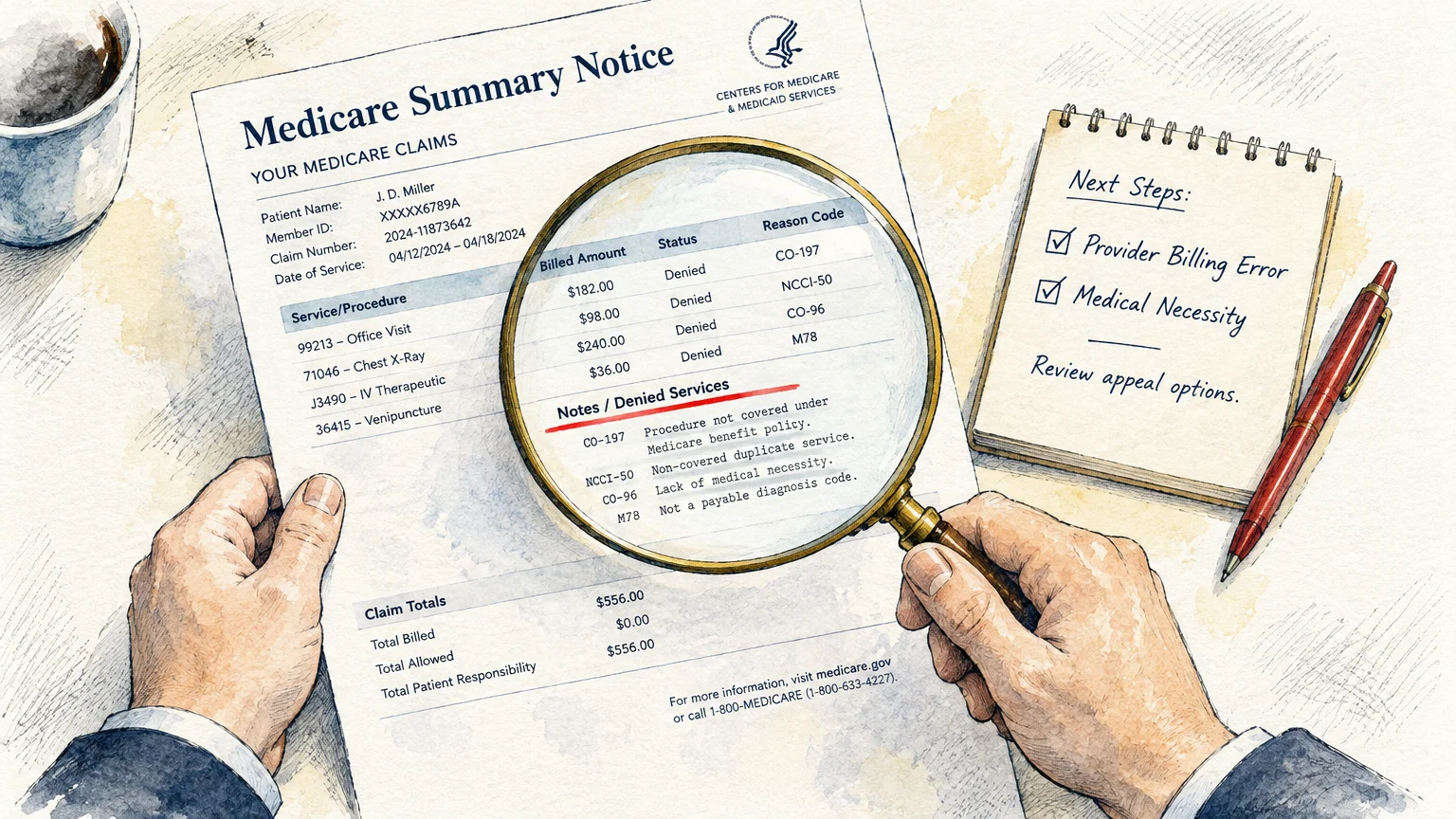
Decoding Your Medicare Summary Notice
Original Medicare beneficiaries receive a Medicare Summary Notice (MSN) quarterly by mail or online. The “Claims Denied” or “Notes” section lists numeric codes explaining payment refusals.
Check what you may be billed. If your provider accepted Medicare assignment, federal rules often limit what they can charge you for denied services.
Reviewing Explanation of Benefits Documents
Medicare Advantage and Part D enrollees receive an Explanation of Benefits (EOB). If a plan refuses authorization or payment, it must issue a written denial notice.
This notice details the clinical denial criteria, appeal instructions, filing deadlines, and submission address.
Common Denial Triggers and Billing Mistakes
Many denials stem from administrative errors rather than medical disputes. Billing staff can enter incorrect procedure codes, transpose insurance numbers, or omit required modifiers.
Contact your provider’s billing office first. If clerical mistakes caused the denial, the provider can correct and resubmit the claim directly.
When Medicare questions medical necessity, overturning the denial requires comprehensive clinical records and supportive statements from your healthcare providers.
Hospital Observation and Outpatient Demonstration Rules
Hospitals may classify your stay as outpatient observation rather than formal inpatient admission, impacting out-of-pocket costs and subsequent skilled nursing facility coverage.
Hospitals must issue a Medicare Change of Status Notice (CMS-10868) if your status changes to observation, allowing an immediate prospective fast appeal while hospitalized.
While retrospective appeals for past observation stays closed on January 2, 2026, prospective bedside appeals remain available to challenge observation status before discharge.
Under the WISeR pilot program, effective January 1, 2026, Original Medicare mandates prior authorization for 17 outpatient services in Arizona, New Jersey, Ohio, Oklahoma, Texas, and Washington.
Running through 2031, this demonstration project preserves standard Medicare appeal rights if your provider receives a denial under WISeR.