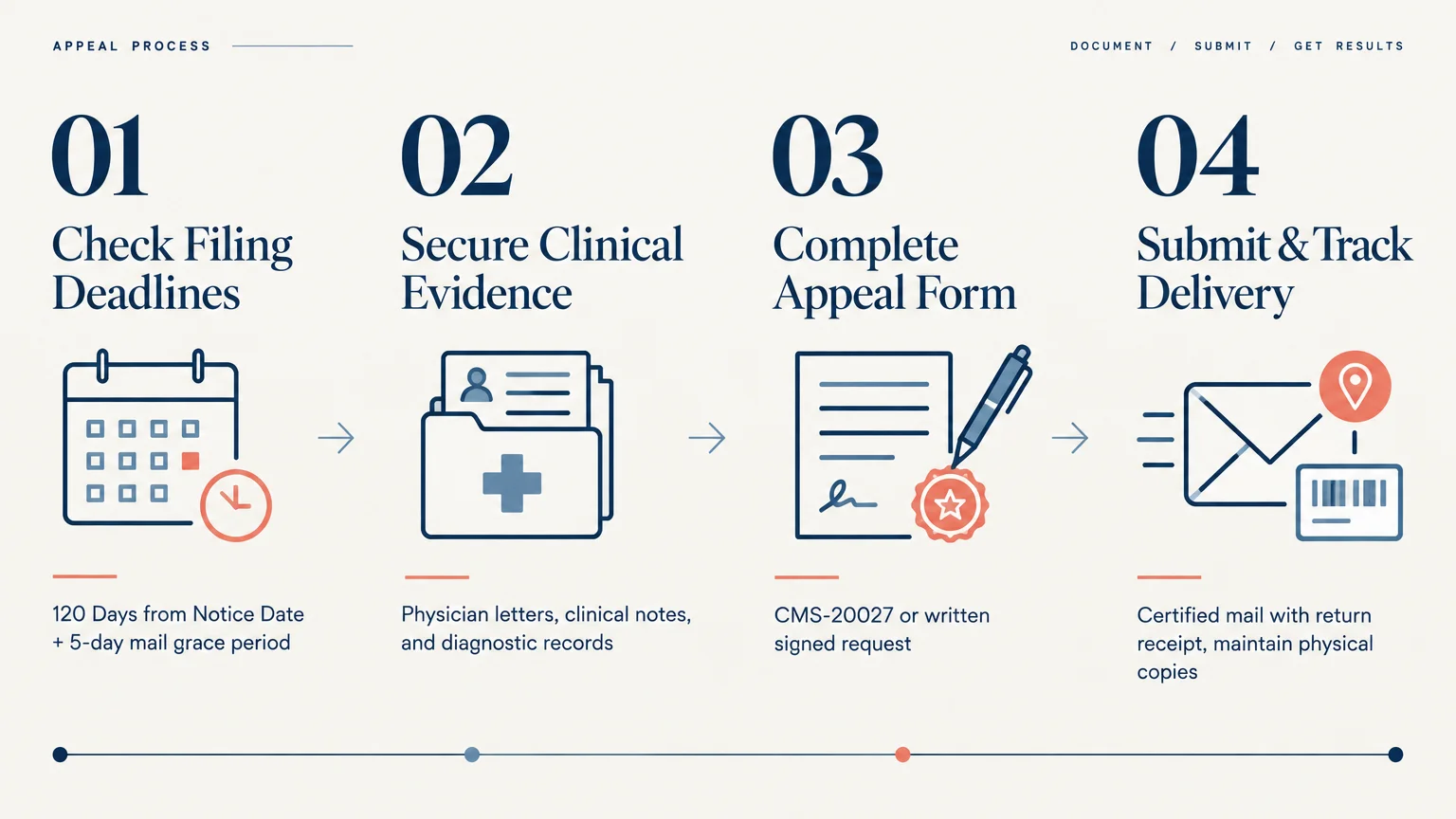
Step-by-Step Guide to Filing an Effective Appeal
A successful appeal requires attention to detail, strict adherence to deadlines, and strong clinical documentation. Following these steps ensures fair consideration.
Step 1: Review the Denial and Confirm Billing Codes
Read your denial letter to identify specific billing codes. Contact your provider’s billing office to verify that no simple coding errors occurred.
Billing staff can often resolve denials by resubmitting claims with missing modifiers or corrected diagnosis codes. If codes are accurate, proceed with your appeal.
Step 2: Enlist Your Treating Physician
Medical necessity forms the core of clinical appeals. Ask your treating physician for a detailed letter explaining your diagnosis, medical history, and prior failed treatments.
Have your doctor include peer-reviewed clinical studies or professional guidelines supporting the care. Specialist statements carry substantial weight with independent reviewers and judges.
Step 3: Complete Required Documentation
Use official Medicare forms to prevent administrative delays. For Original Medicare Part B appeals, submit Medicare Redetermination Request Form CMS-20027.
Alternatively, submit your Medicare Summary Notice with disputed items circled. Write your Medicare number, contact details, and a clear dispute explanation directly on it.
Step 4: Track Delivery and Maintain Detailed Records
Always send paper appeals by certified mail with return receipt requested. This establishes proof of timely filing if postal or processing delays occur.
Keep an organized binder of submitted letters, medical records, postal receipts, and denial notices. Log dates, representative names, and call summaries for all communications.
Worked Example: Appealing a Denied Outpatient Procedure
Consider Eleanor, a 68-year-old Original Medicare beneficiary in New Jersey, a WISeR pilot state. Her specialist scheduled a complex outpatient spinal procedure costing $1,800 for chronic severe nerve pain.
The contractor denied prior authorization under WISeR rules, citing insufficient evidence of conservative therapy. Eleanor faced paying $1,800 or canceling the procedure.
Eleanor and her specialist compiled eight months of physical therapy progress notes and medication logs, drafting a letter detailing her functional decline without intervention.
Eleanor submitted a Level 1 redetermination within her 120-day window. The contractor reversed the denial within 45 days, approving coverage and leaving Eleanor responsible only for standard coinsurance.