Faster Decisions and New Rights for Medicare Advantage Members
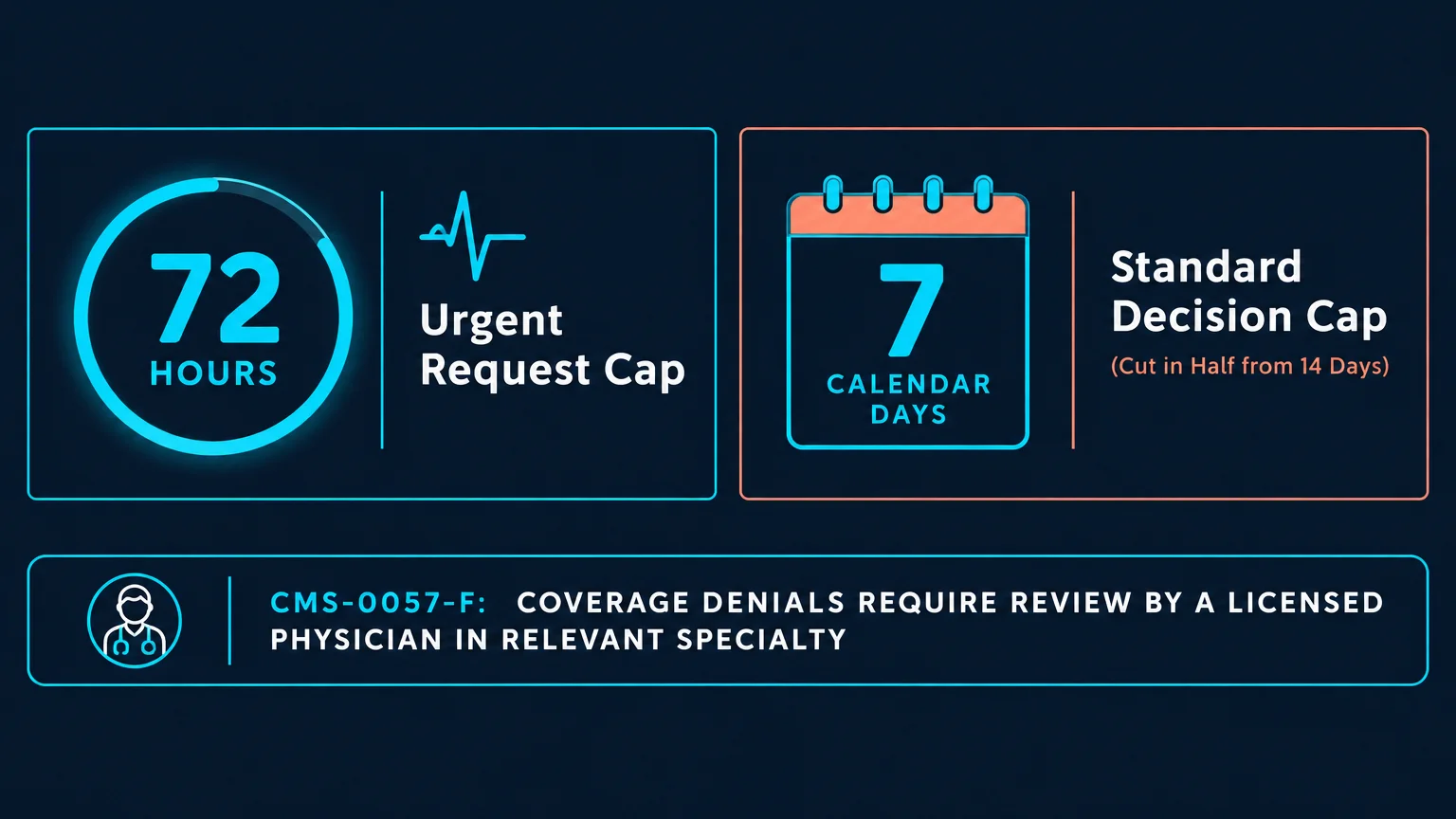
While Original Medicare tests the WISeR pilot, private Medicare Advantage plans face broad federal regulatory changes. These updates stem from the CMS Interoperability and Prior Authorization Final Rule, known formally as CMS-0057-F.
Effective January 1, 2026, this regulation mandates substantially shorter decision timelines for all non-drug medical items and services across every Medicare Advantage plan.
For standard requests, your insurer must now deliver a coverage determination within seven calendar days. This requirement cuts the previous 14-day timeline directly in half.
For urgent medical situations where waiting could seriously jeopardize your health, plans must issue an expedited decision within 72 hours.
The rule also introduces vital continuity-of-care protections for patients undergoing active treatment. Once approved, an authorization remains valid for the entire approved course of care.
If you switch Medicare Advantage plans in the middle of active care, your new plan must honor your existing approval for at least 90 days.
Denials must now include a specific clinical explanation rather than vague bureaucratic terminology. Furthermore, any denial based on medical necessity must be reviewed by a licensed medical professional with relevant expertise in your condition.
Transparency is another major component of the 2026 updates. Beginning March 31, 2026, all Medicare Advantage plans must publicly publish their prior authorization approval, denial, and appeal overturn rates online.
Independent research from organizations like KFF shows that prior authorization has historically affected millions of medical requests each year. Public metrics allow you to compare plan denial patterns before enrolling.
Additional electronic reforms will take effect in the near future. Medicare Advantage payers have until January 1, 2027, to fully implement standardized Health Level Seven Fast Healthcare Interoperability Resources (HL7 FHIR) Application Programming Interfaces (APIs).
These digital tools will allow medical practices to receive automated authorization decisions directly inside their electronic health record systems.
Looking further ahead, CMS introduced proposed rule CMS-0062-P in 2026. If finalized, this proposal will extend these electronic standards and faster turnaround times to Part D prescription drugs starting in October 2027.