
Clouded vision rarely arrives overnight; instead, early cataract signs slip into daily routines so gradually that you barely notice them. Learning to spot these subtle changes helps you protect your sight and coordinate care before vision loss disrupts your independence.
Most people expect blurry vision to be the first clue, yet cataracts often alter how you see colors, handle bright headlights, or read small print long before your world looks foggy.
Knowing which quiet shifts matter most empowers you and your family to schedule timely eye exams and stay ahead of treatable vision problems.

The 6 Subtle Signs of Cataracts You Might Miss
Cataracts develop painlessly as proteins inside your eye’s natural lens clump together and scatter incoming light. Because your brain adapts to gradual shifts, you may chalk up early cataract symptoms to tired eyes or aging rather than a medical change.
In this article6 items
Temporary Improvement in Reading Vision
Finding yourself able to read a menu or pill bottle without your reading glasses feels like a welcome surprise. Eye doctors call this temporary near-vision boost second sight, and it often signals an early nuclear cataract forming inside your lens.
As the central lens thickens, its focusing power briefly increases before clouding worsens. According to the American Academy of Ophthalmology, this deceptive phase usually fades within months to two years, giving way to noticeably dimmer, blurrier sight.
Glare Sensitivity Before Blurriness Appears
Squinting against afternoon sunlight or shielding your eyes from oncoming headlights can indicate posterior subcapsular cataracts long before you notice hazy vision. Because this type forms at the back of your lens, it scatters bright light directly across your line of sight.
You might also notice distracting halos or starbursts radiating around streetlights when driving after dark. If nighttime errands leave you anxious or squinting, a cataract—not just dusty windshields—could be responsible for the glare.
Fading Colors and Yellowed Blues
Clear lenses let true hues pass straight to your retina, while clouded lenses act like a tinted window that dulls vibrant shades. Over time, crisp whites take on a muddy cast, and distinguishing navy socks from black ones becomes surprisingly tricky.
Because this yellow-brown tint builds up across years, you rarely realize how muted your surroundings have become. Families often notice this shift only after one eye is treated, revealing how brightly colors actually look.
Frequent Eyeglass Prescription Updates
Replacing your glasses or contact lenses every few months without gaining lasting sharpness points toward an evolving lens change. When cataract signs alter how light bends inside your eye, even brand-new lenses deliver only brief relief.
Standard vision screenings only measure how well lenses correct focus; they cannot detect structural clouding inside the eye. As the Mayo Clinic’s overview of cataract symptoms notes, recurring prescription changes warrant a closer medical look.
Needing Brighter Light for Everyday Tasks
Turning on every lamp in the living room just to read the morning paper or thread a needle is a classic early warning. Clouded lenses block light from reaching your retina, forcing you to crave stronger illumination for close work.
Older adults sometimes blame dim household bulbs instead of recognizing how much harder their eyes are working. Adding task lighting helps temporarily, yet persistent dimness signals that you should schedule an evaluation.
Double Vision in a Single Eye
Seeing two overlapping images when you cover one eye—a symptom known clinically as monocular diplopia—often catches people off guard. Unlike standard double vision caused by misaligned eye muscles, single-eye doubling stems from scattered light inside an uneven lens.
Oddly enough, this ghosting effect can vanish on its own as the cataract grows larger and covers more of the lens. Even if the doubling fades, you should still report it to an eye care specialist promptly.

Why Cataracts Develop Quietly Over Time
Natural proteins inside your eye’s lens begin breaking down and clumping around age 40, though noticeable impairment usually arrives decades later. By age 80 and older, more than half of all Americans either have cataracts or have undergone surgery to remove them.
According to National Eye Institute data, U.S. cataract rates climb from 15.45% in adults ages 60 to 64 to 68.3% among those 80 and older.
As the population ages, total U.S. cases are projected to roughly double from 24.4 million in 2010 to 50 million by 2050. Recent Medicare data also shows higher prevalence among women at 37% compared with 31% in men.
Globally, cataracts remain the leading cause of unaddressed distance vision impairment and blindness, affecting 94 million people worldwide. The World Health Organization’s vision impairment report notes that nearly one in two people needing cataract surgery globally still lack access to care.
While typical blurry vision causes linked to cataracts progress slowly, sudden visual changes are never normal. Seek immediate emergency care if you experience sudden double vision, flashes of light, abrupt eye pain, or a sudden severe headache alongside vision shifts.
Practical Steps to Protect Your Vision and Plan Care
Lower Everyday Risks Through Healthy Habits
Several modifiable habits strongly influence how quickly lens clouding advances in older adults. Smoking cigarettes makes you two to three times more likely to develop cataracts, while quitting smoking meaningfully reduces your future risk.
Managing blood sugar is equally critical because diabetes raises your cataract risk two to five times and often triggers lens changes earlier in life. Heavy alcohol use, past eye injuries, and long-term steroid medications also accelerate clouding.
Outdoors, protect your eyes with wrap-around sunglasses blocking 100% of UVA and UVB rays paired with a wide-brimmed hat. Filling your plate with colorful fruits and leafy greens adds antioxidants that support long-term eye health.
Schedule the Right Type of Eye Exam
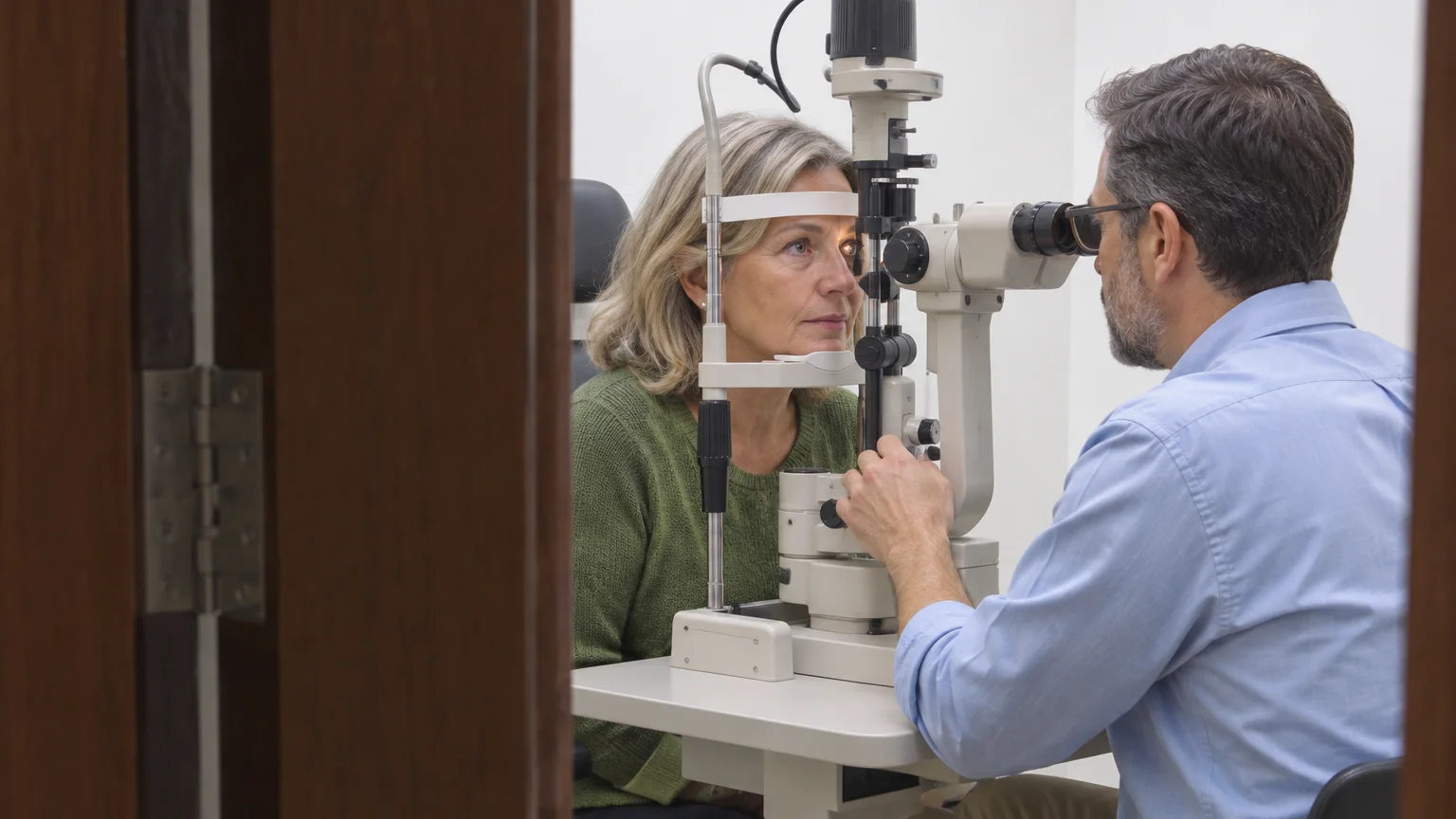
A quick vision chart reading at a retail glasses shop will not catch early cataracts. Diagnosing lens changes requires a dilated comprehensive eye exam in which a doctor examines your lens through a specialized slit-lamp microscope.
Following American Academy of Ophthalmology screening guidelines, schedule a baseline eye exam at age 40 even if your sight feels fine. Adults ages 65 and older need comprehensive exams every 1 to 2 years, or more often with diabetes.
Understand Treatment Timing and Medicare Coverage
No FDA-approved eye drops, vitamins, or medications can dissolve an existing cataract or reverse lens clouding. Early on, updated prescriptions, anti-glare lens coatings, and brighter reading lamps help you stay comfortable until surgery makes sense.
When glare or blurriness disrupts driving, reading, or safety, outpatient surgery replaces your clouded lens with a clear artificial implant. Over 3.5 million U.S. cataract procedures take place annually, with a 98% to 99% success rate.
Roughly 97% of patients reach 20/40 vision or better, and full visual stabilization typically takes four to eight weeks. If you rely on federal coverage, Medicare Part B covers medically necessary cataract surgery and a standard monofocal lens.
You can review out-of-pocket coinsurance details and optional lens upgrades through Medicare’s cataract coverage guide before booking your procedure.

Support Resources and Tools for Families
Navigating vision problems in seniors works best as a family team effort rather than a solo chore. Writing down subtle complaints—like avoiding night driving or misjudging stair steps—gives your loved one’s eye doctor clear context during appointments.
Practical home adjustments reduce fall risks while you wait for an exam or surgery date. Place high-contrast tape on step edges, install warm-white LED task lamps near reading chairs, and keep anti-glare sunglasses handy by the front door.
Caregivers can also check local senior transit programs or low-vision clinics for temporary ride assistance if night glare limits driving. Educational guides from the National Eye Institute and specialist directories help families prepare questions and find qualified care nearby.

Common Questions About Cataract Symptoms and Care
Can eye drops or dietary supplements dissolve cataracts?
No clinically proven eye drops, pills, or nutritional supplements can clear a clouded lens once cataracts form. While antioxidant-rich foods help protect healthy lenses over time, surgery remains the only definitive way to restore clarity.
How do I know if blurred vision is an emergency?
Normal cataract progression unfolds slowly over months or years without causing physical discomfort. Seek urgent medical attention if blurriness strikes suddenly, or if you notice sudden flashes of light, eye pain, sudden double vision, or a severe headache.
What is the difference between a vision screening and a dilated exam?
A routine glasses check only measures refractive sharpness at the surface of your vision. During a dilated exam, eye drops widen your pupils so the specialist can inspect your entire lens, retina, and optic nerve for disease.
Can a cataract grow back after lens replacement surgery?
Artificial lens implants cannot form cataracts, though up to 50% of patients develop clouding behind the implant within five to ten years. Doctors treat this secondary cataract easily using a brief outpatient laser procedure.
Taking Your Next Step Toward Clearer Sight
Subtle cataract signs do not have to quietly steal the activities and confidence you value most. Paying attention to glare, faded colors, and sudden reading-glass shifts puts you back in control of your eye health.
Take one concrete step this week by checking when you or your parent last completed a dilated eye exam. Booking that appointment turns quiet uncertainty into a clear, manageable plan for brighter years ahead.