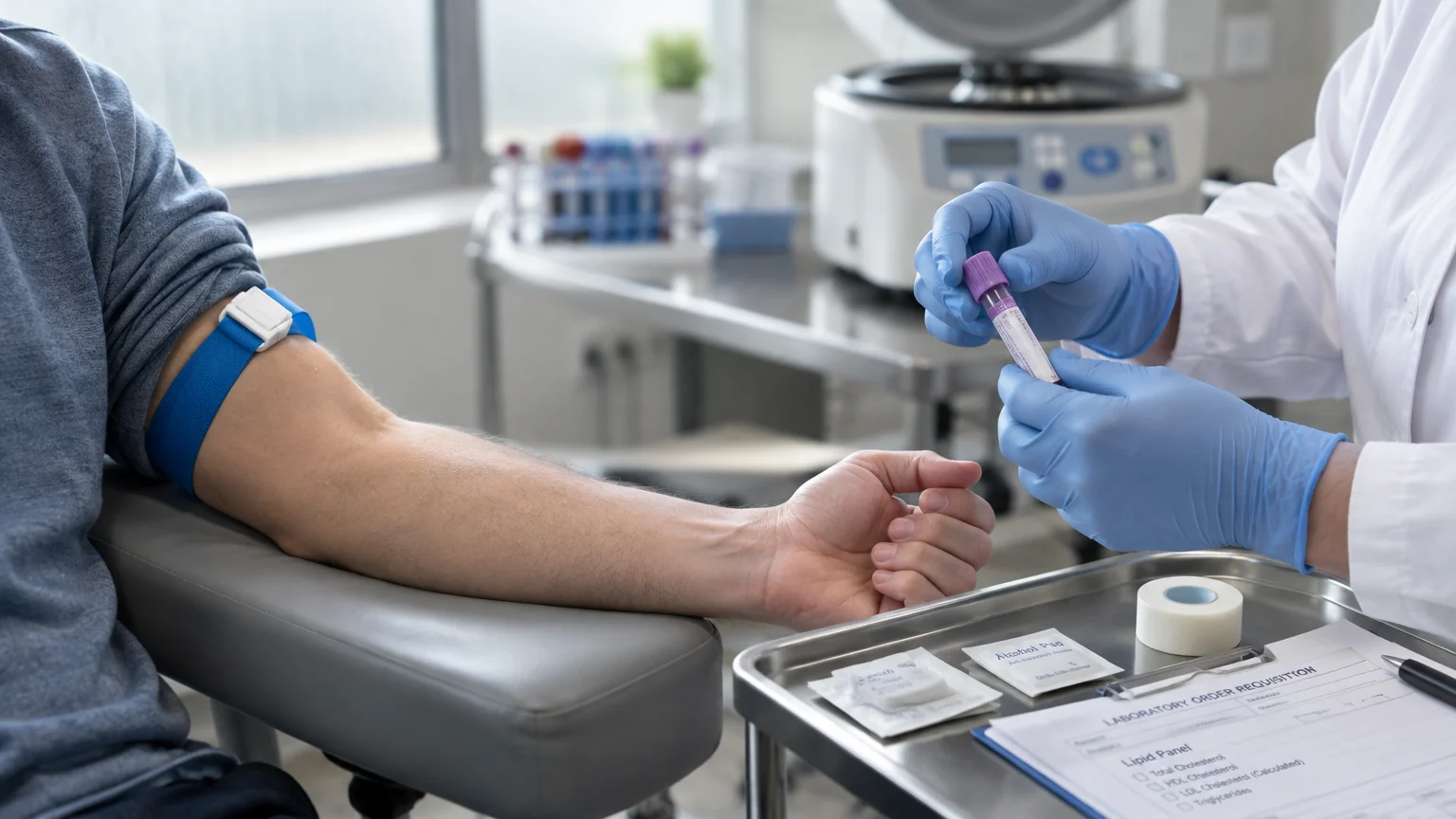
Standard cholesterol tests reassure millions of adults every year, yet they routinely miss a major inherited driver of heart attacks and strokes. Roughly one in five people carries high lipoprotein(a), a sticky genetic particle that standard lipid panels never report separately.
Because your genes set your baseline early in life, clean eating and daily exercise cannot lower this hidden threat. Knowing your number lets you and your doctor protect your arteries before plaque causes trouble.
National guidelines now urge every adult to request this simple blood test once. You can use this guide to get tested, read your results, and safeguard your family.
Why Standard Cholesterol Panels Miss Lipoprotein(a)
The Biology Behind a Dual-Threat Particle
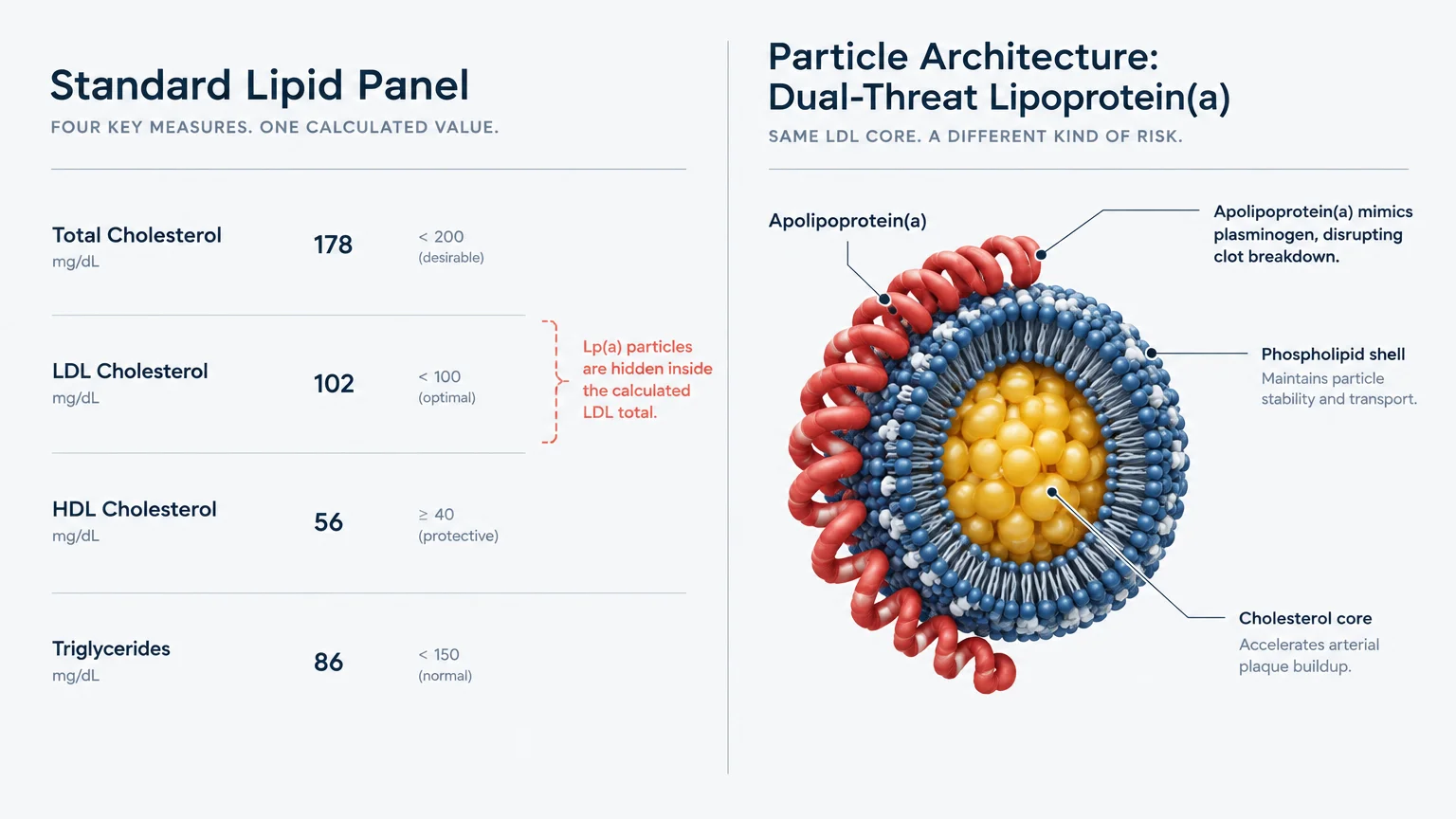
Lipoprotein(a), often shortened to Lp(a), travels through your bloodstream carrying cholesterol just like low-density lipoprotein, or LDL. What makes this particle uniquely dangerous is an extra attached protein called apolipoprotein(a) that wraps around its surface.
That extra protein closely resembles plasminogen, a natural substance your body uses to dissolve blood clots. Because of this structural disguise, Lp(a) disrupts normal clot breakdown while simultaneously depositing cholesterol inside your artery walls.
Doctors view Lp(a) as a dual-threat particle because it accelerates both arterial plaque buildup and dangerous clot formation. Beyond coronary arteries, the LPA gene stands out as the single gene significantly linked to calcific aortic valve disease.
Over decades, those sticky particles can stiffen your aortic heart valve and narrow the opening that feeds oxygen-rich blood to your body. Catching elevated levels early gives your care team time to monitor both your blood vessels and your heart valves.
A Blind Spot in Routine Blood Work
When you visit a clinic for an annual physical, your clinician usually orders a standard lipid panel. That familiar test reports four main figures: total cholesterol, LDL cholesterol, HDL cholesterol, and triglycerides.
Standard panels do not isolate or report Lp(a) on your lab printout. Instead, the cholesterol packed inside Lp(a) particles gets folded quietly into your overall LDL cholesterol calculation.
This accounting quirk creates a false sense of security for millions of families. You can receive reassuring LDL numbers at your checkup while still carrying substantial inherited cardiovascular risk from elevated Lp(a).
Without a dedicated blood draw, neither you nor your physician can tell how much of your calculated LDL actually consists of this stickier particle. Ordering a separate test is the only reliable way to reveal what standard panels conceal.
Why Real-World Testing Still Lags Behind
Although roughly 20 percent of people globally—an estimated 1.4 to 1.6 billion individuals—live with elevated Lp(a), routine screening remains remarkably rare. Most adults have never heard of this particle, let alone seen their measurement.
A 2025 analysis of 5.55 million adults across the University of California health system found that just 0.3 percent had ever been tested for Lp(a). Even among patients already diagnosed with ischemic heart disease, only 2.9 percent had received the test.
Similarly, a 2024 Northern California cohort tracking 1.48 million adults documented a testing rate of only 1.0 percent. Across 48 countries, a study of 48,135 patients with established cardiovascular disease showed that merely 13.9 percent had ever been screened.
These wide gaps mean millions of families navigate heart health without a crucial piece of their genetic puzzle. Bringing up Lp(a) at your next appointment helps close that gap for yourself and your loved ones.
Genetics, Family History, and Unequal Risk
Why Lifestyle Alone Cannot Reset Your Baseline
Unlike triglycerides or standard LDL cholesterol, Lp(a) barely budges when you overhaul your groceries or lace up your running shoes. About 80 percent to more than 90 percent of your concentration comes directly from variations at your LPA gene locus.
Your level locks in during early childhood and remains remarkably steady across adulthood. According to the Cleveland Clinic, more than 30 percent of people with familial hypercholesterolemia also carry elevated Lp(a).
Because two inherited lipid conditions can stack together, people with very high LDL cholesterol face an even steeper climb if Lp(a) goes unchecked. Learning that your number stays fixed by DNA can feel frustrating at first, yet it removes unfair self-blame.
You did not cause high Lp(a) through past meals or skipped workouts. Understanding your genetic starting line allows you to focus your energy on protective steps that genuinely work.
How Ancestry and Sex Shape Your Risk Profile
Inherited Lp(a) risk does not affect every community equally, making equitable screening essential for every family. Global data show clear differences across racial, ethnic, and biological sex groups that shape how doctors evaluate overall heart risk.
In the 48-country cardiovascular disease study, Black individuals had the highest median Lp(a) concentrations of any studied group—roughly threefold higher than White, Hispanic, or Asian patients. Yet access to testing frequently moves in the opposite direction.
In a California health cohort, non-Hispanic Black patients had more than double the odds of elevated Lp(a) compared with White patients, yet they were 30 percent less likely to receive testing. Advocating directly for this lab order helps overcome longstanding screening disparities.
People of South Asian ancestry also experience high rates of elevated Lp(a) alongside premature heart disease. Major U.S. medical guidelines classify South Asian ancestry itself as a cardiovascular risk-enhancing factor when weighing prevention choices.
Biological sex adds another vital layer to how this risk unfolds over time. In the global cardiovascular disease study, women had higher median Lp(a) levels than men, measuring 22.8 mg/dL compared with 17.0 mg/dL.
The American Heart Association notes that elevated Lp(a) compounds women’s cardiovascular risk across key life stages, including pregnancy and menopause. Sharing this information during obstetric or midlife checkups gives women stronger protection across every decade.
Landmark 2026 Screening Guidelines and Cascade Testing
One Test for Every Adult
For years, U.S. testing guidance focused mainly on people with personal heart disease or striking family histories. On March 13, 2026, national policy shifted decisively toward universal awareness.
The 2026 dyslipidemia guideline issued jointly by the American College of Cardiology, the American Heart Association, and partner medical societies recommended for the first time that every adult measure Lp(a) at least once in their lifetime.
That Class 1 recommendation appears in the guideline that retired the 2018 cholesterol guideline.
This U.S. update aligns closely with the 2024 focused update from the National Lipid Association and the 2022 consensus statement from the European Atherosclerosis Society. Together, these authorities agree that one baseline check belongs in routine adult preventive care.
Because your genetic concentration stays stable over time, most adults do not need repeated serial Lp(a) tests once they know their baseline. Doctors occasionally consider a repeat check only if an initial reading lands in a borderline zone or specific medical conditions arise.
Protecting Your First-Degree Relatives
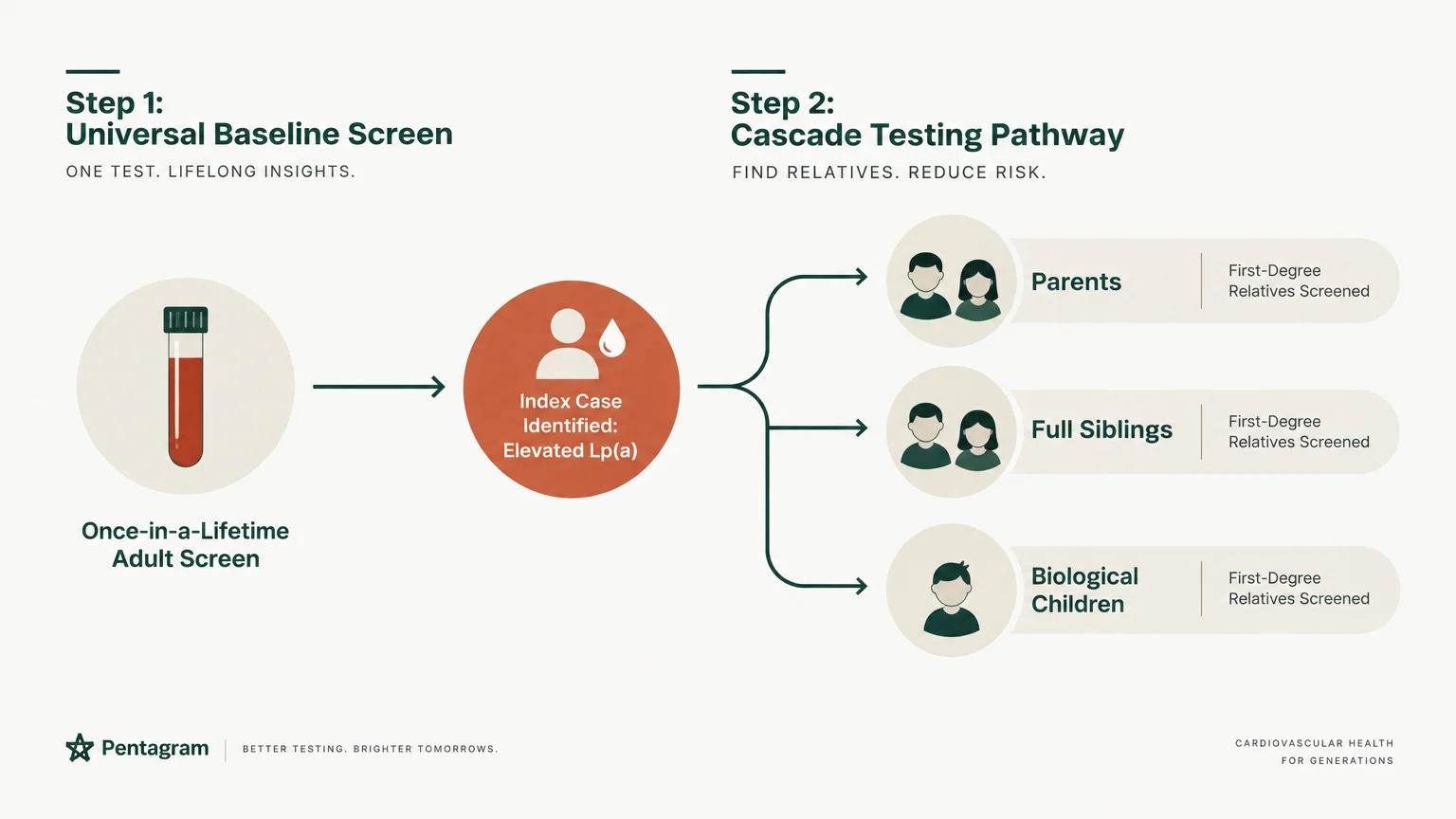
Discovering an elevated result in your own blood work immediately creates an opportunity to protect the people closest to you. Because the trait passes from parents to children, one positive test acts as an early warning beacon for an entire household.
The 2026 multisociety guideline, the 2024 National Lipid Association update, and the 2022 European consensus all strongly endorse cascade testing for first-degree relatives. First-degree relatives include your parents, full siblings, and biological children.
Cascade screening is equally urgent if anyone in your immediate family has familial hypercholesterolemia or premature atherosclerotic cardiovascular disease. Guidance from the American Heart Association defines premature disease as events occurring before age 55 in men or before age 65 in women.
When one adult takes the step to get screened, brothers, sisters, and grown children gain decades of lead time to manage their controllable risks. Starting that conversation around the dinner table turns one lab result into a lasting family shield.
Decoding Your Lab Report and Risk Thresholds
What the Cutoffs Mean for Your Heart
Once your results arrive in your patient portal, knowing the clinical thresholds helps you hold a productive conversation with your physician. Across the 2026 multisociety guideline, the 2024 National Lipid Association update, and the 2022 European consensus, four clear zones guide risk assessment.
Readings below 30 mg/dL, or below 75 nmol/L, fall into the low-risk range and generally rule out excess Lp(a)-driven danger. Values between 30 and 50 mg/dL, or 75 to 125 nmol/L, sit in an intermediate gray zone that warrants closer context.
Measurements of 50 mg/dL or higher, or 125 nmol/L or higher, cross the threshold that doctors treat as clearly risk-enhancing. Levels in this range correspond to roughly a 1.4-fold, or 40 percent, increase in long-term heart attack and stroke risk.
Results reaching 100 mg/dL or higher, or 250 nmol/L or higher, signal substantially elevated risk that at least doubles the likelihood of heart attack or stroke. Consensus guidance further notes that extreme readings around 180 mg/dL carry risk comparable to untreated heterozygous familial hypercholesterolemia.
Seeing a high number can feel alarming, yet remember that Lp(a) is only one piece of your overall cardiovascular picture. Your clinician interprets this figure alongside your blood pressure, blood sugar, standard cholesterol, age, and family history.
Why Lab Units Matter More Than You Think
Reading an Lp(a) lab report requires paying close attention to the units printed next to your number. Laboratories report this measurement in one of two ways: particle mass in milligrams per deciliter (mg/dL) or particle concentration in nanomoles per liter (nmol/L).
Because the inherited apolipoprotein(a) tail varies dramatically in length from person to person, two individuals with the same particle count can show very different total mass numbers. Measuring mass alone can therefore underestimate or overestimate how many risky particles circulate in your blood.
For this reason, major U.S. and European guidelines recommend isoform-insensitive assays calibrated to official reference standards and reported in nmol/L. When you ask your doctor to place the order, check whether your lab reports directly in nmol/L.
Avoid plugging your mg/dL result into an online calculator to convert it into nmol/L.
Although people sometimes cite roughly 2.5 nmol/L per 1 mg/dL as a rough estimate, leading cardiology societies advise against using conversion formulas because particle size differences make math shortcuts inaccurate.
How to Get Tested Without Breaking the Bank
Preparing for Your Blood Draw
Getting checked for Lp(a) takes only a few minutes at a standard lab draw station. Unlike a traditional lipid panel that sometimes requires an overnight fast, an Lp(a) blood draw does not require fasting.
You can drink water, eat breakfast, and take your regular morning medications unless your doctor bundles the draw with fasting glucose or triglyceride checks.
If you already have an upcoming blood draw scheduled, simply ask your clinician to add the Lp(a) code to that same order.
Combining orders saves you an extra needle stick and an extra trip to the clinic. Before you leave the exam room, confirm that your electronic chart specifies the dedicated Lp(a) assay rather than a routine cholesterol panel.
Navigating Insurance and Self-Pay Pricing
Insurance coverage for Lp(a) testing has begun catching up with the March 2026 national guideline update. Following that policy change, major insurers such as Aetna updated coverage rules to pay for a one-time screening test for adults aged 19 and older.
Before visiting a lab, call the member number on your insurance card to verify how your plan handles CPT code 83695, the standard billing code for Lp(a). Checking coverage in advance prevents surprise facility bills weeks later.
If your insurance denies coverage, carries a high deductible, or you prefer to order your own screening, direct-to-consumer lab platforms offer transparent cash pricing. Across major U.S. testing services in late 2026, standalone cash prices typically range from 24 dollars to 55 dollars.
For example, Precision Health Reports lists the test at 24 dollars, TestWell prices it around 38.99 to 40.99 dollars all-in, Quest Health charges 45 dollars plus a 6-dollar physician fee, and both Labcorp OnDemand and Empirical Health offer it for 49 dollars.
By contrast, hospital outpatient labs frequently bill around 150 dollars for self-pay patients.
Comparing outpatient cash options ahead of time can save your household more than 100 dollars for the exact same blood analysis. Always bring a printout or digital copy of any self-ordered test back to your primary care doctor for medical interpretation.

Actionable Ways to Lower Your Overall Heart Risk Today
Doubling Down on Modifiable Risk Factors
While you cannot rewrite your LPA gene, you hold tremendous power over the rest of your cardiovascular risk profile.
Both the 2026 multisociety guideline and the 2024 National Lipid Association update treat elevated Lp(a) as a signal to manage every modifiable risk factor earlier and more intensively.
Think of your heart risk like a busy highway where multiple lanes contribute to traffic congestion. If your genetic Lp(a) lane stays permanently crowded, clearing out standard LDL cholesterol, high blood pressure, and elevated blood sugar dramatically reduces the chance of a pileup.
Clinicians frequently reference the American Heart Association framework known as Life’s Essential 8 as a daily blueprint for protection.
That practical checklist centers on eating balanced meals, staying physically active, avoiding tobacco, getting restorative sleep, and maintaining a healthy weight alongside healthy cholesterol, blood sugar, and blood pressure.
Working systematically through these habits slashes your overall risk of heart attack and stroke even when your Lp(a) number stays unchanged. Every positive shift in blood pressure or daily movement eases strain on arterial walls exposed to sticky particles.
Medications That Help—and Ones That Fall Short
When lifestyle upgrades alone cannot bring controllable lipids low enough, targeted cholesterol medications provide powerful protection. Aggressive lowering of standard LDL cholesterol and apolipoprotein B (ApoB) forms the cornerstone of medical care for people with elevated Lp(a).
Doctors commonly prescribe statins, often paired with ezetimibe, to drive down circulating LDL particles. Statins do not lower Lp(a) directly—and can occasionally nudge measured levels slightly higher—yet they remain essential because lowering overall LDL cholesterol sharply cuts heart attack and stroke risk.
For patients needing deeper lipid reductions, injectable PCSK9 inhibitors such as evolocumab and alirocumab deliver steep drops in LDL cholesterol while modestly lowering Lp(a) by roughly 19 percent to 30 percent.
Your cardiologist can help decide whether your overall risk score justifies adding one of these therapies.
At the same time, knowing what to skip protects you from wasted money and unnecessary side effects.
Although niacin lowers Lp(a) by roughly 20 percent to 30 percent, large clinical trials proved it offers no cardiovascular protection and carries serious adverse effects, so doctors no longer recommend it.
For a small group of high-risk patients, a specialized blood-filtering procedure called lipoprotein apheresis provides another option.
Under 2024 National Lipid Association criteria, apheresis is FDA-approved only for select individuals with familial hypercholesterolemia and documented coronary or peripheral artery disease whose Lp(a) stays at or above 60 mg/dL and LDL remains at or above 100 mg/dL despite maximal medication.
Recognizing Warning Signs and Seeking Medical Care
Managing an inherited lipid trait also means knowing when routine prevention turns into an urgent medical need. Because elevated Lp(a) contributes to plaque rupture, blood clots, and aortic valve narrowing, never ignore new or unexplained symptoms.
Seek emergency medical care immediately if you or a family member experiences chest pressure, squeezing pain, shortness of breath, cold sweats, or discomfort spreading to your jaw, neck, back, or arms.
Call emergency services right away rather than driving yourself to the hospital if stroke signs appear, such as sudden facial drooping, arm weakness, confusion, or slurred speech.
Schedule a prompt appointment with your physician or cardiologist if you notice new fatigue, dizziness, lightheadedness, or chest tightness while climbing stairs or walking briskly.
Those subtler cues can signal progressive aortic valve narrowing or reduced coronary blood flow that warrants an echocardiogram or stress evaluation.
What the Latest 2026 Clinical Trials Mean for Your Future
Lessons From the Pelacarsen Outcome Trial
As of November 2026, no FDA-approved medication exists specifically to lower Lp(a) and prevent heart events. However, intensive clinical research is actively testing whether silencing the gene behind apo(a) production saves lives.
On November 7, 2026, full findings from the landmark Phase 3 Lp(a)HORIZON trial were presented at the American Heart Association Scientific Sessions and published in the New England Journal of Medicine.
The trial tested an injectable antisense medication called pelacarsen across more than 8,300 patients with existing cardiovascular disease over 4.7 years.
Pelacarsen successfully slashed Lp(a) concentrations by nearly 78 percent compared with placebo. Surprisingly, however, that steep reduction failed to lower major adverse cardiovascular events, occurring in 12.3 percent of treated patients versus 12.1 percent on placebo.
While those results disappointed many patients hoping for an immediate breakthrough, researchers point out that clinical setbacks often sharpen future science. The trial underscored the critical need to test whether deeper reductions or earlier treatment windows yield clearer clinical benefits.
Promising Therapies Still in the Pipeline
Three major Phase 3 clinical trials remain actively underway, testing newer therapies that suppress Lp(a) even more profoundly or offer convenient oral dosing. Each trial tracks thousands of patients over several years to measure real-world reductions in heart attacks and strokes.
Amgen’s OCEAN(a)-Outcomes trial is evaluating an injectable small interfering RNA (siRNA) therapy called olpasiran in 7,297 patients, with an estimated completion date of March 2028.
Eli Lilly is simultaneously conducting the massive 17,300-patient ACCLAIM-Lp(a) study for another siRNA candidate, lepodisiran, with initial readouts expected in March 2029.
Earlier studies indicate these siRNA medications can reduce Lp(a) by roughly 94 percent to 97 percent.
Eli Lilly is also advancing an oral pill called muvalaplin in the MOVE-Lp(a) trial, carrying a registered completion target in 2031, while another siRNA candidate, zerlasiran, awaits a development partner before entering Phase 3.
If any of these ongoing studies prove that targeted Lp(a) suppression prevents heart attacks and strokes, patients may gain dedicated therapies within the next several years.
Until those outcomes arrive, aggressive control of blood pressure, blood sugar, and LDL cholesterol remains your strongest proven defense.

Building Family Support and Care Coordination
Learning you carry an inherited cardiovascular risk works best when you treat care coordination as a team effort across generations.
Start by asking your primary care clinician for a clear written summary of your Lp(a) result, your target LDL cholesterol goal, and whether a referral to a preventive cardiologist or lipid specialist makes sense.
When sharing your result with parents, siblings, or adult children, keep your explanation calm and practical.
Let them know that a single non-fasting blood draw ordered under CPT code 83695—often costing under 50 dollars out of pocket if insurance declines—can clarify whether they share the same genetic trait.
Keep a shared family health folder noting each relative’s baseline test date, unit of measurement, and any history of premature heart disease or valve replacement.
Trusted educational libraries from the American Heart Association, National Lipid Association, and Cleveland Clinic offer reliable guides your relatives can print and carry straight into their own checkups.
If anyone in your family struggles with anxiety after seeing an elevated lab number, remind them that knowledge shifts the odds in their favor. Uncovering a hidden genetic factor gives every relative the chance to act years or decades before symptoms ever start.
Frequently Asked Questions About Lipoprotein(a)
If my standard LDL cholesterol is normal, why should I care about Lp(a)?
A normal LDL cholesterol reading only tells part of your arterial story because standard lipid panels blend Lp(a) cholesterol into your overall LDL estimate without flagging it.
Roughly one in five people carries high Lp(a), which promotes plaque buildup and blood clots even when routine cholesterol looks fine.
Checking Lp(a) once in adulthood reveals whether you need tighter LDL targets or closer heart monitoring than a standard risk score would suggest. Knowing your true baseline prevents silent inherited risk from going untreated.
Can I lower my Lp(a) naturally with diet, supplements, or exercise?
Diet changes, weight loss, supplements, and aerobic exercise cannot meaningfully lower your Lp(a) concentration because your DNA determines 80 percent to over 90 percent of your level.
Even niacin, which lowers Lp(a) slightly, failed to prevent heart events in clinical trials and is no longer recommended.
Still, healthy habits remain essential because they dramatically lower your total risk of heart attack and stroke. Regular movement, nutritious meals, and smoke-free living protect your arteries by improving blood pressure, blood sugar, and standard LDL cholesterol.
How often do I need to repeat the Lp(a) blood test?
Most adults only need to measure Lp(a) once in a lifetime because genetic levels stabilize in childhood and barely fluctuate over the years. Major 2026 U.S. guidelines advise against routine repeat testing once a clear baseline is established.
Your doctor might consider a second measurement only if your initial reading fell in the borderline gray zone between 30 and 50 mg/dL or if specific medical conditions shift your health status.
Otherwise, put your follow-up energy into tracking your standard lipid panel, ApoB, and blood pressure.
At what age should my children or younger relatives get tested?
Current 2026 U.S. multisociety guidelines advise every adult to complete one baseline Lp(a) check and call for cascade screening among first-degree relatives of anyone with elevated Lp(a), familial hypercholesterolemia, or premature heart disease.
Knowing your adult children’s or siblings’ status helps them build heart-healthy routines early.
If you have younger children and an elevated personal level or strong family history of early heart events, consult your pediatrician or a pediatric lipid specialist about the right timing.
Together, you can decide when a simple blood draw makes the most sense for your family.
Taking Your Next Step With Confidence
Hidden inherited heart risks lose much of their power the moment you bring them into the light. By asking for a one-time Lp(a) blood test, you replace guesswork with clear genetic insight that standard cholesterol panels simply cannot deliver.
Write down CPT code 83695, verify whether your lab reports in nmol/L, and place this test on the agenda for your very next medical visit.
Once you have your number in hand, partner with your doctor to tighten modifiable risks and invite your immediate family to get checked too.