
Poaching or boiling an egg in plain water is the healthiest way to prepare it. These gentle, fat-free methods preserve delicate vitamins and protein digestibility without adding unnecessary calories or saturated fat.
Still, conflicting headlines about dietary cholesterol and indulgent brunch recipes often leave families unsure about how eggs fit into a healthy breakfast. Your cooking fat, temperature, and plate pairings matter just as much as the egg itself.
Here is how popular egg cooking methods compare nutritionally, what current clinical guidance says about cholesterol, and which food safety rules protect your household every morning.
Inside Egg Nutrition: Whites, Yolks, and Key Micronutrients
Eggs earn their reputation as an affordable kitchen staple because a single serving packs dense nutrition into a modest calorie budget. Understanding what sits inside the shell helps you decide how to build balanced meals for every age.
Breaking Down One Large Egg
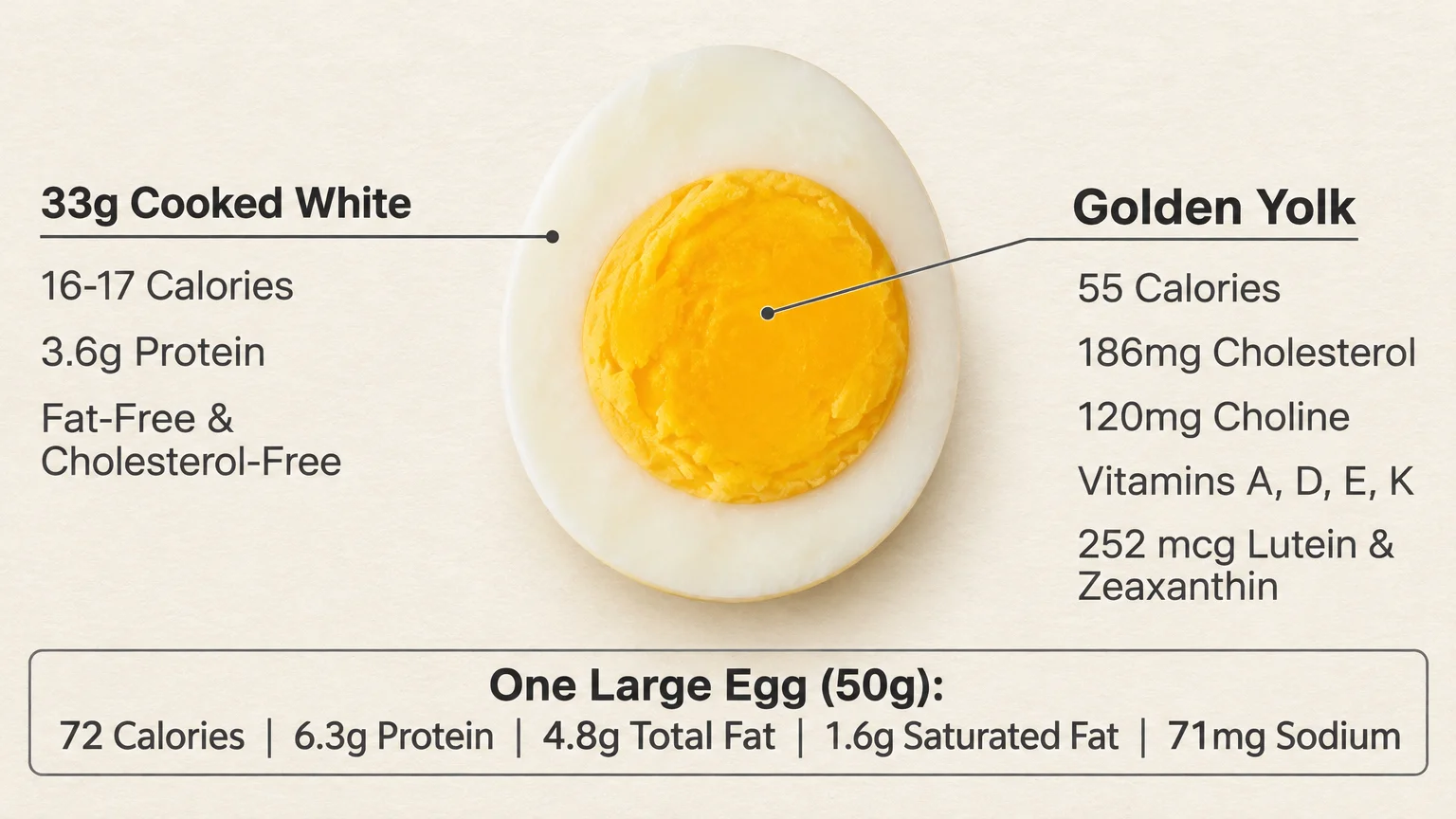
According to data from the USDA FoodData Central database and the USDA Agricultural Research Service, one large raw egg weighing 50 grams supplies 72 calories. That compact package delivers 6.3 grams of complete protein alongside 4.8 grams of total fat.
Out of that total fat, 1.6 grams come from saturated fat, representing 8 percent of your daily value. One large egg also contains 186 milligrams of dietary cholesterol, which accounts for 62 percent of the traditional daily value benchmark.
You get only 71 milligrams of sodium, 0.36 grams of carbohydrates, and zero grams of dietary fiber per egg. Because eggs contain no fiber or complex carbohydrates, pairing them with whole plants completes the nutritional picture.
Beyond macronutrients, one large egg supplies 1 microgram of vitamin D, covering 5 percent of your daily value. It also provides roughly 28 percent of your daily selenium at 15 to 15.4 micrograms and 15 to 19 percent of your daily vitamin B12.
That protein is especially valuable for growing children and older adults preserving muscle mass. Eggs contain all nine essential amino acids your body cannot make on its own, including generous amounts of leucine.
Why the Yolk Matters Just as Much as the White
Many people separate eggs out of habit, yet tossing the yolk removes most of the micronutrients. Comparing the two halves shows why whole eggs offer far broader egg nutrition than whites alone.
A 33-gram cooked egg white is completely fat-free and cholesterol-free while delivering just 16 to 17 calories. It provides 3.6 grams of protein, which represents more than half of the entire egg’s protein content.
Egg whites work well when you need extra protein without added fat or cholesterol. However, relying exclusively on whites leaves vital vitamins and brain-supporting compounds behind.
USDA figures and the American Egg Board confirm that the yolk holds all 186 milligrams of cholesterol and roughly 55 calories, or about three-fourths of total energy. That golden center also stores every fat-soluble vitamin in the egg, including vitamins A, D, E, and K.
Your brain and nervous system also rely on choline found exclusively in the yolk, which supplies about 120 milligrams, or 21 to 27 percent of your daily value. Eye-protective antioxidants lutein and zeaxanthin live there too, totaling roughly 252 micrograms combined.
Dietary fat inside the yolk actually helps your digestive tract absorb those fat-soluble vitamins and carotenoids efficiently. Eating the whole egg therefore gives you better micronutrient return per bite than a white-only scramble.
What the Science Says About Eggs, Cholesterol, and Heart Health
For decades, families heard warnings to limit eggs strictly because of cholesterol numbers on nutrition labels. Newer nutrition science separates dietary cholesterol in whole foods from the saturated fats that drive blood cholesterol upward.
Shifting Dietary Guidelines and Saturated Fat Research
Released on January 7, 2026, by the USDA and the Department of Health and Human Services, the 2025–2030 Dietary Guidelines for Americans recommends eggs as part of whole, nutrient-dense protein foods. The policy includes no numerical limit or mention of dietary cholesterol.
Federal nutrition experts originally dropped the 300-milligram daily dietary cholesterol cap back in 2015. Instead, the current guidelines keep the focus on limiting saturated fat to less than 10 percent of your daily calories.
Clinical trial data published in July 2025 in The American Journal of Clinical Nutrition reinforces this shift. In that University of South Australia study of 61 adults, funded by the Egg Nutrition Center, participants followed three five-week diets.
Eating two eggs daily inside a low-saturated-fat eating pattern actually lowered low-density lipoprotein cholesterol rather than raising it. The researchers concluded that saturated fat from side dishes like bacon and sausage drives elevated LDL cholesterol, not cholesterol naturally present in eggs.
That distinction changes how you plan morning meals for your household. An egg cooked carefully rarely harms healthy arteries on its own, whereas greasy breakfast meats and heavy butter change your lipid profile.
Balancing Long-Term Cohorts and Healthy Aging Data
Large population studies offer reassuring context while reminding clinicians to personalize advice for higher-risk patients.
Research from the Harvard T.H. Chan School of Public Health Nutrition Source, spanning cohorts of over 120,000 men and women, found that up to one egg daily does not raise heart disease risk in healthy adults.
That same analysis emphasizes the surrounding meal pattern above isolated ingredients. Pairing eggs with whole grains and unsaturated fats supports cardiovascular wellness, whereas eating eggs alongside processed meats or butter undermines it.
Older adults may see meaningful longevity benefits from regular, moderate egg intake as well. In February 2025, a Monash University sub-study of the ASPREE-ALSOP cohort published in Nutrients tracked 8,756 adults aged 70 and older.
Participants eating eggs one to six times weekly showed a 15 percent lower risk of all-cause death compared with peers eating eggs up to twice a month. They also experienced a 29 percent lower risk of cardiovascular-related mortality.
Still, nutrition research does not point in one direction for everyone.
A pooled U.S. cohort analysis spanning more than 30 years from Northwestern Medicine, published in JAMA by Allen and colleagues, linked three to four whole eggs weekly with a 6 percent higher cardiovascular disease risk and an 8 percent higher all-cause mortality risk.
Those contrasting findings explain why dietitians evaluate your whole medical picture rather than offering blanket rules. Your baseline blood lipids, blood sugar control, and daily saturated fat intake shape how eggs affect your long-term risk.
Comparing Egg Cooking Methods: From Poached to Fried
Once you understand what is inside the shell, the pan you choose becomes the deciding factor. Different egg cooking methods alter calorie counts, protein absorption, antioxidant stability, and oxidized fat exposure.
Water-Based Cooking: Poached and Hard-Boiled Eggs
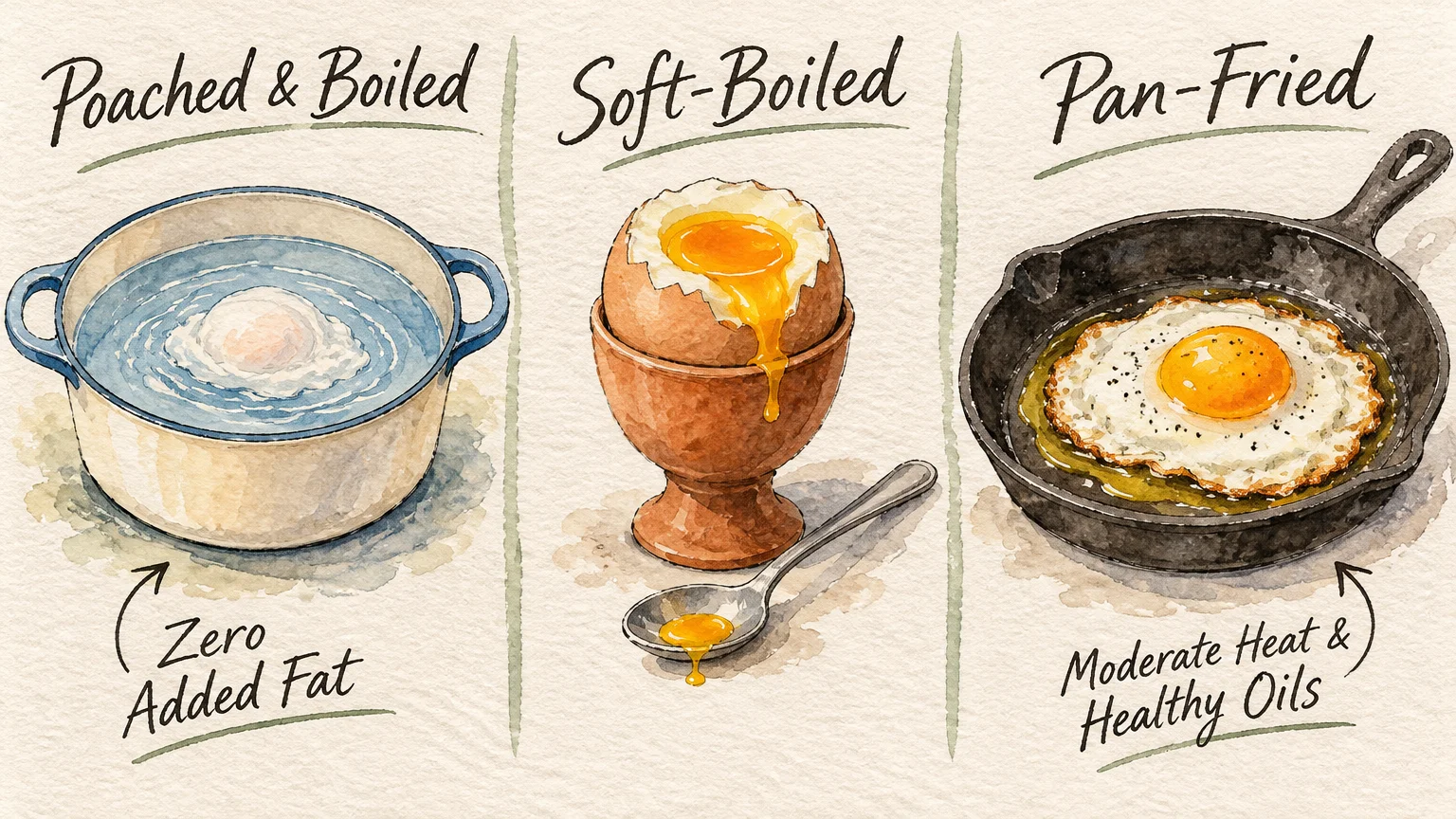
When dietitians rank preparation styles, poached and boiled eggs consistently take the top spots. Both rely on water rather than oil or butter, keeping temperatures controlled and extra calories out of your bowl.
USDA FoodData Central figures show that one 50-gram poached egg contains 72 calories, 6.3 grams of protein, and 4.7 grams of total fat. Because poaching uses simmering water alone, it adds zero cooking fat.
One 50-gram hard-boiled egg carries 78 calories, 6.3 grams of protein, and 5.3 grams of fat, with 1.64 grams coming from saturated fat. Both options keep portion sizes predictable for busy weekday mornings.
Water also puts a natural ceiling on cooking heat, capping temperatures at 100 degrees Celsius, or 212 degrees Fahrenheit. That moderate thermal ceiling largely preserves heat-sensitive vitamin A and B vitamins inside the yolk.
Gentle boiling and poaching may also make protein easier for aging digestive tracts to break down. An in vitro study modeling older-adult gastrointestinal digestion, archived on PMC, found that hard-boiled and poached eggs delivered superior protein digestibility compared with omelets.
In that elderly digestion model, omelet preparation showed up to a 37 percent reduction in proteolysis, meaning digestive enzymes broke down fewer protein chains. If older relatives struggle with heavy meals or chew less thoroughly, soft-cooked poached or boiled eggs offer a gentler alternative.
Dry-Heat Methods: Boiled vs. Scrambled Eggs, Fried Eggs, and Omelets
Comparing boiled vs scrambled eggs reveals how quickly dairy additions and skillet fats change your breakfast macros. While eggs stay nutritious in a skillet, extra ingredients quietly stack up.
According to USDA FoodData Central data per large egg, a 46-gram fried egg provides 90 calories, 6.3 grams of protein, and 6.8 grams of fat. Frying that egg in just one teaspoon of butter adds roughly 34 calories and 3.8 grams of fat.
A 61-gram scrambled egg starts at 91 calories, 6.1 grams of protein, and 6.7 grams of fat. Once home cooks stir in butter, whole milk, heavy cream, or shredded cheese, energy climbs to 90 to 130 calories per egg.
Omelets clock in slightly higher at 94 calories, 6.5 grams of protein, and 7.1 grams of fat for a 61-gram portion before you fold in fillings. Loaded diner omelets add considerably more saturated fat and sodium once cheese and cured meats enter the pan.
Heat intensity affects chemical compounds inside the yolk too. Lipid oxidation begins around 66 degrees Celsius, and high-temperature dry cooking like hard-frying over sizzling fat can oxidize cholesterol into compounds called oxysterols.
Cooking can also reduce carotenoid activity from lutein and zeaxanthin by up to 18 to 20 percent. Keeping your skillet on medium-low heat and removing scrambled eggs while still moist helps minimize unnecessary oxidation.
Not every nutrient drops under dry heat, however. A 2023 study indexed on PMC examined eggs enriched with 25-hydroxyvitamin D3 and reported 72 to 111 percent retention across boiling, frying, scrambling, poaching, and microwaving.
If you love scrambled eggs or omelets, you do not need to give them up entirely. Cooking over moderate heat with a measured splash of plant oil and plenty of chopped vegetables keeps dry-heat meals balanced.
Why You Should Always Cook Your Eggs
Fitness trends occasionally promote raw egg shakes as a quick protein shortcut, yet science shows raw eggs cheat your muscles. Cooking transforms egg proteins structurally so your gut can actually use them.
A classic human stable-isotope digestion study published in 1998 in The Journal of Nutrition by Evenepoel and colleagues measured protein absorption directly in five participants.
Researchers found that 91 percent of protein in cooked eggs was absorbed in the small intestine, compared with just 51 percent in raw eggs.
Heat unfolds tightly coiled protein strands so digestive enzymes can reach and cleave amino acid bonds easily. Cooking also deactivates raw egg-white anti-nutrients, including avidin, which binds biotin, and ovomucoid, which inhibits the digestive enzyme trypsin.
Beyond improving protein availability, thorough heat protects your family from foodborne bacteria. You get maximum nutrition and peace of mind whenever eggs hit safe cooking temperatures.

Practical Action Steps for a Healthy Breakfast
Knowing the healthiest way to eat eggs means little until it fits your Tuesday morning routine. Small adjustments to cooking oils, side dishes, and weekly egg counts turn research into effortless daily habits.
Choosing Cooking Fats and Smart Pairings
Your skillet fat often determines whether a breakfast supports or strains your cardiovascular system. The American Heart Association healthy eating resources advise keeping saturated fat below 6 percent of total calories, or about 13 grams daily on a 2,000-calorie diet.
Swap solid butter, lard, or bacon drippings for unsaturated plant oils such as extra-virgin olive oil, canola oil, or soybean oil. Using a nonstick skillet or a light brush of oil prevents sticking without soaking your eggs in extra fat.
Look at the rest of your plate next, because eggs supply zero dietary fiber or vitamin C. Pairing boiled or poached eggs with sautéed spinach, tomatoes, bell peppers, or mushrooms adds antioxidants and gut-friendly fiber instantly.
Whole-grain toast, rolled oats, black beans, or sliced avocado round out your healthy breakfast with slow-digesting carbohydrates and potassium. Pushing processed breakfast meats like sausage links and crisp bacon off the plate cuts sodium and saturated fat dramatically.
For hectic mornings, hard-boil a half dozen eggs on Sunday evening so grab-and-go protein waits in your refrigerator. Pair two peeled eggs with whole-wheat crackers and fresh berries for a balanced meal in under three minutes.
Tailoring Egg Intake and Partnering With Your Care Team
Healthy adults generally enjoy generous flexibility when their overall diet stays rich in plants and whole grains.
The American Heart Association notes that healthy adults can eat up to one whole egg daily within a heart-healthy pattern, while healthy older adults can eat up to two daily.
Different rules apply when underlying metabolic or cardiovascular conditions enter the picture. Heart association guidance advises caution with high-cholesterol foods if you have abnormal blood cholesterol, diabetes, or risk of heart failure.
Experts at Harvard T.H. Chan School of Public Health recommend that individuals living with diabetes and heart disease, or those struggling with poor LDL cholesterol control, cap intake at no more than three egg yolks per week.
Using egg whites lets you keep fluffy scrambles on the menu without extra yolk cholesterol.
Similarly, April 2026 guidance from the Heart Foundation in Australia advises people living with heart disease, high cholesterol, or type 2 diabetes to limit eggs to no more than seven per week. Checking local guidance with your physician helps bridge these targets.
Schedule a visit with your primary care clinician or a registered dietitian if you have elevated LDL cholesterol, prediabetes, type 2 diabetes, or a strong family history of heart disease.
Your care team can track lipid panels over several months to see how your body responds personally.
Seek prompt medical care if anyone in your household develops severe gastrointestinal symptoms after eating eggs, such as high fever, persistent vomiting, bloody stools, or signs of dehydration like dizziness and minimal urination.
Foodborne infections require fast evaluation in young children, pregnant women, and older adults.
Egg Safety, Storage, and Kitchen Temperature Rules
Even the cleanest cooking method cannot protect your household if bacteria multiply in the carton or on the countertop. Following federal handling rules keeps harmful pathogens like Salmonella out of your kitchen.
Safe Cooking Temperatures at Home
USDA Food Safety and Inspection Service guidelines advise cooking eggs until both the white and yolk are firm. When you bake egg-containing casseroles, quiches, or breakfast stratas, use a food thermometer to verify an internal temperature of 160 degrees Fahrenheit, or 71 degrees Celsius.
FDA food-service and retail standards specify precise targets when preparing eggs in batches. Broken shell eggs cooked for immediate service should reach 145 degrees Fahrenheit, or 63 degrees Celsius, for 15 seconds.
Pooled or non-immediate egg dishes require 155 degrees Fahrenheit, or 68 degrees Celsius, for 17 seconds. If you microwave or reheat previously cooked egg dishes, heat them to 165 degrees Fahrenheit, or 74 degrees Celsius, and let microwaved items stand covered for two minutes.
Young children, older adults, pregnant individuals, and anyone with a weakened immune system face higher risks from severe Salmonella illness. For those family members, skip runny yolks, homemade raw cookie dough, and unpasteurized eggnog altogether.
Look for pasteurized shell eggs or pasteurized liquid egg products in the refrigerated aisle whenever a recipe calls for lightly set eggs. Pasteurization uses gentle heat inside the shell to eliminate bacteria without scrambling the egg.
Refrigeration, Shelf Life, and the Two-Hour Rule
Safe handling begins the moment you unload groceries into your kitchen. FDA storage guidance instructs consumers to keep fresh shell eggs inside their original carton at 40 degrees Fahrenheit, or 4.4 degrees Celsius, or below.
Retailers must hold shell eggs at a maximum display temperature of 45 degrees Fahrenheit, or 7 degrees Celsius. Storing eggs on an interior refrigerator shelf rather than the door keeps temperatures steadier every time your family opens the fridge.
Use refrigerated raw shell eggs within three weeks for peak freshness and quality. Never wash commercially packaged eggs before storing them, because rinse water can pull surface bacteria straight through tiny shell pores.
Once boiled, egg shelf life shortens noticeably because cooking strips away the shell’s natural protective coating. Store peeled or in-shell hard-boiled eggs in the refrigerator for up to seven days, and eat mixed cooked egg dishes within three to four days.
Watch the clock carefully during holiday brunches, school lunches, and outdoor picnics. Both the FDA and USDA enforce the two-hour rule, meaning you must discard cooked eggs or egg dishes left at room temperature longer than two hours.
When summer heat or outdoor events push ambient temperatures to 90 degrees Fahrenheit, or 32 degrees Celsius, or higher, that safety window shrinks to just one hour. Bacteria multiply rapidly in the danger zone between 40 and 140 degrees Fahrenheit.
Trusted Resources and Community Support Tools
You do not have to decode nutrition labels or meal plans without reliable backup. Several public tools give families free, evidence-based guidance right from home.
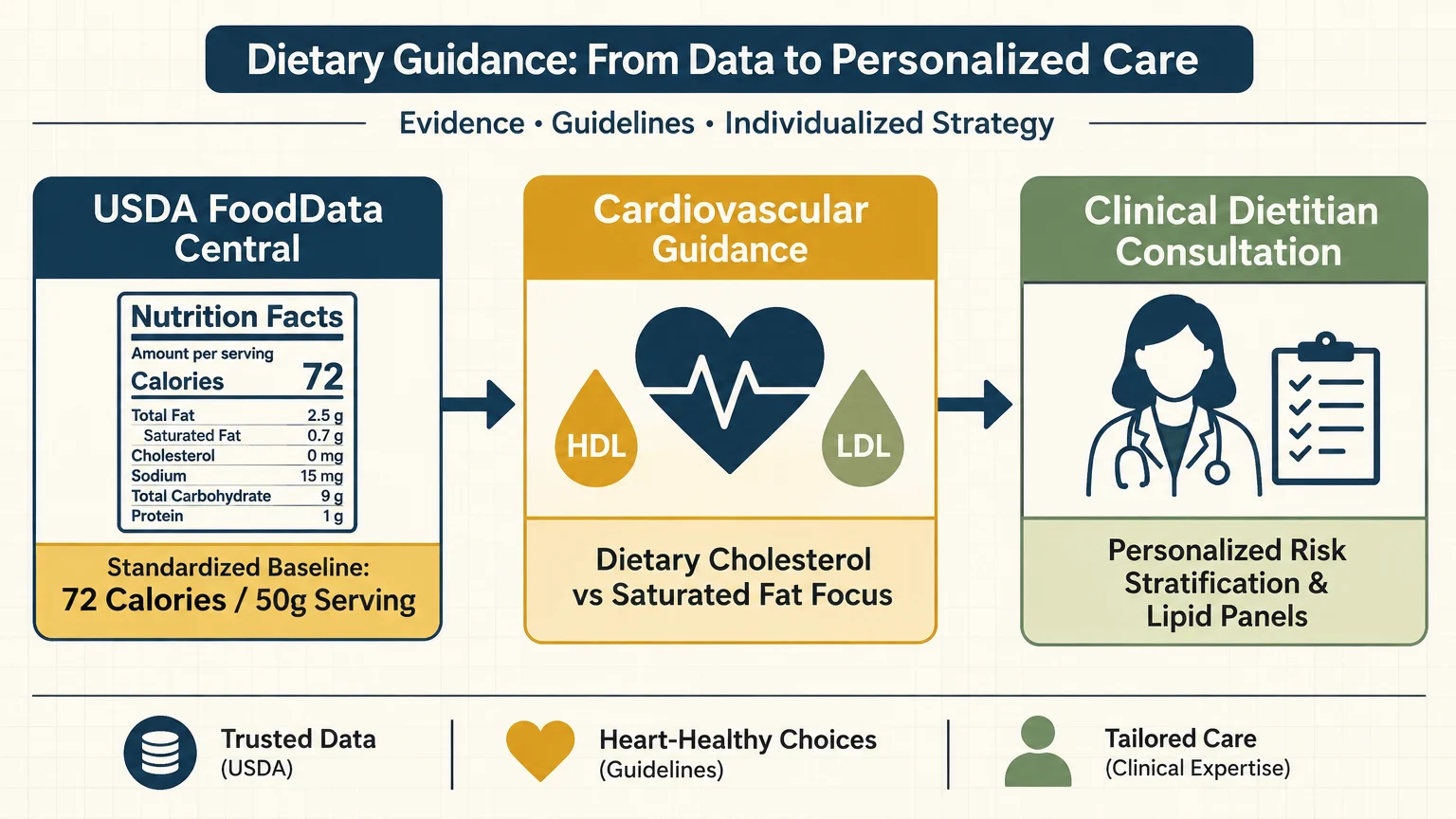
You can look up exact calorie, protein, fat, and micronutrient breakdowns for specific egg recipes inside the USDA FoodData Central portal anytime. Comparing poached eggs against cheesy omelets takes seconds and helps you plan balanced weekly menus.
For household kitchen questions, the federal food safety portal compiles up-to-date storage charts, thermometer instructions, and recall alerts from the USDA and FDA. Bookmarking those charts makes checking leftover timelines effortless.
If your family qualifies for community nutrition programs such as WIC or SNAP nutrition education, ask local staff for budget-friendly egg recipes paired with seasonal produce. Registered dietitians at community health clinics can also customize heart-healthy meal plans around your cultural dishes and food budget.
Patients managing diabetes or high cholesterol can ask their primary care office for a referral to medical nutrition therapy. Many insurance plans cover dietitian visits at low or zero out-of-pocket cost when paired with chronic condition care.
Frequently Asked Questions About Eating Eggs
Are boiled or scrambled eggs healthier for weight and heart goals?
Boiled and poached eggs hold a clear edge for weight management and cardiovascular goals because water adds zero fat or calories. Scrambled eggs quickly climb in saturated fat and calories when prepared with butter, whole milk, or cheese.
You can still enjoy scrambled eggs by whisking them with water or low-fat milk and cooking in a teaspoon of olive oil. Adding spinach and tomatoes boosts fullness without raising saturated fat.
Should I throw away the yolk and eat only egg whites?
Healthy adults usually benefit most from eating the whole egg rather than discarding the yolk. While whites deliver more than half the protein with zero fat, yolks provide all vitamins A, D, E, and K, choline, and eye-protecting carotenoids.
If your clinician advises limiting dietary cholesterol for diabetes, heart disease, or high LDL levels, mixing one whole egg with two extra whites balances flavor and nutrition. That combination preserves creamy texture while keeping yolk cholesterol modest.
How many eggs can I safely eat each week?
Healthy adults fit comfortably within up to one whole egg per day, and healthy older adults can often include up to two daily inside a plant-rich diet. Overall saturated fat levels matter far more than counting individual eggs for healthy people.
People living with diabetes and heart disease or poor LDL control should work closer to three yolks weekly under Harvard guidance, or no more than seven eggs weekly under Australian Heart Foundation limits. Ask your doctor which target matches your blood work.
Is it safe to eat eggs with runny yolks at breakfast?
Soft yolks remain popular for dipping toast, yet undercooked eggs carry a higher risk of harboring live Salmonella bacteria. Federal food safety agencies recommend cooking eggs until both whites and yolks turn firm.
Strict avoidance of runny yolks is especially critical for young children, older adults, pregnant individuals, and immunocompromised family members. Buying pasteurized shell eggs lets your household enjoy softer textures safely.

Building Your Healthier Egg Routine
Choosing the healthiest way to eat eggs comes down to gentle heat, smart cooking fats, and thoughtful side dishes. Water-based poached and boiled eggs keep nutrients intact while leaving room on your plate for fiber-rich vegetables and whole grains.
Pick one practical step to test during breakfast tomorrow morning. Try swapping buttered fried eggs for a poached egg over whole-grain toast and sautéed greens, or batch-boil six eggs tonight for quick weekday meals.
Keep tracking how your meals make you feel, follow basic refrigerator safety rules, and bring your questions to your clinician or registered dietitian at your next checkup. Small, steady kitchen habits build lasting health for your entire family.