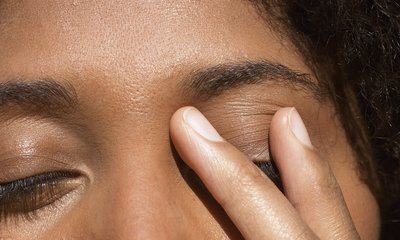



As you get older, you might notice yellowish patches forming around your eyes. Those bumps are actually cholesterol deposits known as xanthelasma and could be a sign that your health is at risk.
Doctors believe xanthelasma shows up when the connection between certain cells inside your capillaries breaks. When that happens, cholesterol can seep out of the blood and into the skin area, where it forms those raised patches, says Adam Scheiner, MD, laser eyelid and facial cosmetic surgeon in Tampa, Florida.
Most people with xanthelasma have high cholesterol or lipid problems, which could put you at risk for scary health conditions like heart attack or stroke, so set up an appointment with your primary care doctor if you notice them. Still, some people with low or healthy cholesterol levels can still develop xanthelasma, so lowering your cholesterol might not be necessary—or at all useful, says James Gordon, MD, FACS, cosmetic eyelid and facial surgeon in New York.
Even though xanthelasma could point to an underlying health problem, the cholesterol deposits themselves aren’t harmful. Still, you might want to get rid of them for cosmetic reasons. One case study found a man’s xanthelasma went away on its own just by taking medication to get his cholesterol levels in check—but over the course of 10 years.
Luckily, you’ve got some options if you don’t want to wait a decade. It’s pretty likely that your xanthelasma will come back even after treatment, says Dr. Gordon, but you can always go back for another.
Laser
For one thing, you could ask about a laser treatment. “When I use a laser, I’m actually removing it layer by layer until it’s gone,” says Dr. Scheiner. As the skin heals, all that’s left is healthy new skin—and no cholesterol deposits. But the treatment does have risk of scarring, and can take a week or two to heal, says Dr. Scheiner.
Surgery
The thing is, lasers might not work for thicker cholesterol deposits. In that case, you could get surgery to remove the xanthelasma instead. But that treatment could leave a scar, or even change your eyelid, says Dr. Gordon. “As you pull the skin together or as the wound heals, it can distort the shape of the tissue around it and distort the eyelid or cause an unusual fold,” he says.
But the healing process is quicker with surgery, which would be ideal if you don’t want to wait for recovery, says Dr. Scheiner. Plus, your insurance might cover the surgery but not a laser treatment, so check your plan before you decide
Chemical peels
If scalpels and lasers aren’t your thing, ask about a trichloroacetic acid. It’s a less common treatment, but it could get rid of xanthelasma by using a chemical reaction to dissolve the cholesterol deposit, says Dr. Scheiner.
Freeze therapy
You could also look for a doctor who will use cryotherapy to freeze the cholesterol deposit off. Just be aware that hypopigmentation could make the skin in the area get lighter, says Dr. Gordon.
Electric needle
During a process called electrodessication, a doctor will use a hot needle to create little burns in your skin. “The body has a great ability to repair itself,” says Dr. Scheiner. “If you injure it, when it grows come back as better quality skin.” But the electric needles aren’t as precise as lasers and might go deeper than your doctor wants, Dr. Scheiner says, so he tends to recommend lasers or surgery instead.