
Sharp vision preserves your everyday independence, whether you are driving at dusk or reading medication labels safely. Recognizing the difference between normal aging and serious disease keeps your sight protected for decades.
While subtle shifts in focus happen naturally after 50, severe vision loss is never an inevitable part of growing older. You can take active control of your visual future starting right now.
This guide explores the early signs of cataracts and macular degeneration, clinical screening timelines, and evidence-backed habits that keep your eyes resilient.
Normal Aging Versus Chronic Conditions
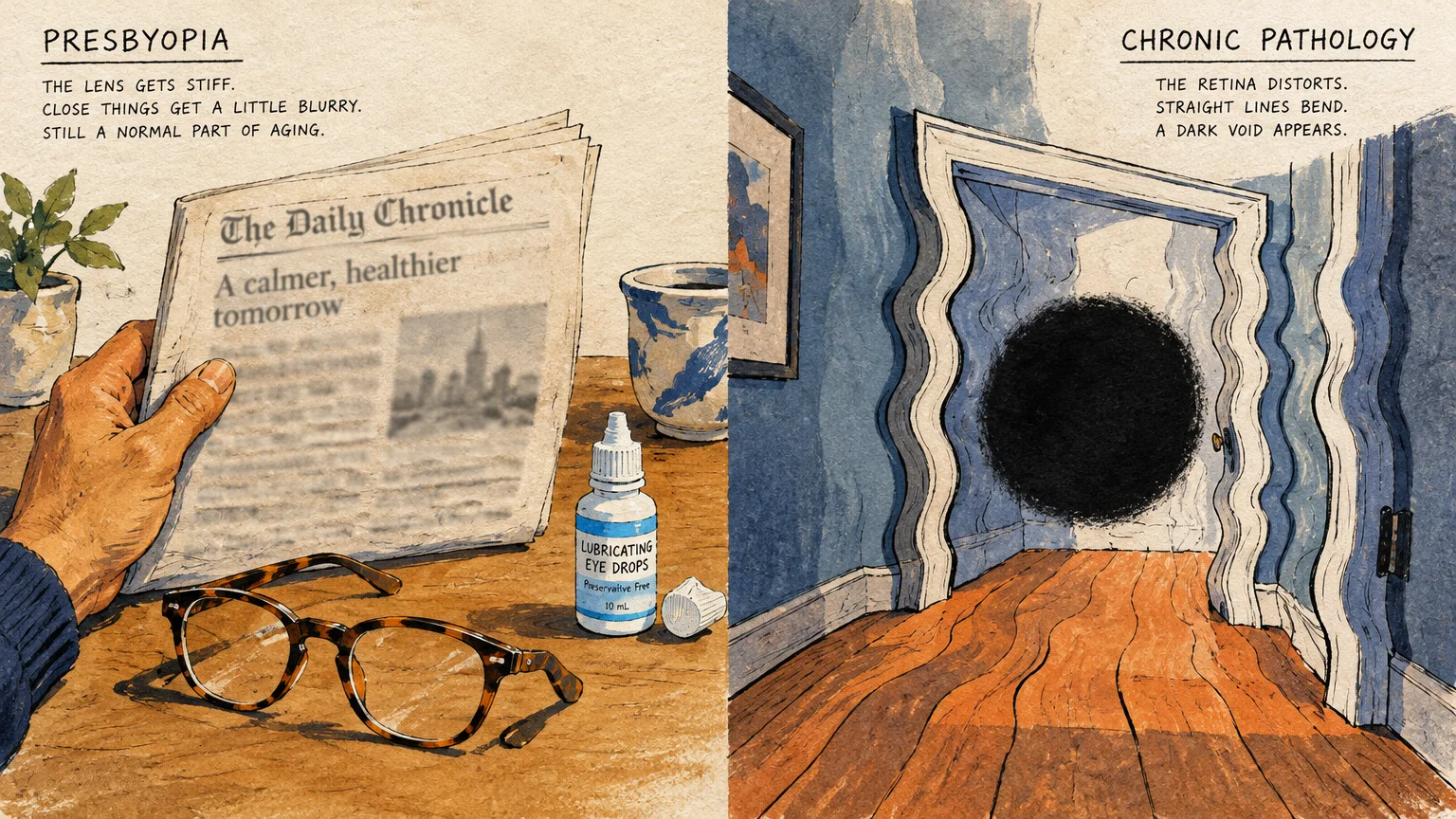
As you pass age 50, the natural lens inside your eye becomes less flexible. This shift, called presbyopia, makes focusing on small print or close objects frustratingly difficult.
You might also notice that your eyes feel drier or require brighter ambient lighting for reading. These gradual adjustments reflect standard physiological changes that reading glasses or lubricating drops can easily manage.
However, serious conditions develop silently beneath these routine inconveniences. Significant blurriness, distortion, and blind spots indicate underlying pathology rather than healthy aging.
Cataracts: Clouding of the Natural Lens
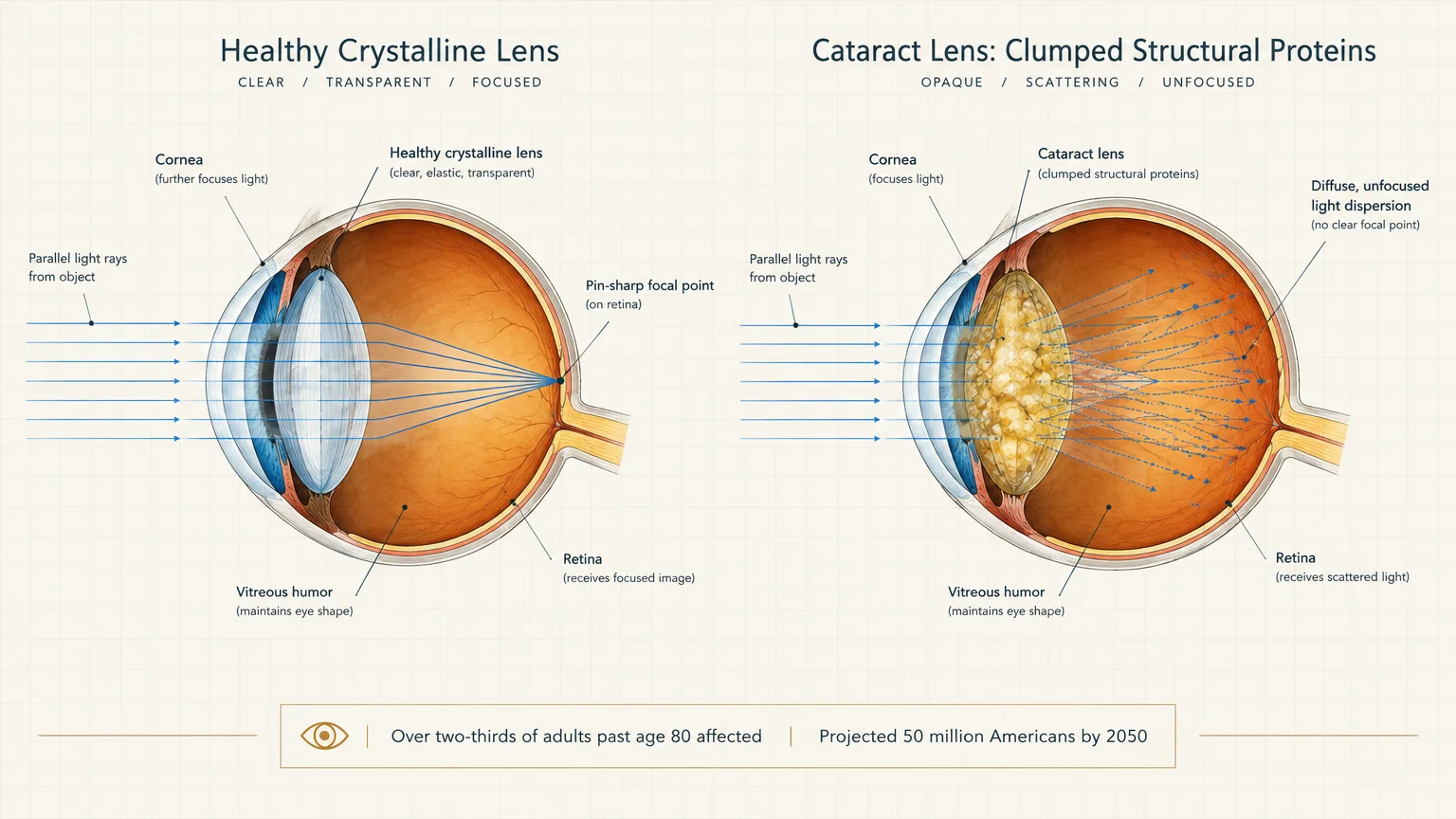
A cataract occurs when structural proteins in your eye’s clear crystalline lens clump together. Over time, this process turns your naturally transparent lens into a cloudy, yellowish barrier.
Data from the National Eye Institute shows that cataracts affect over two-thirds of individuals past age 80. By 2050, researchers project that 50 million Americans will live with this condition.
Early cataract development often mimics a dirty camera lens. You may struggle with faded colors, glare around nighttime headlights, and increasingly poor vision in low-light environments.
Updating your eyeglass prescription helps temporarily during early stages. Once clouded vision interferes with your daily driving or reading hobbies, an outpatient lens replacement restores clarity.

Macular Degeneration Signs and Impact
Age-related macular degeneration, or AMD, attacks your macula—the central portion of the retina responsible for sharp, straight-ahead vision. It stands as a leading cause of vision loss among adults aged 50 and older.
Surveillance data from the Centers for Disease Control and Prevention indicates that approximately 19.83 million Americans live with AMD. That figure includes 18.34 million individuals with early-stage disease and 1.49 million with vision-threatening late-stage AMD.
Early AMD rarely causes noticeable warnings, making proactive detection essential. As the disease advances, you might see straight lines—like doorway frames—appear wavy, crooked, or distorted.
A dark or empty patch can also emerge directly in the center of your sight. If you notice geometric distortions or sudden central blank spots, contact an eye specialist immediately.
Clinical Eye Exam Timelines
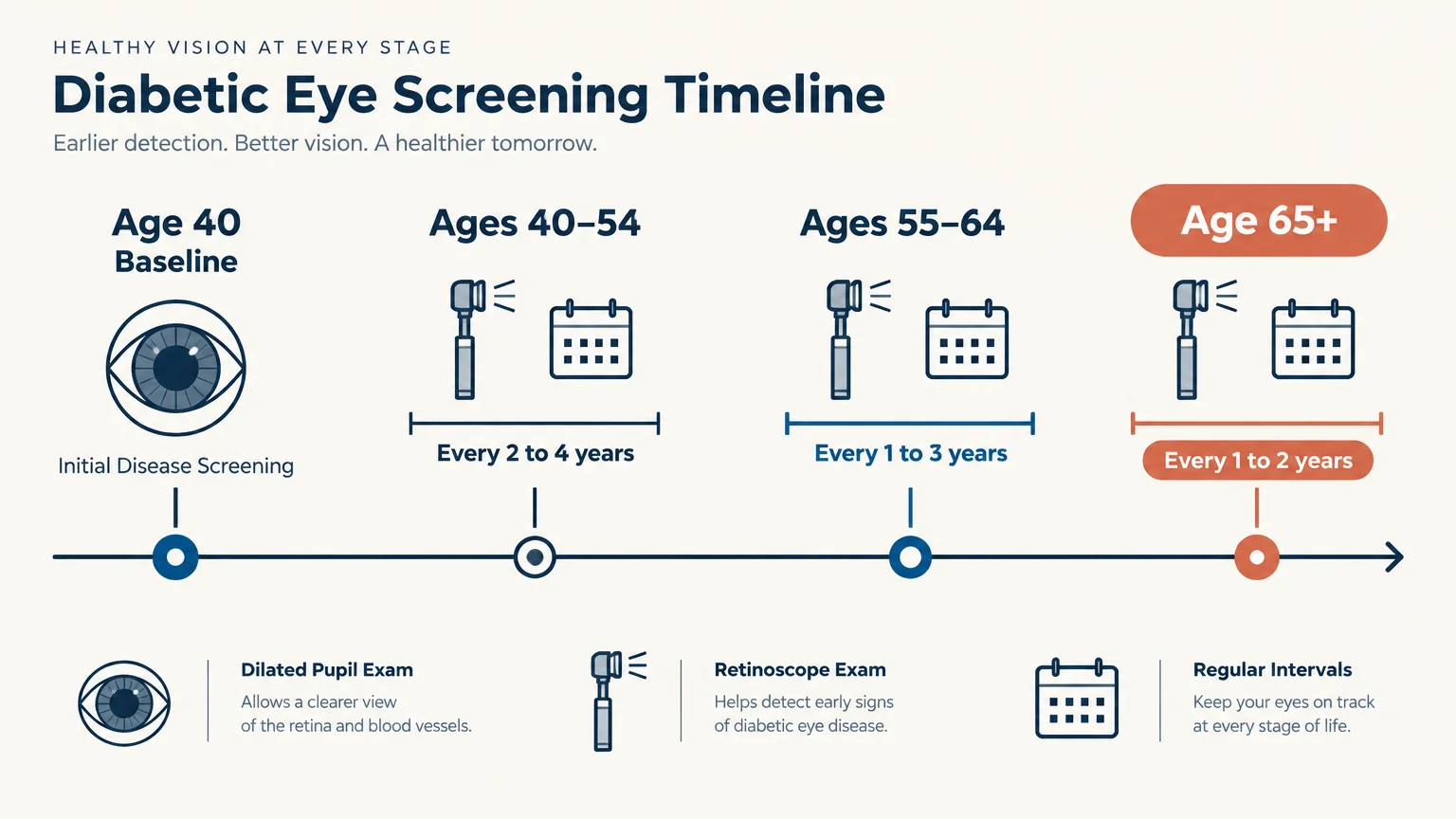
You cannot detect early retinal damage or elevated pressure in a bathroom mirror. Dilated exams allow your doctor to evaluate blood vessels, the optic nerve, and your retina before symptoms appear.
The American Academy of Ophthalmology recommends that every adult receive a comprehensive baseline disease screening at age 40. This baseline provides an accurate benchmark for future structural shifts.
If you are between ages 40 and 54 with low risk, schedule follow-up exams every 2 to 4 years. For adults aged 55 to 64, increase screening frequency to every 1 to 3 years.
Once you reach age 65, obtain a thorough exam at least every 1 to 2 years. Patients with systemic conditions like diabetes or high blood pressure need even more frequent evaluations.

Targeted Nutrition and the AREDS2 Protocol
Your eyes experience heavy metabolic activity and oxidative stress throughout life. Nourishing them with antioxidant-rich foods—especially dark leafy greens—defends vital retinal tissues.
For established intermediate AMD, clinical science offers a proven intervention. The landmark Age-Related Eye Disease Study 2, known as AREDS2, proved that a targeted supplement slows progression to advanced AMD by about 25%.
The daily AREDS2 formula contains 500 mg of vitamin C and 400 international units of vitamin E. It also includes 10 mg of lutein and 2 mg of zeaxanthin.
The formula adds 80 mg of zinc oxide, or a gentler 25 mg dose, alongside 2 mg of cupric oxide to prevent copper deficiency. This combination specifically protects existing tissue rather than preventing initial disease onset.

Daily Habits to Protect Your Sight
Eliminating tobacco use delivers an immediate protective boost to your visual system. Stopping smoking reduces your risk of developing or worsening macular degeneration by roughly 25%.
Ultraviolet radiation accelerates cataract formation and damages delicate surface tissues. Wear wraparound sunglasses that block 99 to 100 percent of UVA and UVB rays whenever you spend time outside.
Support your visual comfort indoors by arranging focused task lighting directly behind or beside your shoulder. This placement eliminates harsh glare on reading materials while keeping your eyes relaxed.
When to Seek Immediate Medical Evaluation
Certain sudden visual symptoms require urgent clinical intervention to preserve your eyesight. Do not wait for a scheduled checkup if you notice rapid visual changes.
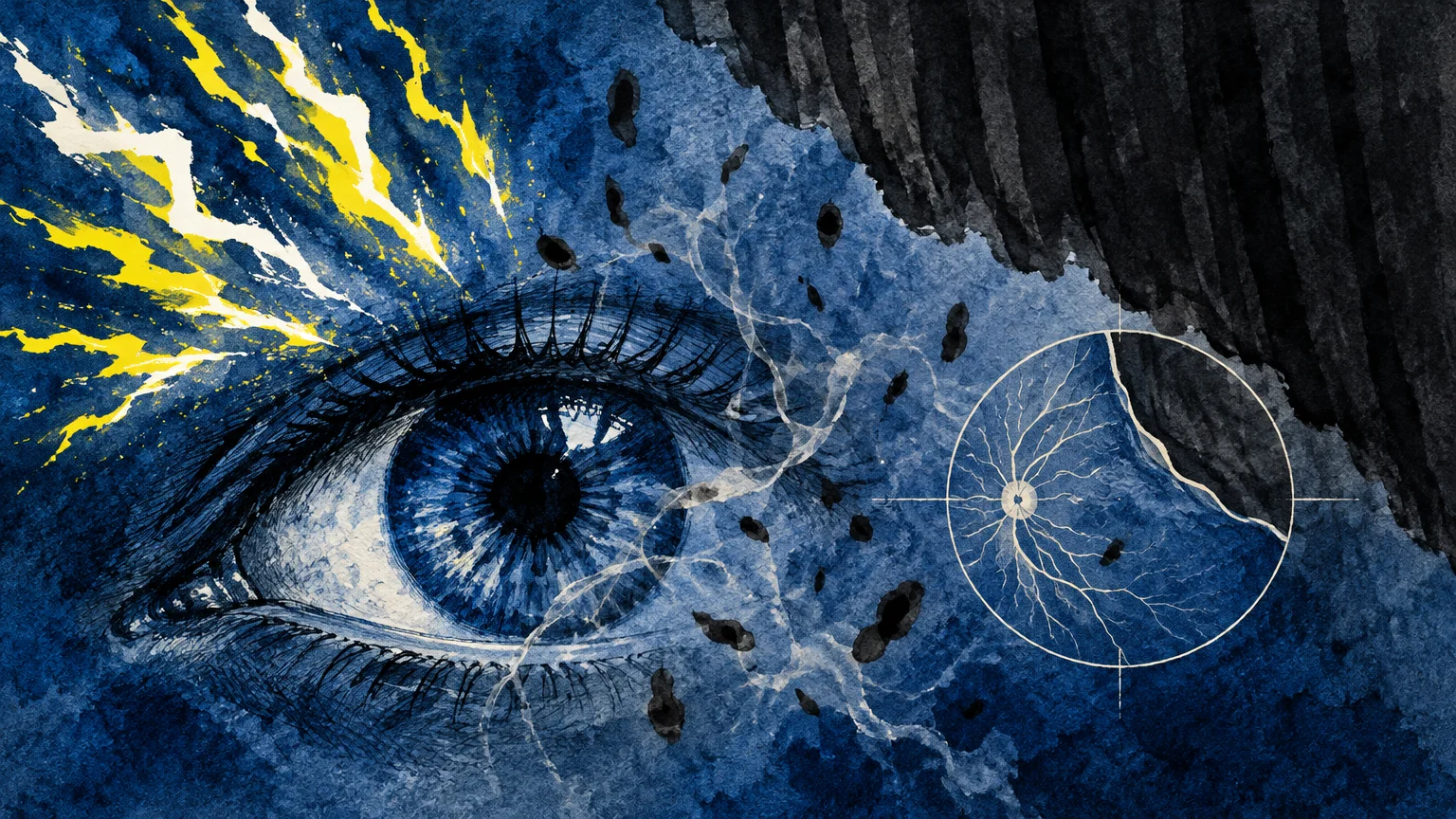
A sudden shower of floaters, flashes of light, or a dark shadow pulling across your visual field signals a potential retinal detachment. This emergency requires same-day care from an ophthalmologist.
Severe eye pain paired with blurred vision, halos around lights, or nausea can indicate acute angle-closure glaucoma. These intense episodes demand emergency medical treatment to halt permanent nerve damage.
This educational guidance outlines general wellness concepts rather than personalized medical directives. Always consult your eye care physician about persistent visual disturbances or before changing your supplement regimen.
Frequently Asked Questions
Can reading in dim light permanently damage your eyesight?
Reading in low light causes temporary eye strain and muscle fatigue, but it does not cause permanent anatomical damage. Adding a dedicated reading lamp quickly relieves discomfort and sharpens contrast.
Should you take AREDS2 supplements if your eyes are healthy?
Clinical trials show that AREDS2 supplements do not prevent the initial onset of eye disease in healthy eyes. Focus instead on nutrient-dense foods like spinach, kale, and oily fish.
How do you know if night glare is caused by cataracts?
If oncoming headlights create starbursts or halos that clean windshields and new glasses cannot fix, cataracts are likely developing. A comprehensive dilated examination confirms whether your lens has clouded.
Can regular exercise improve your visual longevity?
Aerobic exercise enhances systemic blood circulation, which supports healthy blood vessels in your retinas and optic nerves. Moderate daily walks help regulate internal eye pressure and lower chronic disease risks.
Your Action Step for This Week
Check your calendar today and confirm the date of your last comprehensive dilated eye exam. If your last appointment occurred more than two years ago, call your optometrist or ophthalmologist to schedule an evaluation.
Protecting your sight ensures you remain confident, engaged, and independent throughout every stage of your life.