
Staying active means keeping the freedom to travel, garden, and play on the floor with your grandchildren. Healthy joints make that lifestyle possible by preserving mobility and independence as decades pass.
Over time, normal biological shifts alter cartilage, but chronic pain and physical decline are not an inevitable part of growing older.
Adopting targeted, research-backed daily habits protects your hips and knees, relieves physical stress, and preserves long-term vitality. This guide outlines steps to keep your joints moving freely.
Why Joint Health Changes as You Age
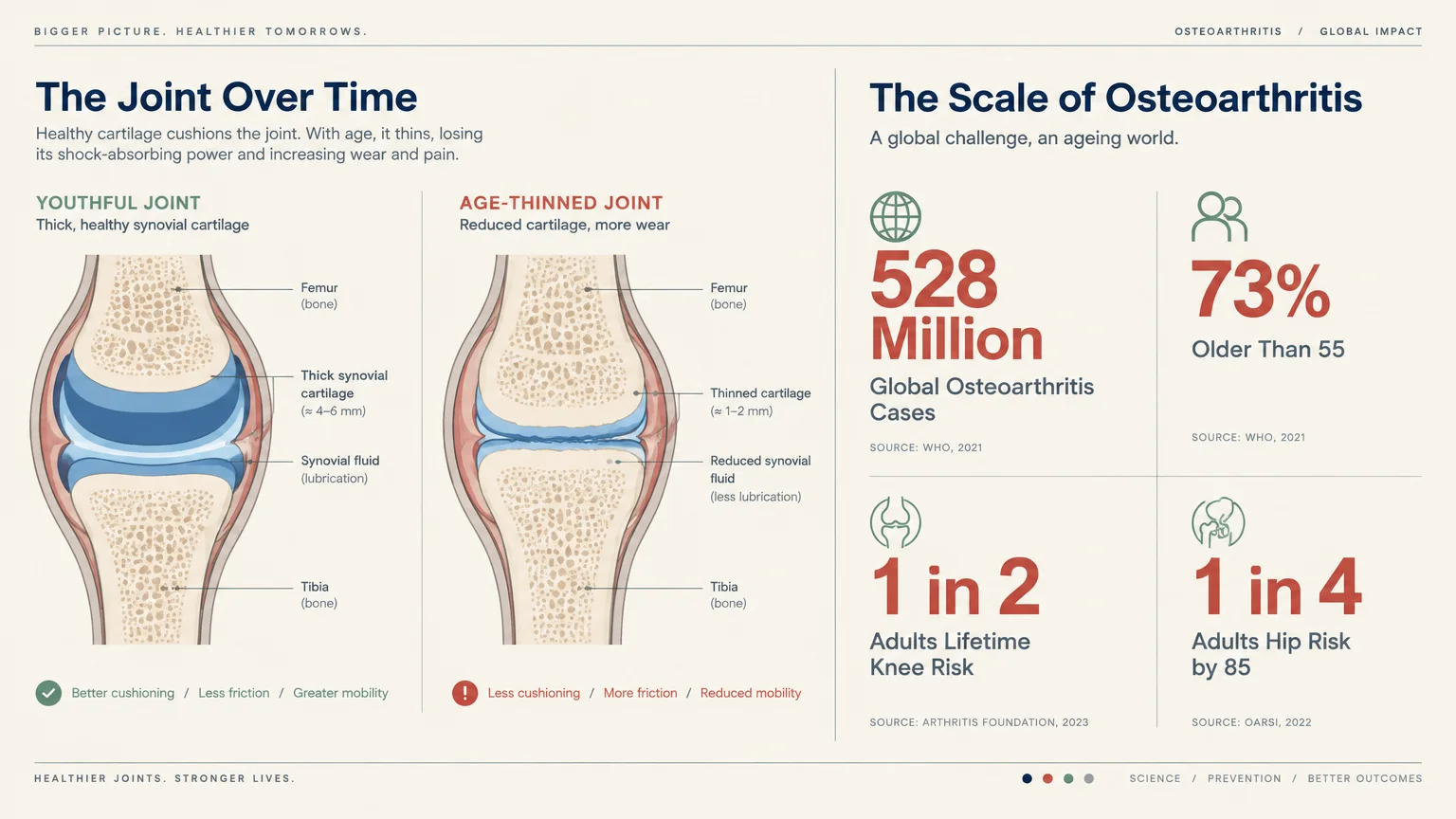
Inside your joints, smooth cartilage caps the bones as a low-friction cushion. With age, this tissue naturally thins, loses water, and repairs itself more slowly.
According to data from the World Health Organization, approximately 528 million people worldwide live with osteoarthritis. Among those affected globally, 73% are older than 55 years, and 60% are female.
A major study in The Lancet projects that global cases will reach nearly 1 billion by 2050. In the United States, the Centers for Disease Control and Prevention reports that 21.1% of adults have diagnosed arthritis.
Osteoarthritis accounts for more than 33 million of those domestic cases. Total diagnosed arthritis cases in the United States are projected to climb to 78 million by 2040.
Data from the Arthritis Foundation shows that approximately 1 in 2 adults will develop symptomatic knee osteoarthritis in their lifetime. Additionally, 1 in 4 adults will experience symptomatic hip osteoarthritis by age 85.
More than 80% of adults over age 55 demonstrate radiographic evidence of joint wear on X-rays. Fortunately, structural changes do not guarantee pain, and purposeful daily behaviors improve physical comfort.
Lightening the Load on Your Knees and Hips
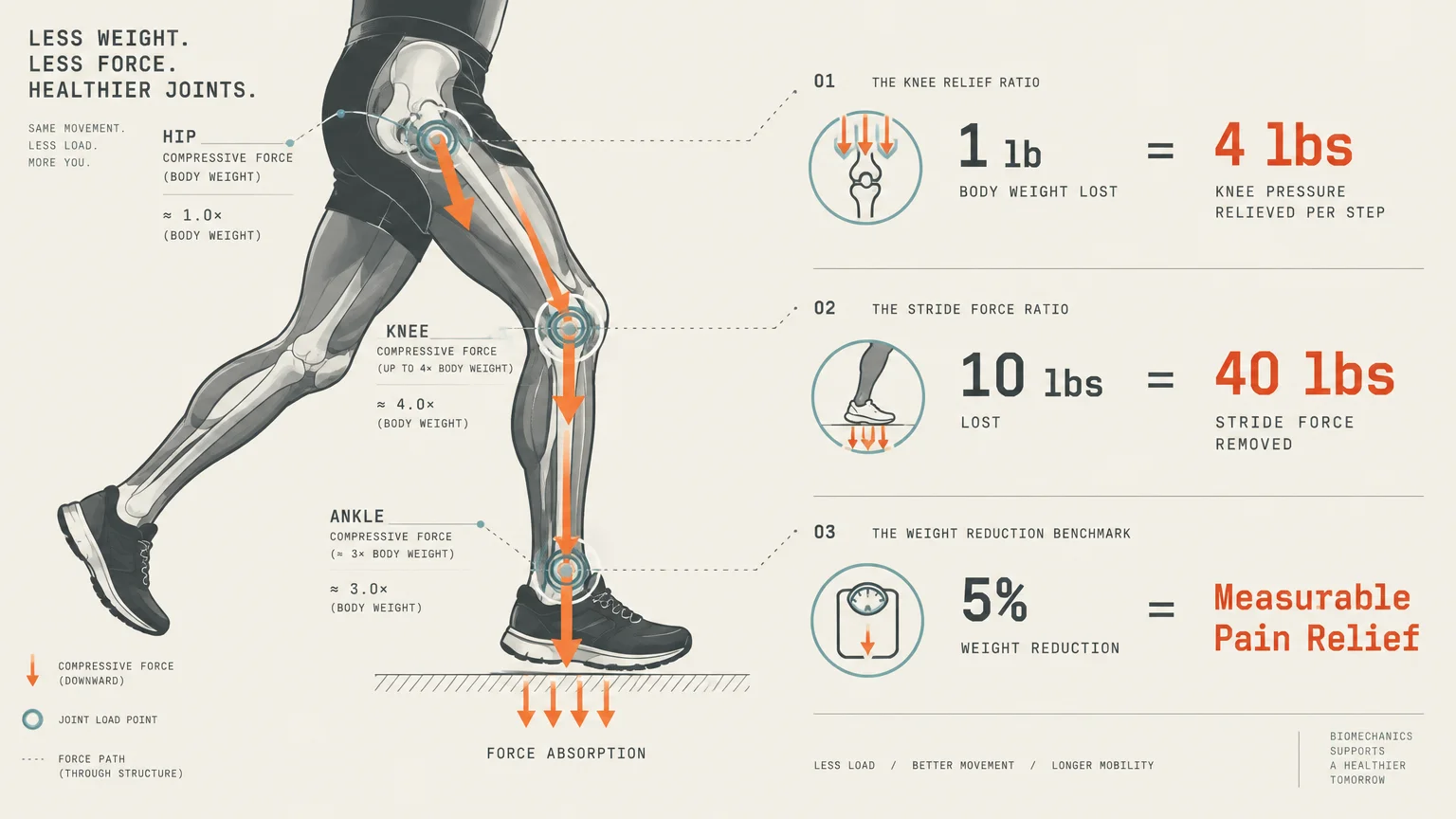
Body weight directly dictates the cumulative mechanical stress placed on lower extremities. Every step transfers immense physical force through your ankles, knees, and hips.
Biomechanical research reveals that each pound of body weight lost removes a 4-pound load from your knees per step. Shedding 10 pounds relieves an astounding 40 pounds of pressure with every stride.
Over an average mile, this relief spares joints tens of thousands of pounds of compressive force. Modest weight adjustments produce profound benefits for cartilage.
Public health guidance indicates that losing 5% of baseline body weight noticeably reduces joint pain and functional limitations. This accessible benchmark provides relief without demanding extreme dietary restriction.
Clinical trials demonstrate that achieving a 10% to 20% weight reduction yields greater improvements in daily function and systemic inflammation markers. Focus on nutrient-dense whole foods and consistent portion control to attain steady results.

Engaging in Joint-Friendly Aerobic Exercise
Cartilage lacks a direct blood supply and relies on regular motion to absorb essential nutrients. Movement circulates synovial fluid, lubricating joint surfaces and flushing away cellular waste products.
Public health authorities recommend completing at least 150 minutes of moderate-intensity, low-impact aerobic activity each week. Low-impact modalities protect articular cartilage while building cardiovascular endurance and stamina.
Brisk walking represents an accessible option requiring no specialized gear beyond supportive shoes. Walking on level outdoor paths or indoor tracks provides rhythmic stimulation that nourishes hip and knee cartilage.
Water aerobics and lap swimming offer exceptional joint-sparing benefits because buoyancy supports body weight. Submersion minimizes impact while water resistance gently strengthens surrounding musculature.
Stationary cycling serves as another superior choice, guiding legs through a smooth, controlled range of motion. Adjust saddle height properly so knees maintain a gentle bend at the lowest pedal position.
Building Muscular Support and Joint Stability
Strong muscles function as internal shock absorbers, dissipating external force before it reaches fragile connective tissues. Without adequate muscular support, the skeletal frame absorbs every physical impact.
Health directives suggest scheduling at least 2 days of muscle-strengthening activities per week. Targeting major muscle groups around hips, thighs, and calves creates balanced support for optimal alignment.
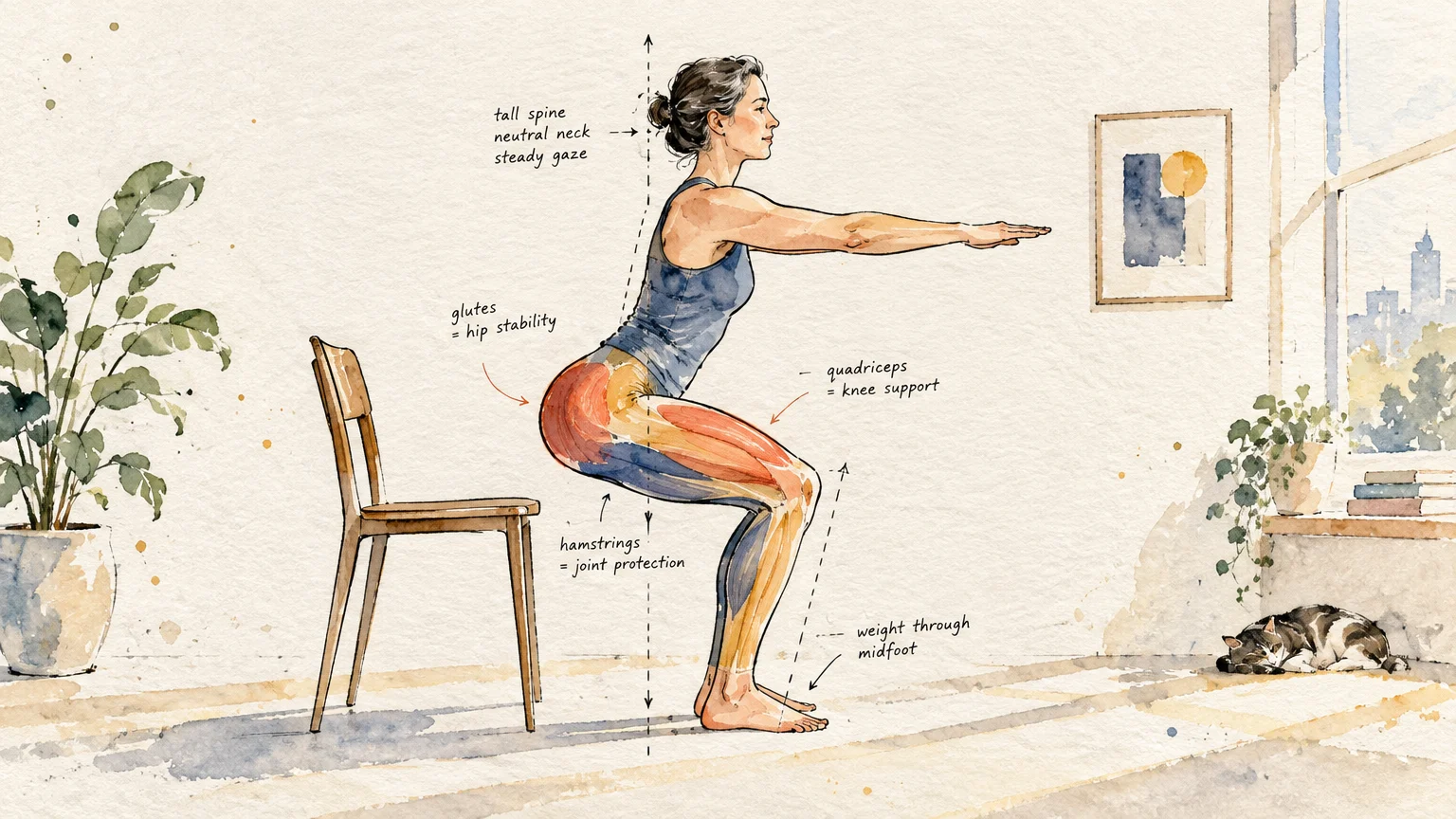
Strengthening quadriceps protects the patellar tendon and stabilizes knee tracking when climbing stairs. Seated leg extensions and straight leg raises build thigh strength safely at home.
Strong gluteal muscles and hamstrings stabilize the pelvis and keep hips centered during movement. Gentle bridge exercises or shallow sit-to-stand chair squats reinforce these essential hip stabilizers.
Prioritize slow, deliberate repetitions and maintain steady breathing rather than lifting heavy loads. Consistent resistance training preserves muscle mass, improves balance, and defends against joint wear.
Protecting Your Joints Through Daily Ergonomics
Daily mechanics and posture influence wear patterns on joints as much as formal exercise. Slumping or carrying uneven loads places asymmetric stress on the spine and hips.
Wear supportive footwear with cushioned soles and arch support to absorb ground forces. Avoid worn-out shoes, as flattened cushioning forces knees and ankles to absorb unnecessary shock.
When lifting heavy items or groceries, bend your knees and lift with leg muscles rather than rounding your back. Keep objects close to your center of gravity to avoid straining hips.
Avoid sitting in static positions for extended intervals throughout the day. Set a quiet timer to stand, stretch, and walk for two minutes every hour to prevent joint stiffness.
When to Consult a Healthcare Professional
While proactive habits preserve comfort, certain warning signs warrant prompt evaluation from a medical provider. Always consult a physician before initiating a new exercise program, especially if you manage chronic health conditions.
Research from the National Institutes of Health highlights the importance of ruling out acute joint trauma or inflammatory conditions. Seek medical attention if you experience severe swelling, warmth, redness, or sudden inability to bear weight.
Schedule a clinical assessment if joint stiffness persists for longer than thirty minutes each morning. A physical therapist or orthopedic physician can deliver personalized guidance tailored to your specific biomechanical needs.
Frequently Asked Questions
Can damaged joint cartilage completely regenerate naturally?
Cartilage contains very few cells and lacks a direct blood supply, limiting spontaneous self-repair. However, regular movement and targeted strengthening can halt further degradation and relieve pain remarkably well.
Should I continue walking if my knees feel stiff?
Mild stiffness often improves as walking warms up joints and distributes natural lubricating fluid. If you feel sharp or escalating pain, stop immediately and rest the joint.
How does physical therapy support joint health?
A physical therapist identifies specific muscle weaknesses, movement compensations, and gait imbalances around your joints. They design targeted exercise regimens that restore stability and reduce wear on vulnerable cartilage.
Do joint supplements like glucosamine really work?
Scientific evidence regarding glucosamine and chondroitin remains mixed, with modest benefits reported by some individuals. Discuss supplements with your doctor to verify safety and prevent interactions with current prescription medications.
Your Small Step for This Week
Protecting joints does not require an overwhelming lifestyle overhaul. Sustainable progress begins with one practical adjustment that fits smoothly into everyday routine.
Commit this week to taking a brisk 10-minute walk every day immediately after lunch or dinner. This session enhances joint lubrication, supports healthy blood sugar, and puts you in control of your mobility.