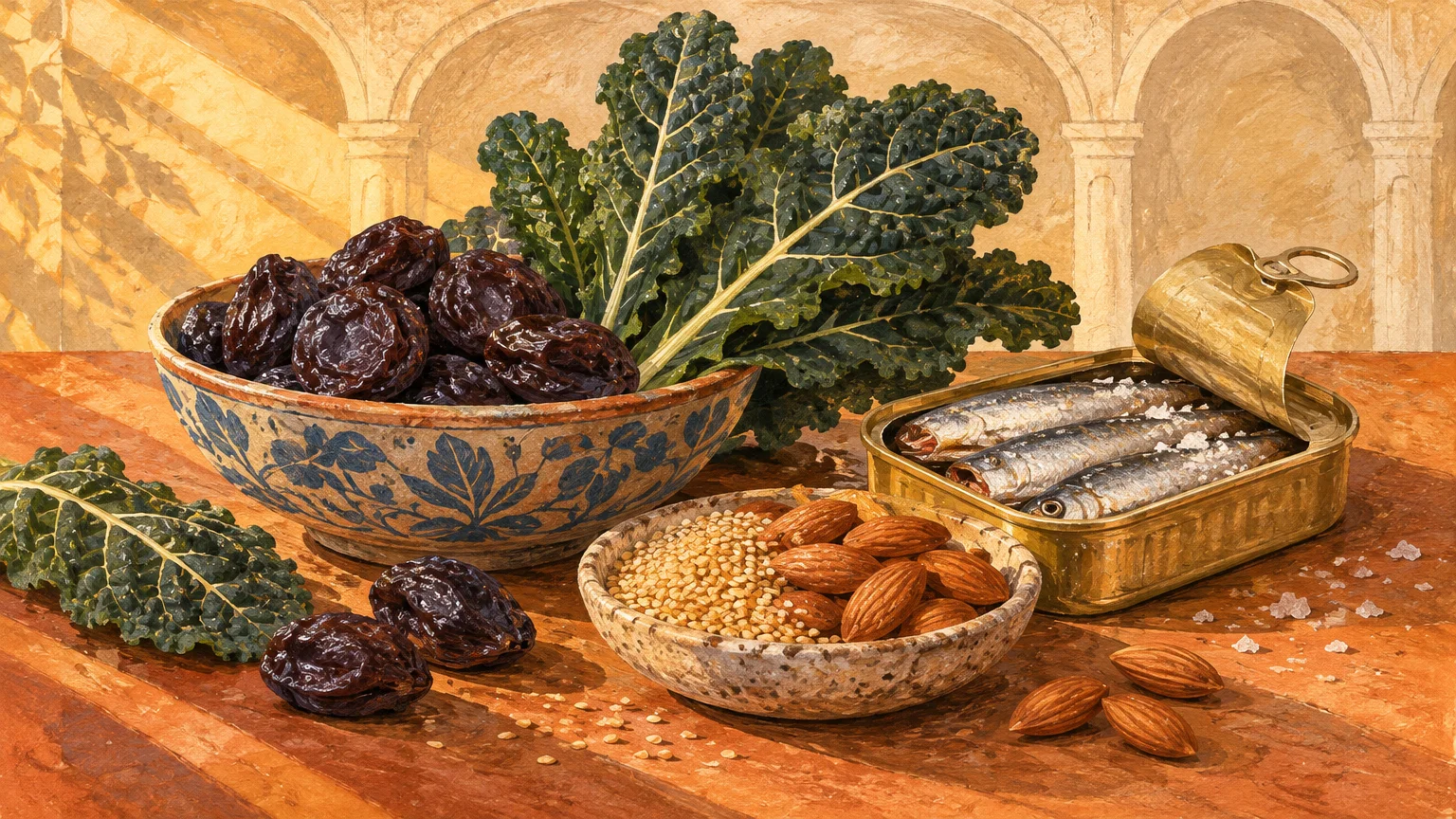
Strong bones keep you moving freely, whether you are carrying groceries, gardening, or keeping up with grandchildren. Choosing the right foods for bone health helps protect your independence and lower your risk of life-altering breaks after age 50.
Even though bone loss accelerates with age, your daily meals remain one of your strongest defenses. Whole foods deliver calcium, vitamin D, protein, and key minerals in combinations your body uses efficiently.
Below are six practical, research-backed staples—plus simple serving tweaks and safety tips—to help you build a sustainable bone density diet. Each option adapts easily to different budgets, appetites, and dietary needs.
Why Your Bones Change After 50—and Why Food Comes First
You naturally lose bone tissue faster than you rebuild it as you enter midlife and beyond. Understanding what drives that shift helps you target the exact nutrients your skeleton needs to stay resilient.
The Reality of Bone Loss and Fractures
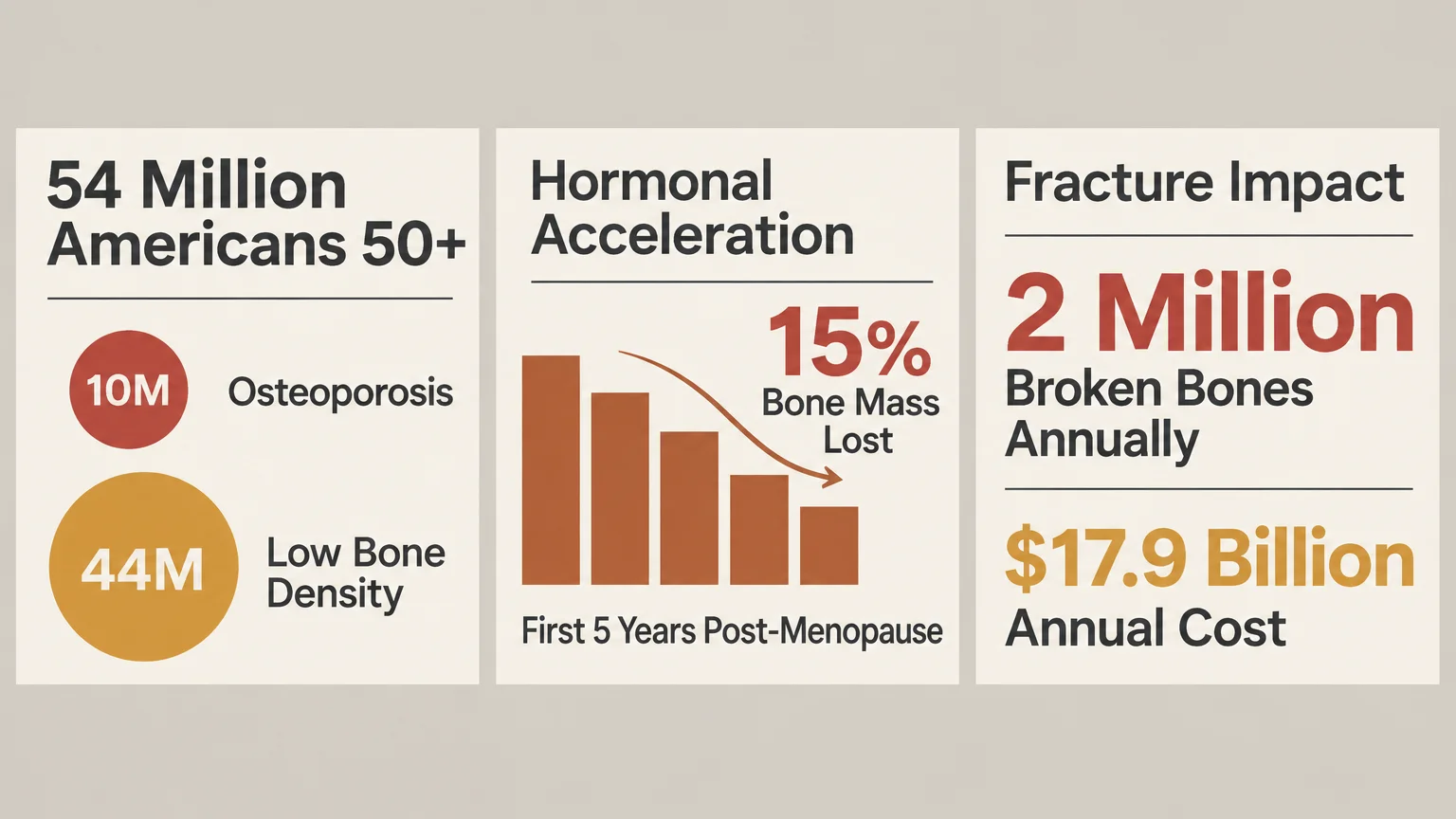
According to the Bone Health and Osteoporosis Foundation, roughly 10 million Americans have osteoporosis and another 44 million have low bone density. Together, that puts 54 million Americans—half of all adults age 50 and older—at increased fracture risk.
Data from the Centers for Disease Control and Prevention show osteoporosis affects 12.6% of U.S. adults age 50 and older at the hip or spine. That rate reaches 19.6% in women and climbs to 27.1% among women 65 and older.
Hormonal changes speed up this loss dramatically in midlife. World Health Organization and European Union reporting notes that some women lose up to 15% of their bone mass during the first five years after menopause.
Recent USDA National Institute of Food and Agriculture data confirm that losses reach 6% to 7% at the hip and spine during the three-year window around a woman’s final menstrual period. Men face real risk too, with 4.4% having osteoporosis and 33.5% having low bone mass after 50.
Across a lifetime, about 1 in 2 women and up to 1 in 4 men will break a bone due to osteoporosis. Globally, the International Osteoporosis Foundation estimates 37 million fragility fractures occur each year—about 70 every minute—with hip fractures projected to double between 2018 and 2050.
In the United States, osteoporosis causes roughly 2 million broken bones annually and costs an estimated $17.9 billion per year. Yet nearly 80% of older Americans who suffer a fracture are never tested or treated afterward.
Why Whole Foods Beat Routine Pills
Many older adults assume a daily pill offers simple protection, but recent medical guidance favors getting nutrients from your plate first. Whole foods supply complementary protein, vitamins, and minerals that isolated tablets leave out.
In December 2024, the U.S. Preventive Services Task Force issued a draft Grade D recommendation against routine vitamin D supplementation—with or without calcium—to prevent falls and fractures in community-dwelling postmenopausal women and men 60 and older.
That panel found routine supplements failed to prevent fractures in healthy older adults while increasing the risk of kidney stones. Note that this guidance excludes people who already have diagnosed osteoporosis, vitamin D deficiency, or nutrient malabsorption.
Similarly, the Endocrine Society advised in June 2024 against routine vitamin D supplementation above recommended daily levels for healthy adults under age 75. Instead, it targets empiric supplementation mainly to adults 75 and older and high-risk groups.
Both Osteoporosis Canada and the Bone Health and Osteoporosis Foundation recommend whole foods as your primary source of bone-building nutrition. Building meals around calcium rich foods gives your bones steady support without overloading your kidneys.
Your Daily Nutrient Targets and Absorption Limits
Your body stores 99% of its calcium inside your bones and teeth, drawing on that reserve whenever blood levels dip. To keep stores full, the NIH Office of Dietary Supplements recommends 1,000 mg daily for men ages 51 to 70.
Women ages 51 to 70 and all adults 71 and older need 1,200 mg of calcium each day. Keep total intake from food and supplements under the 2,000 mg daily upper limit set by the Institute of Medicine and Mayo Clinic.
How you space your meals matters just as much as your daily total. Because Osteoporosis Canada notes your gut cannot efficiently absorb more than about 500 mg of calcium at once, spread your servings across breakfast, lunch, and dinner.
You also need vitamin D so your digestive tract can absorb calcium properly. According to the NIH Office of Dietary Supplements, adults need 600 IU (15 mcg) daily through age 70 and 800 IU (20 mcg) starting at age 71.
Most Americans fall far short through meals alone, averaging just 204 IU daily for men and 168 IU for women. Stay below the 4,000 IU (100 mcg) daily upper limit from all sources combined, since excess vitamin D can trigger high blood calcium and kidney damage.
Protein, magnesium, and vitamin K round out the bone-building team. The International Osteoporosis Foundation recommends 0.8 g of protein per kilogram of body weight daily to preserve muscle, lower fall risk, and support fracture recovery—disproving older claims that protein leaches bone calcium.
About 60% of your body’s magnesium sits in bone, requiring 320 mg daily for women and 420 mg for men over 31, with a 350 mg limit on supplements. Vitamin K targets are 90 mcg daily for women and 120 mcg for men.
01 Plain Yogurt and Milk for Steady Calcium Absorption
Dairy remains one of the easiest ways to help prevent osteoporosis because it combines highly bioavailable calcium with high-quality protein. In the United States, dairy supplies roughly 72% of total calcium intake, with about 30% absorbed by the body.
What One Cup Delivers
An 8-ounce serving of plain nonfat yogurt provides about 488 mg of calcium, while plain low-fat yogurt delivers roughly 450 mg. That single cup brings you right near the 500 mg absorption ceiling for a meal.
Plain low-fat Greek yogurt offers thicker texture and extra protein alongside roughly 260 mg of calcium per 8 ounces. Straining removes some whey and calcium, so alternating between traditional and Greek yogurt gives you the best of both worlds.
One 8-ounce cup of cow’s milk adds about 300 to 310 mg of calcium plus roughly 100 to 120 IU of fortified vitamin D. Remember that cheese and ice cream are usually not fortified with vitamin D, so liquid milk and fortified yogurt do heavier lifting.
Practical Ways to Serve Dairy Every Day
Choose plain tubs over pre-sweetened cups to keep added sugars low and stretch your grocery budget. Stir in fresh berries, cinnamon, or chopped walnuts at breakfast so you hit roughly one-third of your daily calcium goal before 9 a.m.
If lactose bothers your stomach, reach for lactose-free milk or live-culture yogurt, which breaks down much of the milk sugar naturally. Blending milk into oatmeal, creamy vegetable soups, or mashed potatoes boosts calcium quietly if you dislike drinking plain glasses.
02 Canned Sardines and Fatty Fish for Calcium and Vitamin D
Few single foods supply both calcium and vitamin D at the same time, making fatty fish a standout choice to help prevent bone fractures. Canned fish with edible bones offers particular value because it stores well in your pantry and requires zero cooking.
The Power of Edible Bones and Vitamin D
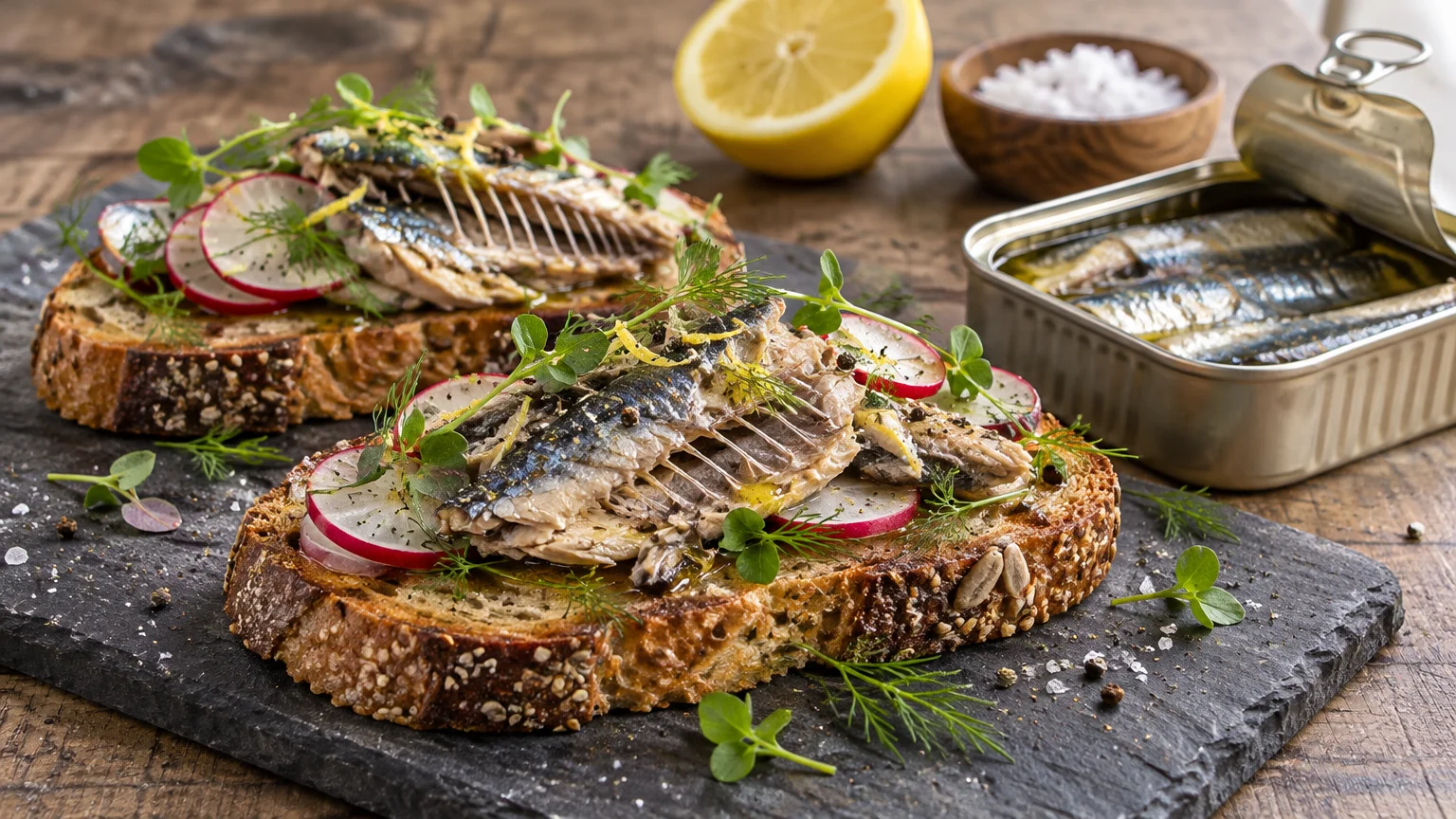
A 3-ounce serving of canned sardines packed with their soft, edible bones supplies roughly 325 to 330 mg of calcium. Even two drained sardines contribute about 46 IU of natural vitamin D alongside heart-healthy fats and protein.
Fatty fish without edible bones excel at closing the widespread vitamin D gap. A 3-ounce portion of cooked sockeye salmon delivers roughly 380 to 570 IU of vitamin D, while 3 ounces of farmed rainbow trout provide about 645 IU.
Eating fish twice a week gives your skeleton a rare natural burst of vitamin D without needing high-dose pills. Pairing that protein with your regular meals also helps maintain the leg strength you rely on to catch your balance.
Easy Swaps If You Dislike Fishy Flavors
Look for boneless-skinless fish only when buying salmon or trout, and specifically choose bone-in varieties for sardines or canned salmon so you get the calcium. Those soft bones mash smoothly with a fork and add a subtle richness rather than crunch.
Mash sardines with lemon juice, Dijon mustard, chopped celery, and a spoonful of plain yogurt for a quick lunch salad. You can also flake baked trout or canned salmon over warm greens or whole-grain toast for a ten-minute dinner.
03 Calcium-Set Tofu and Fortified Plant Milks
You do not need dairy to meet your calcium needs after 50. Plant-based eaters and adults with milk allergies can build a strong bone density diet using calcium-set tofu and fortified beverages.
Why Labels Make All the Difference
Not all tofu packs the same mineral punch, because manufacturers use different coagulants to firm up soy curds. Regular or firm tofu made with calcium sulfate delivers roughly 430 mg of calcium per half-cup—or about 506 mg per full cup.
Tofu set with magnesium chloride instead of calcium salts contains substantially less calcium. Always check the Nutrition Facts panel and ingredient list before tossing a block into your cart.
Fortified beverages bridge the gap cleanly when poured over cereal or blended into smoothies. One cup of fortified soy milk provides about 300 mg of calcium and roughly 100 to 144 IU of vitamin D, matching cow’s milk closely.
Fortified 100% orange juice offers roughly 300 to 350 mg of calcium and about 100 IU of vitamin D per cup. Like dairy, fortified foods show roughly 30% calcium absorption.
Simple Kitchen Habits for Plant Calcium
Added calcium naturally settles to the bottom of plant milk and juice cartons during storage. Shake every carton vigorously for several seconds right before pouring, or your final cup will hold most of the minerals while earlier servings miss out.
If you drink fortified orange juice, stick to a small 4- to 8-ounce glass alongside a protein-rich meal to keep blood sugar steady.
Press excess water out of calcium-set tofu, cube it, and roast or stir-fry it with garlic and vegetables for an easy protein anchor.
04 Low-Oxalate Leafy Greens for Bioavailable Calcium and Vitamin K
Dark leafy greens belong in every healthy-aging kitchen, yet one popular vegetable fools many shoppers trying to support their bones. Knowing which greens actually release their calcium helps you get full value from every forkful.
Why Collards, Kale, and Bok Choy Beat Spinach
Cooked spinach holds roughly 240 to 250 mg of calcium per cup, which looks impressive on paper. However, spinach contains high levels of oxalic acid—a natural compound that binds calcium tightly and limits absorption to only about 5%.
Low-oxalate greens deliver far better results for your skeleton. Cooked collard greens provide roughly 270 mg of calcium per cup, cooked bok choy offers about 190 mg, and cooked kale supplies around 180 mg, with impressive absorption rates between 40% and 60%.
Those same greens supply vitamin K, which helps bone proteins bind calcium into strong mineral crystals. One cup of cooked greens easily pushes you toward the daily vitamin K target of 90 mcg for women and 120 mcg for men.
Cooking Safely and Managing Blood Thinners
Lightly steaming or sautéing tough greens shrinks their bulk so you can comfortably eat a full cup without chewing endlessly. Toss chopped kale or collards into lentil soup during the final five minutes of simmering, or sear bok choy halves in olive oil.
Pay close attention to vitamin K if you take prescription blood thinners such as warfarin. According to the NIH Office of Dietary Supplements, you do not need to avoid leafy greens, but you must keep your daily vitamin K intake steady rather than swinging wildly.
05 Prunes to Support Hip and Cortical Bone Density
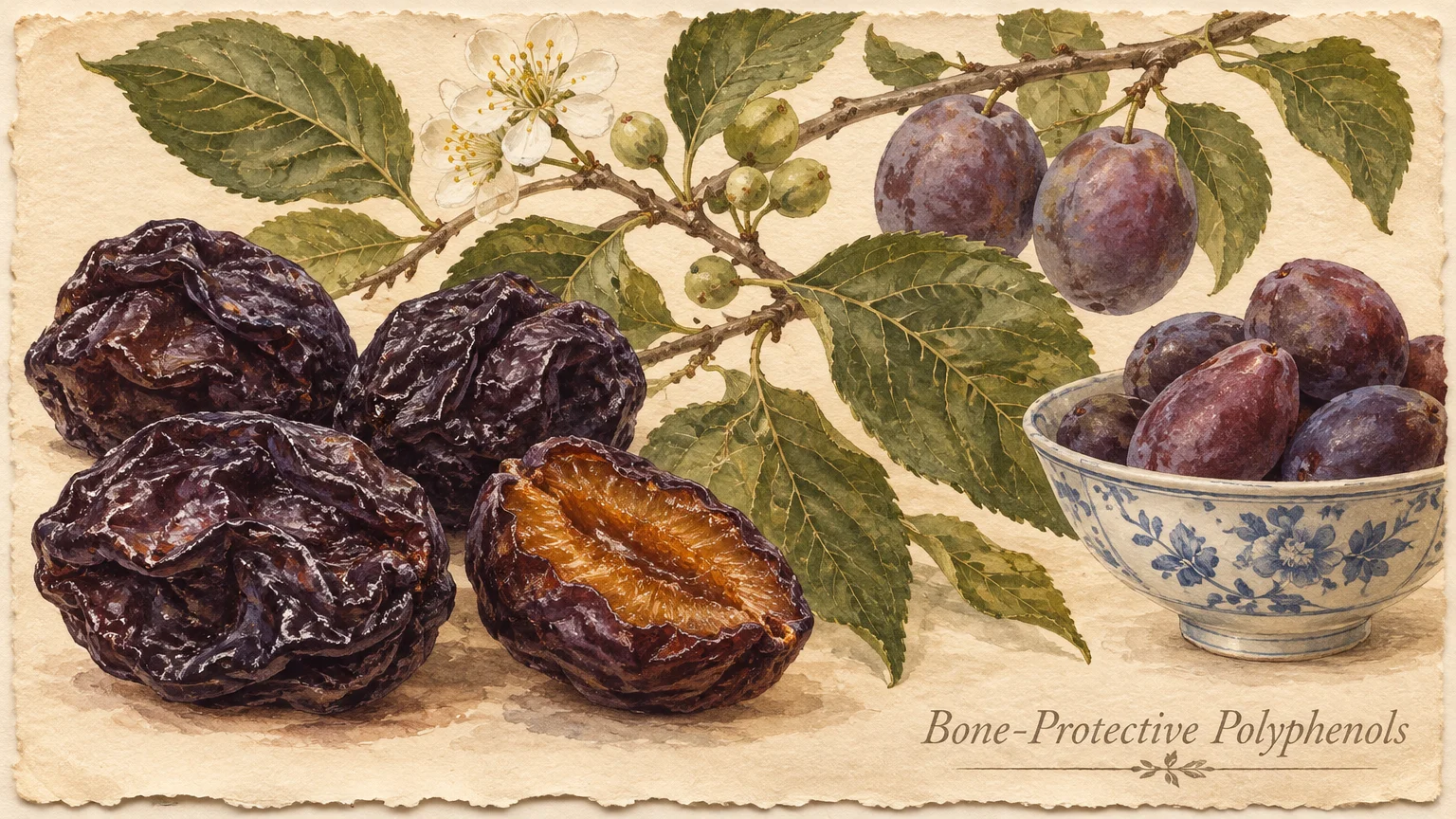
Dried plums—commonly sold as prunes—have moved beyond digestive remedies into bone health research over the past several years. While they do not replace calcium or vitamin D, adding a small daily portion offers promising support for aging hips.
What Recent Research Shows—and Its Limits
In a 12-month randomized controlled trial of 235 postmenopausal women conducted at Penn State University, eating 50 g of prunes daily—about five to six prunes—helped preserve total hip bone mineral density. Women eating that amount lost only 0.3% density versus 1.1% in controls.
That moderate dose also proved realistic, with a 15% dropout rate compared to 41% among participants assigned to eat 100 g daily. A June 2024 follow-up using three-dimensional imaging showed four to six prunes daily preserved bone density and strength in the outer shinbone.
New 18-month trials funded by the USDA National Institute of Food and Agriculture launched in late 2025 to test 30 to 50 g daily in perimenopausal women. Meanwhile, an April 2026 meta-analysis of four trials covering 518 women with osteopenia found no statistically significant pooled density difference.
Treat prunes as a smart, supportive piece of your daily diet rather than a standalone cure. Together with calcium, vitamin D, and weight-bearing movement, a handful of prunes adds potassium, vitamin K, and protective plant compounds.
Adding Prunes Without Stomach Upset
Jumping straight to six prunes a day can trigger bloating or loose stools if your gut is not used to concentrated fiber. Start with two prunes daily alongside breakfast for the first week, then gradually step up to four or five.
Chop prunes into warm oatmeal, blend one into a morning smoothie, or pair whole prunes with a small handful of almonds for an afternoon snack. Their natural sweetness satisfies dessert cravings without refined sugar.
06 Seeds, White Beans, Almonds, and UV-Exposed Mushrooms
Small pantry additions quietly fill the gaps between your main calcium and vitamin D meals. Nuts, seeds, beans, and specially grown mushrooms bring extra magnesium, plant protein, and bone-supporting minerals to any dish.
Everyday Pantry Boosters
Just 1 ounce of roasted sesame seeds packs roughly 280 mg of calcium, while 2 tablespoons of tahini—sesame seed paste—deliver about 130 mg. One ounce of toasted almonds adds around 80 mg of calcium alongside bone-supporting magnesium, and half a cup of cooked white beans supplies roughly 70 mg.
Mushrooms offer an unexpected plant-based source of vitamin D when growers expose them to ultraviolet light. Ordinary dark-grown mushrooms contain virtually none, whereas FDA-approved UV-exposed mushrooms provide roughly 366 IU of vitamin D2 per half-cup and up to 889 IU per 3 ounces.
Check produce labels for terms like UV-treated or vitamin D mushrooms when you shop. Combining these mushrooms with white beans or greens gives plant-focused meals a rare vitamin D lift.
Affordable Upgrades for Any Meal
Whisk tahini with lemon juice, warm water, and garlic to create a creamy dressing for roasted collards or grain bowls. Keep canned white beans on hand to mash into soups or toss with olive oil and herbs when cooking feels tiring.
Sprinkle toasted sesame seeds over sautéed bok choy or stir chopped almonds into plain yogurt. These compact additions cost pennies per serving and require no refrigeration until opened.
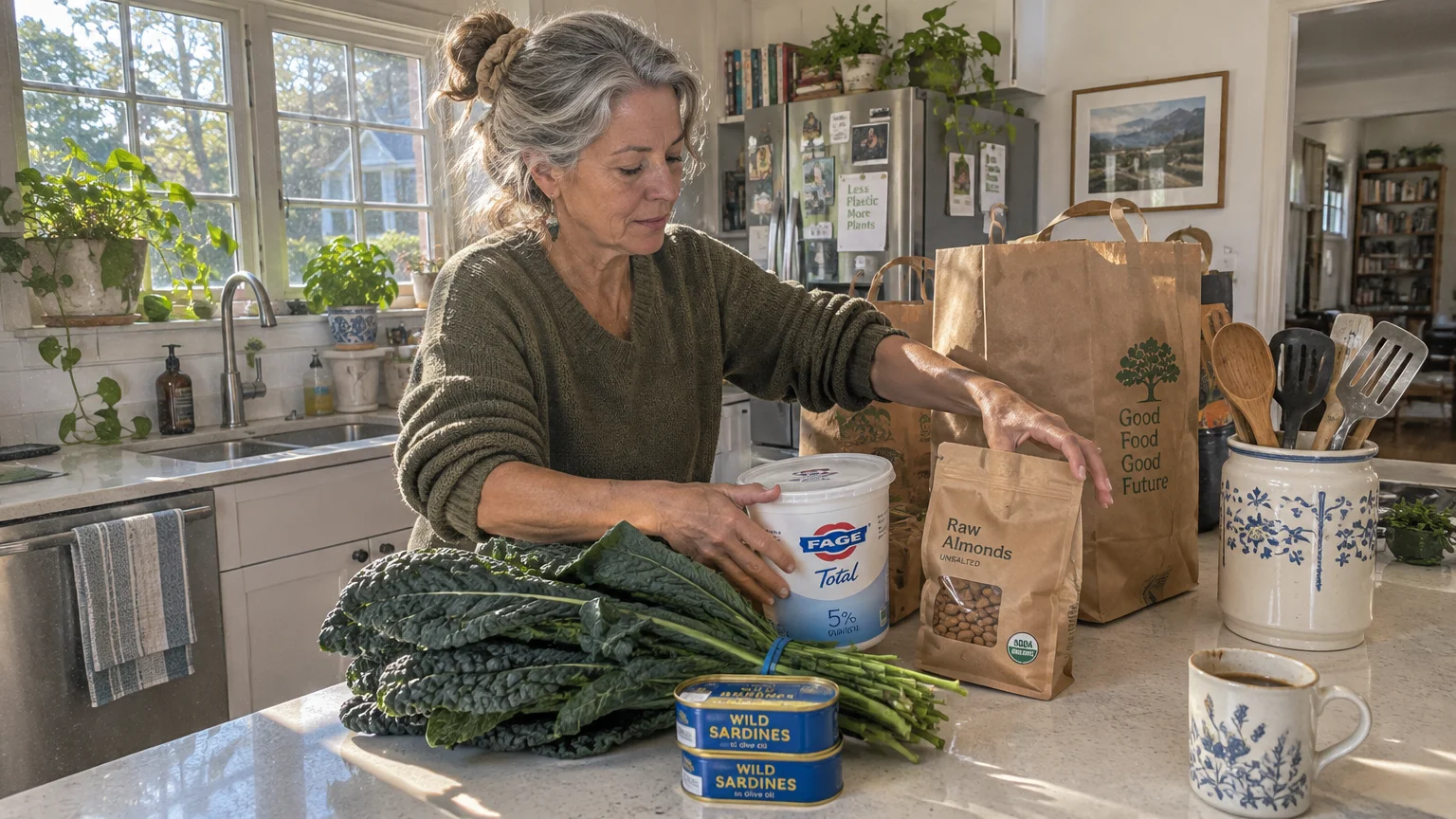
Building a Bone Density Diet Around Everyday Habits
Adding these six foods for bone health works best when your broader eating habits protect the minerals you consume. A few common kitchen and lifestyle traps can quietly wash calcium out of your system or impair bone remodeling.
Habits That Drain Calcium From Your Bones
Eating too much salt pushes your kidneys to excrete extra calcium in your urine. Follow American Heart Association guidance by keeping daily sodium under 2,300 mg—roughly one teaspoon of table salt across all foods and restaurant meals.
Canned sardines and white beans can carry extra sodium, so rinse canned beans under cool water for 15 seconds and compare fish labels for lower-salt tins. Seasoning dishes with herbs, vinegar, citrus, and garlic keeps flavor bright without stressing your bones.
Smoking and heavy drinking both interfere with bone-building cells and hormone balance. The Bone Health and Osteoporosis Foundation advises avoiding tobacco completely and limiting alcohol to protect bone strength and reduce fall risk.
Being underweight also weakens your skeleton over time. According to the International Osteoporosis Foundation, a body mass index below 19 kg/m² raises osteoporosis risk, while a healthy target generally sits between 20 and 25 kg/m².
Adapting Meals for Dental, Digestive, and Budget Needs
Dental discomfort or chewing fatigue should never keep you from hitting your daily nutrient goals. Smooth options like plain yogurt, mashed calcium-set tofu, creamy tahini dressings, soft white beans, and blended vegetable soups deliver rich nutrition gently.
If swallowing pills or large dry snacks feels difficult, soak chopped prunes in warm tea or yogurt so they soften completely. Flaking canned sardines into warm mashed potatoes or scrambled eggs makes soft, savory protein effortless to eat.
On a tight food budget, focus on shelf-stable and frozen winners first. Store-brand plain yogurt tubs, dried or canned white beans, bone-in canned sardines, and frozen collards or kale cost far less per milligram of calcium than specialty snacks.
When to Check With Your Doctor First
Dietary habits support healthy aging broadly, but general nutrition information never replaces personalized medical care. Several symptoms and medical histories call for a conversation with your clinician before you adjust your diet or supplements.
Schedule a medical evaluation promptly if you experience a fall, notice sudden height loss, develop new mid-back pain, or break a bone from a minor slip. Remember that nearly 80% of older Americans who fracture a bone never receive follow-up testing or treatment.
Talk with your doctor before changing high-vitamin-K foods like collards or kale if you take warfarin or similar anticoagulants. Consistency keeps your medication dosing safe and predictable.
Consult your care team before adding calcium or vitamin D supplements if you have a history of kidney stones, chronic kidney disease, hypercalcemia, or digestive malabsorption.
While primary prevention guidelines caution healthy older adults against routine pills, people with diagnosed osteoporosis or proven deficiencies often need targeted medical therapy.
Frequently Asked Questions About Bone-Healthy Eating
Can I get enough calcium without eating dairy?
Yes, you can meet your 1,000 to 1,200 mg daily target using calcium-set tofu, fortified plant milks, canned sardines with bones, low-oxalate greens, and sesame products. Spread three to four servings across the day and always shake fortified cartons before pouring.
Should I stop taking my prescribed calcium or vitamin D supplement?
No—never stop a prescribed supplement or osteoporosis medication without talking to your doctor first. Recent advisories against routine pills apply only to healthy older adults taking supplements for primary prevention, not people treating diagnosed bone loss or deficiencies.
Does eating protein weaken my bones?
No, adequate dietary protein strengthens rather than weakens your skeleton. International Osteoporosis Foundation guidance confirms that hitting roughly 0.8 g per kilogram of body weight helps preserve bone density, build protective muscle, lower fall risk, and speed recovery after fractures.
How much calcium can my body absorb in one meal?
Your digestive tract absorbs calcium most efficiently in doses up to about 500 mg per meal. Eating one massive calcium-heavy dinner leaves extra minerals unused, so aim for roughly 300 to 400 mg at breakfast, lunch, and dinner instead.
One Small Habit to Start This Week
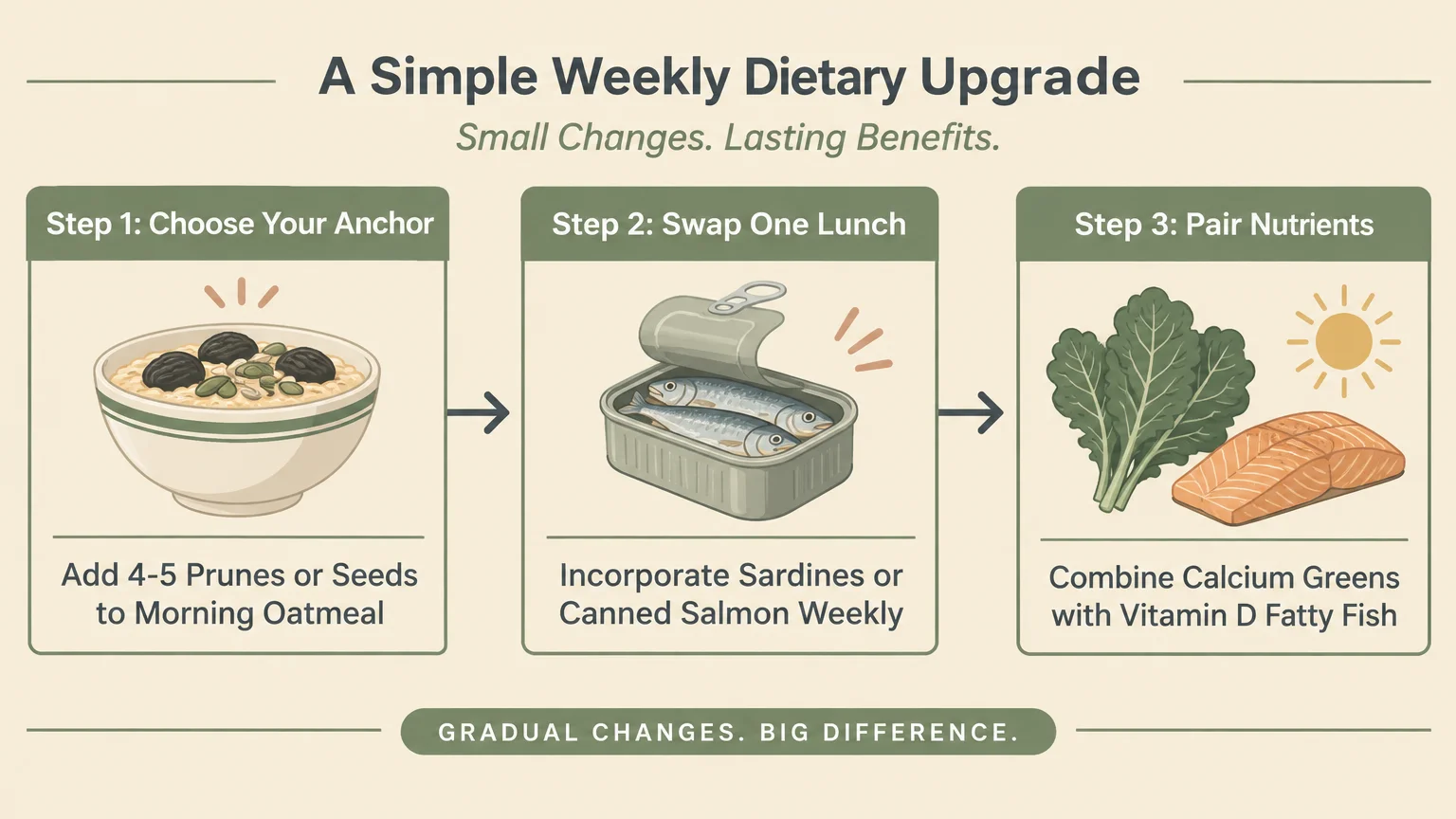
Pick just one meal—such as breakfast or lunch—and add a single reliable calcium source from this list for the next seven days. Stirring chopped almonds into plain yogurt or tossing a cup of collards into soup takes only minutes.
Once that simple swap feels automatic, build a second bone-friendly staple into another meal. Steady, everyday food choices do far more to prevent bone fractures and protect your independence than any complicated overhaul ever could.