
Waking up with tight joints can make your first steps feel hesitant and slow your morning pace. A gentle morning mobility routine restores your natural range of motion so you can move through your day with confidence and ease.
By warming your tissues before you leave bed, you protect your independence and keep up with grandchildren or daily hobbies. These small movements lubricate your joints and reduce muscle tension without exhausting your energy reserves.
This five-minute practice requires no special equipment and adapts easily to your personal comfort level. Start your day on steady footing with these targeted, restorative movements.
Why Morning Stiffness Increases with Age
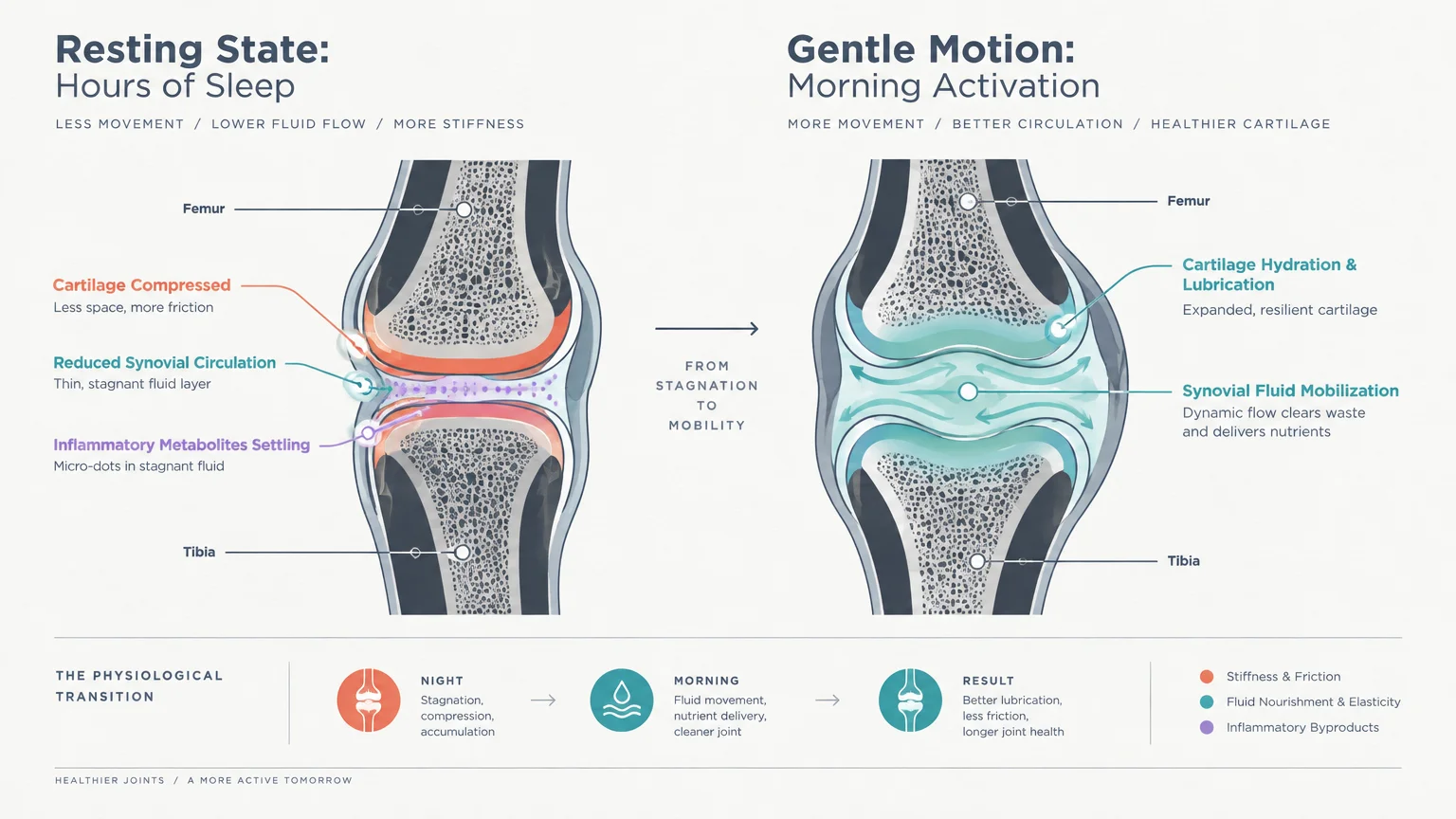
During sleep, your body remains still for hours, which slows blood flow and reduces the circulation of synovial fluid inside your joints. This natural fluid acts like motor oil, nourishing cartilage and ensuring friction-free movement.
As the years pass, cartilage naturally thins and connective tissues lose some of their resting elasticity. The National Institute on Aging emphasizes that staying gently active counteracts this age-related decline.
When you lie still, inflammatory chemicals can also settle in resting tissues; gentle motion quickly sweeps them away. Moving immediately upon waking signals your nervous system to release muscular guarding.
Phase 1: Gentle Movements While Still in Bed
You do not need to leap onto your feet the moment your eyes open. Beginning while lying flat allows your heart rate and spine to acclimate gradually.
Full-Body Reach and Deep Breathing
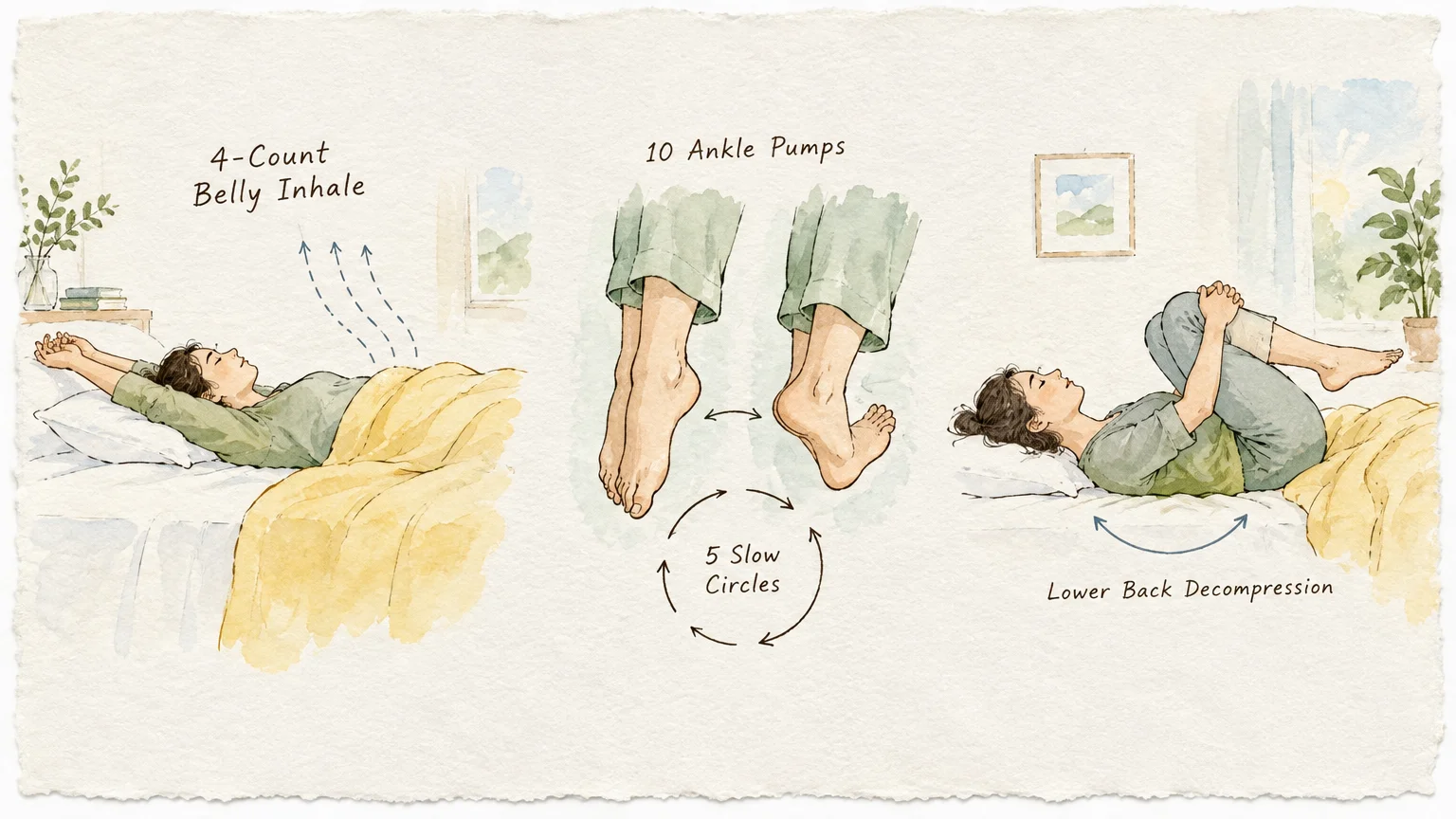
Extend your arms overhead and stretch your legs long toward the foot of your bed. Inhale deeply into your belly for four counts, then exhale slowly through your mouth.
This deep diaphragmatic breath expands your ribcage and oxygenates dormant muscles. Repeat this stretch three times to awaken your nervous system.
Ankle Pumps and Circles
Point your toes downward away from your shins, then flex them firmly upward toward your nose. Perform ten slow repetitions to push pooled blood from your lower legs back toward your heart.
Follow with five clockwise and five counterclockwise circles with both ankles. This simple movement loosens the calf muscles and readies your feet for stable weight-bearing.
Gentle Knee-to-Chest Hugs
Bend one knee and draw it slowly toward your chest, clasping your hands behind your thigh. Hold for two slow breaths, release gently, and repeat with your other leg.
Avoid pulling directly on your kneecap to protect the joint capsule. This decompression relieves lower back tension that often accumulates overnight.

Phase 2: Seated Mobility at the Edge of the Bed
Sit up slowly, pausing for a moment to let your blood pressure adjust before moving further. Sitting upright engages your core stabilizers and prepares your spine for upright posture.
Seated Neck and Shoulder Releases
Drop your chin softly toward your collarbone, then roll your head gently toward your right shoulder. Return to center and repeat on your left side, keeping your breath steady.
Next, roll both shoulders backward in large, fluid circles five times. This clears tension in your upper trapezius muscles from sleeping on flat or bulky pillows.
Seated Torso Twists
Plant both feet firmly flat on the floor and rest your hands lightly on your thighs. Gently rotate your upper body toward the right, using your mattress for light support.
Pause for a full breath cycle before rotating slowly across to the left side. The Centers for Disease Control and Prevention highlights flexibility exercises as a core pillar of healthy aging.
Seated Pelvic Tilts
Rest your hands on your knees, gently arch your lower back, and lift your chest forward. Then round your spine gently toward the back of the bed, tucking your pelvis.
Alternate between these two shapes five times to restore mobility across your lumbar vertebrae. This movement lubricates your spine before you transfer full body weight onto your feet.
Phase 3: Standing Transitions and Balance Prep
Now that your joints are warm, stand up with intention and confidence. Ensure your feet are shoulder-width apart and your slippers or shoes offer reliable grip.
Supported Heel-to-Toe Rocking
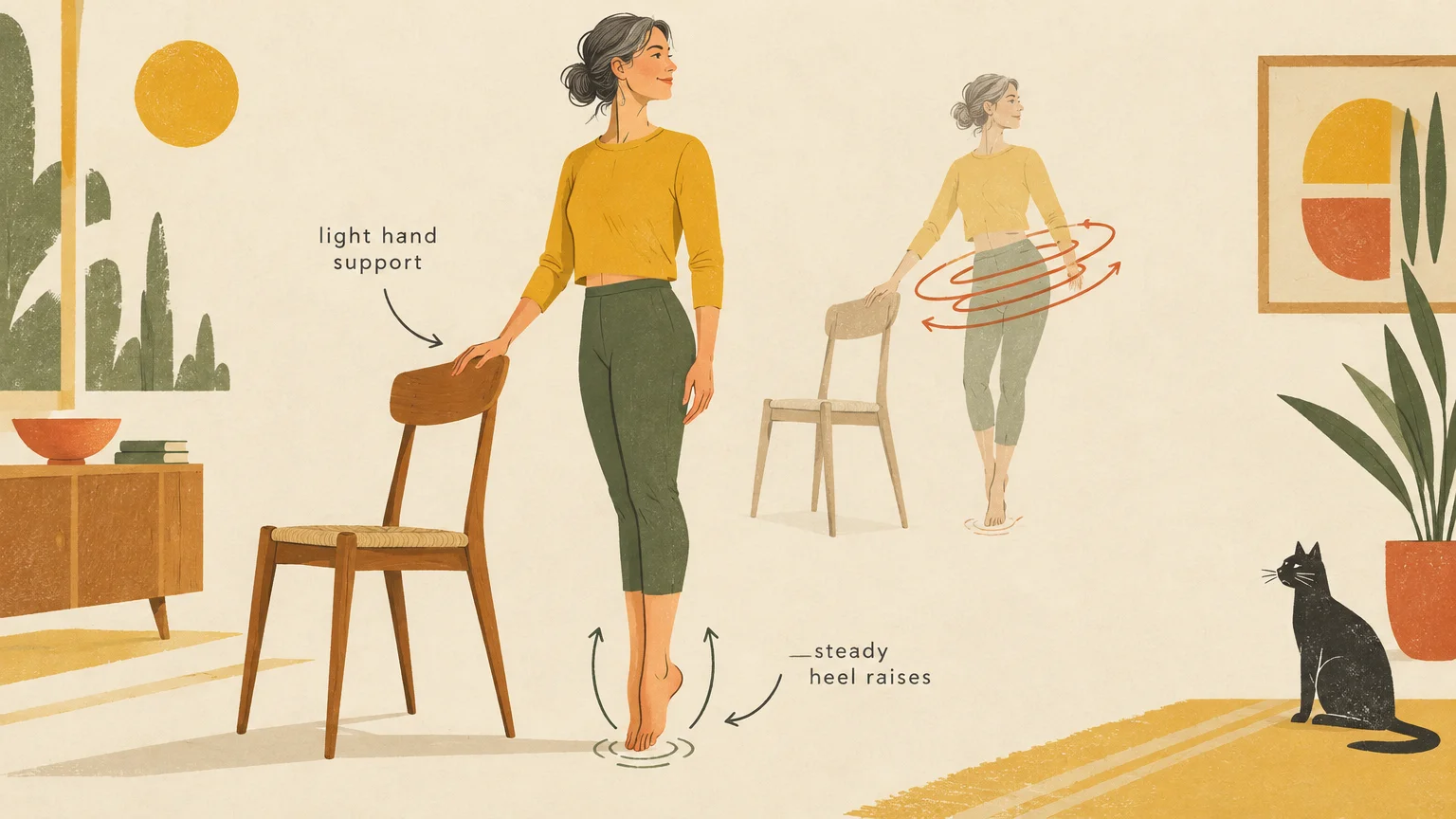
Place your hands on a sturdy bedpost or stable dresser for light balance support. Shift your weight smoothly onto your toes, then rock back slightly onto your heels.
Move smoothly through ten gentle rocks without locking your knees. This action fires up your calf muscles and stimulates foot receptors essential for fall prevention.
Standing Side Bends
Stand tall with your feet grounded and let your arms rest loosely along your sides. Slide your right hand a few inches down your right thigh as your torso bends sideways.
Return upright and glide your left hand down your left thigh. Lateral mobility frees up your rib cage and allows for deeper, effortless breathing throughout the day.
Adjustments for Arthritis and Joint Discomfort
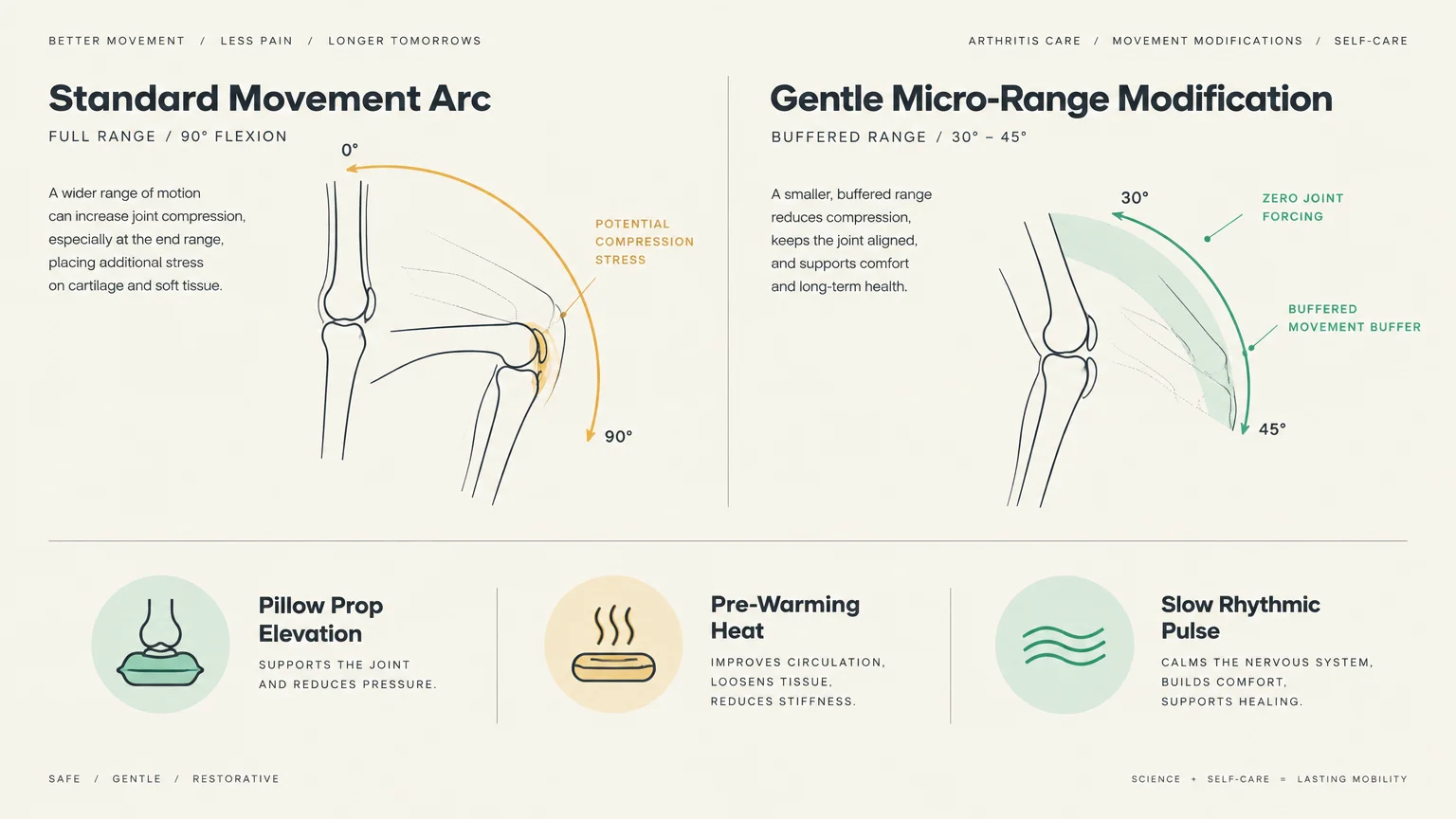
Movement should never cause sharp, stabbing, or pinching sensations. If your joints feel particularly tender, perform fewer repetitions and decrease your range of motion.
Applying a warm compress or taking a warm shower prior to movement can soften rigid tendons. Guidance from the National Health Service confirms that gentle, regular motion reduces joint pain over time.
Listen closely to what your body communicates each morning, honoring days when small micro-movements are plenty. Consistency matters far more than intensity when building long-term joint resilience.

When to Consult Your Doctor
Morning stiffness typically loosens within twenty to thirty minutes of gentle activity. If your joint stiffness regularly persists for longer than an hour, schedule an evaluation with your physician.
Seek prompt medical care if you notice joint heat, visible swelling, redness, or sudden changes in mobility. Medical experts at the American College of Rheumatology advise early diagnosis for inflammatory conditions.
Always discuss new physical routines with your healthcare provider if you take blood pressure medications or experience frequent dizziness. This guide offers educational insight and does not replace personalized medical advice.
Frequently Asked Questions
How long should my morning mobility routine take?
A thorough morning routine takes just five to eight minutes from start to finish. You can easily expand or shorten the sequence depending on your schedule and comfort level.
Is it better to stretch before or after breakfast?
Practicing these movements before breakfast helps release sleep-related stiffness right away. However, moving after your morning meal or tea is equally effective if you need early hydration first.
What should I do if a specific stretch causes discomfort?
Immediately decrease your range of motion or skip that specific movement altogether. Healthy mobility work should feel like a satisfying release rather than a painful struggle.
Can I do these movements again later in the day?
Yes, repeating this routine in the afternoon or evening can prevent midday sluggishness. Gentle movement after sitting for long periods keeps your joints conditioned and limber.
One Small Habit to Build This Week
Commit to doing just the ankle pumps and the seated torso twists every morning for seven days straight. Pairing these quick movements with waking up will make the habit stick effortlessly.
Notice how much lighter your initial steps feel as you walk to your kitchen. Small investments in your daily mobility bring lasting rewards for your freedom and vitality.