
Maintaining strong muscles preserves your daily independence, protects your physical mobility, and gives you the energy to stay active with your family. You can rebuild muscle vitality and protect your strength at any age.
While natural biological shifts occur over time, proactive lifestyle habits can halt and even reverse age-related physical decline. Understanding these biological changes helps you take immediate, effective control of your long-term health.
This comprehensive guide outlines the science of sarcopenia alongside practical exercise routines and nutrition targets designed to keep you resilient.
Understanding Age-Related Muscle Loss
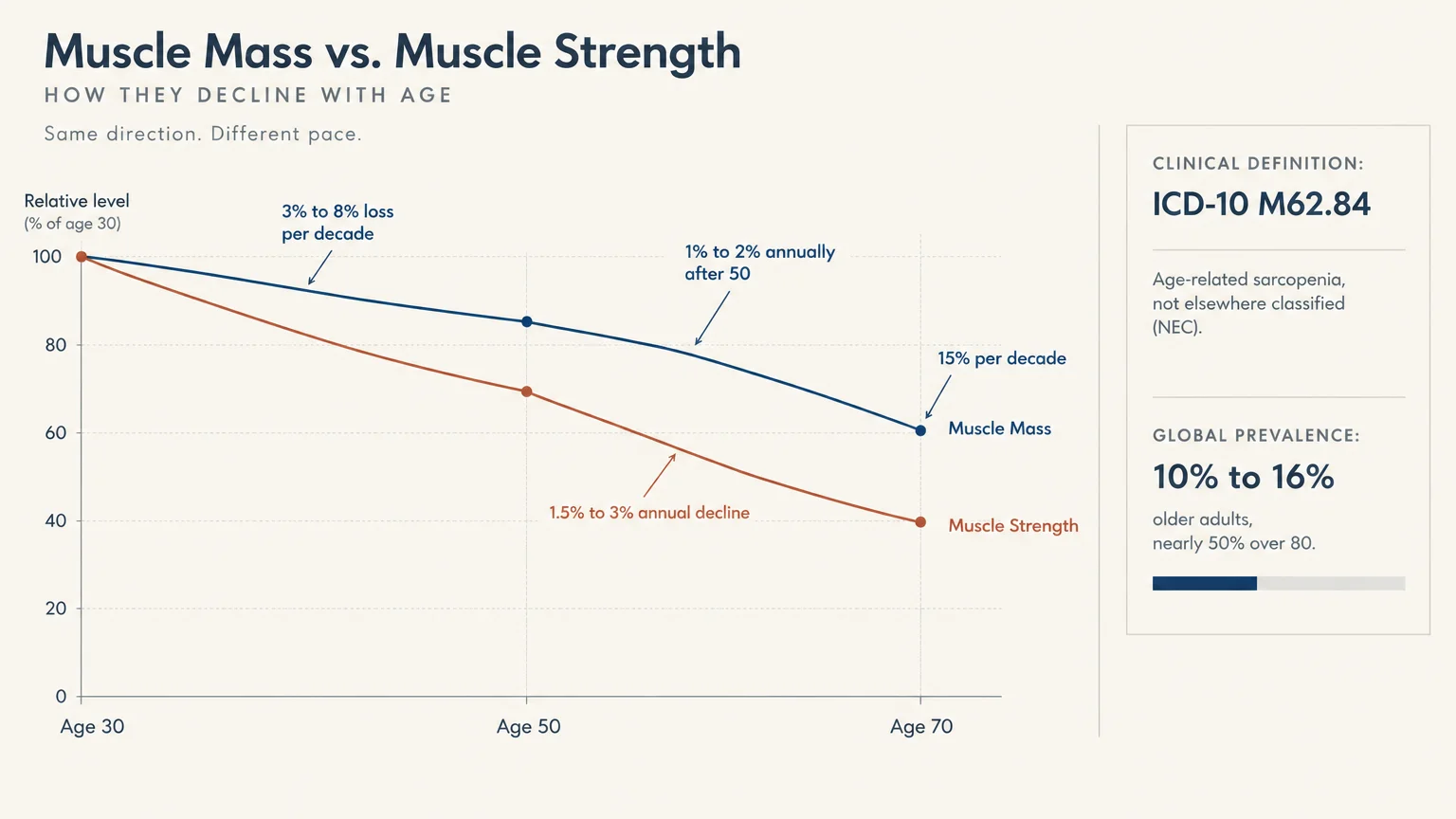
Sedentary adults naturally lose 3% to 8% of their muscle mass per decade starting in their 30s and 40s. After age 50, muscle mass drops by 1% to 2% annually.
Muscle strength declines even faster than mass, diminishing at an annual rate of 1.5% to 3%. By age 70, cumulative mass loss accelerates to roughly 15% per decade.
In October 2016, medical authorities recognized this condition as an independent disease under ICD-10 code M62.84. Sarcopenia affects 10% to 16% of older adults globally, rising to nearly 50% in people over 80.
The European Working Group on Sarcopenia in Older People updated its consensus guidelines in 2018 to prioritize muscle strength over mass. This change allows healthcare providers to diagnose physical decline earlier through simple assessments like grip strength.
Functional strength tests—such as rising from a chair repeatedly—reliably predict your risk of falls and disability. Preserving that strength protects your personal freedom far better than measuring muscle size alone.
Protein Nutrition: Overcoming Anabolic Resistance
As your body matures, your muscle tissue develops anabolic resistance, which blunts your cellular response to dietary amino acids. Overcoming this resistance requires specific nutritional adjustments to keep your muscle protein synthesis active.
The standard Recommended Dietary Allowance of 0.8 grams of protein per kilogram of body weight per day fails to prevent muscle decline in older adults. Clinical consensus groups, including the European Society for Clinical Nutrition and Metabolism, recommend higher targets.
Healthy older adults need between 1.0 and 1.2 grams of protein per kilogram of body weight daily. If you manage chronic illness, recover from illness, or have diagnosed sarcopenia, you may need 1.2 to 1.5 g/kg/day.
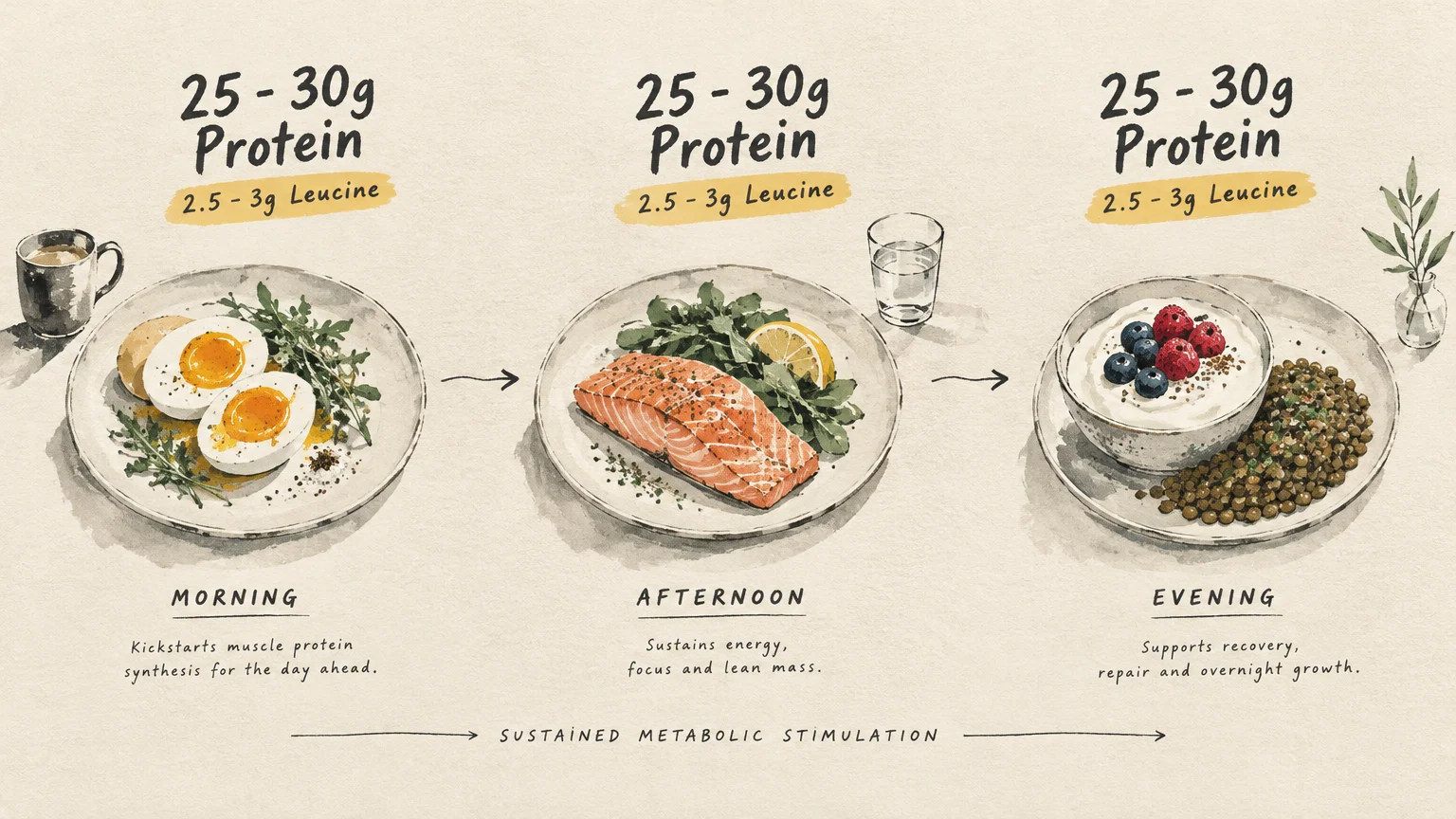
Distribution throughout the day matters just as much as your daily total. Aim for 25 to 30 grams of high-quality protein per meal to trigger muscle repair.
This per-meal target supplies about 2.5 to 3 grams of leucine, a vital amino acid that directly stimulates muscle synthesis. Eggs, poultry, fish, Greek yogurt, and legumes provide rich sources of this nutrient.
Spacing your protein across three balanced meals ensures continuous stimulation of muscle tissue throughout the day. Consuming a large protein portion only at dinner leaves your muscles undernourished during morning and afternoon hours.
Progressive Resistance Training: The Proven Strategy
Physical exercise serves as your primary defense against physical decline. Currently, regulatory agencies offer no FDA- or EMA-approved medications specifically indicated for treating or preventing sarcopenia.
While clinical trials investigate emerging drug candidates, progressive resistance training remains the single most effective, clinically validated intervention available. Challenging your muscles prompts them to adapt, grow, and generate force.
Starting at Your Current Fitness Level
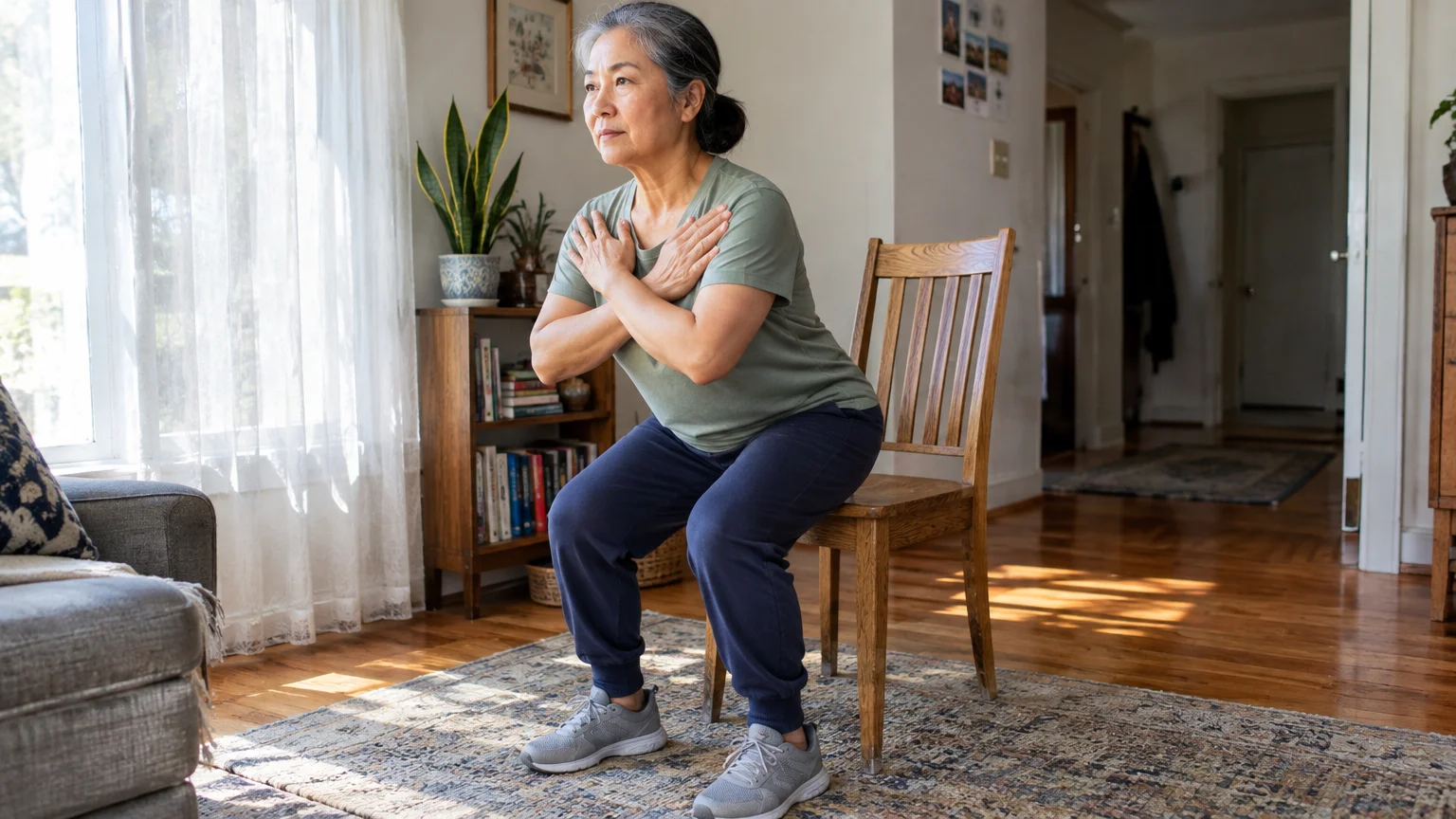
Begin your strength routine right where you are today. If you have been sedentary, simple bodyweight exercises—such as sit-to-stand repetitions from a sturdy dining chair—build baseline lower-body strength safely.
As movements feel easier, incorporate elastic resistance bands or light hand weights into your weekly routine. Focus on functional movement patterns like seated rows, overhead presses, and gentle wall push-ups.
Aim for two to three resistance sessions per week on non-consecutive days. Guidance from the National Institute on Aging emphasizes working all major muscle groups consistently.
Progressing Safely Over Time
Consistency delivers far better results than excessive intensity. Choose a resistance level that allows you to complete 8 to 12 repetitions with controlled, steady form.
Rest for 60 to 90 seconds between sets to allow muscle fibers to recover. When you can complete all repetitions easily without fatigue, slightly increase resistance or repetitions to encourage continued muscle adaptation.
Rest days play an essential role in your physical progress because muscles repair and strengthen while you rest. Aim for at least 48 hours of recovery between sessions targeting the same muscle groups.

When to Consult Your Doctor
Always speak with your primary healthcare provider before starting a new resistance routine, particularly if you manage heart conditions or joint disorders. A physician can help tailor movements to your physical limitations.
Sudden muscle weakness, unexplained weight loss, or difficulty rising from a chair warrant immediate medical evaluation. These symptoms can indicate underlying metabolic conditions or medication side effects that require clinical investigation.
Certain prescription therapies—including corticosteroids or newer GLP-1 weight-loss medications—can accelerate muscle loss alongside fat reduction. If you take these medications, your doctor can adjust your exercise and nutrition plan to safeguard lean tissue.
If you experience balance problems or recent falls, ask your physician for a referral to physical therapy. The Centers for Disease Control and Prevention highlights gait and strength training as critical tools for fall prevention.
Remember that educational resources provide helpful guidance, but they never replace personalized clinical advice. Your medical team will ensure your nutritional targets and exercise programs match your personal health profile.
Frequently Asked Questions
Can walking alone prevent sarcopenia?
Walking provides substantial cardiovascular benefits, but it does not produce enough mechanical tension to stop muscle mass decline. You must combine regular walking with resistance exercises to effectively stimulate muscle growth.
Is it safe to lift weights after age 70?
Yes, resistance training is safe and remarkably beneficial for adults in their 70s, 80s, and beyond. Proper form and gradual progression minimize injury risk while significantly improving functional mobility and bone density.
Are protein supplements necessary?
Whole foods should supply most of your daily protein needs whenever possible. However, whey or plant-based protein powders offer a convenient, efficient option if you struggle to reach 25 to 30 grams per meal.
Can medications cure sarcopenia?
No medications currently exist to cure or treat sarcopenia. While researchers are actively testing new drug therapies in clinical trials, structured exercise and targeted protein intake remain the only proven treatments.
Your Action Step for This Week
Pick one small, sustainable habit to begin rebuilding your physical strength right now. You do not need expensive gym memberships or complicated equipment to create lasting change.
Practice five controlled chair stands each morning after breakfast. Stand up without using your hands, pause briefly at the top, and lower yourself slowly back down.
Pair this movement habit with a breakfast that delivers 25 to 30 grams of protein. These two simple steps immediately trigger muscle growth and set you on a path toward lasting vitality.