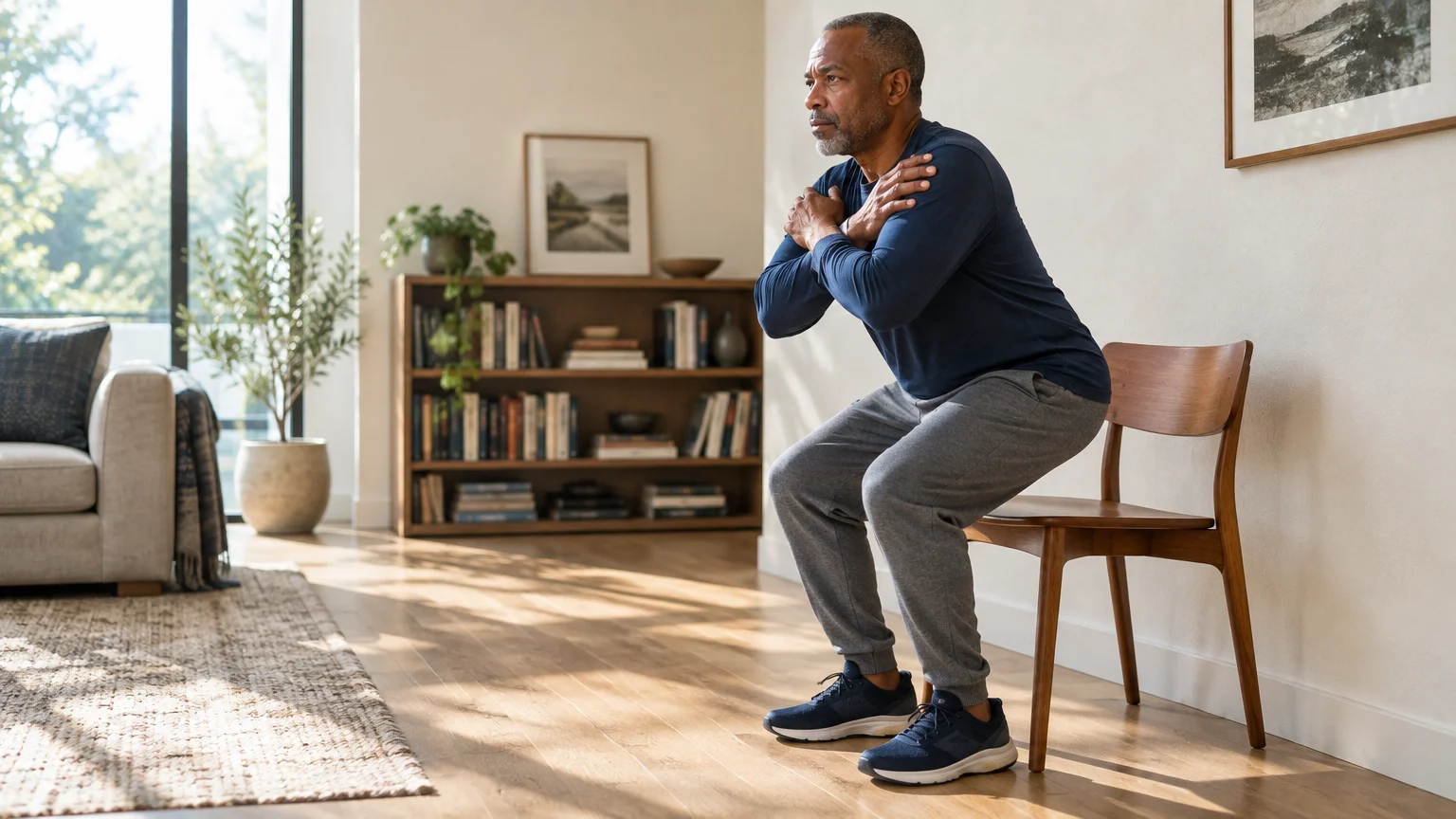
Your ability to rise smoothly from a chair reveals how well your body handles aging. This quick movement measures functional leg strength, balance, and independence better than many complex medical screenings.
Simple sit-to-stand assessments help you spot subtle physical declines before they lead to painful falls or limit your daily adventures. You can perform these evaluations safely at home using ordinary furniture.
By tracking your baseline now, you gain the power to strengthen your lower body and protect your vitality for years to come. Here is how to test yourself accurately and improve your score.
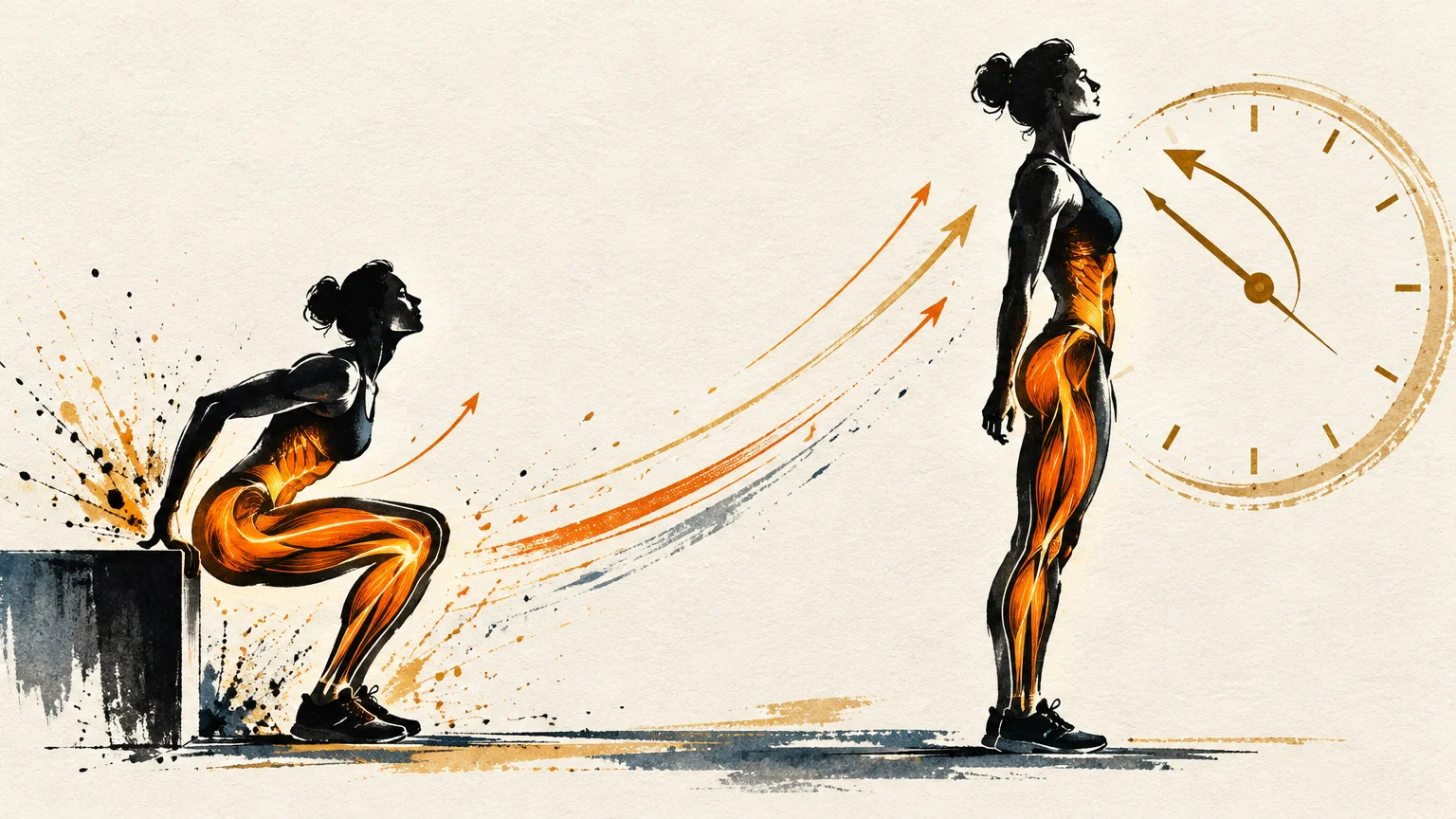
Why Leg Power Defines Your Biological Age
Standing up from a seated position requires coordinated work from your quadriceps, gluteal muscles, and core. When these muscle groups fire together, they stabilize your spine and propel your body upward against gravity.
As birthdays accumulate, muscle power naturally tends to decline faster than overall muscle mass. This specific loss of rapid force production directly influences how quickly you can react to a sudden slip or stumble.
The National Institute on Aging emphasizes that maintaining lower-body strength preserves personal autonomy. Without adequate leg power, simple tasks like getting off a low sofa or stepping out of a car become major obstacles.
Functional tests capture this dynamic capacity far better than a simple bathroom scale can. Your performance reflects the real-world health of your joints, motor nerves, and cardiovascular system under physical demand.
When you stand, your heart must adjust immediately to changes in blood distribution. A smooth, steady rise demonstrates robust autonomic vascular regulation alongside muscular vigor.
Neurological pathways must also recruit thousands of muscle fibers in a fraction of a second. Practicing sit-to-stand movements reinforces these critical neuromuscular connections across every decade of life.
The 30-Second Chair Stand Test: The Clinical Gold Standard
Physical therapists and geriatric specialists rely heavily on the 30-second chair stand test to gauge mobility. The Centers for Disease Control and Prevention features this exact evaluation within its STEADI fall-prevention protocol.
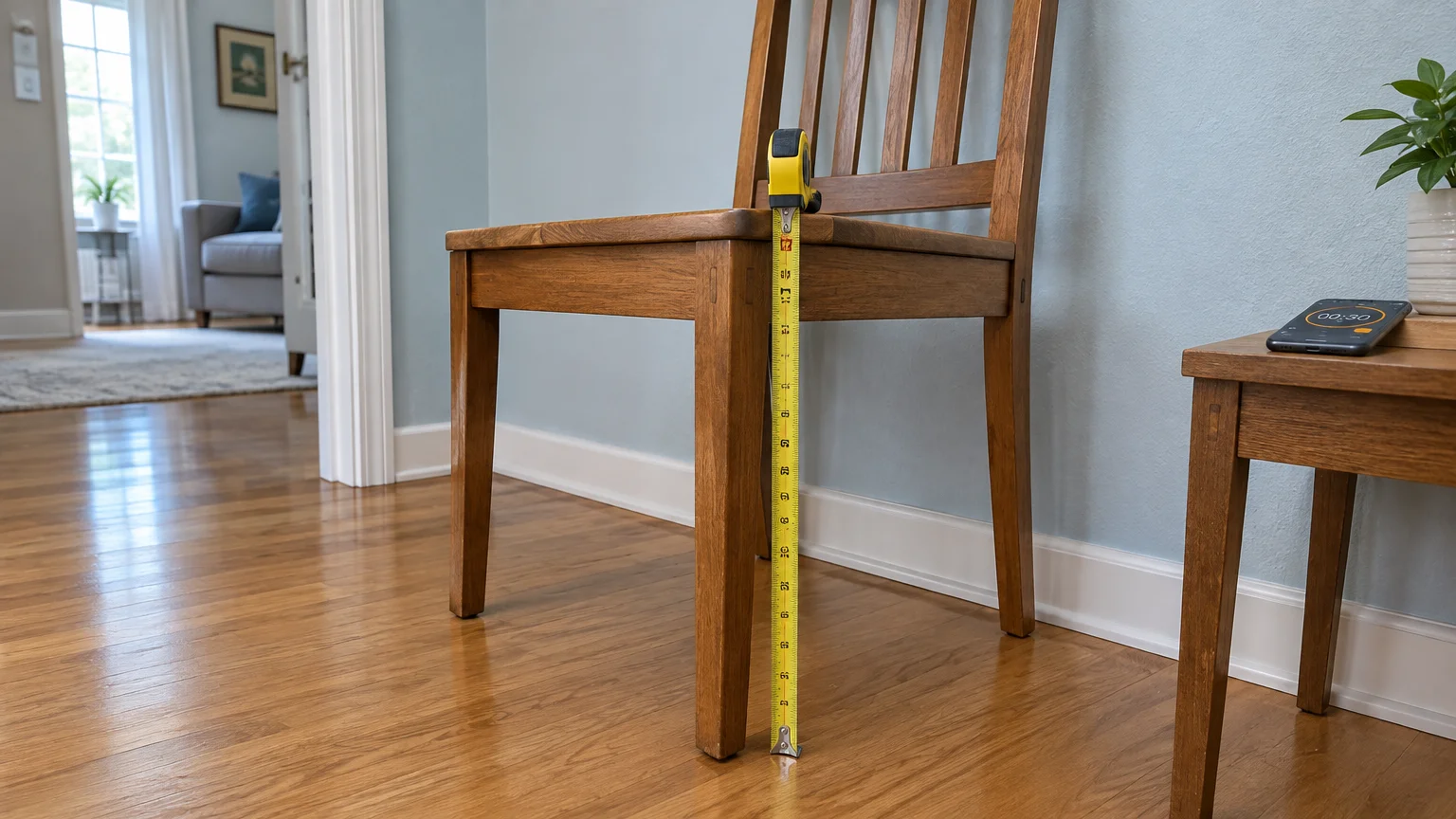
To set up the test, find a sturdy, straight-backed armless chair with a seat height of 17 inches (approximately 43 centimeters). Place the back of the chair flat against a solid wall to eliminate any risk of slipping.
Sit squarely in the center of the seat with your back straight and your feet planted flat on the floor. Cross your arms over your chest so that your hands rest securely on your opposite shoulders.
Set a timer for 30 seconds on your smartphone or have a family member hold a stopwatch. When the timer begins, rise to a completely upright standing position, then immediately sit back down.
Repeat this continuous cycle as many times as you safely can within the 30-second window. Count each time you achieve a full, erect standing posture before returning to the seat.
Form matters immensely during this assessment. If your arms uncross or you push off your thighs to stand up, the test stops immediately, and your recorded score is 0.
Ensure your knees lock out safely at the top without hyperextending your joints. Sit down fully between repetitions rather than merely grazing the cushion with your hips.
CDC Fall-Risk Benchmarks Across Every Decade
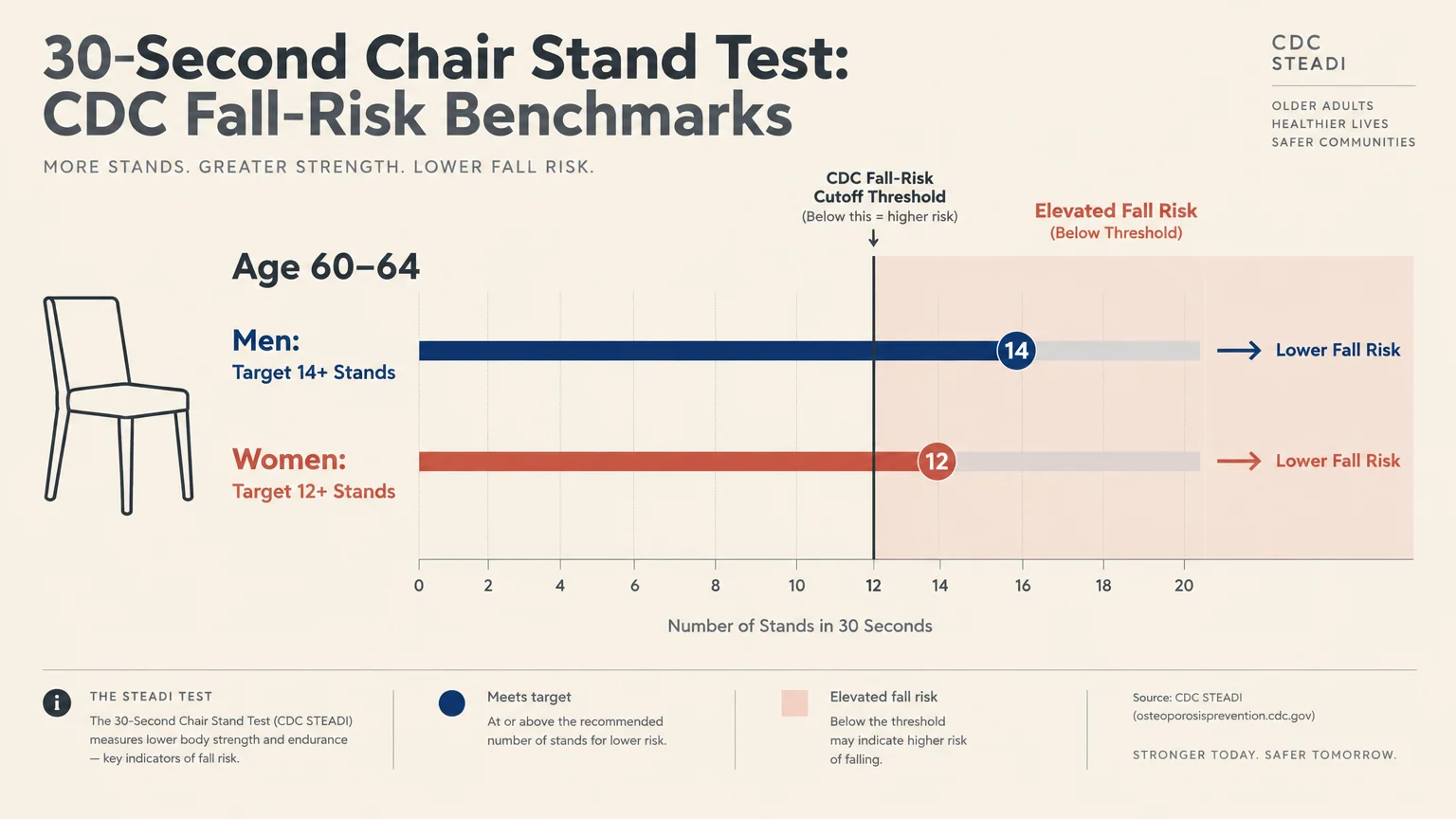
The CDC established distinct scoring cutoffs that separate average functional mobility from heightened fall risk. Falling below your age and sex threshold indicates that lower-body weakness may compromise your balance.
Target Scores for Adults in Their Sixties
For adults aged 60 to 64, men should complete at least 14 full stands in 30 seconds. Women in this same age bracket target a minimum of 12 stands to stay within the safe range.
Between ages 65 and 69, the benchmark shifts slightly to account for physiological changes. Men need at least 12 repetitions, while women need 11 repetitions to maintain an average score.
Scoring below these numbers in your sixties suggests an early loss of fast-twitch muscle fibers. Catching this trend early gives you the best opportunity to rebuild robust muscular reserves.
Target Scores for Adults in Their Seventies
For individuals aged 70 to 74, men should aim for 12 or more stands within the half-minute limit. Women in this tier need 10 or more stands to avoid falling into the high-risk category.
From ages 75 through 79, the standard requires men to achieve at least 11 completed stands. Women maintain the target of 10 stands during this five-year window.
Meeting these standards during your seventies correlates strongly with continued independent living. It ensures you can navigate stairs, climb out of bathtubs, and stroll through grocery aisles without assistance.
Target Scores for Adults Aged Eighty and Older
Between ages 80 and 84, the cutoff drops to 10 stands for men and 9 stands for women. For those aged 85 to 89, both men and women must complete at least 8 stands.
In the 90 to 94 age group, completing 7 stands for men and 4 stands for women indicates solid functional capacity. Scoring below these marks highlights an urgent need for targeted physical therapy.
Regardless of your chronological age, these numbers offer an objective snapshot of physical health. They remove the guesswork from determining whether your daily activity regimen maintains adequate strength.
The 5-Times Sit-to-Stand Speed Assessment
If you prefer a quicker alternative to the 30-second endurance drill, consider the 5-times sit-to-stand test. Clinicians frequently use this timed sprint as part of the Short Physical Performance Battery.
This version uses the exact same 17- to 18-inch chair and crossed-arm posture. Instead of racing against a fixed clock, you measure how many seconds it takes to complete five consecutive stands.
Start seated, begin timing on your command, and stop the clock the moment your body stands fully upright on the fifth repetition. Move as briskly and safely as your body permits.
Clinical guidelines show that taking 12 seconds or longer signals impaired lower-extremity strength and demands a formal fall-risk evaluation. Completing the sequence in more than 15 seconds flags a significant risk of recurrent falls.
A large meta-analysis led by researcher Richard Bohannon outlines typical completion times for healthy adults. In that comprehensive analysis, adults aged 60 to 69 averaged 11.4 seconds to finish five repetitions.
The average time increased to 12.6 seconds for adults in their seventies. For healthy adults aged 80 to 89, the average completion time reached 14.8 seconds.
Tracking this specific metric month over month provides immediate feedback on your physical conditioning. Even a one-second improvement in your five-repetition time translates to noticeable ease in everyday movement.
The Floor Sitting-Rising Test for Longevity
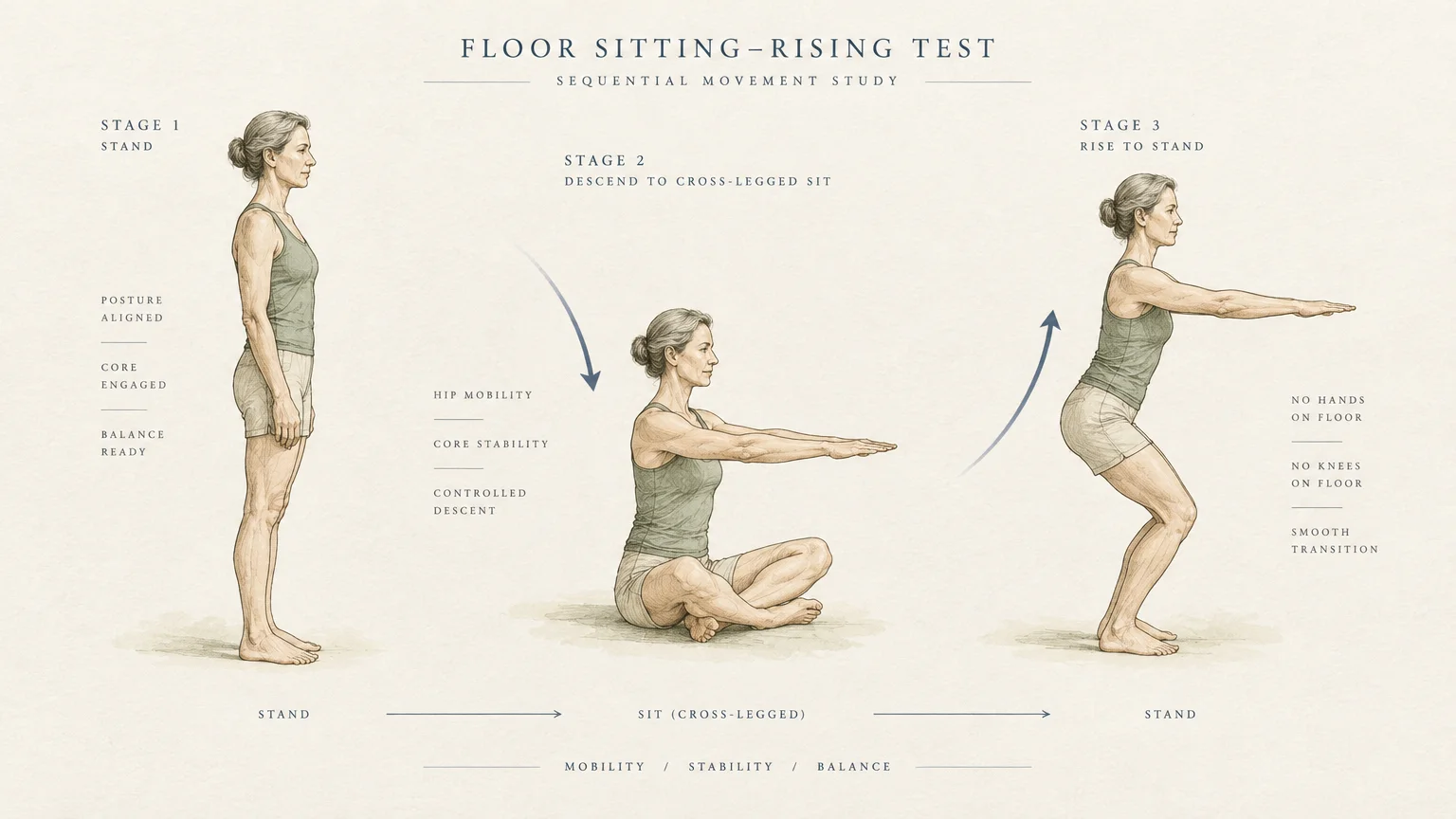
Moving beyond chairs, sports medicine physician Dr. Claudio Gil Araújo developed the floor Sitting-Rising Test (SRT). This unique assessment evaluates non-aerobic physical fitness, blending muscle strength, joint flexibility, balance, and body composition into one score.
To attempt the test, stand barefoot in comfortable clothing on a clean, open floor away from sharp objects. Cross your feet and lower yourself into a seated, cross-legged position without relying on external support.
Once seated comfortably on the floor, stand back up using only your legs and core. You must avoid placing your hands, knees, forearms, or the sides of your legs against the ground.
The test utilizes a 10-point scale, allocating 5 points for sitting down and 5 points for rising up. You subtract 1 full point every time a hand, forearm, knee, or leg provides support.
You also subtract 0.5 points whenever you experience an obvious wobble or loss of balance during the movement. If you fall or lose control, the test ceases for safety.
Do not feel discouraged if this test proves exceptionally challenging on your first attempt. Clinical reference data derived from over 6,000 adults shows that fewer than 8% of individuals aged 55 and older earn a perfect 10/10 score.
Treat the floor test as an educational baseline rather than a high-stakes obstacle. It exposes specific limitations in hip mobility or core stability that you can address through daily practice.
What the Longevity Science Reveals
The scientific connection between rising ability and biological longevity is supported by extensive research published in the European Journal of Preventive Cardiology. The original 2012 investigation tracked 2,002 adults aged 51 to 80 over a median period of 6.3 years.
Participants scoring in the lowest range of 0 to 3 points faced a 5- to 6-times higher risk of all-cause mortality compared to high scorers. Achieving 8 to 10 points provided substantial protective benefits.
Crucially, the 2012 data showed that every single 1-point increase in your score was linked to a 21% reduction in all-cause mortality. Small gains in physical function produce measurable statistical advantages.
A major follow-up study published by Dr. Araújo’s research team expanded these findings across 4,282 adults aged 46 to 75. Researchers monitored these individuals over a median follow-up duration of 12 years.
The updated results revealed that adults scoring between 0 and 4 points had a 3.8-fold higher risk of dying from natural causes compared to those scoring a perfect 10. Their cardiovascular mortality risk was 6.0-fold higher.
Over that 12-year window, the total death rate was just 3.7% for participants who earned a perfect score of 10. For individuals scoring 8 points, the death rate stood at 11.1%.
In sharp contrast, the death rate surged to 42.1% among individuals scoring in the lowest tier of 0 to 4 points. Musculoskeletal fitness clearly correlates with internal cardiovascular and metabolic health.
Muscles function as metabolic engines that process glucose and modulate systemic inflammation. When you preserve the capacity to lift your own body mass, your whole biological system thrives.
How to Prepare Your Testing Area Safely
Safety must always take priority over setting personal performance records in your living room. Before conducting any self-assessment, inspect your environment thoroughly to prevent unnecessary trips or slips.
Choose a rigid, wooden or metal chair without wheels, swivel mechanisms, or plush cushions. Soft cushions compress unpredictably, which robs your legs of leverage and distorts your score.
Position the chair so its rear legs rest firmly against a baseboard or solid doorframe. This bracing prevents the chair from sliding backward when you drop your hips onto the seat.
Wear supportive, closed-toe athletic sneakers with non-slip rubber soles during chair assessments. Never perform these tests while wearing slick socks or loose slippers on hardwood or tile flooring.
If you choose to attempt the floor test, ensure your floor is clear of rugs that could bunch up. You may want a soft yoga mat beneath you for joint cushioning.
We strongly recommend inviting a spouse, family member, or friend to stand nearby as a spotter. A spotter can monitor your posture, run the stopwatch, and assist if you lose balance.
Keep a sturdy table or secondary chair within arm’s reach when trying floor movements. Having a secure anchor available allows you to abort the movement safely if you feel unstable.
Practical Exercises to Elevate Your Score
If your initial score fell below expectations, targeted exercise routines can rapidly rebuild your strength. Muscles adapt remarkably well to mechanical stimulus at any age when trained consistently.
Master the Box Squat with Cushion Progression
Begin practicing box squats using your standard dining chair as a reliable target. If standing up without arm support feels too strenuous, place two firm cushions on the seat to raise the starting height.
Cross your arms over your chest, brace your abdominal muscles, and stand up purposefully. Pause at the top for one second, then slowly lower your hips back onto the cushions.
Perform 3 sets of 8 to 10 repetitions three times per week. As your leg power builds over several weeks, remove one cushion to increase the challenge until you use the bare chair.
Emphasize Slow Eccentric Lowering
The lowering phase of a squat builds incredible muscular control while placing minimal strain on your cardiovascular system. Stand tall, then take a full 3 to 4 seconds to descend toward the chair.
Do not allow your body to drop heavily onto the seat at the bottom. By controlling the descent until your hips touch down softly, you recruit deep stabilizing fibers in your hips and knees.
Aim for 2 sets of 6 slow eccentric repetitions every other day. This controlled deceleration directly protects your joints against sudden impacts during regular walking.
Incorporate Heel and Toe Raises
Strong calves and responsive shins provide the foundational leverage necessary for quick rising movements. Stand behind your chair and place your fingertips lightly on the backrest for balance.
Lift your heels as high as possible, holding the peak contraction for two seconds before lowering down. Immediately rock back onto your heels to lift your toes toward your shins.
Complete 15 to 20 continuous repetitions to promote lower-leg circulation and strengthen your ankles. Robust ankle mobility allows your knees to track forward comfortably whenever you initiate a rise.
Develop Single-Leg Balance and Stability
Balance is an active neuromuscular skill that requires regular stimulation to stay sharp. Stand near a wall or sturdy counter and lift one foot two inches off the floor.
Hold this single-leg stance for 20 to 30 seconds while keeping your pelvis level and your torso tall. Switch legs and repeat the exercise twice on each side daily.
According to physical activity recommendations from the National Health Service, combining balance drills with strength work drastically reduces fall injuries. Strong stabilizer muscles keep your center of mass centered over your feet.

When to Check with a Doctor First
While functional self-tests are generally safe, certain health conditions demand a medical consultation before you begin. Never push through sharp joint pain, sudden lightheadedness, or unfamiliar chest discomfort.
If you have undergone a total hip or knee replacement, check with your orthopedic surgeon first. Specific hip precautions may prohibit crossing your legs or flexing your hips beyond 90 degrees.
Individuals diagnosed with severe spinal stenosis, advanced osteoporosis, or chronic balance disorders should exercise caution. A clinical physical therapist can adapt these tests to protect your spine and fragile bones.
Pay careful attention to cardiovascular signals whenever you transition from sitting to standing rapidly. If you experience dizziness, blurred vision, or heart palpitations, pause immediately and sit down.
These sensations may stem from orthostatic hypotension, a condition where blood pressure drops abruptly upon standing. Consult your physician to review your medications, as certain blood pressure drugs require dosage adjustments.
If you have suffered an unexplained fall within the past three months, avoid self-testing without professional supervision. Your healthcare provider can conduct a comprehensive mobility assessment in a controlled clinical environment.
Remember that this article provides educational health insights rather than personal medical diagnosis. Always consult a qualified physician before starting any rigorous physical fitness routine.
Frequently Asked Questions About Functional Aging Tests
How often should you retest your sit-to-stand performance?
Testing yourself once every four to six weeks provides an ideal window to gauge your progress. Retesting too frequently can lead to frustration, as meaningful muscular adaptations take several weeks to solidify.
Keep a dedicated fitness notebook or digital log to record your completed stands and times. Tracking your gradual improvements over several months serves as excellent motivation to stay active.
What should you do if your knees ache while standing up?
Mild joint stiffness often eases as your muscles warm up, but sharp knee pain requires immediate attention. First, check your foot placement to ensure your knees track in line with your second toes.
Avoid letting your knees collapse inward toward each other as you exert upward force. If the discomfort persists, raise your seat height with a firm cushion to reduce the flexion angle at your knee joints.
Persistent pain that does not improve with seat modification warrants an evaluation by a medical professional. An underlying issue like meniscus wear or tendonitis may require specialized rehabilitation.
Is it possible to improve your score after age seventy?
Yes, human skeletal muscle retains the capacity to grow stronger and hypertrophy throughout every stage of life. Research consistently demonstrates that even nonagenarians gain significant functional strength through progressive resistance training.
Consistency matters far more than your starting age or current fitness background. By performing regular bodyweight squats and balance exercises, you can steadily increase your chair stand count over time.
What if you cannot stand up without using your arms?
Recording a score of zero on the formal CDC test simply establishes your current starting baseline. It identifies an immediate, actionable opportunity to rebuild critical leg strength before a fall occurs.
Begin by using your hands lightly on your thighs or chair arms to assist your ascent. Focus on lowering yourself down as slowly as possible without relying entirely on your upper body.
Over time, use fewer fingers for support until your legs can carry your full bodyweight. Dedicating just five minutes a day to assisted standing drills will build the strength you need.
Your Seven-Day Action Plan for Stronger Legs
Transforming your physical vitality does not require hours spent in a crowded gym. You can achieve substantial strength improvements by attaching one tiny habit to your existing daily routine.
Starting today, implement the three-stand rule every time you get up from a chair. Before walking away to answer the phone, brew tea, or grab the mail, stand up and sit down three extra times.
Keep your arms crossed over your chest if your strength permits, or use minimal fingertip support on the armrests. Focus on driving through your heels and squeezing your gluteal muscles at the top.
If you rise from a chair ten times throughout the day, this micro-habit delivers thirty bonus squats effortlessly. Over a single week, that accumulates to more than two hundred functional repetitions.
These distributed repetitions build durable muscular endurance without causing overwhelming muscle soreness or draining your daily energy. Your nervous system rapidly masters the movement pattern through frequent, low-stress exposure.
Commit to this simple three-stand practice for the next seven consecutive days. You will build the foundation for greater independence, enhanced stability, and vibrant health for all the years ahead.