
Proper daily hydration preserves your physical stamina, protects stiff joints, and keeps your mind sharp. It supports the energy you need to pursue hobbies and enjoy active days with your loved ones.
Yet as you mature, internal fluid reserves decline and natural thirst signals fade quietly. Waiting until your mouth feels dry often means your body is already running low on water.
Understanding these internal changes empowers you to maintain steady energy and safeguard your independence. A few intentional habits will help you stay refreshed throughout every season of life.
Why Thirst and Aging Diverge
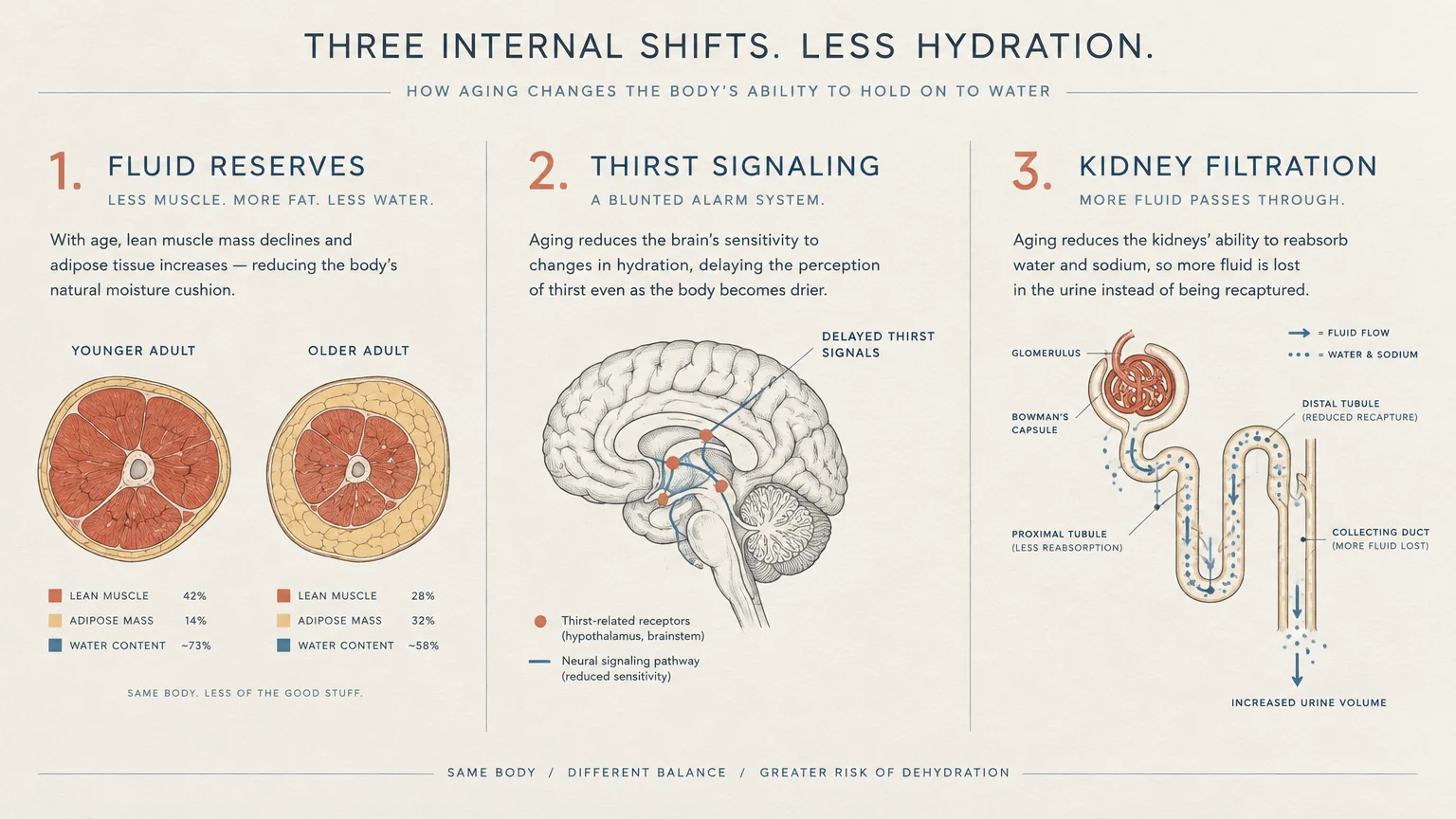
Your body undergoes several quiet physiological transformations that directly alter how you handle fluids. Recognizing these shifts helps you adapt before mild dehydration affects your daily routine.
First, the total volume of water stored in your lean muscle tissue decreases as muscle naturally yields to fat mass. Because lean tissue holds more water, your overall moisture cushion shrinks over time.
Second, the brain receptors responsible for registering dehydration become far less sensitive. By the time you notice genuine thirst, you may have operated with a fluid deficit for several hours.
Third, your kidneys gradually lose some of their filtering efficiency. They allow larger volumes of water to pass through into urine rather than reclaiming it back into your bloodstream.
Guidance from the National Institute on Aging emphasizes that relying on thirst alone leaves mature adults vulnerable to fluid loss. You must approach drinking fluids as an active routine rather than a spontaneous reaction.
Subtle Dehydration Signs Seniors Often Overlook
Classic symptoms like extreme thirst or profuse sweating rarely show up first in older bodies. Instead, dehydration often presents through vague physical complaints that many people write off as normal aging.
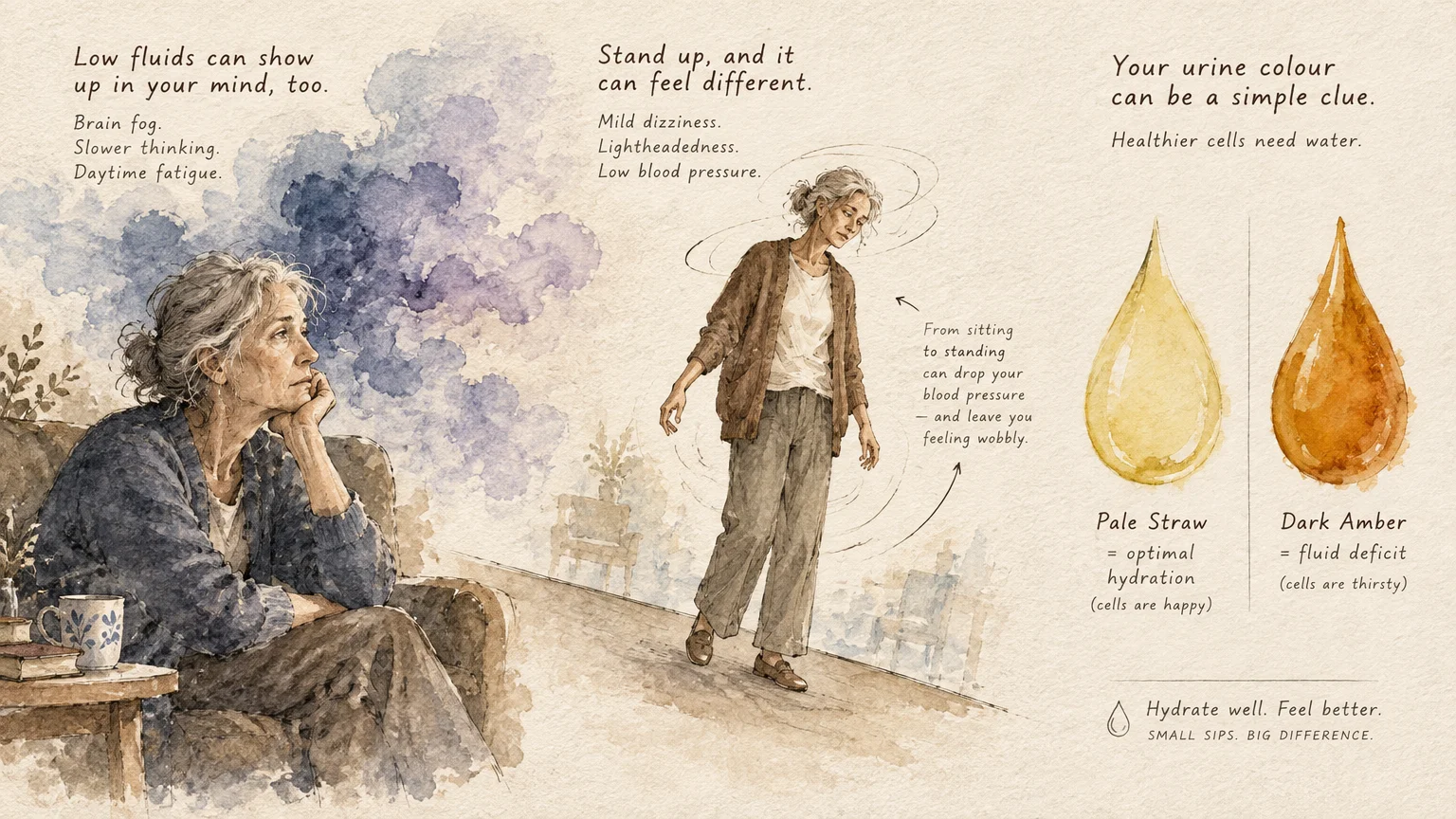
Sudden mental sluggishness, confusion, or uncharacteristic irritability frequently stems from depleted cellular water. Brain cells shrink slightly when deprived of moisture, disrupting the chemical signaling required for sharp thinking.
Unexplained fatigue and daytime drowsiness represent another common early signal. When blood volume drops due to inadequate fluid, your heart works harder to pump oxygen throughout your system.
Physical instability poses an immediate safety hazard that fluid deficits can amplify. Mild dehydration lowers blood pressure upon standing, creating dizzy spells that drastically elevate your risk of falling.
The NHS highlights urine color as a reliable visual benchmark. Pale straw indicates healthy hydration, while dark amber suggests your kidneys need immediate fluid support.

Practical Habits to Build Daily Fluid Intake
Building consistent hydration does not require forcing down massive carafes of plain water. Integrating small, appealing habits into existing routines ensures steady fluid intake without overwhelming your stomach.
Anchor Water to Daily Transitions
Pair every major daily milestone with a small glass of fresh water. Sip four ounces right after brushing your teeth, before preparing lunch, and when checking your afternoon mail.
Habit pairing eliminates the mental burden of remembering to drink throughout the day. Over time, these brief moments become automatic reflexes that protect your cellular health.
Eat Your Hydration
Solid foods can supply a meaningful portion of your daily fluid needs. Crisp cucumbers, ripe melons, berries, and tomatoes all contain high concentrations of water alongside beneficial vitamins.
Warm, low-sodium broths and blended vegetable soups also replenish moisture while soothing digestion. These flavorful dishes provide comfort during cooler months when cold water feels unappealing.
Elevate Plain Water with Flavor
If flat water feels dull, infuse your pitcher with sliced citrus, crushed mint, or crisp ginger root. Natural aromatics stimulate saliva production and make regular sipping genuinely pleasant.
Lightly carbonated water or chilled herbal teas offer additional variety without adding unwanted refined sugars. Experimenting with temperatures—lukewarm, room temperature, or chilled—helps you discover what your throat prefers.

Navigating Medications and Chronic Health Conditions
Certain prescription drugs significantly modify how your body stores and eliminates water. Reviewing your medicine cabinet with your healthcare team provides essential clarity for your daily routine.
Diuretics—often prescribed for high blood pressure—encourage your kidneys to flush excess fluid and sodium. You must carefully balance these medications with adequate fluid intake to avoid dangerous electrolyte crashes.
Conversely, certain diagnoses require intentional fluid restrictions rather than open-ended drinking. The American Heart Association notes that individuals managing congestive heart failure or advanced kidney disease must limit total fluid intake.
In those specific medical circumstances, excessive fluid overtaxes compromised organs and causes dangerous swelling. Always ask your prescribing doctor for an exact daily fluid target before dramatically changing your habits.

When to Seek Medical Attention
While mild dehydration responds quickly to home fluids, severe fluid deficits demand urgent clinical intervention. Never hesitate to call your doctor if symptoms escalate abruptly.
Seek emergency evaluation if you or an older relative experiences acute confusion, persistent vomiting, fainting spells, or an inability to keep fluids down. These red flags point toward serious electrolyte imbalances.
According to clinical guidelines summarized by the Centers for Disease Control and Prevention, rapid dehydration can lead to kidney injury or heat-related crises within hours. Prompt professional care ensures safe intravenous rehydration when oral fluids fail.
Remember that general wellness advice never replaces direct medical oversight. Consult your primary physician whenever new medications, chronic ailments, or unexplained physical symptoms complicate your hydration planning.
Frequently Asked Questions
Does morning coffee count toward your daily fluid intake?
Moderate coffee and tea consumption definitely counts toward your hydration baseline. While caffeine has a mild diuretic effect, the liquid volume in the cup far outweighs any minor fluid loss.
How can you stay hydrated without waking up all night to use the bathroom?
Front-load your fluids by drinking the majority of your water before five in the afternoon. Taper your intake during evening hours and empty your bladder right before climbing into bed.
Is room-temperature water better for older digestive systems?
Room-temperature water is often gentler on sensitive teeth and relaxes stomach muscles during swallowing. The best temperature, however, is simply whichever one motivates you to drink consistently.
What should you do if an older parent resists drinking water?
Offer small, four-ounce cups instead of imposing tall tumblers that feel daunting. Alternatively, serve hydrating fruit slices, fruit gelatin, or mild broths to deliver fluids through enjoyable snacks.
A Simple Habit to Start Today
Transforming your hydration does not require an intimidating lifestyle overhaul. Choose one manageable ritual today that builds natural momentum for the week ahead.
Place a clean glass of water on your nightstand or kitchen counter before you fall asleep tonight. Drink that entire glass immediately after rising tomorrow morning to replenish overnight losses and stimulate digestion.
This brief morning ritual primes your circulatory system and sets an intentional tone for your day. Celebrate that simple win, and watch how quickly consistent hydration restores your everyday bounce.