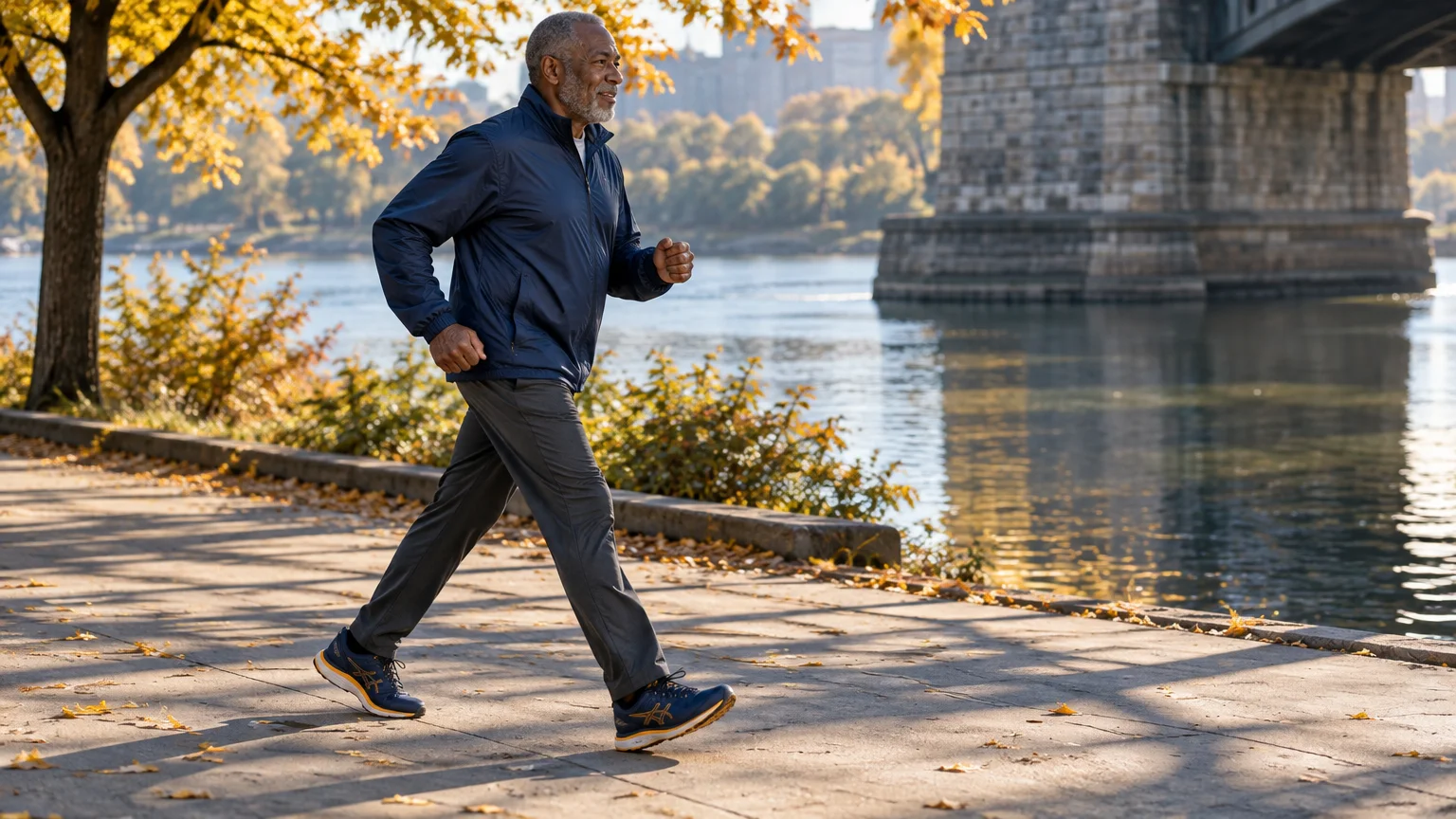
Daily walking protects your physical independence, sharpens your memory, and gives you the energy to stay active with your family. You do not need to log grueling miles to experience those life-changing rewards.
Many adults assume healthy aging demands ten thousand daily steps. Modern longevity research shows the actual target for staying strong and vital is much lower and easier to reach.
This guide outlines the exact daily step targets supported by clinical science, practical pacing techniques, and straightforward adjustments that fit your joint health and lifestyle.
What Changes as You Age and Why Walking Helps
Advancing years bring natural physiological changes to your muscles, joints, and cardiovascular system. Muscle mass gradually declines, cartilage thins within weight-bearing joints, and blood vessels lose elasticity.
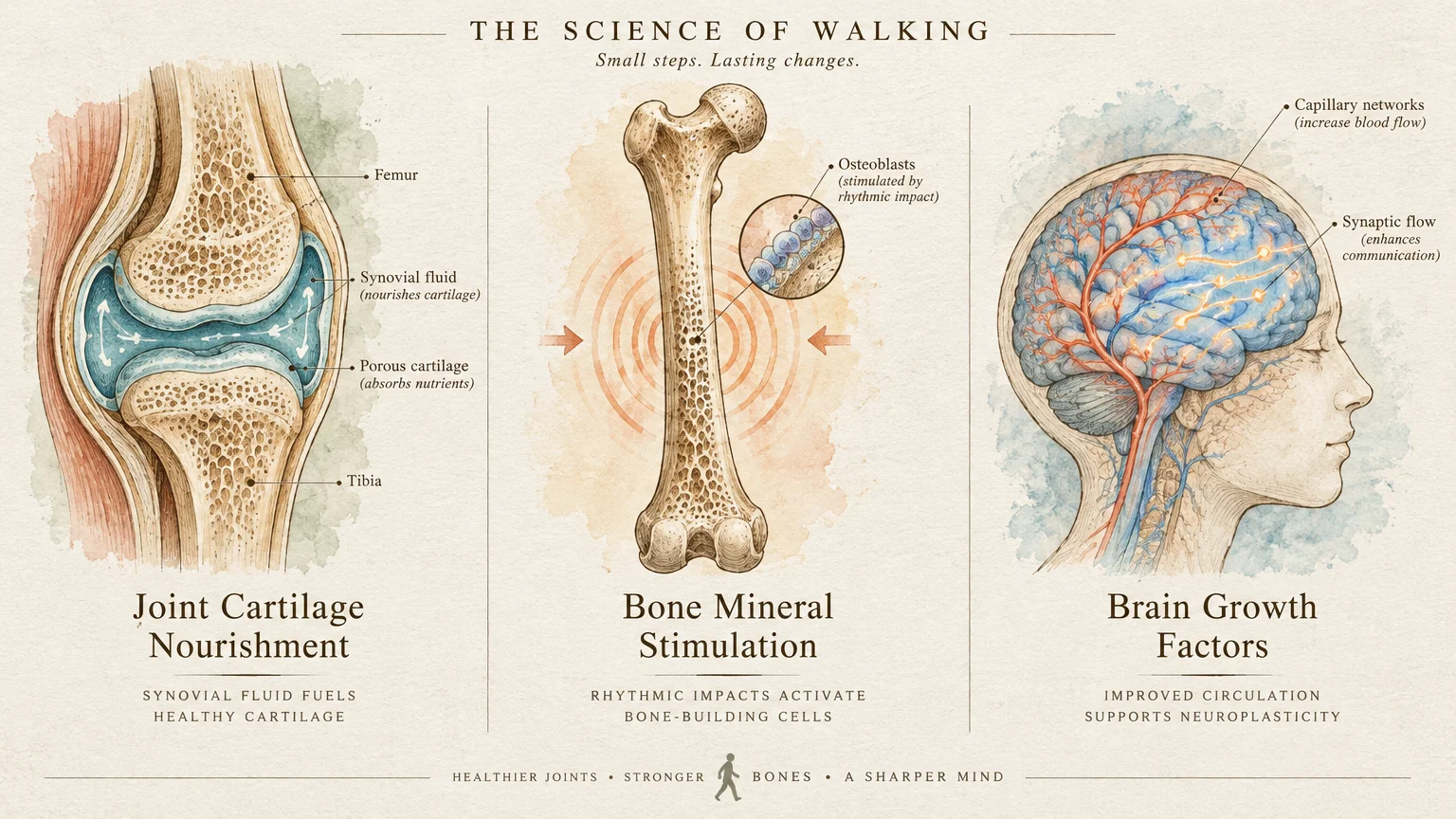
A regular walking habit counteracts these changes directly. Rhythmic foot strikes stimulate bone-building cells, while increased circulation nourishes joint tissues that lack direct blood supply.
Walking also protects your brain health. Elevating your heart rate releases specialized growth factors that preserve brain tissue and enhance communication across neural pathways.
Consistent movement builds postural stability as well. Strengthening the stabilizing muscles in your hips and calves lowers your risk of stumbles and falls.
Step Counts for Longevity: How Much Is Enough?
You do not need ten thousand steps each day to protect your health. That familiar benchmark originated as an advertising slogan rather than a clinical requirement.
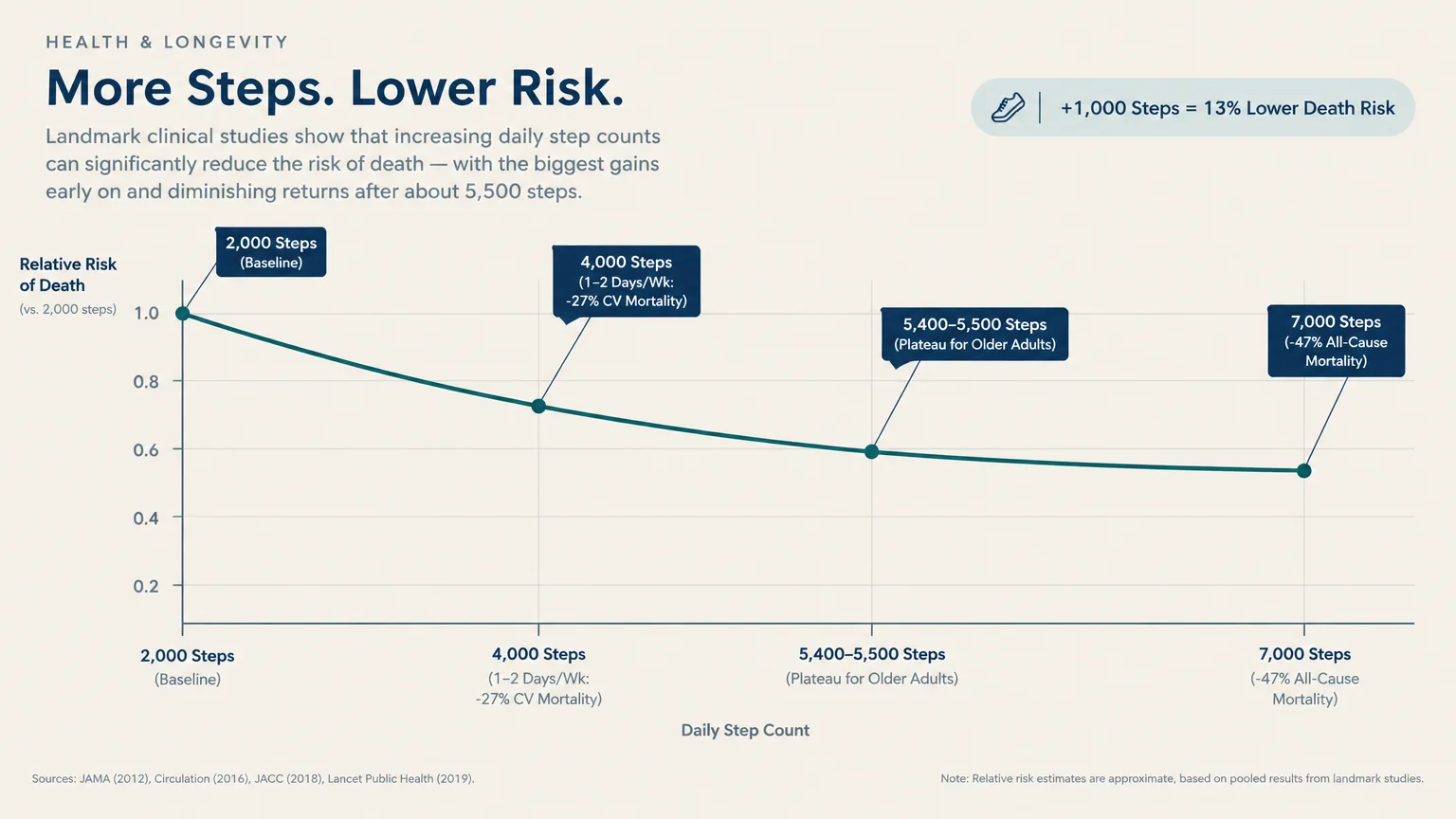
A landmark 2025 meta-analysis in The Lancet Public Health examined fifty-seven studies on daily movement. Researchers discovered that walking 7,000 steps per day lowered all-cause mortality risk by 47 percent compared to taking 2,000 steps.
That 7,000-step benchmark also reduced cardiovascular mortality by 47 percent and cut cardiovascular disease risk by 25 percent. Longevity benefits leveled off between 5,400 and 5,500 daily steps for older adults.
You also do not need high step counts every day. A 2025 Harvard-led study in the British Journal of Sports Medicine evaluated more than thirteen thousand older women over ten years.
Reaching 4,000 steps on just one or two days per week reduced cardiovascular death risk by 27 percent. Hitting 4,000 steps on three or more days lowered all-cause mortality risk by 40 percent.
Small gains provide immense protective power. A 2026 meta-analysis in the American Journal of Health Promotion found that adding 1,000 daily steps cuts all-cause death risk by 13 percent.
Those extra steps defend cognitive faculties, too. Research from Baylor College of Medicine in 2026 revealed that adding 1,000 daily steps improves visual attention and decision-making in adults over sixty.
Aerobic Targets and Walking Cadence
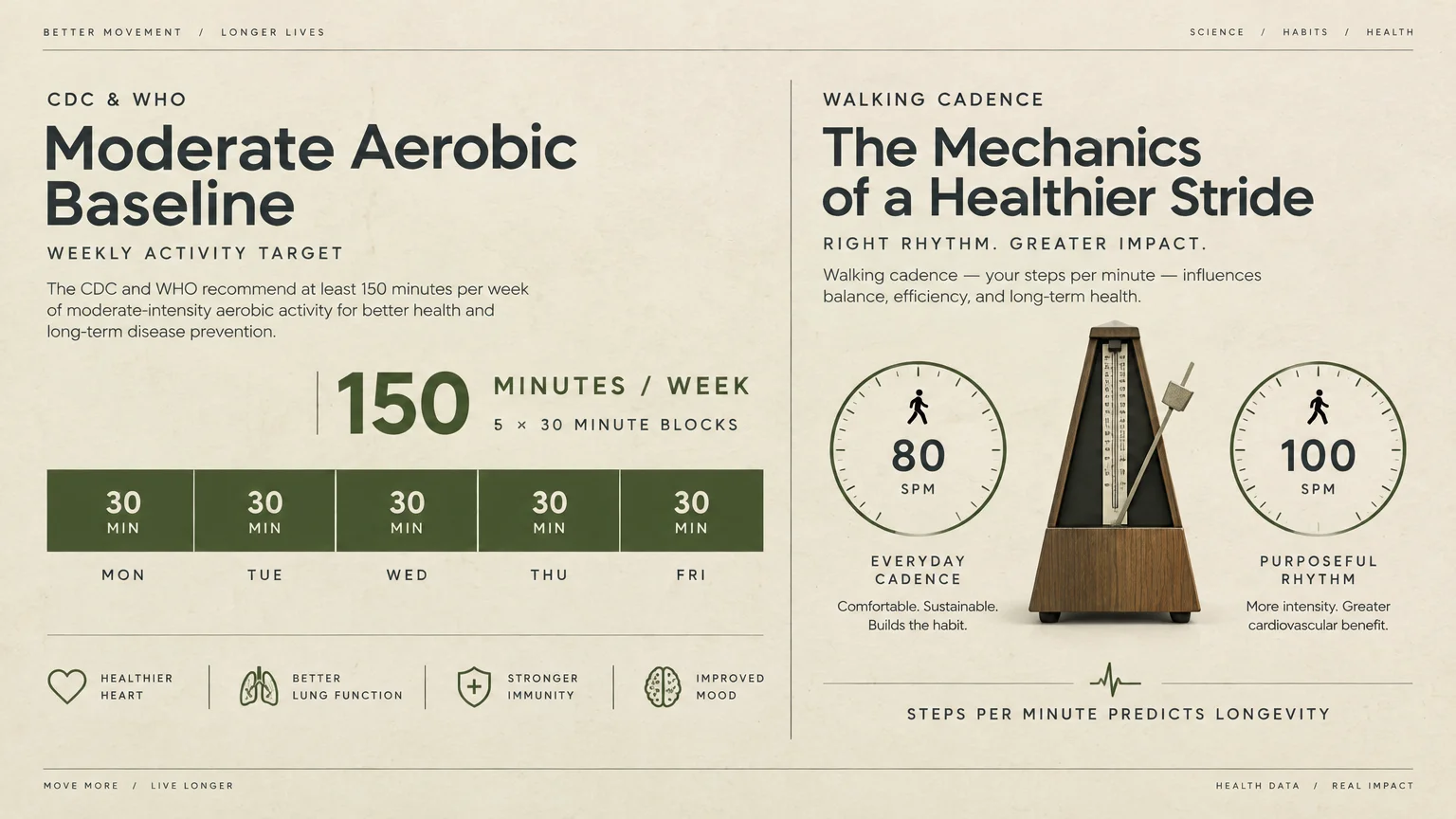
Public health agencies often measure physical activity in minutes rather than steps. The Centers for Disease Control and Prevention recommends at least 150 minutes of moderate-intensity aerobic exercise each week for adults sixty-five and older.
The World Health Organization notes that 150 to 300 weekly minutes of moderate movement delivers profound protection against chronic illness. Breaking this goal into thirty-minute walks five days per week fulfills the standard comfortably.
Pace is just as critical as your total step tally. A 2026 study in JAMA Network Open analyzed wearable sensor data from more than four thousand older adults.
Everyday walking cadence—measured as steps per minute—predicts mortality risk just as accurately as formal clinical walking tests. Stepping with purposeful rhythm challenges your heart and strengthens arterial elasticity.
Building a Well-Rounded Mobility Habit
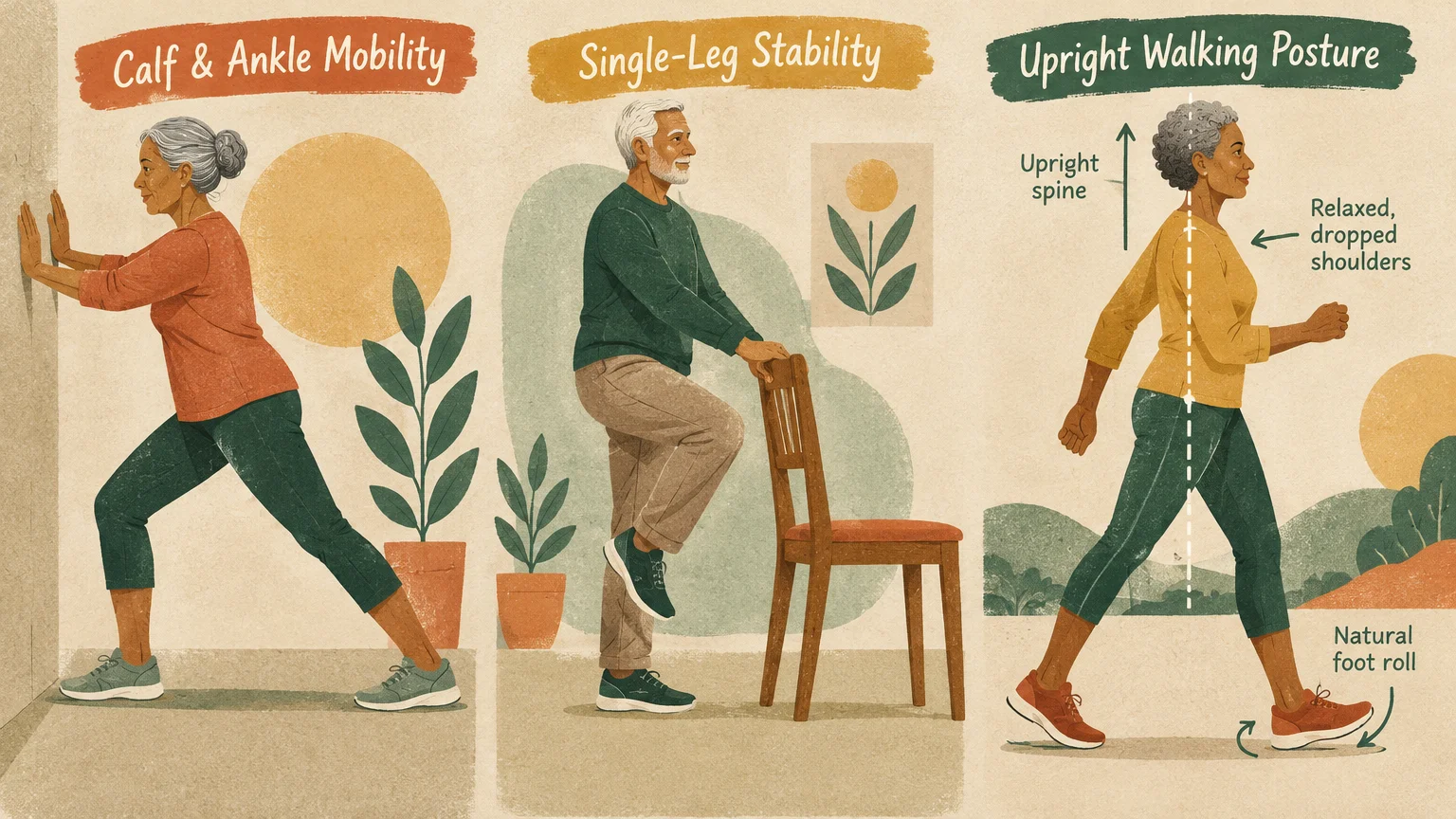
Walking forms the foundation of functional longevity, but it cannot stand alone. Geriatric guidelines urge older adults to combine regular walking with deliberate strength and balance drills.
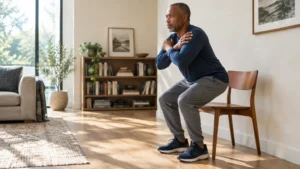
Engage in muscle-strengthening activities at least two days each week. Bodyweight squats, wall push-ups, or resistance-band rows preserve the lean tissue required to rise smoothly from low chairs.
Incorporate balance-enhancing exercises into your weekly schedule as well. Heel-to-toe walking along a hallway or balancing briefly on one foot trains your nervous system to recover quickly from unexpected trips.
If joint pain arises, adjust your walking surface rather than stopping. Cushioned tracks, level dirt paths, and supportive footwear protect delicate knees and hips against ground impact.
When to Consult Your Healthcare Provider First
Walking is exceptionally safe, but substantial changes to your activity level warrant clinical guidance. Consult your doctor before significantly increasing your pace or distance, especially if you manage cardiovascular or respiratory conditions.
Review your current prescriptions with your primary care provider. Certain blood pressure medications alter exercise heart rates, while diuretics can accelerate dehydration during warm weather.
Seek immediate medical evaluation if you notice chest tightness, unusual breathlessness, dizziness, or joint pain that lingers. The National Institute on Aging notes that unexplained balance changes require professional assessment.
This guide provides general educational insights rather than personalized medical instructions. Always listen to your body and coordinate major lifestyle modifications with your healthcare team.
Frequently Asked Questions About Walking for Seniors
Does walking speed matter as much as total step count?
Walking cadence plays a vital role in cardiovascular fitness. Moving at a brisk pace raises your heart rate, which improves arterial health and enhances aerobic endurance.
However, a relaxed pace still delivers meaningful rewards. Gentle strolling mobilizes stiff joints, lowers blood sugar spikes after meals, and reduces premature mortality risk.
Can you break daily walks into shorter sessions?
Accumulated movement provides the exact same metabolic benefits as continuous exercise. Three ten-minute walks spread across your day satisfy your daily thirty-minute target perfectly.
Shorter sessions often work better if you manage joint fatigue. Dividing your walks prevents physical exhaustion and preserves proper posture.
What should you do if joint pain makes walking uncomfortable?
Joint stiffness often eases after several minutes of gentle movement. If discomfort persists, switch to low-impact alternatives like aquatic walking or level turf trails.
Trekking poles also reduce joint impact by redistributing body weight to your upper body. If sharp pain alters your gait or lingers after resting, consult your physician.
Your Next Step: One Simple Habit for This Week
Do not overwhelm yourself by attempting to double your daily steps immediately. Sustainable independence develops through small, repeatable habits that fit naturally into your life.
Select one ten-minute window each day this week for a purposeful walk. Stroll around your neighborhood after breakfast, walk during lunch, or move briskly while taking phone calls.
That single ten-minute session adds roughly one thousand steps to your day. Over time, that modest addition protects your heart, sharpens your focus, and sustains your vitality.