
You can lift groceries effortlessly, climb stairs without pausing, and play with your grandchildren without pain. Strength training after 60 builds the muscle you need to protect your independence and stay active for decades.
Many people worry that lifting weights causes joint pain or serious injuries later in life. In reality, regular resistance exercise strengthens fragile joints, increases energy levels, and reduces your risk of unexpected falls.
Starting a routine requires simple, manageable habits rather than exhausting gym sessions. This guide shows you how to build lasting strength safely and comfortably right at home.
Why Your Muscles Need Resistance After 60
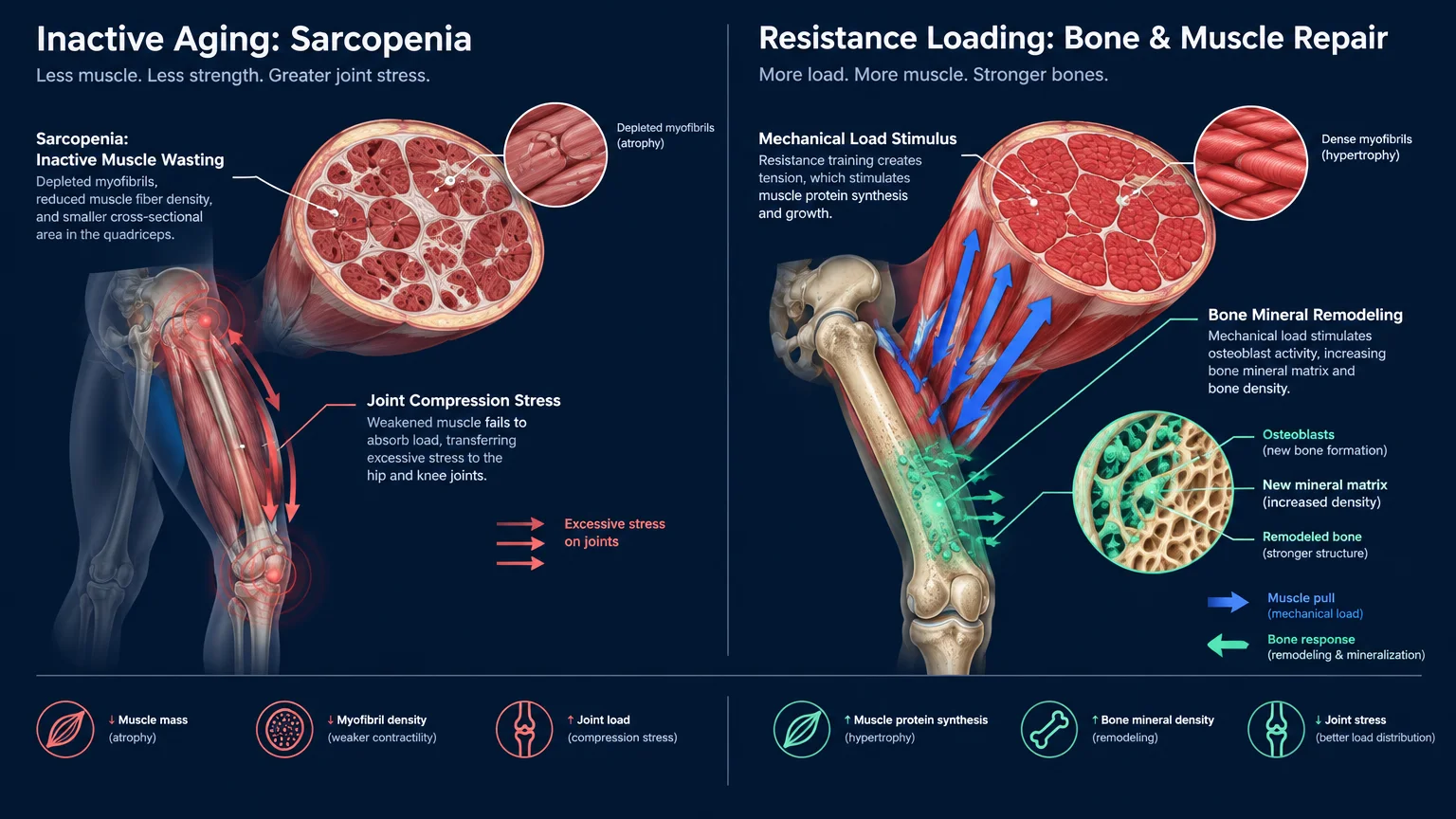
Age-related muscle loss, known clinically as sarcopenia, begins gradually in midlife and accelerates each year. Without intentional resistance exercise older adults lose both functional strength and metabolic efficiency.
Inactive muscle tissue wastes away, which places extra physical stress onto your hips, knees, and spine. Everyday movements become exhausting when your muscles lack the power to support your skeleton.
Engaging your muscles with resistance triggers immediate physiological repair processes. The National Institute on Aging emphasizes that resistance training preserves functional mobility and supports daily independence as you age.
Lifting also stimulates bone remodeling to ward off osteoporosis. When your muscles pull against bone, the mechanical load stimulates new bone mineral formation and prevents fractures.
When to Consult Your Doctor First
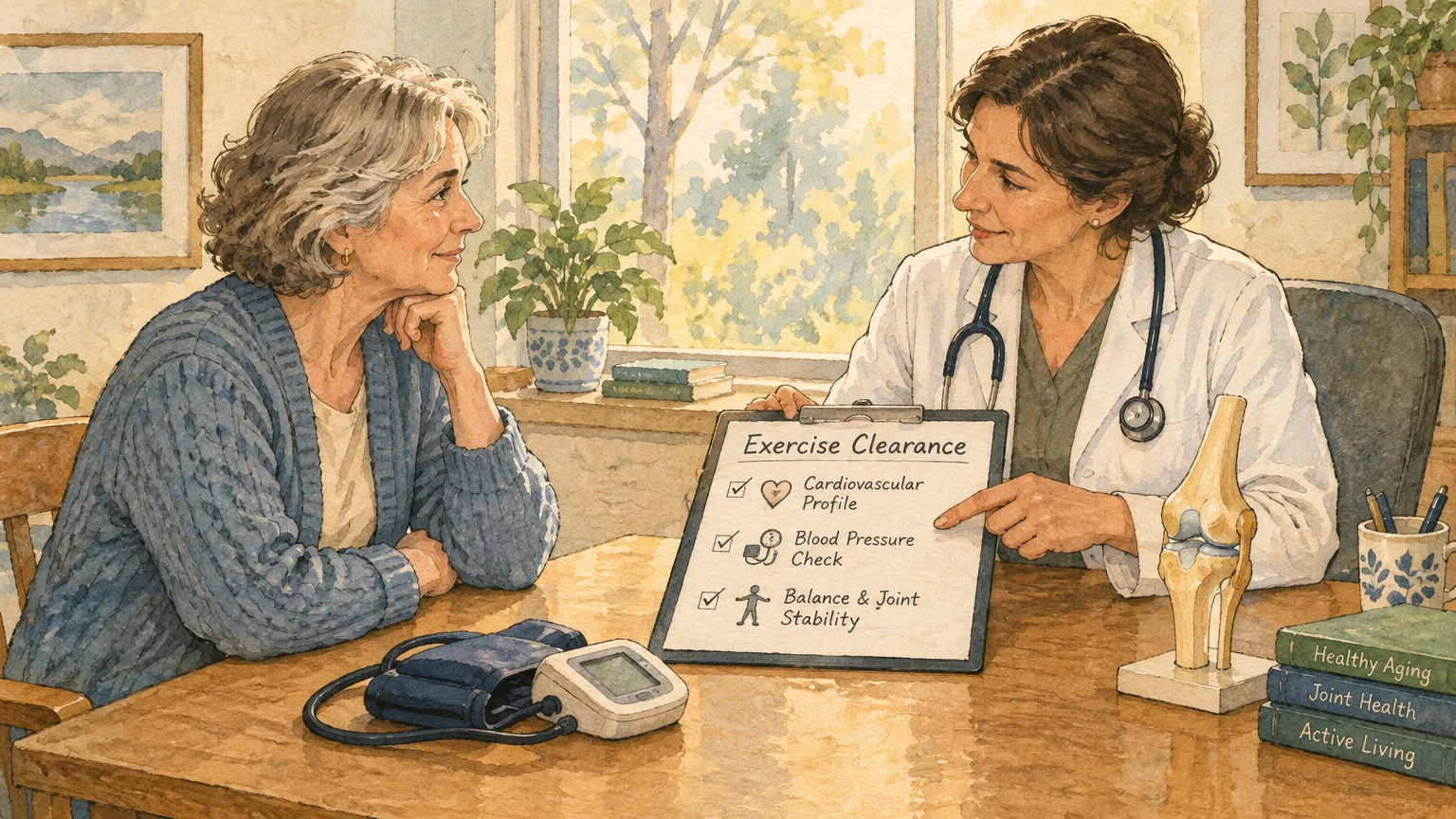
You should consult your healthcare provider before beginning any new exercise routine. A quick medical evaluation ensures your exercise choices match your individual health profile.
Medical guidance is critical if you take medications for blood pressure or cardiovascular conditions. Certain medications alter heart rate response during exertion, which requires modified movement paces.
Tell your doctor if you have experienced sudden balance loss, unexplained joint swelling, or frequent dizziness. These symptoms require medical clearance to ensure your workouts remain completely safe.
Remember that this guide provides general educational information rather than individualized medical advice. Always listen to your physician and your body when embarking on new physical activities.
Essential Movement Patterns for Beginners
Safe strength training seniors practice focuses on functional movement patterns rather than isolated muscle pumps. Functional movements mirror the exact physical motions you perform around your home every single day.
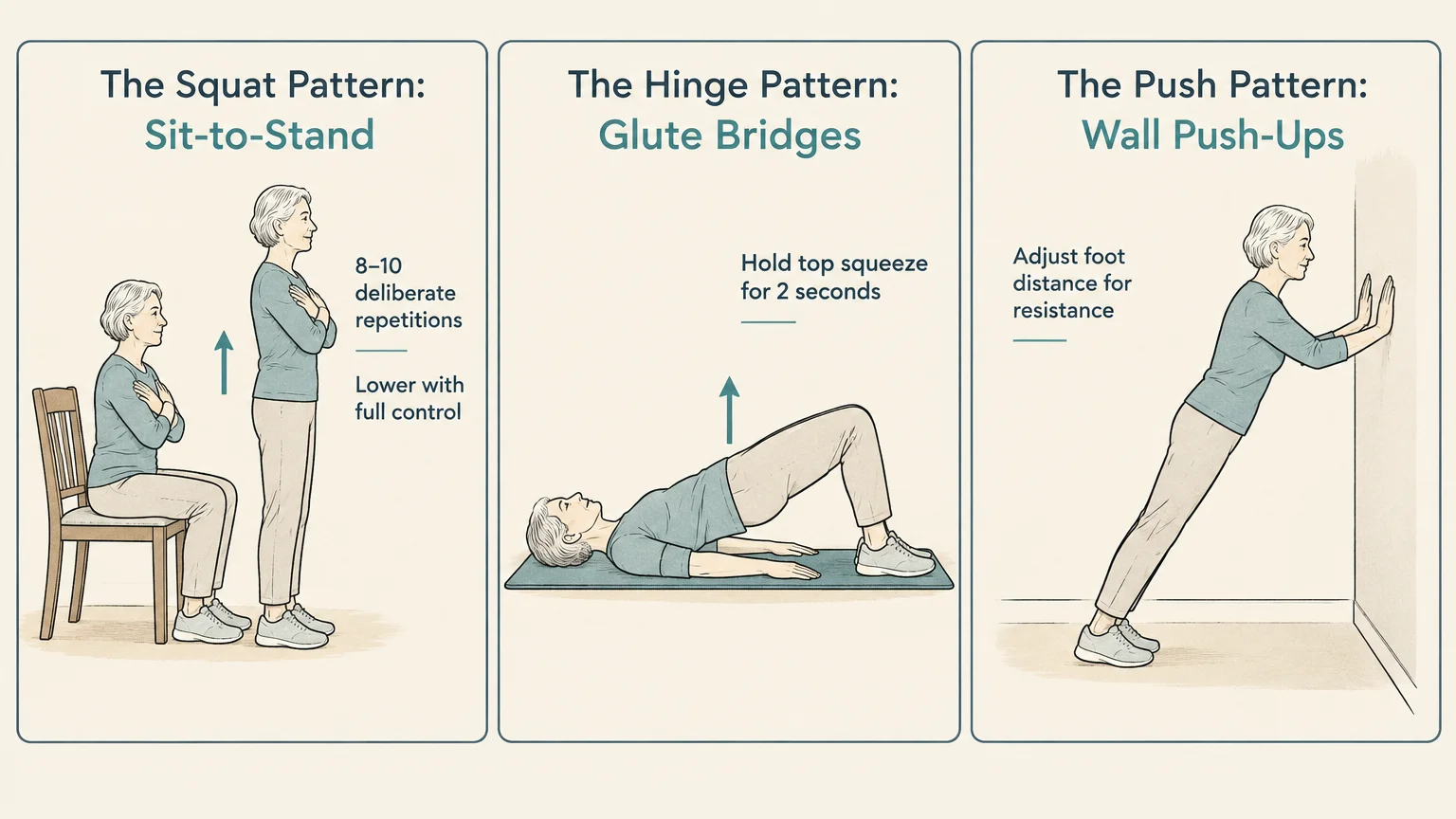
The Squat Pattern: Sit-to-Stand
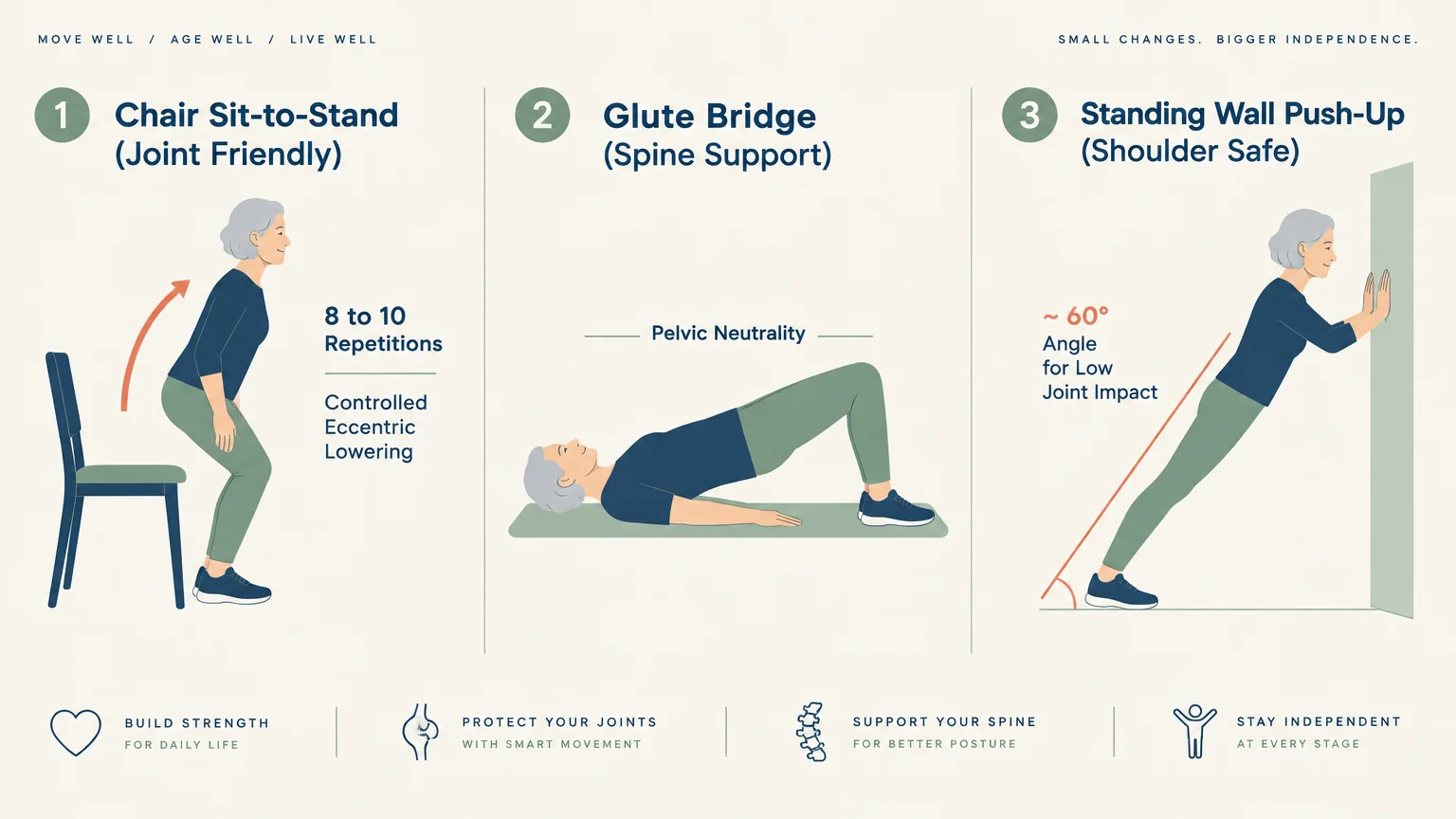
The sit-to-stand exercise strengthens your quadriceps, glutes, and core muscles simultaneously. You simply rise from a sturdy dining chair without using your hands, then lower yourself slowly.
Lowering yourself under full control builds eccentric leg strength to protect your knees. Perform eight to ten deliberate repetitions to develop the leg power necessary for effortless standing.
The Hinge Pattern: Glute Bridges
Hip hinges protect your lower spine when you pick up objects from the floor. Glute bridges teach this essential movement while keeping your back supported on a comfortable mat.
Lie on your back with knees bent and feet flat on the floor; then lift your hips toward the ceiling. Squeeze your glutes at the top of the movement and hold for two seconds.
The Push Pattern: Wall Push-Ups
Wall push-ups develop chest, shoulder, and triceps strength without placing dangerous strain on your wrists. Stand an arm’s length away from a solid wall with palms flat at shoulder height.
Lower your chest smoothly toward the wall before pressing firmly back to the starting stance. Adjust your foot distance from the wall to make the exercise easier or more challenging.
The Pull Pattern: Resistance Band Rows
Pulling movements counteract rounded shoulders and improve posture across your upper back. Anchor an elastic resistance band around a secure door handle and step backward to create tension.
Pull the band handles back toward your ribs while drawing your shoulder blades together. Release the tension slowly over three seconds to maximize your postural muscle development.
Equipment and Safe Progression
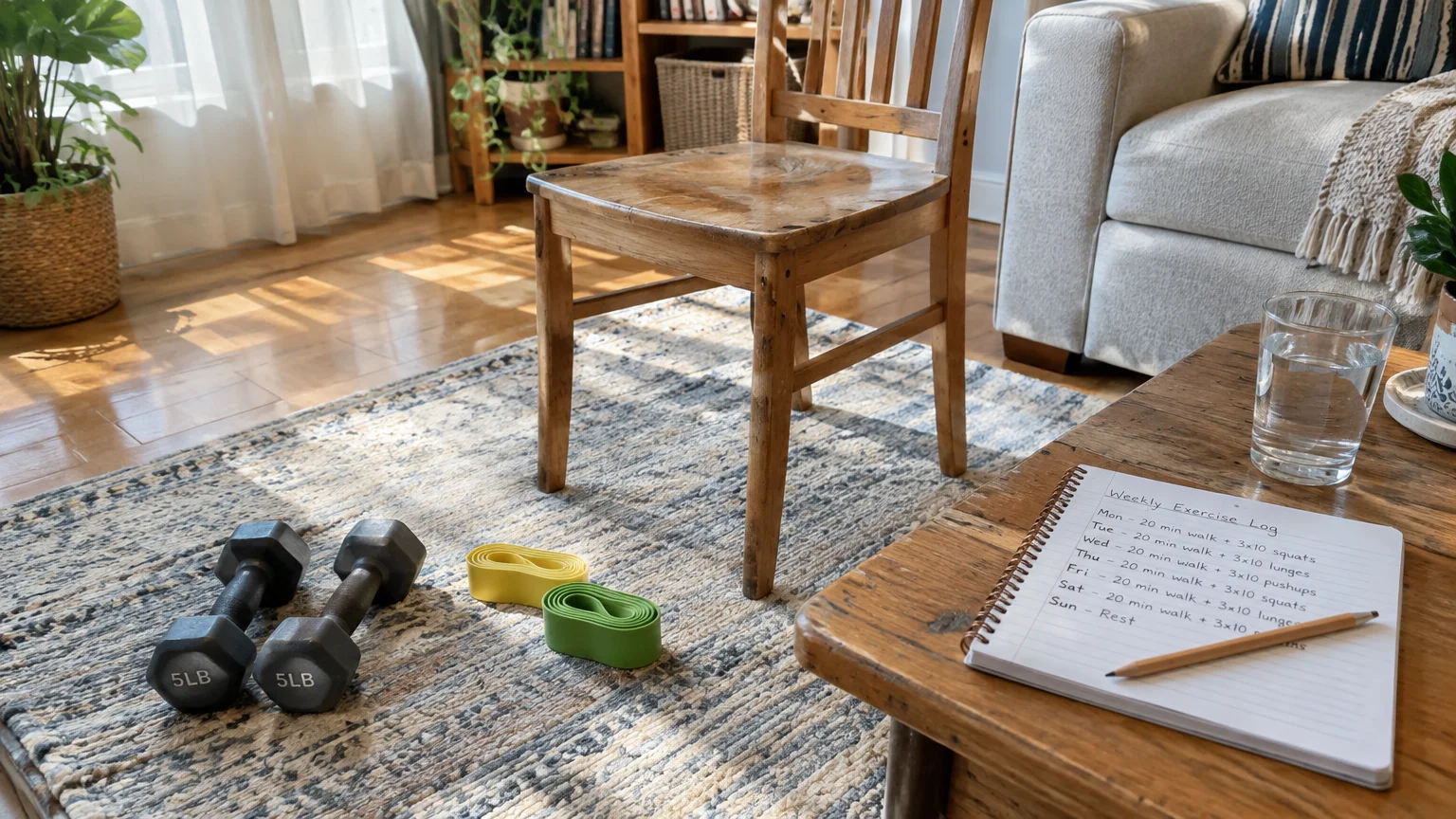
You do not need expensive machines or heavy iron barbells to start lifting after 60. Bodyweight movements and lightweight elastic resistance bands provide ample tension for beginners.
Elastic bands offer continuous tension while remaining remarkably gentle on sensitive joints. They allow you to build stabilizing strength without the risk of dropping heavy objects.
Once bodyweight exercises feel effortless, you can introduce light dumbbells into your routine. Choose a weight that you can lift with impeccable form for ten repetitions.
The Centers for Disease Control and Prevention recommends muscle-strengthening activities at least two days each week. Give your muscle groups forty-eight hours of rest between sessions to repair and grow stronger.
Tailoring Exercises for Health Conditions
Existing health conditions should shape your training plan rather than prevent you from exercising. Simple modifications allow anyone to experience the profound benefits of resistance training.
Exercising with Osteoarthritis
Gentle movement lubricates stiff joints by circulating nutrient-rich synovial fluid through the cartilage. The Arthritis Foundation notes that stronger surrounding muscles absorb shock and alleviate joint pain.
If you experience sharp joint pain during an exercise, stop immediately and reduce your range of motion. Exercise through a comfortable, pain-free range to build strength without provoking inflammation.
Exercising with Balance Concerns
Balance concerns require stable training setups to eliminate the risk of accidental falls. Keep a sturdy chair or kitchen counter within arm’s reach during standing exercises.
Seated strength routines provide full-body conditioning while keeping your center of gravity completely grounded. As your core and hip stability improves, you can gradually progress toward supported standing exercises.
Frequently Asked Questions
Is it too late to start lifting weights after 60?
It is never too late to begin strength training and gain functional muscle mass. Research confirms that individuals in their seventies, eighties, and nineties gain substantial strength from resistance routines.
How often should I strength train each week?
Aim for two to three twenty-minute training sessions spaced throughout the week. Consistency creates far better results than infrequent, exhausting workouts that leave you excessively sore.
Will strength training worsen my high blood pressure?
Consistent resistance exercise helps lower resting blood pressure over time when performed properly. The American Heart Association stresses that you must breathe continuously and avoid holding your breath during exertion.
What should I do if my muscles feel sore the next day?
Mild muscle soreness represents a normal, healthy adaptation to new physical movements. Take a gentle walk and drink plenty of water to promote blood flow and recovery.
Your One Small Habit for This Week
You do not need to overhaul your entire lifestyle today to make meaningful progress. Focus on establishing one tiny, repeatable habit that creates momentum.
Complete five sit-to-stand repetitions from your dining chair before breakfast each morning. This simple two-minute practice immediately activates your largest muscles and builds daily confidence.
After a week of consistent practice, add a second set of repetitions or try wall push-ups. Small, consistent actions compound over time into vibrant strength and lasting independence.