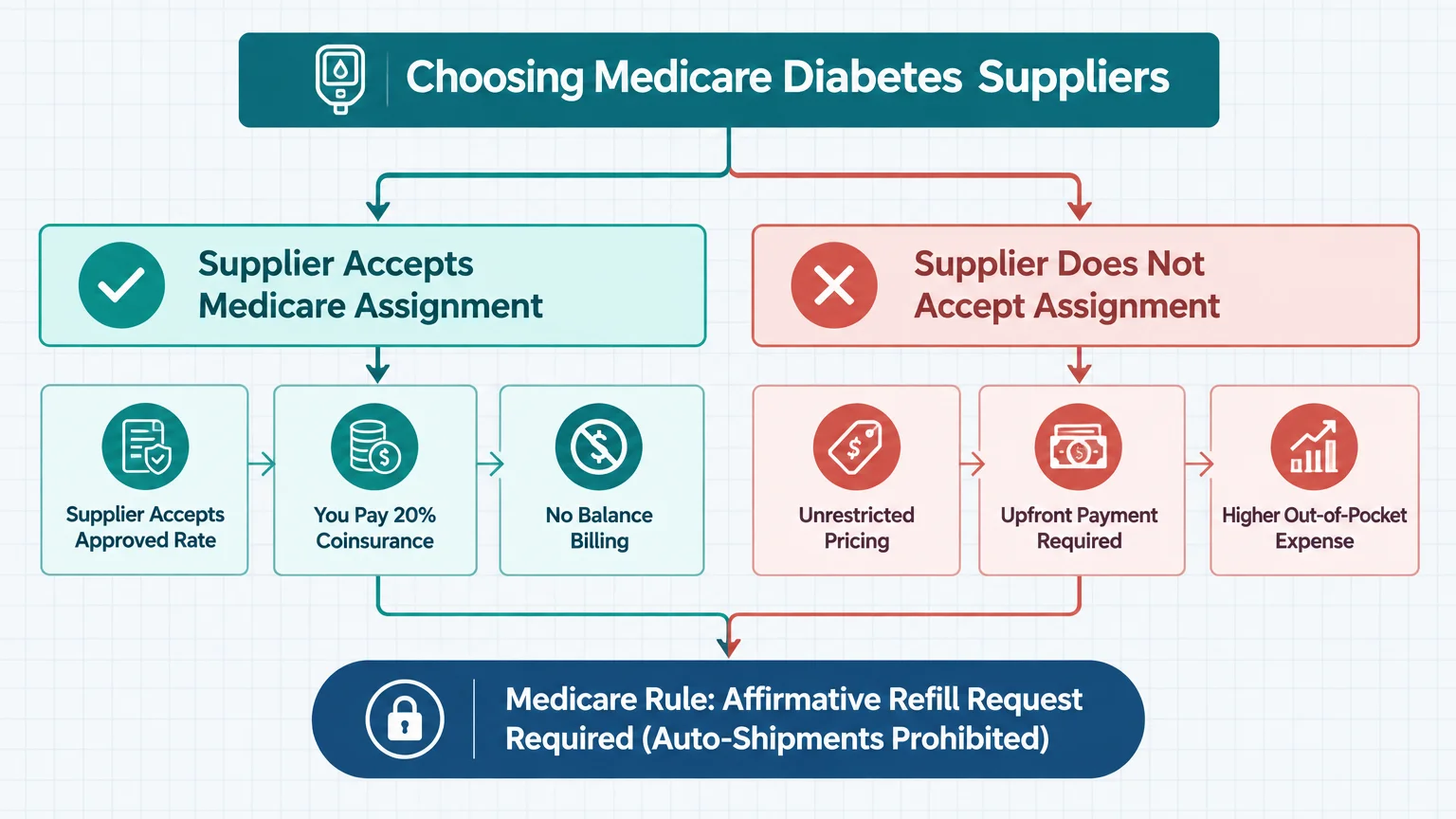
Comparing Costs, Choosing Suppliers, and Real-World Examples
Because Medicare splits diabetes benefits across multiple parts, tracking where to fill each item can feel confusing. The table below details how Medicare structures coverage and costs across major supply categories.
| Supply or Medication Category | Medicare Part | 2026 Patient Cost | Key Coverage Condition |
|---|---|---|---|
| Blood Glucose Monitors & Strips | Part B | 20% coinsurance after $283 deductible | Up to 300 strips per 3 months with insulin, 100 without |
| Continuous Glucose Monitors | Part B | 20% coinsurance after $283 deductible | Requires insulin use or hypoglycemia history; 6-month visits |
| Insulin for Durable Pumps | Part B | Capped at $35 monthly (no deductible) | Must use an approved durable infusion pump |
| Injected or Inhaled Insulin | Part D | Capped at $35 monthly (no deductible) | Includes pens, vials, and disposable patch pumps |
| Syringes, Needles, and Swabs | Part D | Plan copay (deductible applies) | Covered when prescribed for insulin administration |
| Oral Medications (Jardiance, Januvia) | Part D | Plan copay after $615 max deductible | Subject to $2,100 annual out-of-pocket cap |
A Real-World Example: Eleanor’s Diabetes Coverage in 2026
To see how these rules function together, consider Eleanor, a 68-year-old beneficiary with type 2 diabetes. Eleanor takes daily basal insulin through an injection pen and uses a continuous glucose monitor.
In January 2026, Eleanor visits her primary care doctor to renew her annual prescriptions. She picks up a 30-day supply of insulin pens at her local pharmacy.
Because of the insulin cap, Eleanor pays exactly $35 for her insulin pens under Part D. She does not have to pay toward her plan’s $615 drug deductible first.
She also purchases pen needles, which are processed under Part D and apply toward her deductible. Her pharmacist reminds her that all out-of-pocket drug expenses count toward the $2,100 annual Part D ceiling.
Next, Eleanor orders replacement CGM sensors from an accredited Medicare contract supplier under Part B. Because this is her first Part B claim of 2026, she pays her $283 annual deductible.
Eleanor then pays 20% coinsurance on subsequent sensor shipments. She schedules a follow-up visit five months later to satisfy the six-month rule.
Steps to Protect Yourself Against Billing Errors
Always confirm that your pharmacy or medical equipment vendor accepts Medicare assignment. Suppliers who accept assignment cannot charge you more than the Medicare-approved amount for covered items.
You can search for approved suppliers and compare drug plans using the official Medicare.gov Plan Finder. This tool shows which plans cover your preferred insulin brands at the lowest out-of-pocket cost.
Research from the KFF health policy organization highlights how plan formularies vary widely. Comparing options annually ensures your medications remain covered affordably.
If you encounter billing disputes or supplier issues, contact your State Health Insurance Assistance Program (SHIP) for free, personalized assistance. You can also reach official Medicare support 24 hours a day by calling 1-800-MEDICARE.