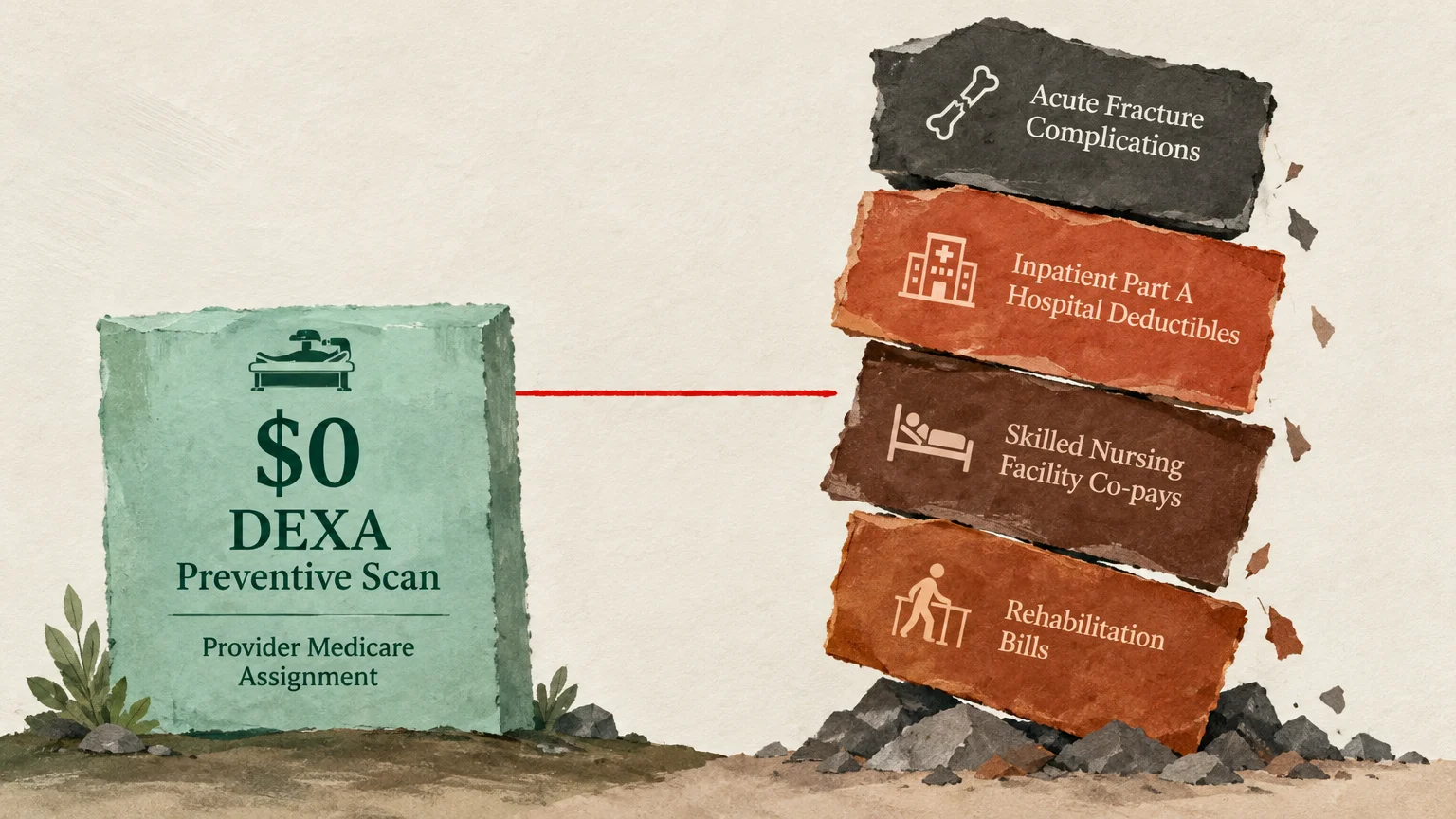
Out-of-Pocket Expense Scenarios and Inpatient Risks
A concrete scenario illustrates how Medicare covers bone health services across clinical settings. Consider Margaret, a 68-year-old beneficiary enrolled in Original Medicare (Part A and Part B) along with a standalone Part D plan.
During a routine checkup, Margaret mentions slipping on a rug and fracturing her wrist. Because her X-ray shows bone thinning, her physician orders a central DEXA scan of her spine and hips.
Margaret’s Test and Treatment Pathway
Margaret attends her DEXA scan at an accredited imaging center that accepts Medicare assignment. Because Medicare treats this initial scan as a covered preventive service, Margaret pays $0 out-of-pocket.
Her test confirms severe osteoporosis, prompting her doctor to discuss medical treatment options. If her doctor administers twice-yearly Prolia injections in the outpatient office, Part B covers the therapy.
Assuming Margaret already met her $283 Part B deductible for 2026, she pays a 20% coinsurance for each injection. If she owns a Medigap policy, that supplemental plan covers her 20% coinsurance charge.
Alternatively, suppose her doctor prescribes daily Forteo self-injection pens under Part D. Margaret pays her plan deductible and copayments until her out-of-pocket drug costs reach the $2,100 cap for 2026.
After reaching that $2,100 threshold, she pays $0 for covered Part D medications for the remainder of the calendar year, preventing runaway costs for vital bone-strengthening therapies.
Hospital Deductibles from Severe Fractures
Untreated osteoporosis substantially raises the risk of disabling fractures requiring inpatient hospital care. When a fall causes a broken hip, Medicare Part A (Hospital Insurance) covers inpatient surgical care.
Adopting proactive daily strategies can help you slash your risk of bone fractures and avoid traumatic injuries altogether.
In 2026, the Part A inpatient hospital deductible is $1,736 per benefit period. The Medicare Trustees Report projects that this hospital deductible will rise to $1,788 in 2027.
A benefit period begins upon hospital admission and ends after 60 consecutive days out of the hospital. Receiving timely bone screenings and preventive treatments protects against physical trauma and steep hospital deductibles.
For personalized assistance understanding your health benefits, contact your local State Health Insurance Assistance Program (SHIP). These trained counselors provide free, unbiased guidance tailored to your specific healthcare needs.