Medicare Part D Rules and Prescription Drug Cost Caps
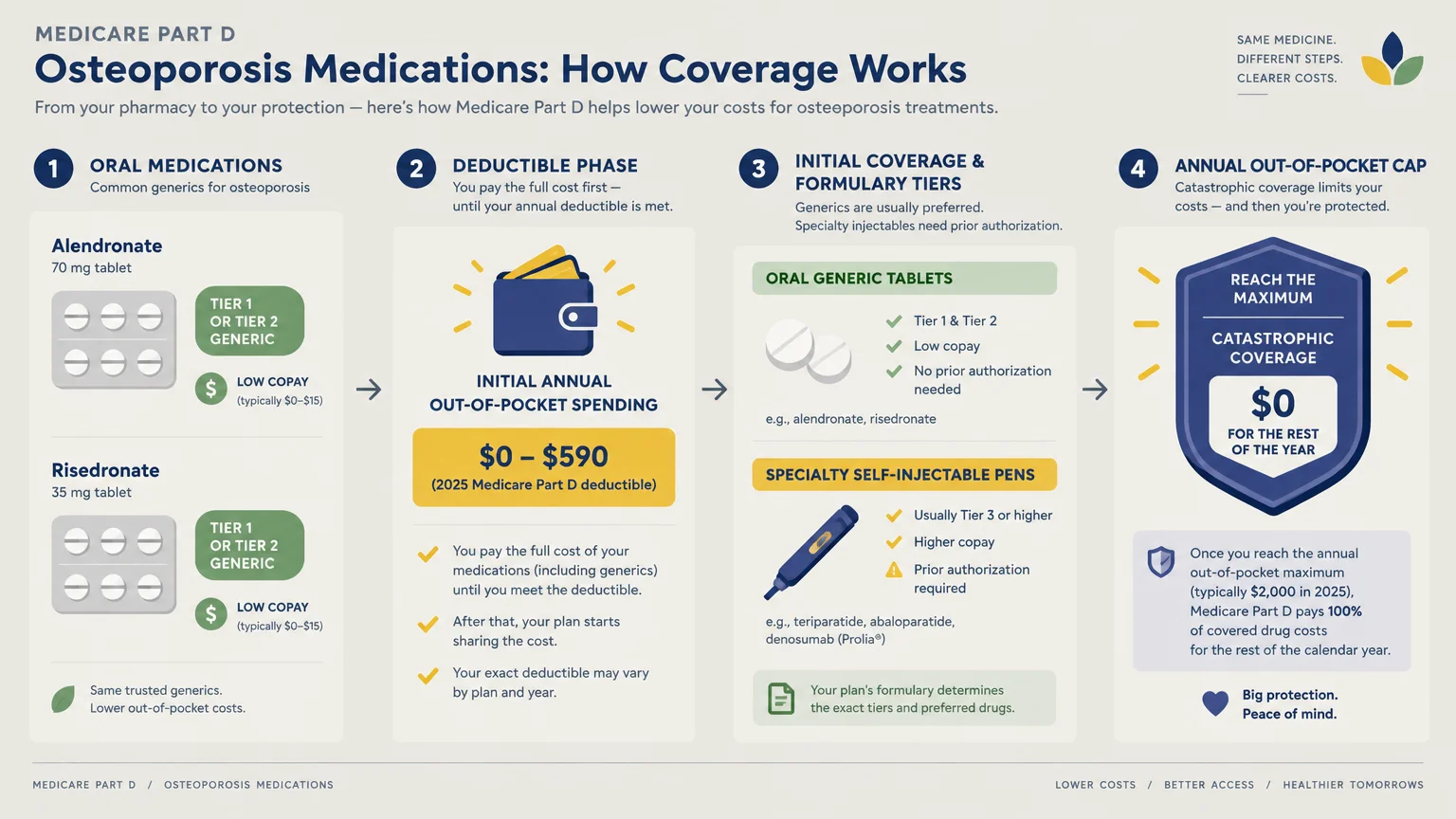
If your physician prescribes oral tablets or self-administered daily injections, Medicare Part D handles coverage. Beneficiaries obtain Part D protection through standalone prescription drug plans or Medicare Advantage plans with integrated drug benefits.
Standard oral therapies include bisphosphonates such as generic alendronate (Fosamax) or risedronate (Actonel), which usually sit on lower formulary tiers with low copayments.
In contrast, bone-building daily pens like teriparatide (Forteo) and abaloparatide (Tymlos) sit on specialty tiers, stimulating new bone formation for severe osteoporosis.
Caps on Prescription Spending
Major legislative updates permanently eliminated the Part D coverage gap, commonly called the donut hole, in 2025, establishing a strict annual ceiling on out-of-pocket spending for covered prescriptions.
According to an analysis from KFF, annual caps dramatically lower expenses for seniors taking high-cost specialty drugs. In 2026, your total annual out-of-pocket spending on covered Part D prescriptions cannot exceed $2,100.
For 2027, this out-of-pocket maximum rises to $2,400. Once prescription spending hits that annual threshold, you pay $0 for covered Part D drugs for the rest of the year.
The maximum allowable Part D deductible is $615 in 2026, increasing to $700 in 2027. Some plans offer lower deductibles or exempt generics entirely.
Beneficiaries facing high upfront costs can also utilize the Medicare Prescription Payment Plan to spread prescription copayments into predictable monthly installments throughout the calendar year.
Comparing Part B and Part D Osteoporosis Coverage
Understanding which branch of Medicare pays for treatment determines where you receive care and what you owe. The table below compares these critical coverage features.
| Coverage Element | Medicare Part B (Clinic-Administered) | Medicare Part D (Self-Administered) |
|---|---|---|
| Typical Medications | Prolia, Evenity, Reclast, Jubbonti | Fosamax, Actonel, Forteo, Tymlos |
| Administration Method | Doctor or nurse injection or infusion | Oral pills or daily self-injected pens |
| Standard Deductible | $283 in 2026 ($292 projected in 2027) | Up to $615 in 2026 ($700 in 2027) |
| Patient Cost Sharing | 20% coinsurance after deductible | Tiered copay or coinsurance |
| Out-of-Pocket Cap | No annual cap under Original Medicare | $2,100 in 2026 ($2,400 in 2027) |
Evaluating drug formularies helps prevent high coinsurance charges. You can explore plan options on the official Medicare website to compare anticipated medication expenses.