Medicare covers your dual-energy X-ray absorptiometry (DEXA) bone density scan at zero out-of-pocket cost when your doctor confirms you qualify. This preventive screening detects osteoporosis before a minor fall leads to a severe bone fracture.
The Bone Health and Osteoporosis Foundation (BHOF) reports that approximately 10 million Americans have osteoporosis, while 44 million more have low bone mass. Early detection preserves bone health and independence.
Navigating coverage for diagnostic scans, infusions, and medications can feel confusing. This guide details Medicare costs and rules so you can manage bone health with confidence.
Medicare Coverage Rules for Bone Density Tests
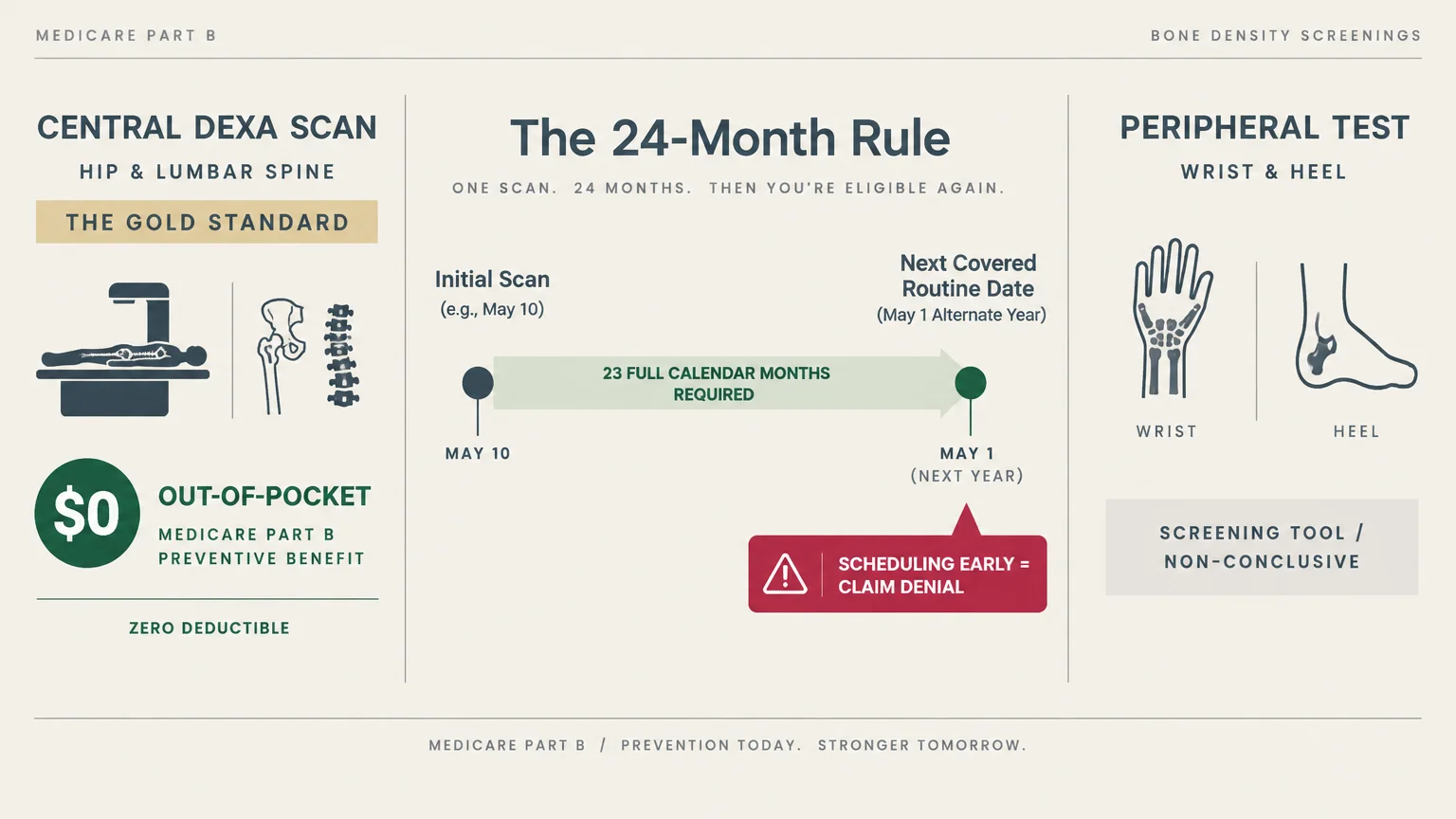
Medicare Part B (Medical Insurance) classifies central bone mass measurements—most commonly central DEXA scans of the hip and spine—as preventive services. Because Medicare considers this screening preventive, you pay $0.
You avoid both the Part B deductible and the standard 20% coinsurance, provided your ordering physician and the imaging facility accept Medicare assignment.
When providers accept assignment, they agree to accept the Medicare-approved amount as payment in full. Non-participating providers may balance bill you for additional fees.
Central DEXA scans represent the gold standard in bone mineral measurement, evaluating structural density in the hip and lower lumbar spine, where debilitating fractures occur most frequently.
In contrast, peripheral tests measure bone density in outer limbs such as your wrist, finger, or heel. While Medicare covers peripheral screenings, doctors primarily rely on central scans for conclusive medical diagnoses.
The 24-Month Frequency Rule
Medicare limits routine screening to once every 24 months, meaning at least 23 full calendar months must pass between test dates.
If your first scan takes place on May 10, your next covered routine scan cannot occur until May 1 of the alternate year. Scheduling even a few days early can trigger an automatic claim denial.
To avoid unexpected charges, review past claims in your secure account on Medicare.gov to confirm that you satisfy the required 23-month window.
Medicare permits exceptions to this two-year restriction when your physician documents medical necessity. For instance, your doctor may order more frequent scans to monitor rapid bone loss from prolonged steroid therapy.
You can also receive an earlier follow-up scan if an initial peripheral screening reveals abnormal bone density, allowing a covered central confirmatory scan to guide treatment.