Medicare covers essential mental health services, including individual counseling, psychiatric evaluations, and annual depression screenings. You can access outpatient therapy without annual session limits, provided your doctor confirms care remains medically necessary.
Recent federal updates expanded your options. Medicare now directly reimburses marriage therapists, licensed professional counselors, and telehealth appointments from home.
Understanding these coverage rules protects your mental well-being and budget. Here is what Original Medicare and Medicare Advantage cover, what you will pay, and how to access care.
Outpatient Therapy and Counseling Under Medicare Part B
What Outpatient Mental Health Care Covers
Medicare Part B covers outpatient mental health treatment in doctors’ offices, clinics, and hospital outpatient departments. This includes individual psychotherapy, group counseling, psychiatric evaluations, and diagnostic testing for conditions like depression and anxiety.
Coverage also extends to family counseling when the primary focus is assisting your treatment. Medicare covers these services when delivered by participating professionals accepting Medicare assignment.
Understanding Your Outpatient Costs
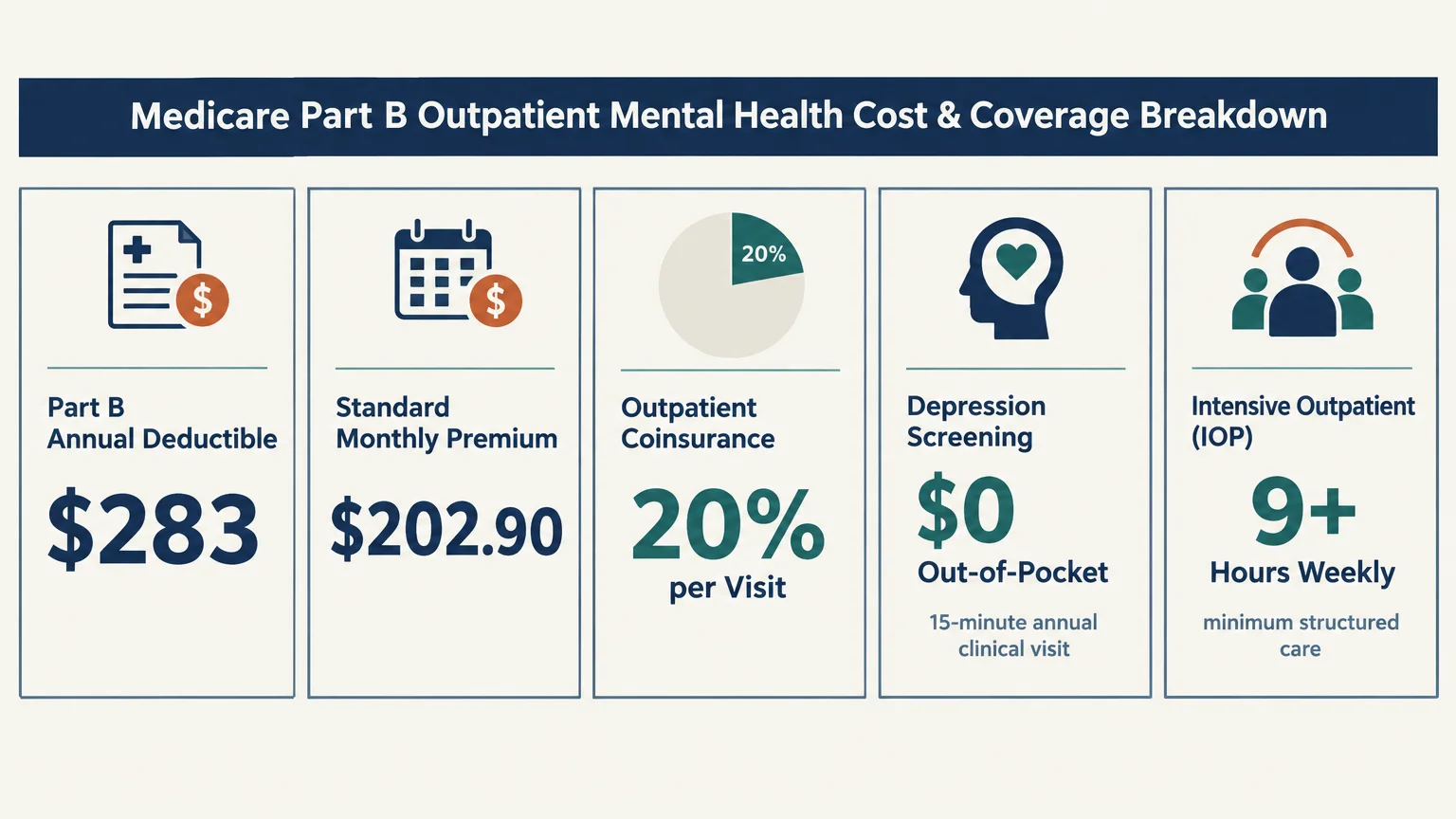
To access outpatient mental health benefits, you must satisfy the annual Part B deductible of $283. You also pay the standard Part B monthly premium of $202.90.
After meeting your deductible, you pay a 20% coinsurance per visit based on the Medicare-approved amount. Medicare places no annual limit on outpatient therapy sessions as long as your provider certifies medical necessity.
Your therapist must accept Medicare assignment for these rates to apply. Providers accepting assignment agree to Medicare’s approved rate as full payment and cannot bill you for extra charges.
Free Preventive Depression Screenings
Medicare Part B covers one annual depression screening per calendar year at a $0 out-of-pocket cost. You pay nothing if your primary care provider accepts Medicare assignment.
Alongside professional care, exploring natural ways to manage depression can offer practical everyday support for emotional well-being.
Your primary care provider must administer this 15-minute screening in a clinical setting equipped for follow-up care, ensuring immediate referrals if screening indicates mild, moderate, or severe depression.
Intensive Outpatient Programs
If you require more structured care than weekly visits, Part B covers Intensive Outpatient Programs (IOP). These programs serve as an intermediate level of care between outpatient therapy and partial hospitalization.
An Intensive Outpatient Program requires at least 9 hours of therapeutic services weekly, supporting patients managing severe emotional distress, medication adjustments, or hospital step-downs.
You can receive Intensive Outpatient Program services at hospital outpatient clinics, Community Mental Health Centers, Federally Qualified Health Centers, and Rural Health Clinics. Review outpatient benefit details on Medicare.gov.