What Coverage You Can Change During Open Enrollment
The fall enrollment window offers substantial flexibility across Medicare. Understanding these permitted moves helps align coverage with your medical needs and budget.
Moving Between Original Medicare and Medicare Advantage
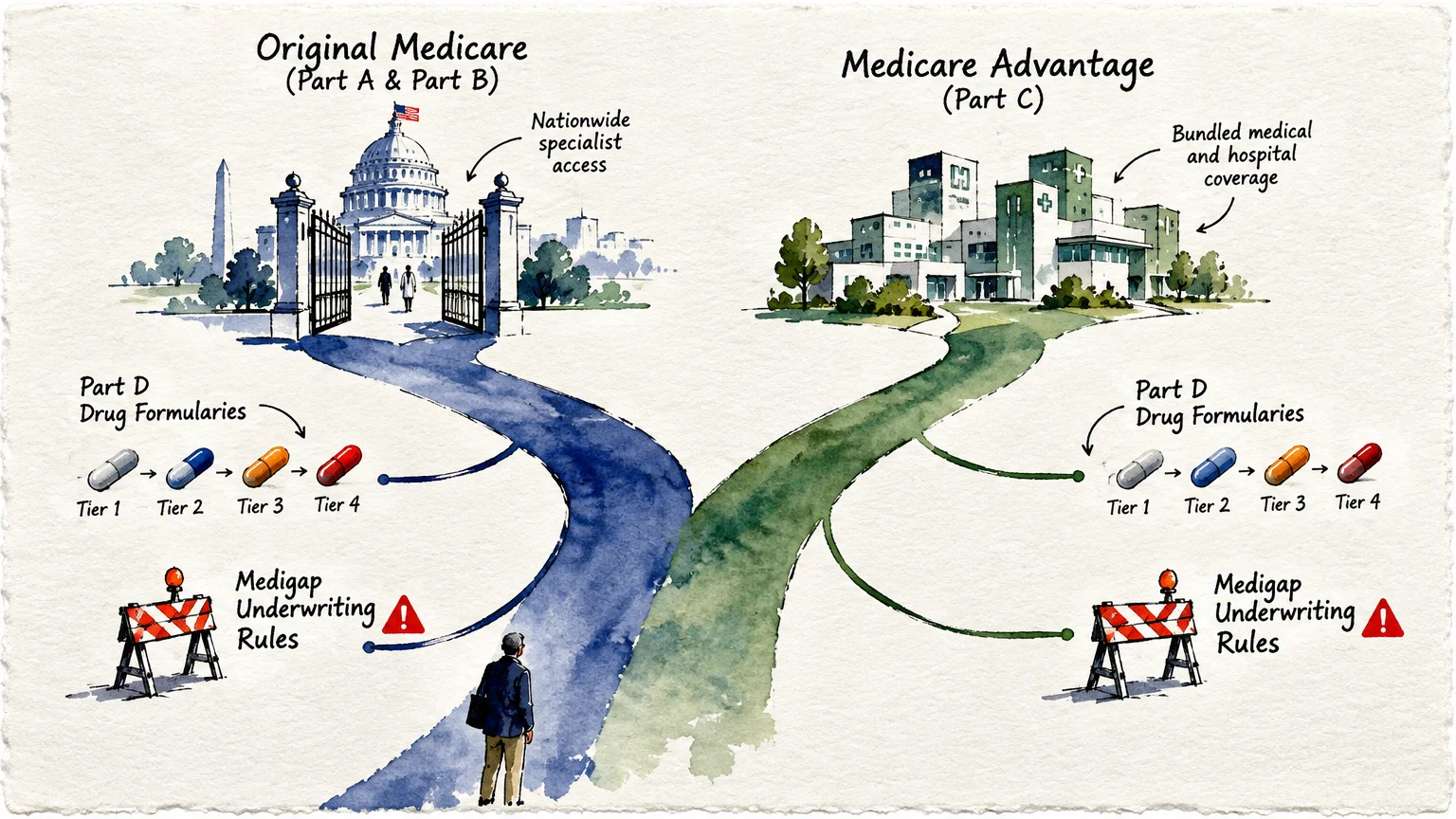
You can switch from Original Medicare—comprising Part A (hospital insurance) and Part B (medical insurance)—to a private Medicare Advantage plan. Many choose Medicare Advantage to bundle hospital, medical, and drug coverage into one policy.
If you are deciding between coverage paths, comparing Original Medicare vs. Medicare Advantage helps clarify which option best matches your preferred doctors and budget.
Conversely, you can leave Medicare Advantage and return to Original Medicare. Beneficiaries often do this to access nationwide specialists without prior authorization barriers.
You may also switch between competing Medicare Advantage plans if your carrier dropped your doctor or raised copayments. Comparing regional plans ensures you never overpay for clinic visits.
Adjusting Part D Prescription Drug Plans
You can join, switch, or drop a standalone Medicare Part D plan during the fall window. Because insurers adjust formularies annually, reviewing your drug list prevents unexpected tier changes and higher costs.
Even if your health feels stable, checking medication pricing annually is prudent. A prescription covered with a modest copayment this year might shift into an expensive coinsurance tier in 2027.
Critical Warning: Medigap Underwriting Rules
The fall Open Enrollment Period does not apply to Medicare Supplement Insurance (Medigap). Medigap policies work alongside Original Medicare to pay deductibles and coinsurance.
Outside your initial six-month Medigap window when turning 65, private insurers can evaluate your medical history. In most states, insurers may charge higher premiums or deny coverage due to pre-existing conditions.
If you leave Medicare Advantage hoping to buy a Medigap policy, you risk being denied coverage. Always confirm Medigap eligibility and premium rates in writing before dropping any Medicare Advantage plan.