Automatic Drug Coverage and Other Key Program Perks
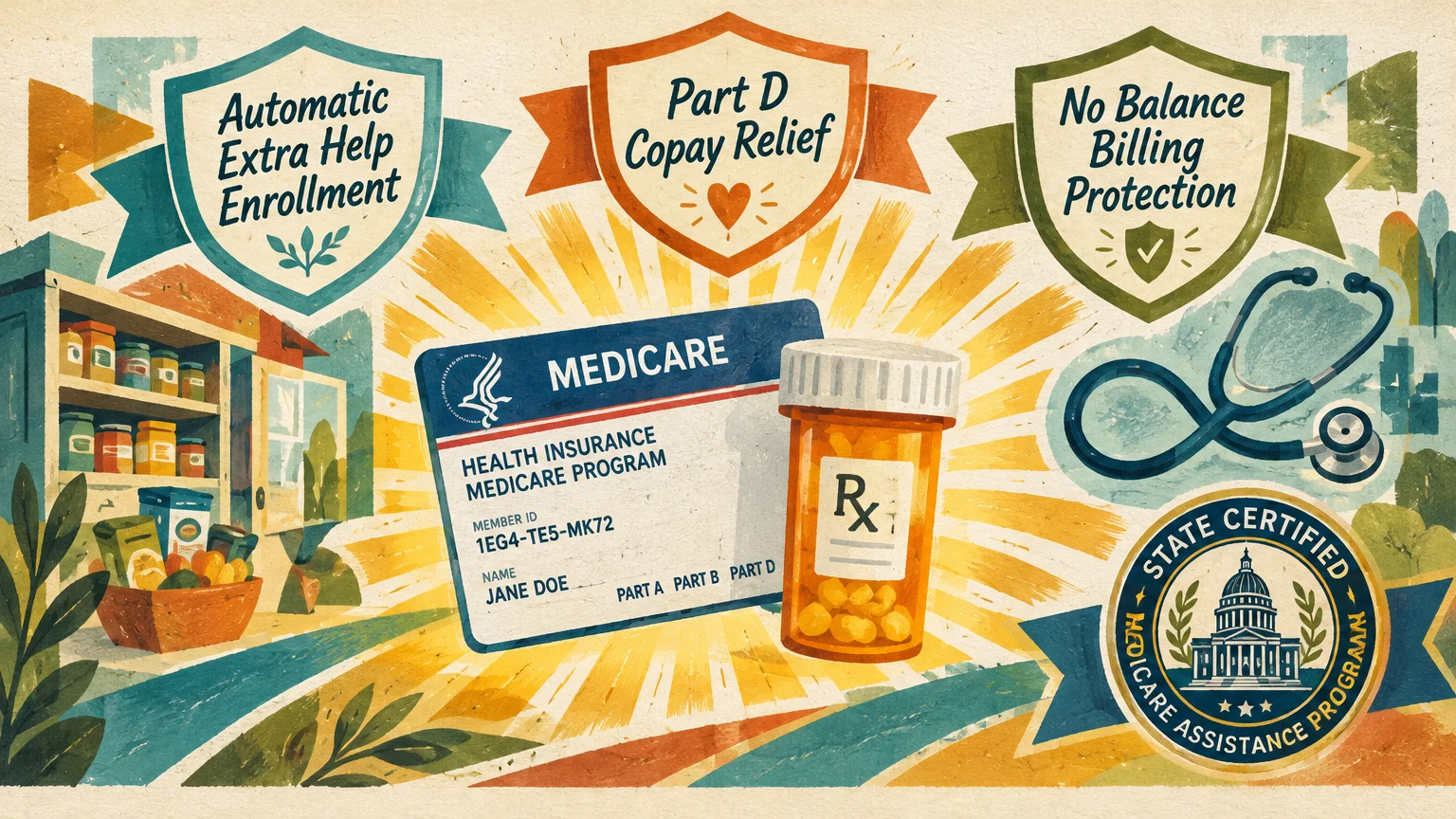
Automatic Enrollment in Part D Extra Help
Enrolling in QMB, SLMB, or QI triggers a powerful secondary benefit known as Extra Help. The Social Security Administration automatically awards this Part D Low-Income Subsidy to all MSP recipients.
Extra Help pays your monthly Medicare prescription drug plan premium and eliminates your annual drug deductible. This dual protection dramatically reduces your out-of-pocket pharmacy bills.
In 2026, Extra Help limits your copayments to no more than $12.65 for each covered brand-name medication. Generic prescription medications carry even lower copayments, providing substantial ongoing savings.
You do not need to file a separate application to claim Extra Help. You can verify your subsidy status through the official ssa.gov portal.
Real-World Example: Margaret Regains Financial Stability
Consider Margaret, a 69-year-old widow living in Pennsylvania on a fixed monthly Social Security benefit of $1,580. She retains $5,100 in savings and owns her home.
In 2026, the standard $202.90 monthly Part B premium deduction reduced her actual take-home check to $1,377.10. Meanwhile, her four maintenance prescription drugs cost her $145 each month at the pharmacy.
Her daughter helped her apply for assistance through her local county assistance office. Because Margaret’s income fell under the $1,616 threshold, the state approved her for the SLMB program.
The state immediately assumed payment of her $202.90 Part B premium, restoring that amount to her monthly deposit. Her automatic Extra Help subsidy slashed her monthly prescription drug spending to under $30.
In total, Margaret saved over $3,800 across the year. That financial relief allowed her to handle home utility bills and groceries without incurring credit card debt.