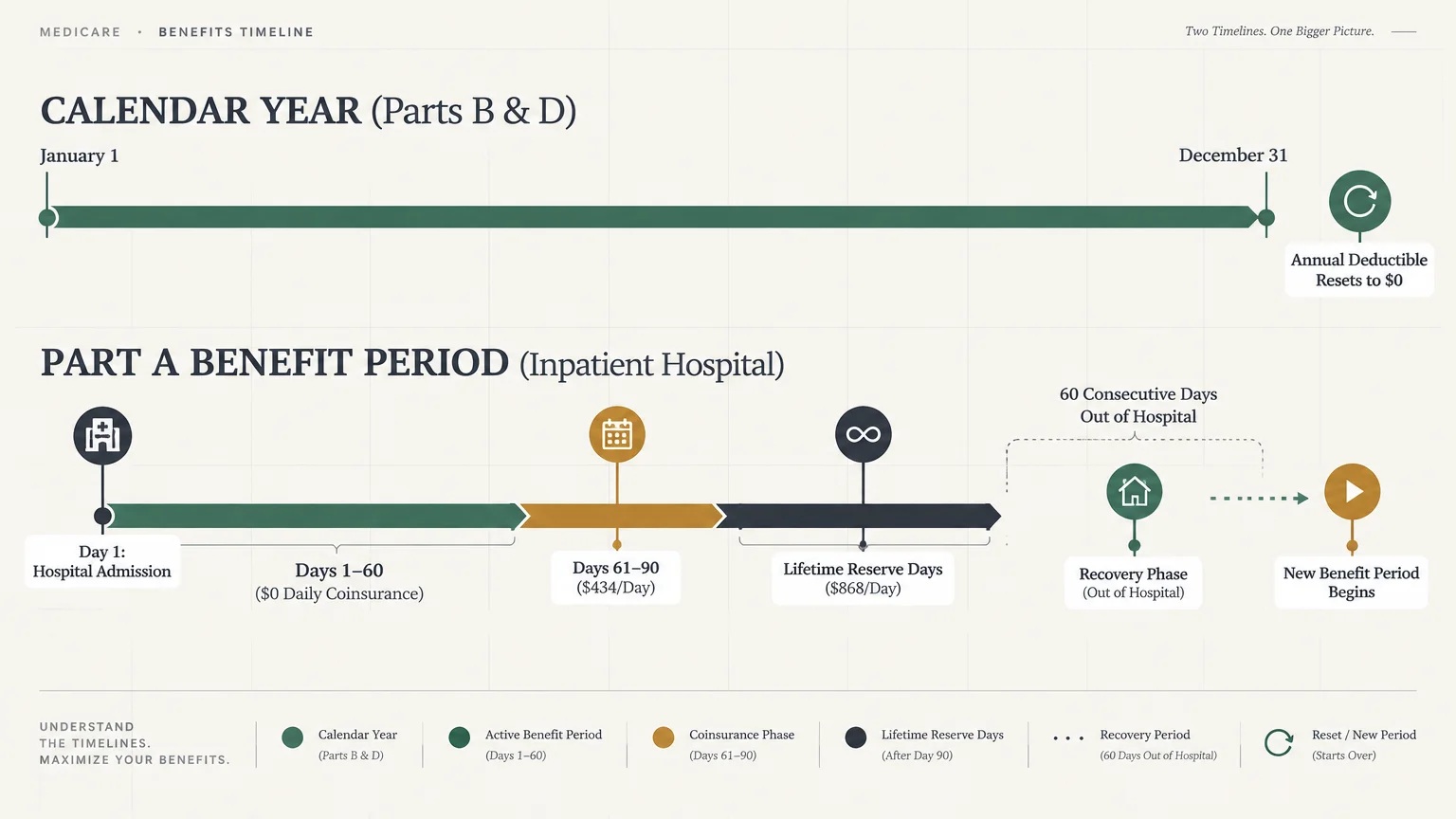
Benefit Period vs. Calendar Year: The Hidden Reset Button
Calendar Year Resets for Part B and Part D
A calendar year runs from January 1 through December 31. Medicare Part B and Part D operate strictly on this calendar-year schedule.
Your Part B outpatient deductible and Part D prescription spending caps reset to zero every January 1.
The Part A Inpatient Benefit Period
Original Medicare Part A measures inpatient hospital care using a benefit period instead of a calendar year.
A benefit period begins the day you enter a hospital or skilled nursing facility as an inpatient. It ends once you spend 60 consecutive days out of inpatient care.
Each new benefit period requires paying the full Part A deductible again, which is $1,736 in 2026.
Benefit periods protect you from paying deductibles during long, continuous hospital stays, but they require careful tracking if you experience frequent hospitalizations.
Skilled Nursing Facility Rules
To qualify for skilled nursing facility coverage, you must first spend at least three consecutive days as an inpatient in a hospital.
Time spent under hospital observation status does not count toward the three-day inpatient hospital stay requirement for skilled nursing benefits.
Always ask the hospital administration whether you are admitted as an inpatient or placed under outpatient observation.
In 2026, you pay $0 daily coinsurance for days 1 through 20. For days 21 through 100, your daily coinsurance is $217.
Medicare pays nothing toward skilled nursing care after day 100 of a benefit period.
A Worked Example: Tracking Benefit Periods
Consider Margaret, who enters the hospital for pneumonia on March 1, 2026. She pays her $1,736 Part A deductible and returns home on March 6.
On July 10, Margaret breaks her hip and requires hospital readmission. Because more than 60 consecutive days passed since her discharge, a new benefit period begins.
Margaret must pay a second $1,736 deductible for this separate stay. A supplemental Medigap policy would have covered this expense for her.
Margaret avoids this second deductible if she is readmitted within 59 days, as both hospitalizations would belong to the same initial benefit period.