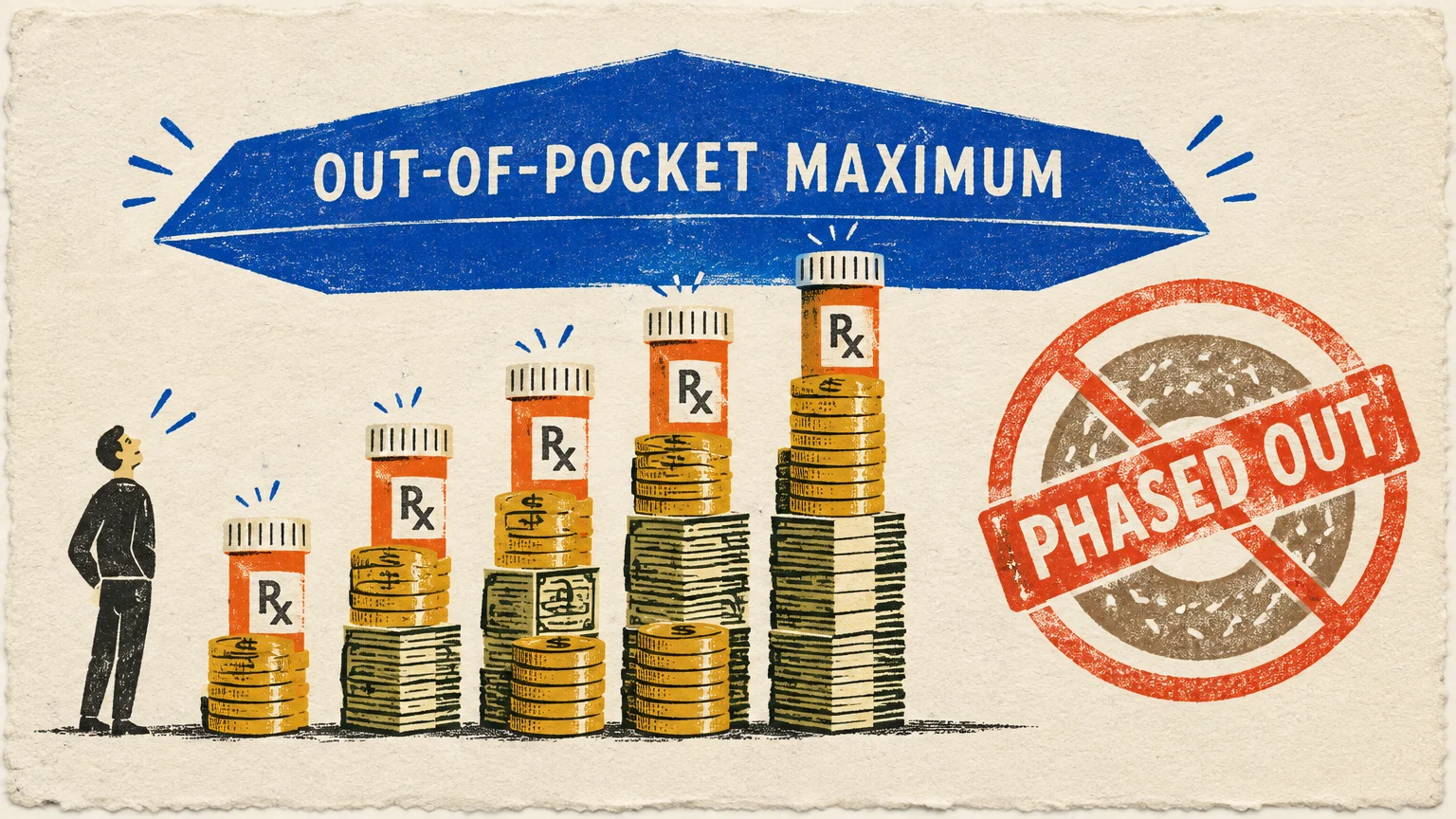
Out-of-Pocket Maximums and the Obsolete Donut Hole
Original Medicare vs. Medicare Advantage Spending Caps
An out-of-pocket maximum is the annual ceiling on what you spend on covered care. Once reached, your plan pays 100% of covered costs.
Original Medicare (Parts A and B) has no annual out-of-pocket maximum. Without supplemental coverage, your 20% Part B coinsurance is unlimited.
In contrast, federal regulations require every Medicare Advantage plan to establish a mandatory annual out-of-pocket maximum.
Medigap plans provide a private alternative to Medicare Advantage out-of-pocket caps by paying your deductibles and coinsurance charges directly.
The Part D Prescription Drug Spending Cap
Total annual out-of-pocket spending on covered Part D prescription drugs is capped at $2,100 in 2026. This cap rises to $2,400 in 2027.
Once you reach this annual threshold, your copayments drop to $0 for covered medications for the remainder of that calendar year.
Manufacturer discounts on brand-name medications count toward your Part D out-of-pocket maximum, helping you reach catastrophic coverage faster.
Why the Donut Hole Is Officially Gone
The coverage gap historically called the donut hole has been permanently eliminated. You no longer have to navigate this confusing middle stage.
Federal law reformed Part D into three simple stages starting in 2025: the annual deductible, initial coverage, and catastrophic coverage.
During the catastrophic stage, which begins immediately after meeting your annual spending cap, you pay nothing for covered prescription drugs.
The elimination of the donut hole represents one of the largest financial protections ever introduced to the Medicare Part D program.