Premium Changes and Shifting Drug Costs for 2027
While the $2,400 cap limits pharmacy expenses, other Part D costs are shifting. Beneficiaries must prepare for premium changes and altered cost-sharing structures.
These pharmacy rule shifts are just part of the broader Medicare changes taking effect in 2027 across outpatient and inpatient care.
Expiration of the Premium Stabilization Demonstration
The federal Part D Premium Stabilization Demonstration expires at the end of 2026. This demonstration previously subsidized stand-alone drug plans and capped premium increases at $50 per month in 2026.
Without these federal subsidies, insurance carriers face higher financial risk under the $2,400 cap. Many insurers are raising premiums to offset these potential liabilities.
Projected Stand-Alone Premium Increases
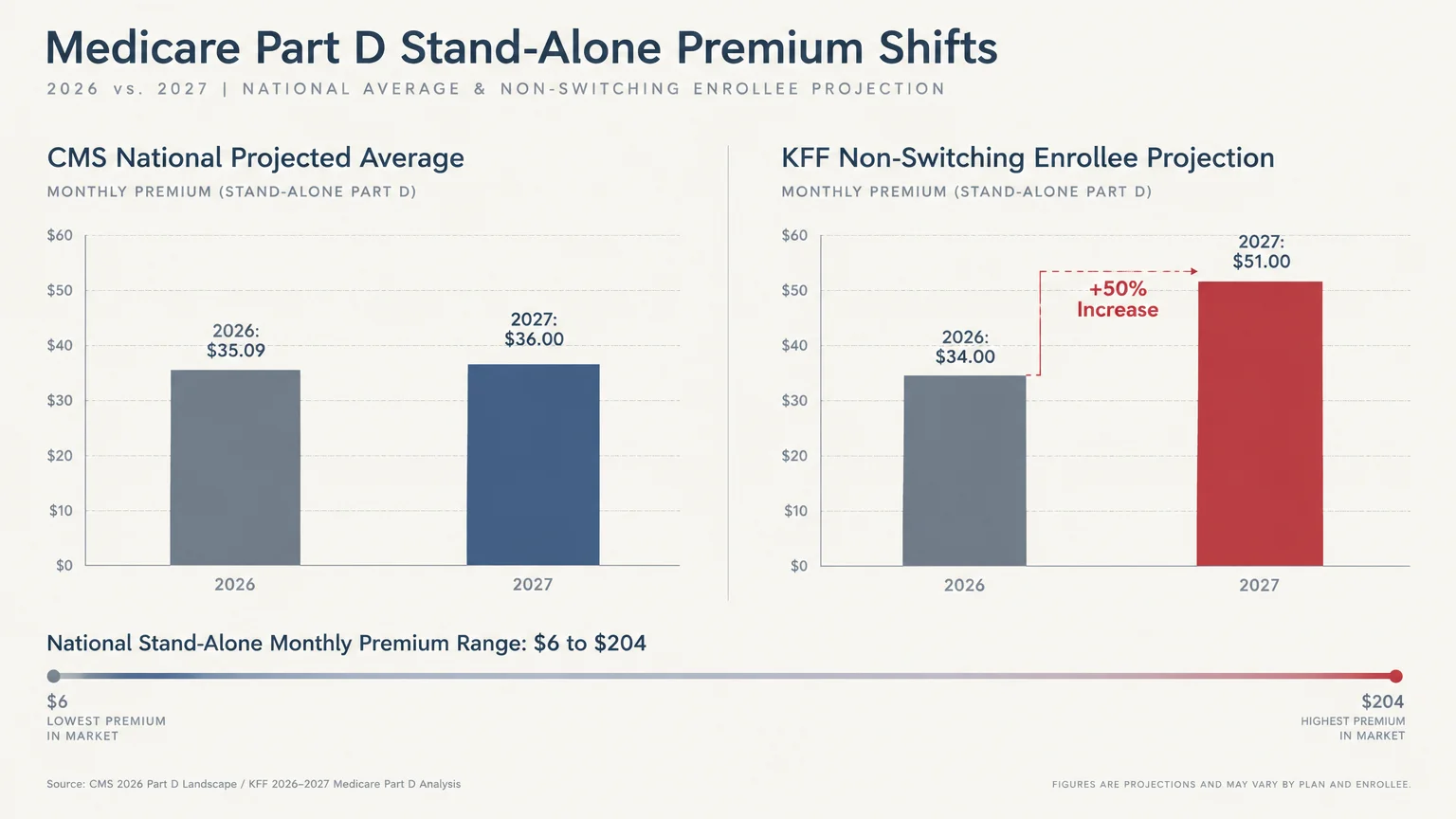
The Centers for Medicare & Medicaid Services (CMS) projects a national average stand-alone Part D premium of $36.00 in 2027. This reflects a modest increase from $35.09 in 2026.
However, an enrollment-weighted analysis by the Kaiser Family Foundation (KFF) reveals a steeper climb for enrollees who stay in their current plans. Without plan switching, the average stand-alone premium is projected to jump 50%, rising from $34 in 2026 to $51 in 2027.
Individual stand-alone plan premiums nationwide will range from $6 to $204 per month. This wide variation makes comparing your options essential.
Elimination of Zero-Dollar Stand-Alone Plans
For 2027, $0-premium stand-alone drug plans are no longer offered on the market. Only beneficiaries who qualify for the Low-Income Subsidy (Extra Help) can enroll in zero-premium stand-alone plans.
This change affects approximately 4 million beneficiaries who carried zero-premium stand-alone plans in 2026. If you have one of these plans, you will see a monthly premium bill in 2027.
The Shift from Copayments to Coinsurance
Most 2027 Part D plans are replacing flat dollar copayments with percentage-based coinsurance. KFF reports a median coinsurance of 25% in stand-alone plans and 20% in Medicare Advantage plans for preferred brands.
Coinsurance links your out-of-pocket payment directly to the retail cost of your medication. Expensive brand-name drugs will require larger upfront payments before you reach the cap.