
If you find yourself waking at dawn or waking up multiple times throughout the night, your body is experiencing natural shifts in its sleep architecture. Understanding these biological changes helps you adjust your daily routines for deeper rest tonight.
Aging alters your internal biological clock, but it does not diminish your fundamental need for restorative rest. You can regain control over your nightly rest by applying simple, science-backed behavioral adjustments.
Here is what happens inside your nervous system as decades pass, along with immediate steps you can take before bed.
Do Sleep Needs Decrease as You Age?
A widespread myth suggests that older adults require far less sleep to function properly. In reality, your body needs almost as much nightly rejuvenation as it did during early adulthood.
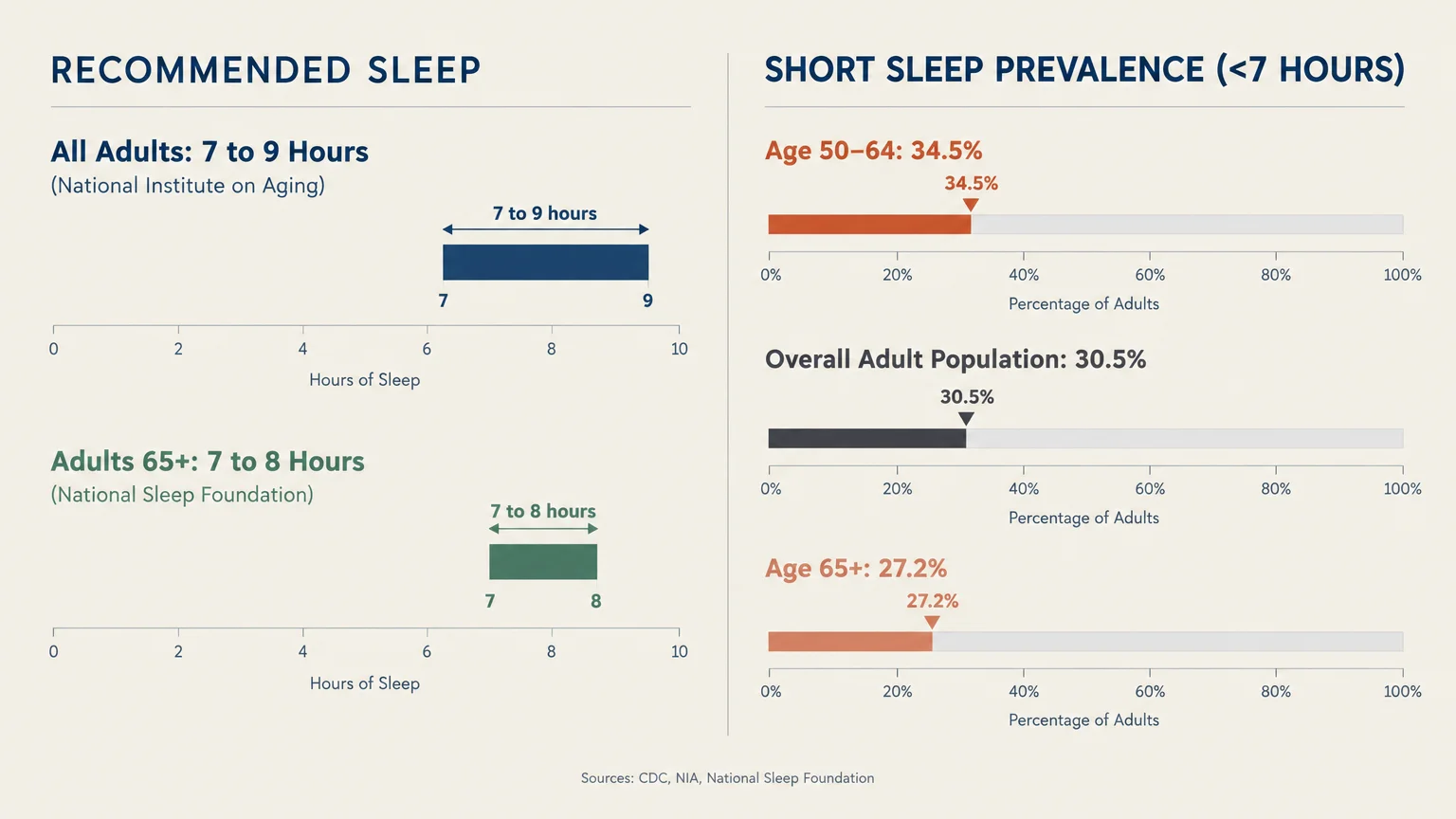
The National Institute on Aging recommends seven to nine hours of nightly sleep for all adults. Sleep remains vital for your immune function, cognitive health, and cellular repair.
Similarly, the National Sleep Foundation recommends seven to eight hours specifically for adults aged 65 and older. Your physiological demand for sleep stays durable across your lifespan.
Yet many older individuals fail to reach these target durations. Clinical data compiled by the Centers for Disease Control and Prevention indicates that 27.2 percent of adults aged 65 and older get less than seven hours per night.
Interestingly, this short-sleep rate is actually lower than the 34.5 percent observed among middle-aged adults aged 50 to 64. Across the entire adult population, 30.5 percent fail to get recommended sleep.
The Biology Behind Circadian Phase Advance
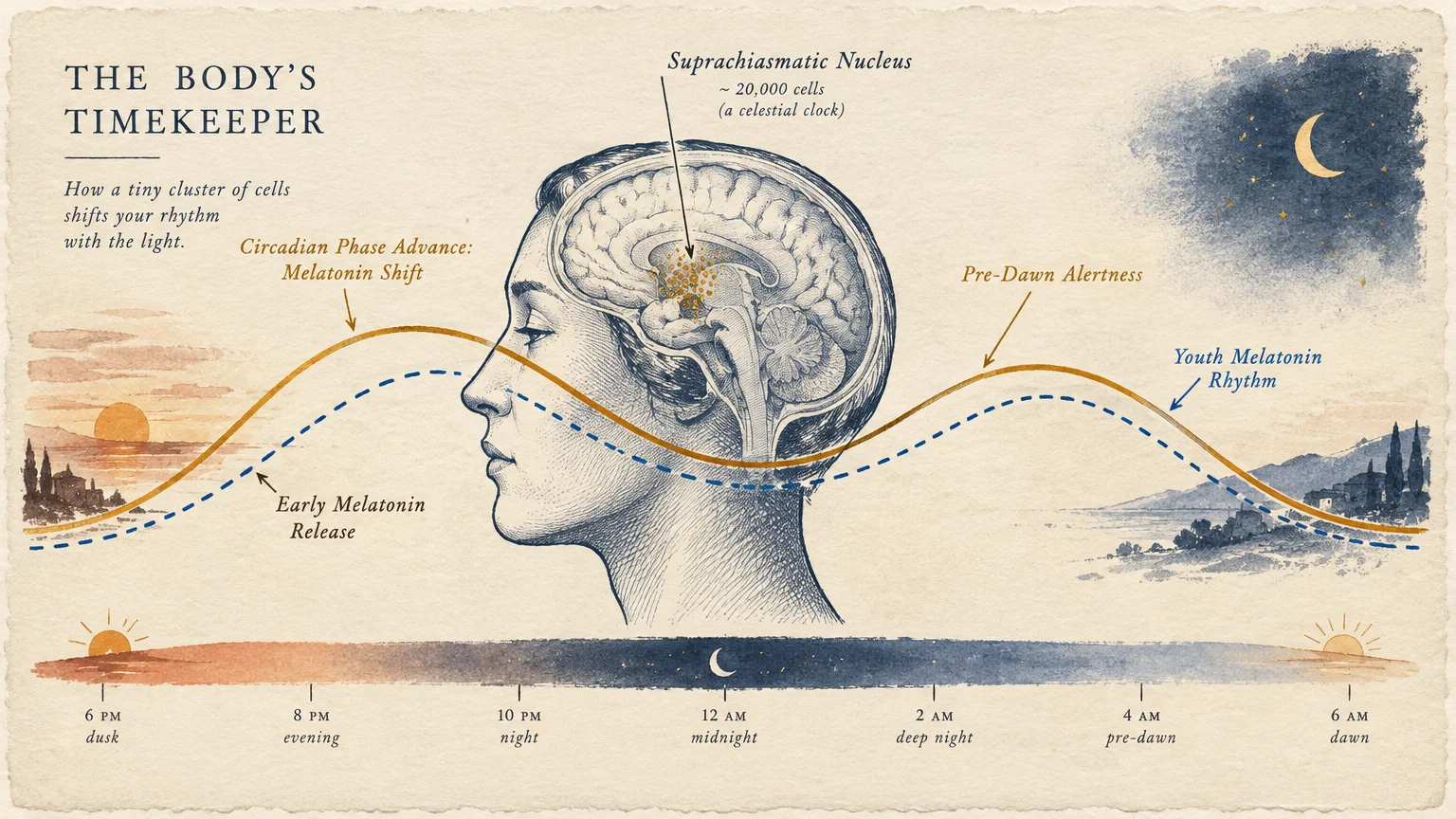
If you struggle to stay awake past dinner and find yourself awake before dawn, biological shifts explain the pattern. Medical experts call this shift circadian phase advance.
Your body’s central clock resides within the hypothalamus in a specialized structure called the suprachiasmatic nucleus. This regulatory center contains approximately 20,000 cells that control your daily hormonal cycles.
As these cells age, their function shifts and alters your hormonal timing. The National Institutes of Health explores how natural biological aging dampens and advances your daily melatonin rhythm.
Melatonin release triggers earlier in the evening, signaling your brain that nighttime has arrived. Consequently, your body completes its hormonal cycle earlier, waking you up during the pre-dawn hours.
This biological shift explains why early waking seniors experience high morning alertness. Working alongside your body clock yields far better rest than trying to force an unnatural bedtime.
Why You Wake Up Throughout the Night
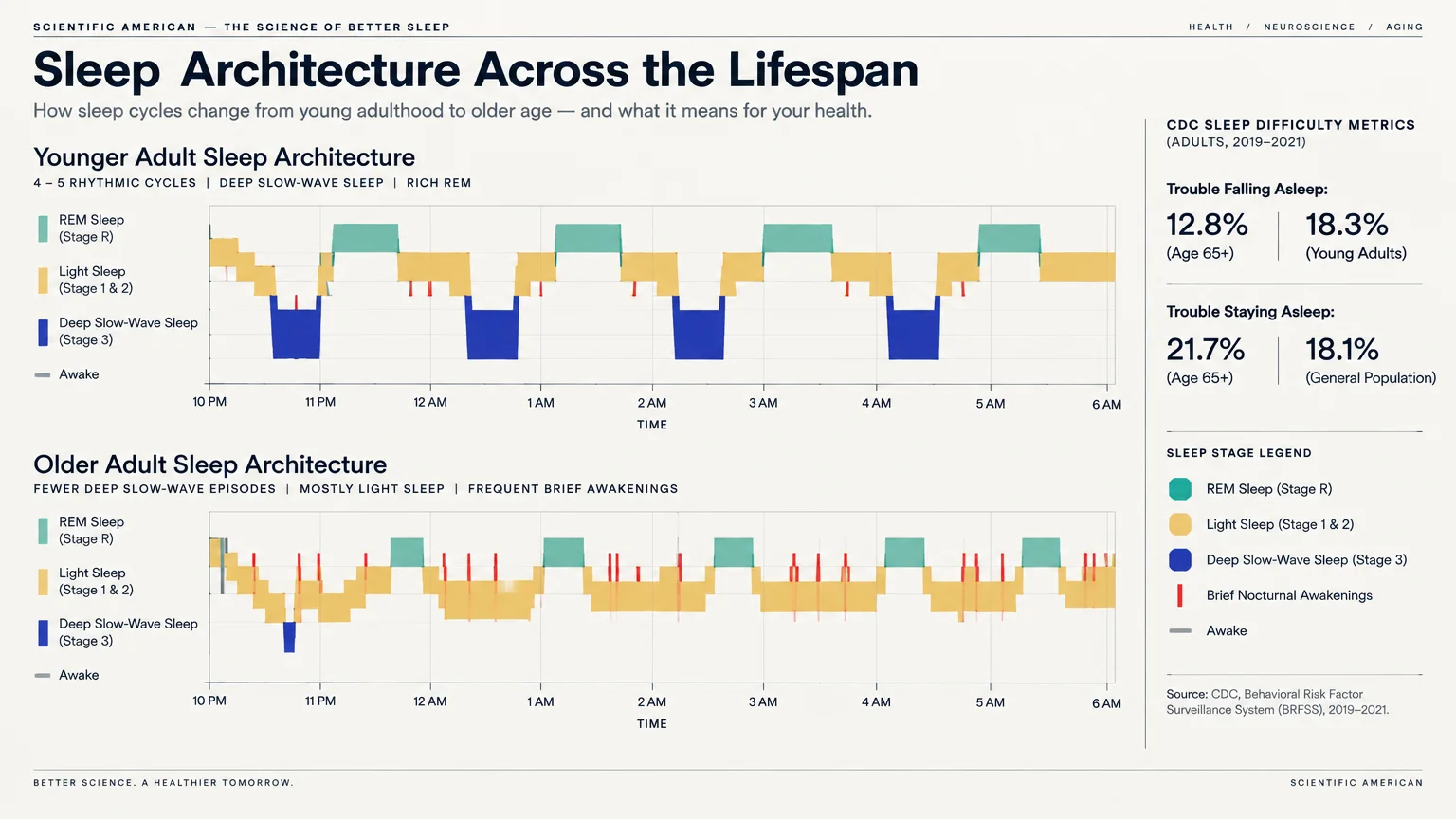
Normal human rest consists of three to five sleep cycles that alternate between non-REM and REM sleep stages. Deep, slow-wave sleep serves as the restorative stage that physically repairs tissues and clears brain metabolic waste.
With age, the brain experiences marked declines in both slow-wave deep sleep and REM sleep. As a result, older adults spend far more of the night in lighter sleep stages.
These lighter sleep stages leave you far more vulnerable to minor nighttime disturbances. Ambient bedroom noise, minor joint stiffness, or subtle temperature changes can instantly wake you.
Surprisingly, falling asleep initially remains relatively easy for seniors. The CDC notes that trouble falling asleep drops from 18.3 percent in young adults aged 18 to 34 down to 12.8 percent in adults aged 65 and older.
The true challenge lies in sleep maintenance. Over 21.7 percent of older adults struggle with staying asleep, compared to 18.1 percent across the broader population.
Sex differences also influence this nighttime fragmentation. Data shows that 21.4 percent of women struggle to stay asleep, compared to just 14.6 percent of men.
Actionable Habits for Deeper Rest
Harness Morning and Evening Light
Bright outdoor light provides the primary cue that synchronizes your suprachiasmatic nucleus. Spend time outside in early morning sunlight to strengthen your daytime wakefulness signal.
Conversely, expose yourself to bright light during the late afternoon to delay premature evening sleepiness. Dim indoor lights during late hours to avoid triggering abrupt circadian shifts.
Buffer Your Bedroom Against Disruptions
Because you spend more time in lighter sleep stages, you must actively eliminate sensory interruptions. Run a steady white noise machine or use soft earplugs to block out sudden exterior sounds.
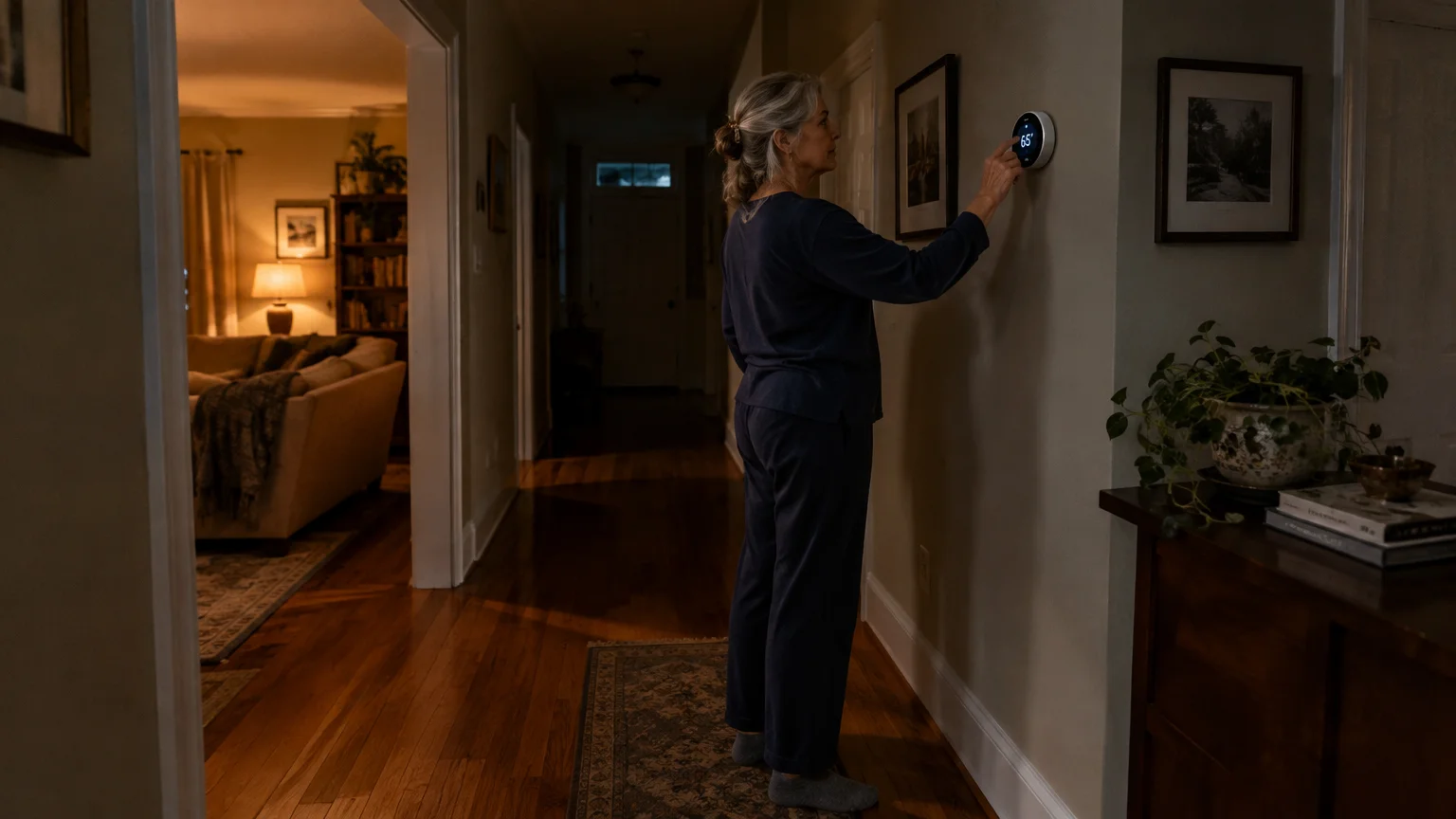
Install blackout shades to keep pre-dawn sunlight and streetlamps from triggering early awakening. Maintain a comfortably cool room temperature to support deep physical recovery.
Adjust Daily Consumption Patterns
Frequent nighttime urination interrupts continuous sleep cycles and leaves you frustrated. Taper your fluid intake in the late evening while staying properly hydrated during daytime hours.
Cut off caffeine consumption by early afternoon. Because metabolic clearance slows with age, stimulants remain active in your bloodstream far longer than they used to.

When to Consult a Healthcare Professional
While shifts in sleep architecture happen naturally, severe sleep disruption is never an inevitable consequence of aging. You should speak with a doctor if you experience persistent insomnia lasting multiple months.
Chronic loud snoring accompanied by gasping or choking indicates potential obstructive sleep apnea. This dangerous disorder fragments your sleep cycles and deprives vital organs of oxygen.
Consult a physician if uncomfortable tingling sensations in your legs disrupt your evening rest. Remember that this guide offers health education rather than personalized clinical diagnoses or medical advice.
Frequently Asked Questions
Should older adults take afternoon naps?
Short daytime naps can restore alertness without disrupting your nocturnal rhythm. Keep naps brief and schedule them for early afternoon so they do not erode your overnight sleep drive.
Does early waking mean you have insomnia?
Early waking only indicates insomnia if you cannot achieve adequate total sleep or feel fatigued during the day. If you wake early feeling energized, your circadian clock has simply shifted forward naturally.
Are over-the-counter sleep aids safe for seniors?
Over-the-counter sleep aids containing antihistamines carry significant risks for older adults. These medications can trigger prolonged daytime grogginess, mental confusion, and urinary retention.
Always consult your physician before taking any sleep supplements or over-the-counter sedatives. A doctor can review your current medications and recommend proven behavioral strategies.
Why do older adults wake up with joint pain?
Natural changes in joint cartilage and circulation often create stiffness during prolonged immobility. Using supportive mattresses and doing gentle evening stretches can significantly reduce nocturnal physical discomfort.
One Small Change to Try Tonight
Tonight, dim your overhead household lighting in the hours before you plan to sleep. This simple adjustment stabilizes your melatonin release and helps you achieve continuous, restorative rest.