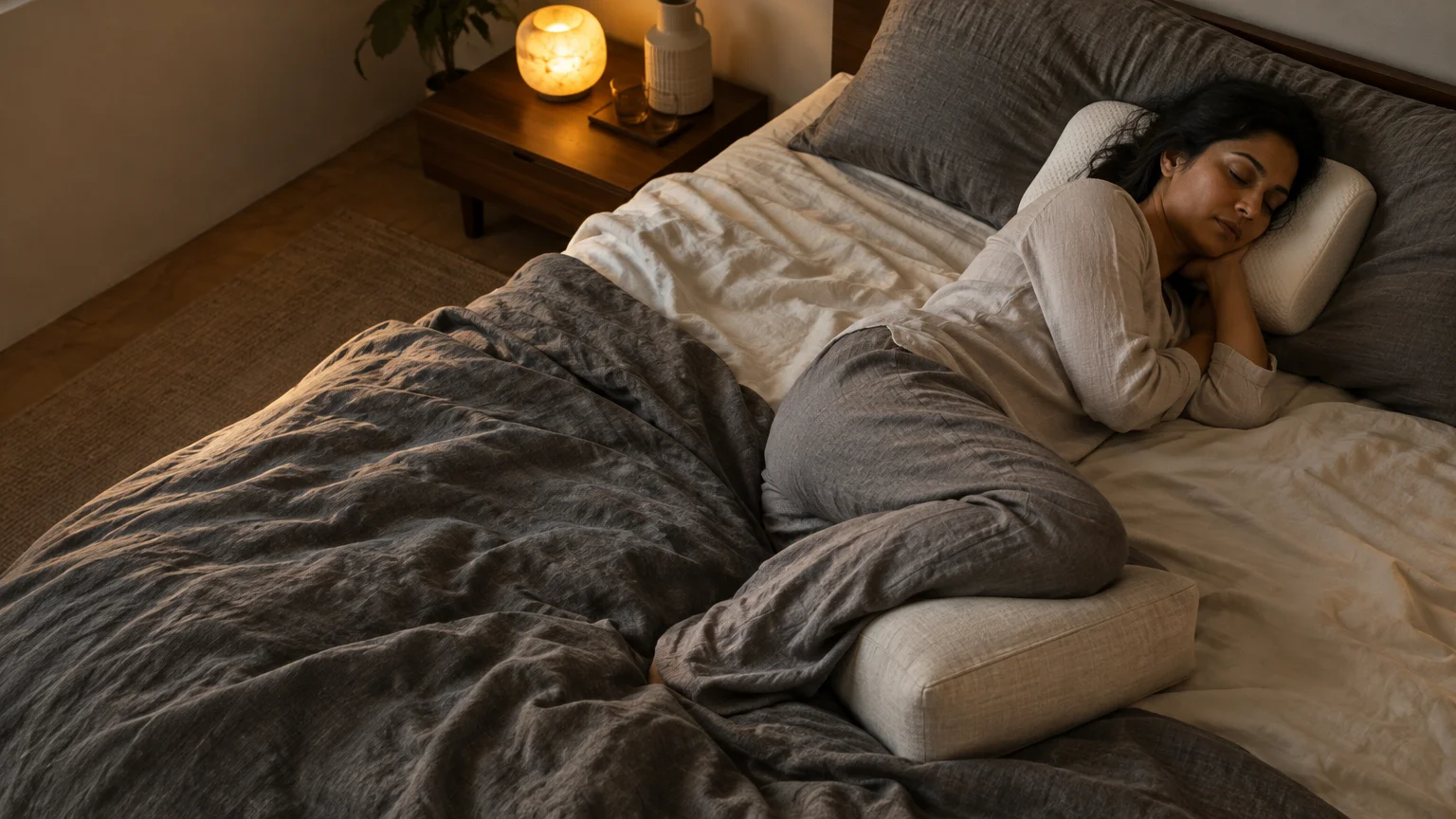
Waking up with a stiff lower back, chest burn, or a raw throat often traces back to how you align your body on your mattress. Adjusting your sleep posture tonight can immediately alleviate pressure on your spinal joints, digestive tract, and upper airway.
Your body rests in one posture for hours at a time; sustained gravity either supports your internal systems or strains them. Choosing an intentional position transforms your sleep from a source of morning aches into true physical restoration.
By making minor adjustments with common household pillows, you can target specific nighttime symptoms without buying an expensive new bed.
How Nighttime Posture Impacts Your Body
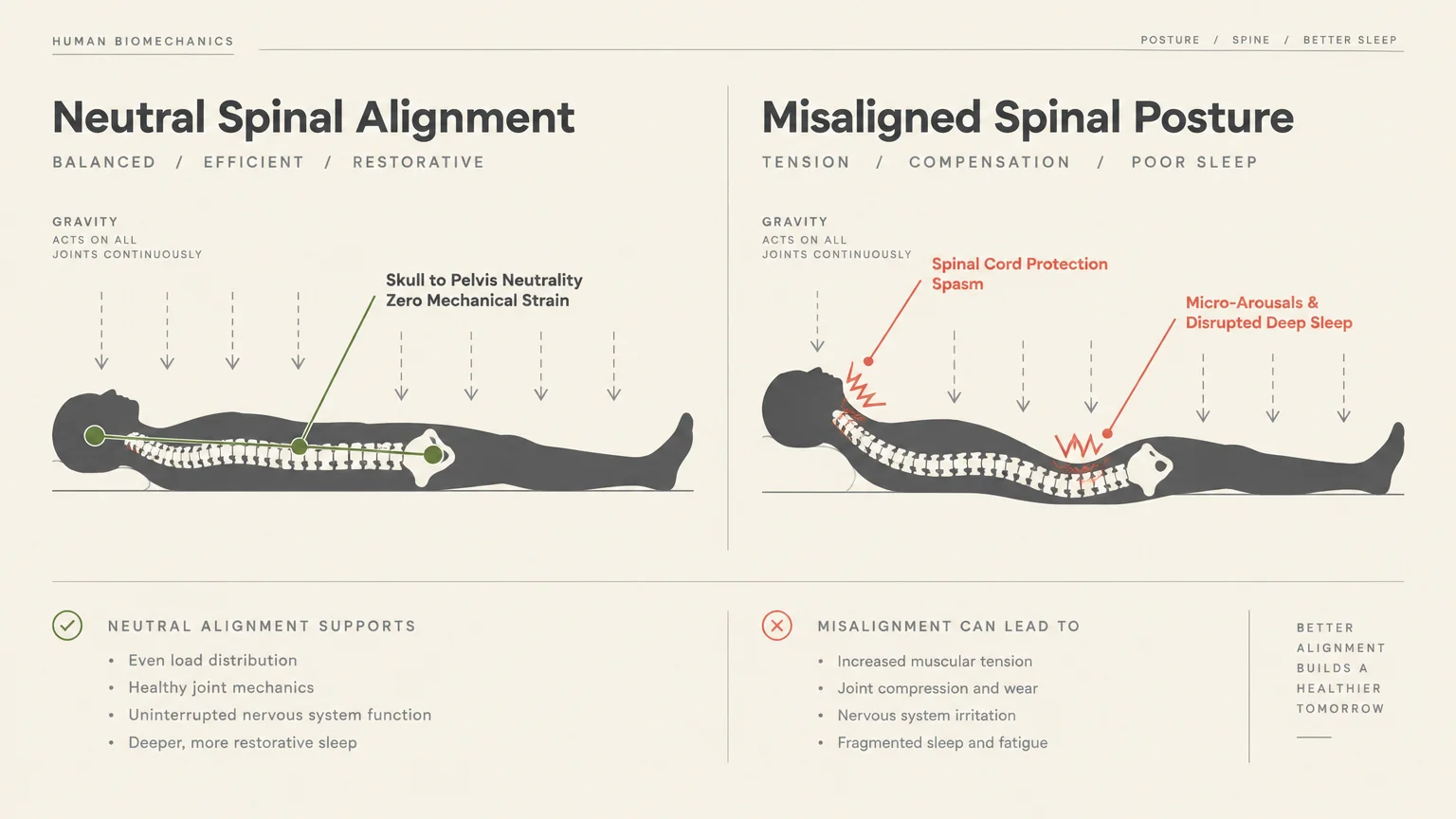
When you sleep, your muscles relax and surrender structural support to gravity. If your posture twists your joints or compresses soft tissues, your nervous system responds with micro-arousals that disrupt deep sleep stages.
Your spinal column requires a neutral alignment from your skull down to your pelvis. When your mattress or position bends that line, surrounding muscles spasm overnight to protect the spinal cord.
Gravity also acts continuously on your digestive fluids and airway tissues. The simple orientation of your head and torso determines whether gastric juices stay contained and whether your throat remains open.
The Best Sleeping Position for Back Pain
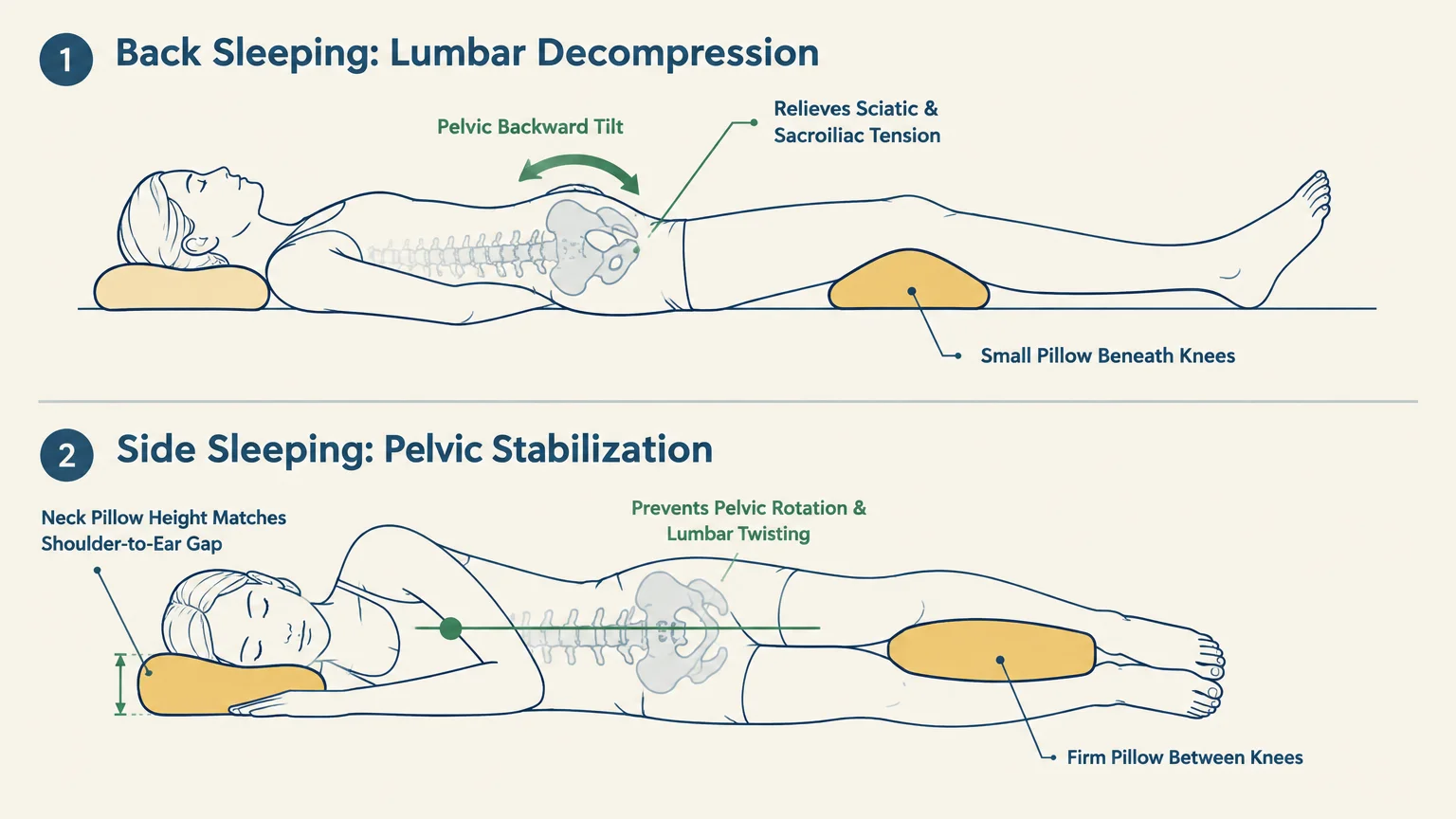
Sleeping on your back distributes your body weight evenly across your skeleton. This posture minimizes pressure points on your neck and lumbar spine while maintaining an even, neutral posture.
To protect the natural curve of your lower back, place a small pillow beneath your knees. This slight elevation tilts your pelvis backward and relieves tension across the sciatic nerve and sacroiliac joints.
If you prefer sleeping on your side, bend your knees slightly and slide a firm pillow between them. The pillow prevents your upper leg from pulling your pelvis forward, which prevents painful spinal twisting.
Keep your neck pillow at a height that matches the space between your shoulder and ear. The National Institute of Neurological Disorders and Stroke notes that maintaining proper spinal alignment prevents mechanical strain on delicate back muscles.
Avoid sleeping flat on your stomach whenever possible. Stomach sleeping forces your cervical spine into extreme rotation for hours, straining ligaments and flattening the natural lumbar curve.
The Best Sleeping Position for Acid Reflux
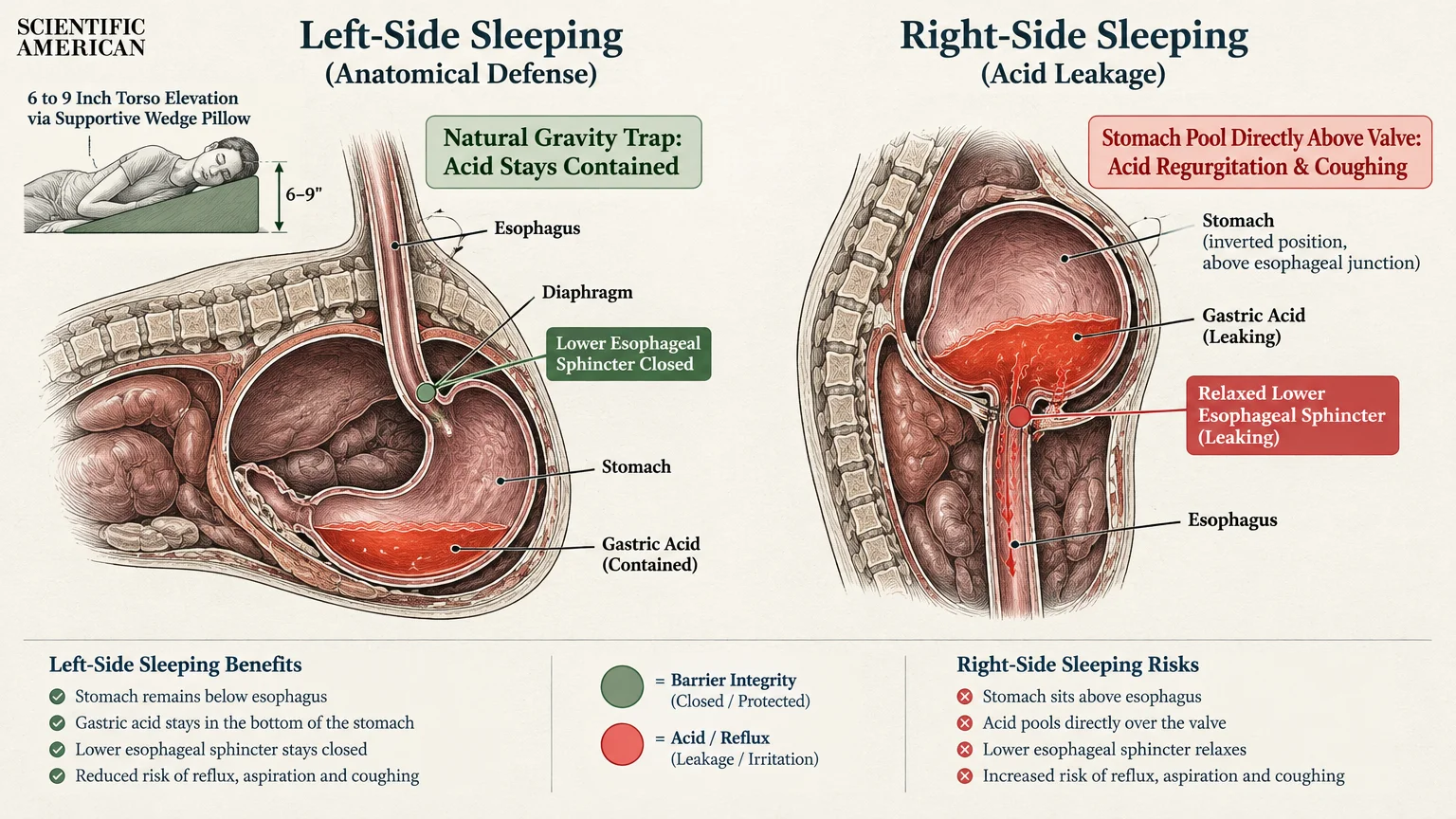
Left-side sleeping serves as the premier anatomical defense against nocturnal heartburn. When you lie on your left side, your stomach remains positioned lower than your esophagus.
This physical drop creates a natural gravity trap that keeps caustic stomach acid below the lower esophageal sphincter. Clinical guidance from the National Institute of Diabetes and Digestive and Kidney Diseases highlights left-side positioning for managing reflux symptoms.
In contrast, resting on your right side places the stomach pool directly above the esophageal junction. Liquid stomach contents can easily seep across the relaxed sphincter valve, triggering burning pain and sudden coughing.
Elevating your head and upper chest six to nine inches adds an extra barrier against nighttime regurgitation. Use a supportive wedge pillow or bed risers rather than stacking ordinary sleeping pillows.
Stacking soft pillows merely bends your neck forward without raising your esophagus. That sharp bend creates intra-abdominal pressure that actually forces acid upward into your throat.
The Best Sleeping Position for Snoring
Side sleeping offers the most effective immediate relief for routine nighttime snoring. Lying horizontally on your side prevents your tongue and soft palate from collapsing backward into the pharynx.
Back sleeping allows gravity to pull relaxed oral tissues directly down into the airway passage. As your breath forces its way through that narrowed opening, the surrounding tissues vibrate loudly.
According to the National Heart, Lung, and Blood Institute, side sleeping helps keep your breathing passages patent throughout the night. This posture reduces tissue resistance and promotes steady oxygen intake.
If you unconsciously roll onto your back during the night, place a firm body pillow along your spine. The physical barrier prevents you from turning supine while you remain in deep sleep.
You can also attach a small clip or pocket holding a tennis ball to the back of your sleep shirt. When you start turning onto your back, the gentle discomfort prompts you to roll back over.

When Positional Adjustments Are Not Enough
Altering how you lie down resolves simple mechanical strain, but it cannot cure underlying medical conditions. You should recognize when symptoms indicate a deeper issue requiring professional diagnosis.
Consult a doctor if your snoring includes gasping, choking sounds, or witnessed breathing pauses. These warning signs often indicate obstructive sleep apnea, a serious disorder linked to cardiovascular strain.
The Centers for Disease Control and Prevention emphasizes that chronic daytime exhaustion despite adequate bed rest warrants clinical evaluation. Unrefreshing sleep diminishes cognitive performance and metabolic health.
Seek prompt medical attention if back pain radiates down your leg or causes numbness in your extremities. Similarly, persistent acid reflux that resists lifestyle changes can damage esophageal tissue over time.
Frequently Asked Questions
Can you train yourself to sleep in a new position?
Yes, you can reshape your sleep habits over several weeks by using strategic pillow barriers. Placing supportive pillows behind your back and between your knees reinforces side sleeping until it becomes automatic.
Is sleeping on your back ever bad for you?
Back sleeping can worsen both snoring and obstructive sleep apnea by allowing the tongue to obstruct airflow. It can also exacerbate acid reflux if your head and torso remain completely flat.
What is the worst sleeping position for overall health?
Stomach sleeping causes the greatest mechanical strain on your body. It twists your neck sideways, flattens your lower back curvature, and presses your chest into the mattress.
Does mattress firmness matter as much as sleep position?
Mattress firmness directly interacts with your sleep position to dictate spinal alignment. Side sleepers generally need a medium-plush surface to cushion shoulders, while back sleepers thrive on medium-firm support.
One Action to Take Tonight
Select the single symptom that disrupts your rest the most—whether that is aching joints, acid reflux, or loud snoring. Arrange one extra pillow tonight specifically to target that vulnerability before you close your eyes.
Slide that pillow between your knees for back relief, turn to your left side for digestion, or wedge your back to silence snoring. Small, intentional physical shifts produce immediate improvements in your morning vitality.