Tossing and turning every night drains your daytime energy, mental focus, and emotional well-being. Making a few targeted behavioral adjustments tonight helps you fall asleep faster and wake up genuinely refreshed.
Sleep hygiene refers to the foundational habits and environmental cues that promote deep, restorative rest. These evidence-based practices align your natural internal clock with your ideal sleep schedule.
Instead of relying on expensive sleep trackers or unproven supplements, you can optimize your rest through practical lifestyle habits. This checklist offers immediate, reliable steps you can take today.
How Your Body Regulates Sleep
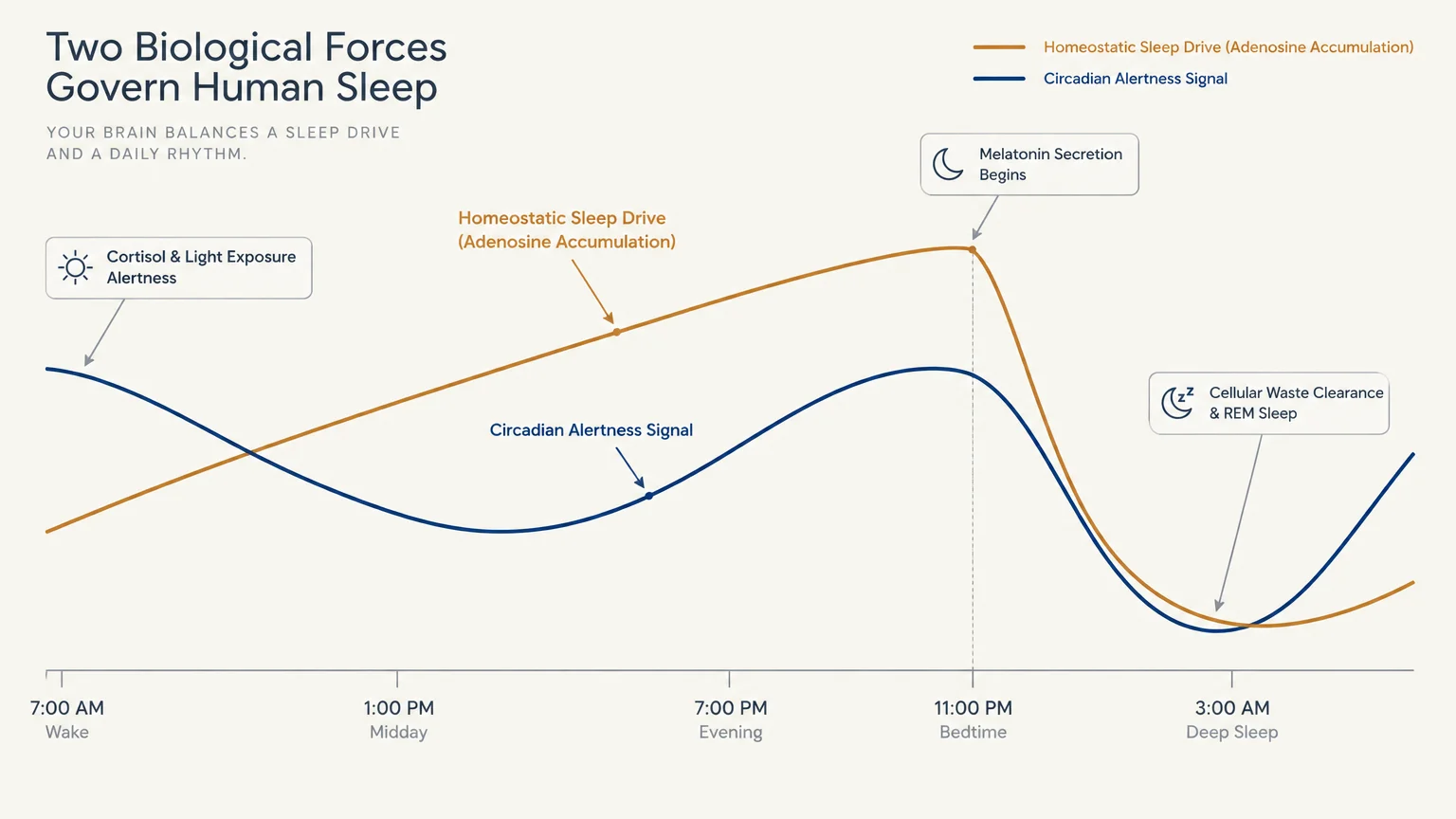
Two primary biological systems dictate when you feel alert and when you feel drowsy. Understanding how these internal mechanisms operate empowers you to make smarter lifestyle choices throughout the day.
The first system is your circadian rhythm, a 24-hour internal clock managed by your brain. This cycle responds heavily to light exposure, prompting the brain to release cortisol for alertness or melatonin for sleepiness.
The second system is your homeostatic sleep drive, which builds pressure to sleep the longer you stay awake. During waking hours, a chemical called adenosine accumulates in your brain until you finally rest.
Deep restorative sleep and REM sleep allow your brain to clear cellular waste and consolidate memories. According to the National Institute of Neurological Disorders and Stroke, your body requires these uninterrupted sleep stages to maintain neurological and immune health.
The Core Sleep Hygiene Checklist
Healthy sleep habits do not require an all-or-nothing lifestyle overhaul. Focus on consistent, manageable tweaks that signal safety and routine to your nervous system.
In this article7 items
Fix Your Wake-Up Time
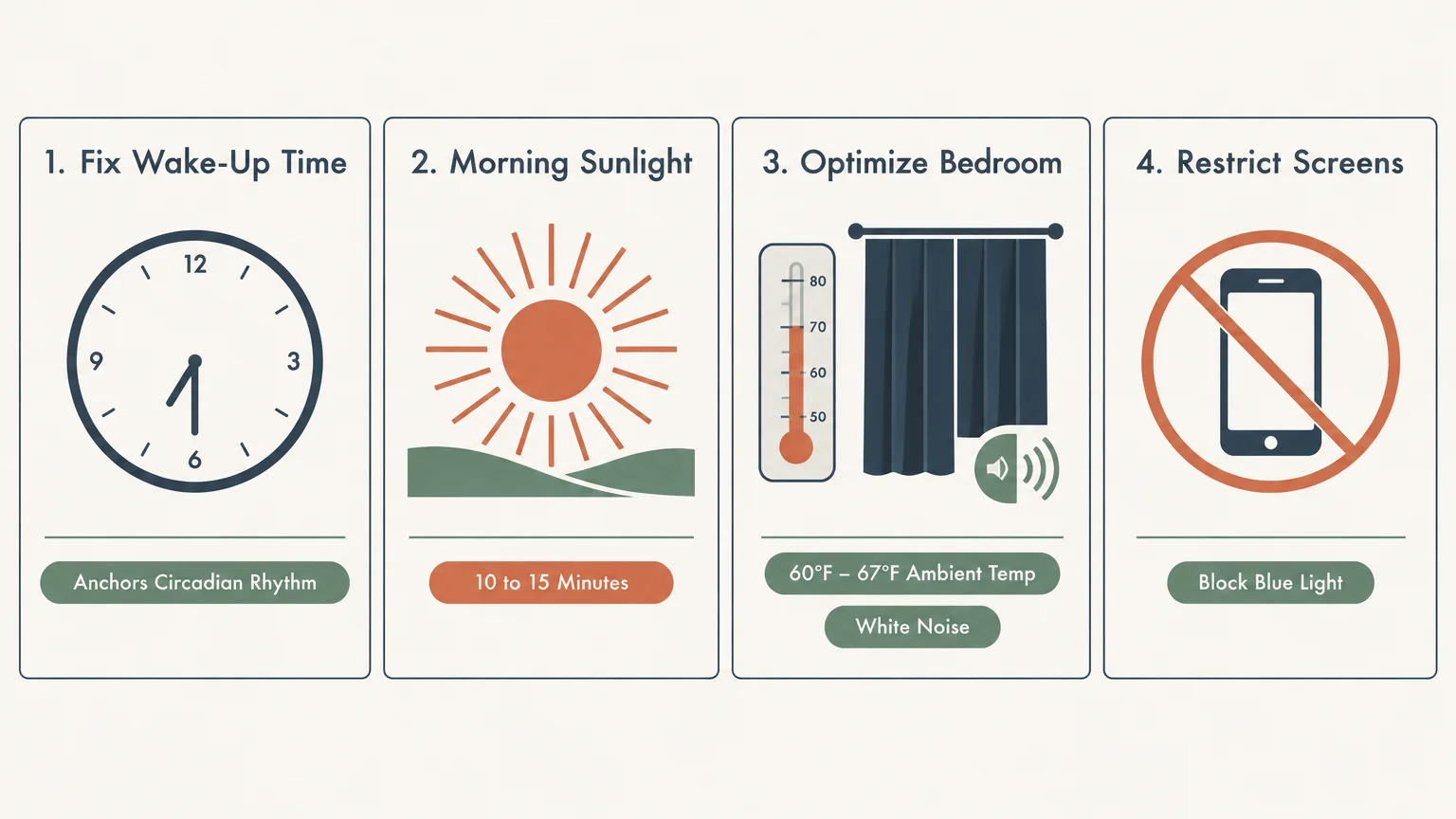
Wake up at the exact same time every day, including weekends. A predictable morning wake-up anchors your circadian rhythm and establishes a reliable bedtime later that evening.
If you sleep late on Sunday, your body struggles to reset on Sunday night. Keep your morning schedule stable to prevent chronic weekly jetlag.
Seek Bright Morning Sunlight
Expose your eyes to natural sunlight within an hour of waking up. Outdoor light halts melatonin production and sets an internal timer for natural evening drowsiness.
Step outside for ten to fifteen minutes every morning without sunglasses. Even on overcast days, outdoor light delivers significantly more lux than typical indoor fixtures.
Optimize Your Bedroom Environment
Transform your bedroom into a cool, quiet, and dark sanctuary. Research summarized by the Centers for Disease Control and Prevention highlights that poor bedroom conditions directly degrade overall sleep quality.
Set your thermostat between 60 and 67 degrees Fahrenheit, as cooler ambient air facilitates natural nighttime temperature drops. Install blackout curtains or wear an eye mask to block all disruptive light.
Mask intermittent environmental sounds with a continuous white noise machine or earplugs. Eliminating sudden acoustic spikes keeps your nervous system in a relaxed, restorative state.
Restrict Screens and Evening Blue Light
Turn off smartphones, tablets, and computers at least one hour before bed. Blue wavelengths emitted by digital screens trick your pineal gland into suppressing melatonin production.
If you must work late, wear blue-blocking glasses or activate night-mode filters on your devices. However, passive offline activities always prepare your brain more effectively for deep rest.
Time Your Caffeine and Alcohol Intake
Cut off caffeine at least eight hours before your target bedtime. Because caffeine has an extended half-life, late afternoon espresso blocks adenosine receptors and prevents healthy drowsiness.
Avoid alcohol close to bedtime; while a nightcap acts as a sedative, it fragments your sleep architecture. Alcohol severely reduces restorative REM sleep and causes frequent midnight awakenings.
Reserve the Bed for Sleep and Intimacy
Never work, answer emails, or watch television while lying in bed. When you perform stimulating tasks in bed, your brain associates the mattress with stress and wakefulness.
If you cannot fall asleep after twenty minutes, get out of bed and sit in dim light. Read a physical book until drowsiness returns, then return to bed to preserve that association.
Create a Predictable Wind-Down Routine
Dedicate thirty to forty-five minutes every evening to a relaxing, low-stimulation ritual. A predictable routine signals your central nervous system that daytime responsibilities have ended.
Try light stretching, journaling your tomorrow tasks, or taking a warm shower. The National Health Service recommends wind-down rituals to effectively release muscle tension and calm racing thoughts.

When to Seek Professional Medical Care
While sleep hygiene habits solve many mild sleep disruptions, behavioral tweaks cannot cure primary sleep disorders. Please consult a qualified physician or sleep specialist if severe symptoms persist.
Loud snoring accompanied by choking, gasping, or witnessed pauses in breathing suggests obstructive sleep apnea. This serious medical condition requires clinical diagnosis and targeted medical therapy rather than lifestyle changes alone.
You should also consult a doctor if insomnia persists for more than three months despite consistent habits. As the American Academy of Sleep Medicine explains, chronic insomnia often requires specialized therapies like cognitive behavioral therapy for insomnia.
Unpleasant crawling sensations in your legs or sudden daytime sleep attacks also warrant immediate medical attention. Use this general information for educational guidance, not as a replacement for formal medical diagnosis.
Frequently Asked Questions
How long does it take for sleep hygiene to work?
Most people notice improvements within one to two weeks of consistent daily practice. Your brain requires several consecutive days to synchronize circadian rhythms and rebuild natural sleep pressure.
Should I take daytime naps if I feel exhausted?
Keep daytime naps under twenty minutes and take them before mid-afternoon. Long or late naps deplete your homeostatic sleep drive, making nighttime sleep onset much harder.
What should I do if my mind races at night?
Keep a notepad beside your bed to perform a brief brain dump before turning off the lights. Externalizing your lingering tasks onto paper prevents your brain from rehearsing them in bed.
Can weekend catch-up sleep make up for lost rest?
Sleeping late on weekends cannot fully reverse chronic sleep debt and actually disrupts your circadian clock. Aim instead for consistent nightly sleep totals throughout the entire week.
Your Action Plan for Tonight
You do not need to overhaul your entire lifestyle simultaneously to experience better sleep. Choose just one high-impact action from this checklist to put into practice this evening.
Start by setting a firm digital curfew: put your smartphone in another room sixty minutes before sleep. Enjoy the quiet evening, let your brain unwind, and feel the difference tomorrow morning.