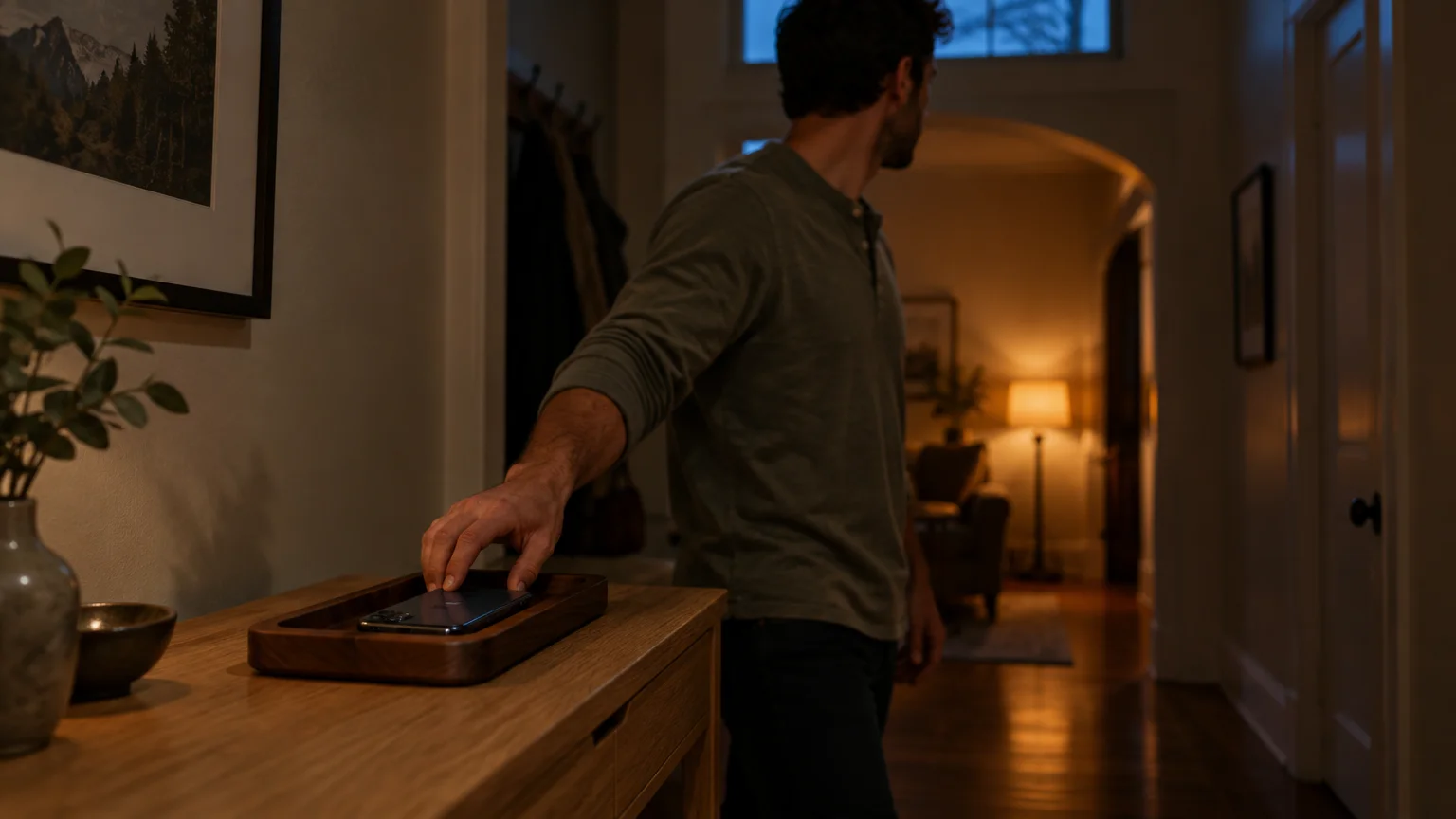
Checking your phone before bed steals hours of restorative rest by tricking your brain into thinking it is daytime. You can reverse this sleep disruption tonight by making two deliberate adjustments to your evening habits.
Nighttime screen exposure delays your natural sleep cycles and fragments your deep recovery stages. A few small boundaries will help you fall asleep faster without tossing and turning for hours.
This guide reveals how digital devices alter your internal biological clock and gives you practical, realistic strategies to reclaim your sleep tonight.
How Screens Alter Your Brain Chemistry and Circadian Rhythm
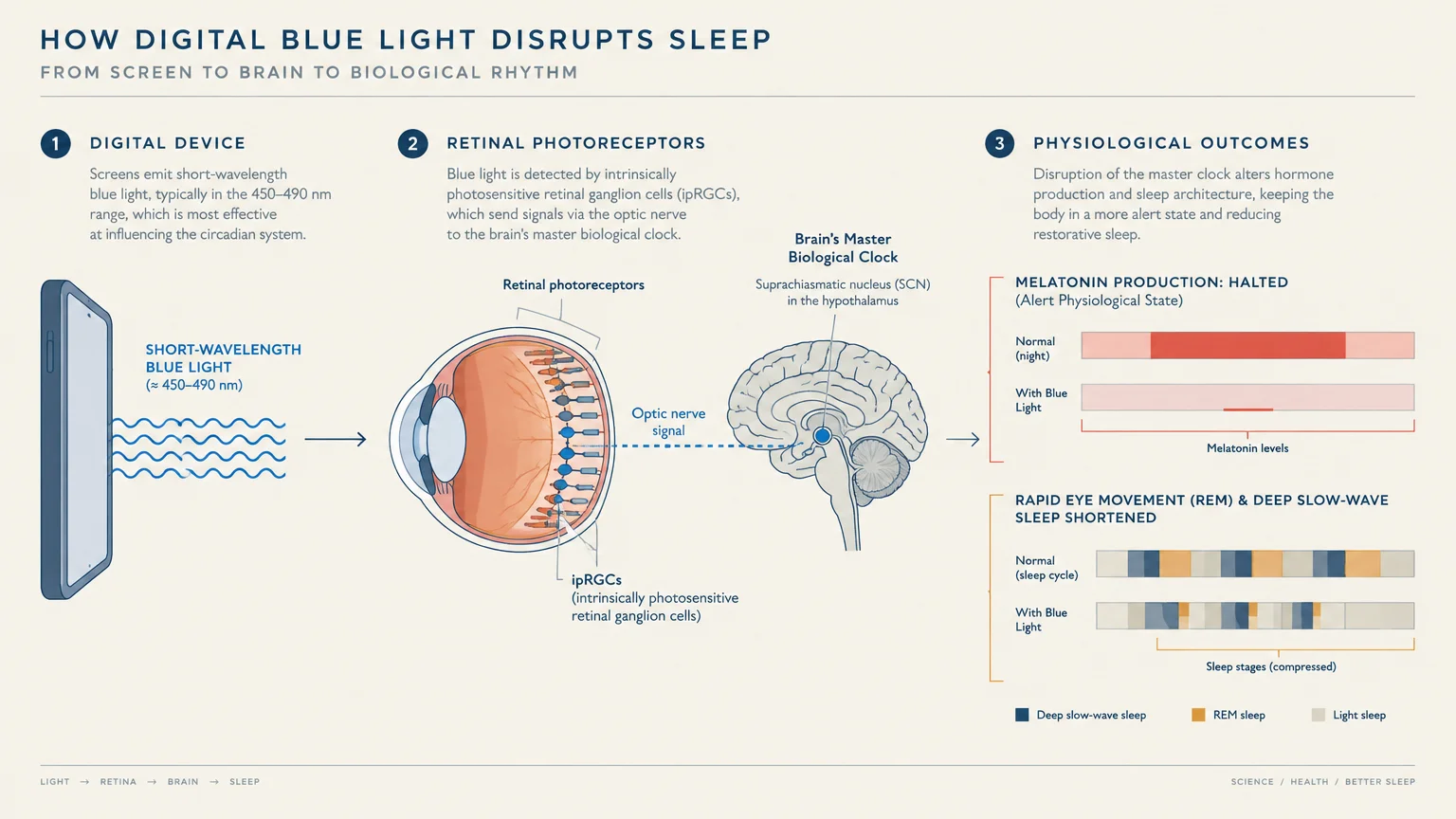
Your body regulates sleep through an internal 24-hour clock known as the circadian rhythm. Specialized cells in your retinas detect light exposure and send signals directly to your brain’s master clock.
When these photoreceptors detect the short-wavelength blue light emitted by smartphones and tablets, they trigger your brain to halt melatonin production. The National Institutes of Health notes that melatonin is the crucial hormone responsible for signaling biological darkness.
Without adequate evening melatonin, your brain remains in an alert physiological state. You end up lying awake long after turning off your bedside lamp.
Screen exposure also disrupts the homeostatic sleep drive that accumulates naturally throughout waking hours. Lingering screen glow dilutes this gentle physiological pressure to sleep, making sleep onset feel frustratingly elusive.
Furthermore, nighttime light exposure shortens rapid eye movement sleep and deep slow-wave sleep. These restorative sleep stages are vital for immune function, cellular repair, and memory processing.
Why Mental Stimulation Matters More Than Blue Light
While blue light physically delays melatonin release, the psychological stimulation from digital content creates an equally severe sleep barrier. Interactive media prompts mental alertness that directly combats relaxation.
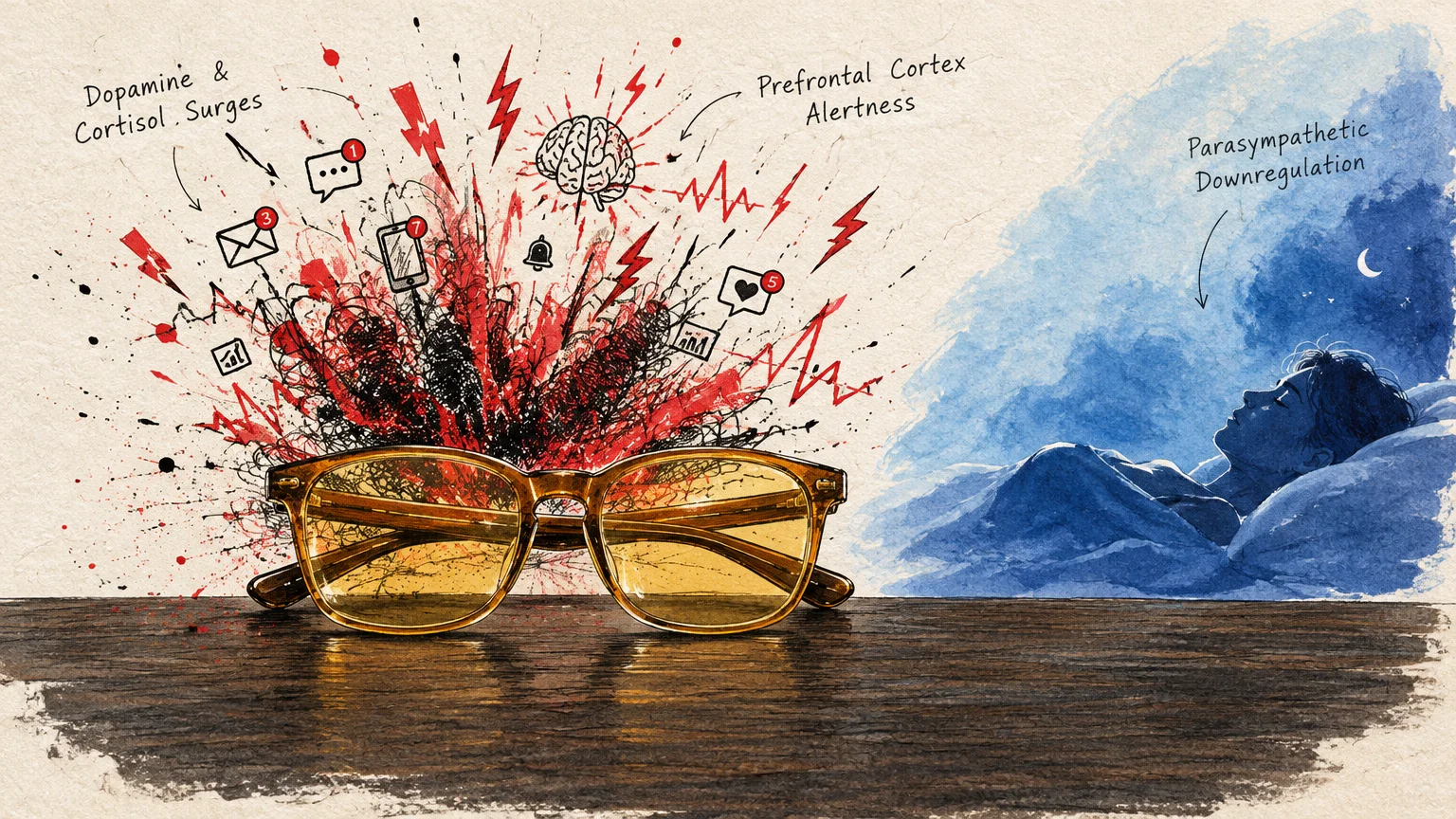
Scrolling through social media feeds, reading breaking news, or replying to work emails triggers dopamine and cortisol surges. These chemical spikes elevate your resting heart rate and activate your sympathetic nervous system.
Putting on blue light blocking glasses helps filter wavelengths, but it does not calm an overstimulated mind. A thrilling video or stressful email keeps your prefrontal cortex fully engaged regardless of lens tint.
Sleep requires physiological downregulation, where your body transitions from active fight-or-flight processing into a calm parasympathetic state. Devices demand continuous cognitive choices that actively prevent this critical shift.
Practical Ways to Step Away from Screens at Night
Breaking evening screen habits does not require ditching technology entirely. Sustainable changes rely on establishing physical boundaries and introducing friction between your hands and your devices.
Charge Your Devices in Another Room
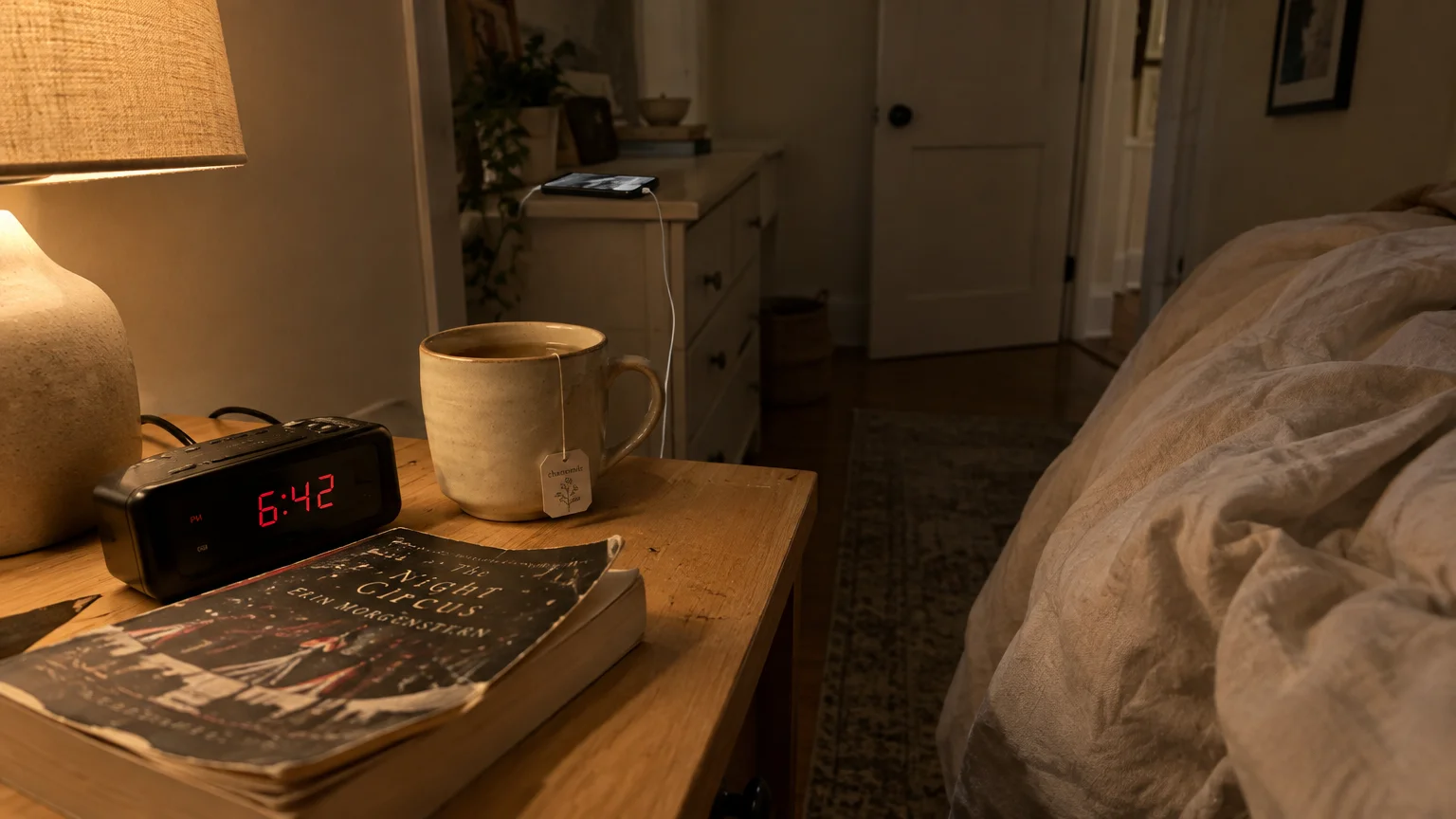
Keeping your phone on your nightstand turns bedtime browsing into an unconscious, low-effort reflex. Moving your charger to a hallway or home office removes temptation entirely.
If you rely on your phone to wake up, purchase an inexpensive standalone digital alarm clock. This single swap prevents late-night scrolling and eliminates screen exposure the instant you open your eyes.
Switch Your Screen Display to Grayscale
Modern apps use vibrant color palettes to hold your visual attention and trigger reward centers. Turning your display to black-and-white mode immediately neutralizes this compelling visual pull.
You can configure shortcut settings on iOS and Android to toggle grayscale automatically each evening. Without brilliant hues, scrolling feels distinctly unrewarding, making it much easier to put the device down.
Establish an Analog Buffer Zone
Designate the final sixty minutes before sleep as a screen-free buffer zone. Use this window to lower ambient lighting throughout your home, signaling dusk to your nervous system.
Replace digital consumption with tactile activities like reading a physical book, stretching gently, or listening to quiet music. These calming habits allow your core body temperature to decline naturally before bed.
Guidelines from the Centers for Disease Control and Prevention emphasize consistent sleep schedules and calm, dark bedrooms as cornerstones of restorative sleep hygiene.
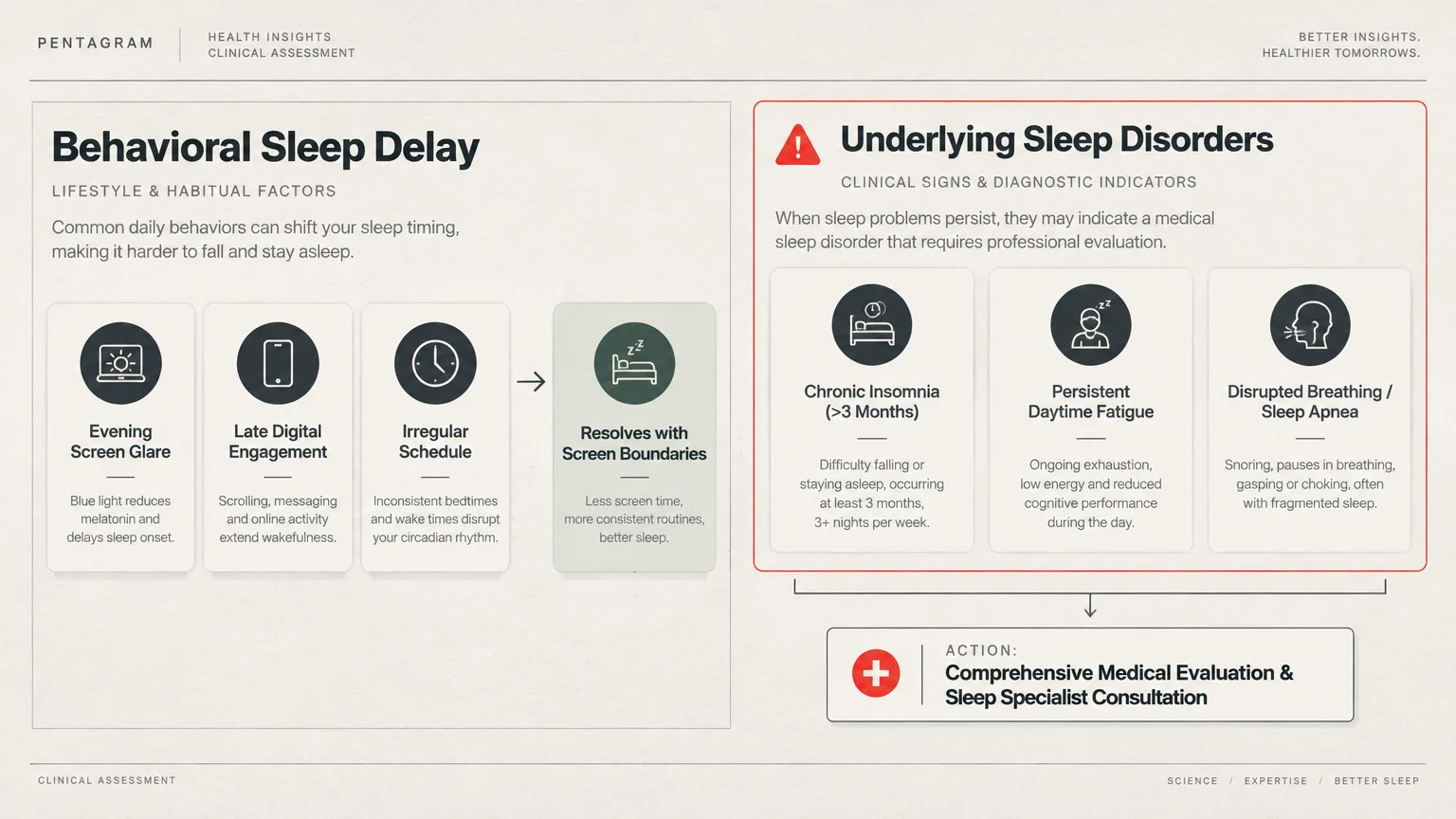
When Sleep Troubles Signal an Underlying Medical Condition
Reducing screen exposure dramatically improves sleep quality for many people, but digital devices are not the only cause of sleeplessness. Persistent sleep disruption often stems from underlying medical conditions.
If you struggle to fall or stay asleep for three or more nights a week over several months, you may have chronic insomnia. Environmental fixes like screen curfews cannot replace clinical therapies like cognitive behavioral therapy.
Pay close attention to physical warning signs such as loud, chronic snoring, morning headaches, or waking up gasping for air. The National Health Service warns that these symptoms can indicate obstructive sleep apnea.
Frequent daytime sleepiness, unrefreshing sleep despite adequate bed rest, or persistent leg restlessness also warrant professional medical care. Speak with a physician or board-certified sleep specialist for a comprehensive clinical evaluation.
Please remember that the educational guidance in this article serves to improve everyday wellness and does not constitute medical diagnosis or treatment.
Frequently Asked Questions About Screens and Sleep
Do Blue Light Screen Filters and Night Modes Actually Help?
Built-in night modes shift screen colors to warmer tones, which reduces the intensity of melatonin-suppressing wavelengths. However, research summarized by the Sleep Foundation suggests warm light still signals wakefulness to sensitive retinal cells.
More importantly, warm tones do nothing to prevent cognitive arousal caused by high-engagement media. Night filters offer modest harm reduction, but they cannot replace a true digital curfew.
Can I Read with an E-Reader Before Falling Asleep?
Dedicated e-readers that use electronic ink technology and gentle front-lit displays mimic printed paper closely. They emit significantly less light than tablets and smartphone screens.
An e-ink device is generally safe for nighttime reading, provided you read low-stress material. Avoid multi-purpose tablets that allow web browsing, social media, or app notifications.
What Should I Do If I Cannot Sleep Without Background Noise?
Many people use smartphones to play white noise, ambient sounds, or soothing podcasts to quiet their minds. The problem arises when selecting audio keeps you gazing into bright displays in bed.
Switch to a dedicated white noise machine or use voice commands on a smart speaker to activate sounds. This delivers comforting audio without forcing you to look at a glowing screen.
Your Action Step for Better Sleep Tonight
You do not need an overwhelming lifestyle overhaul to experience the restorative benefits of better nighttime boundaries. Lasting behavioral changes grow from single, manageable steps that you can practice consistently.
Tonight, set a gentle recurring alarm on your phone for forty-five minutes before your target bedtime. When that chime sounds, plug your phone into a charger across the room and walk away.
Pick up a paper book or take a warm shower instead. Give your brain the quiet darkness it needs, and notice how much faster you drift off to sleep.