
If you struggle to fall asleep, popping a high-dose melatonin gummy might feel like an easy fix tonight. Yet melatonin does not work like a conventional sleeping pill, and taking it incorrectly can leave you groggy tomorrow.
You can reset your internal clock and fall asleep faster when you treat melatonin as a timing signal rather than a sedative.
Understanding how melatonin works in your body will help you choose the right dose, avoid common label pitfalls, and protect your long-term health.
How Melatonin Works in Your Body
Your brain produces melatonin naturally in the pineal gland when darkness falls. This hormone does not knock you out; instead, it signals to your brain that night has arrived.
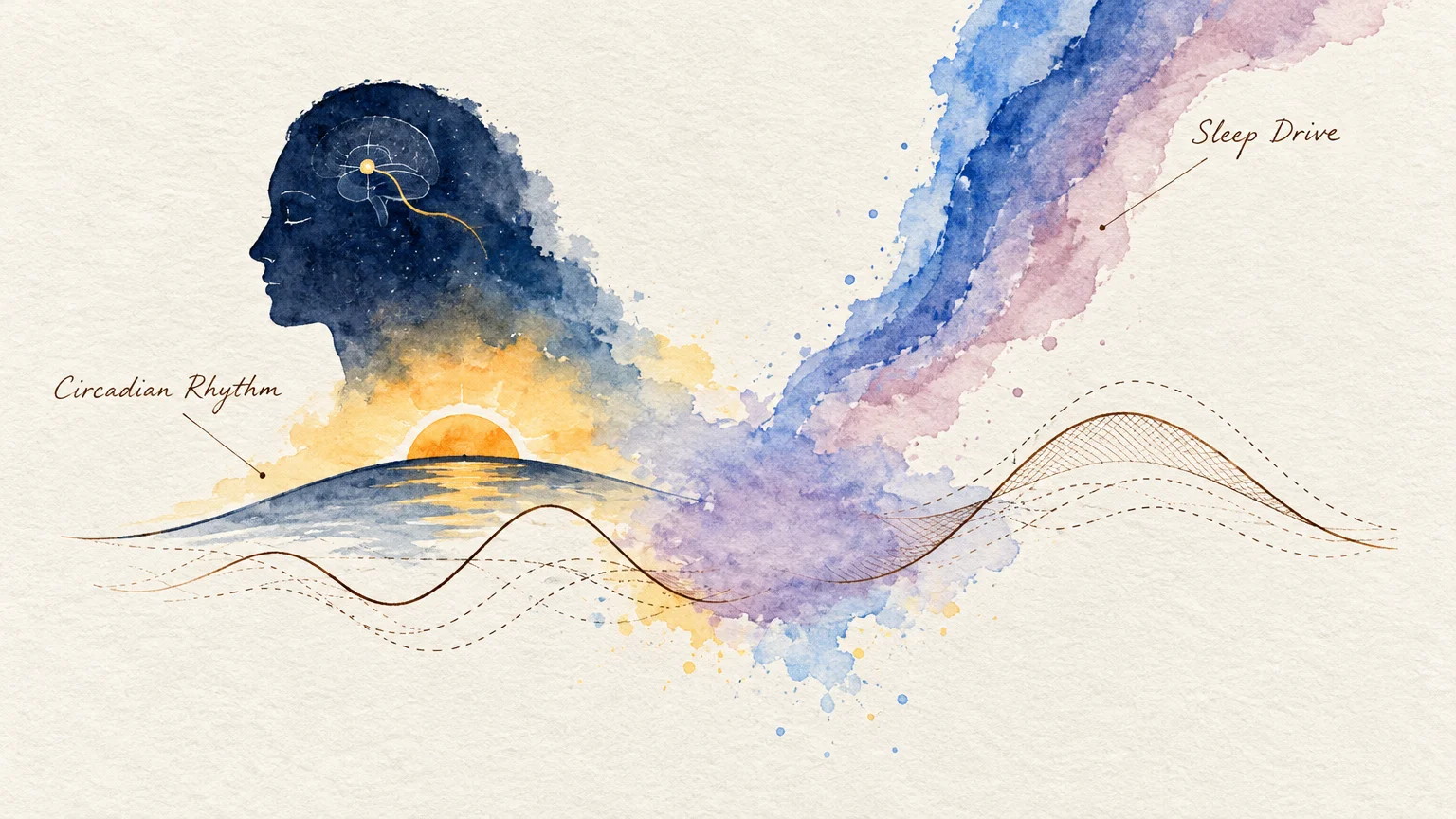
Sleep relies on two distinct biological forces: your homeostatic sleep drive and your circadian rhythm. Melatonin influences the circadian rhythm, which sets the optimal biological window for slumber.
Bright light from screens and overhead fixtures suppresses your natural melatonin release within minutes. Maintaining a dark environment during the evening hours allows your natural biological rhythm to function smoothly.
If your circadian rhythm drifts out of alignment with your schedule, your brain delays this natural surge. Supplementing provides a chemical sunset, cueing your body to prepare for rest.
Who Melatonin Helps (and Who Should Skip It)
Melatonin supplements excel at resetting a disrupted schedule rather than treating general sleeplessness. If you face jet lag across time zones, strategic dosing helps your clock sync rapidly to local time.
Shift workers who must sleep during daylight hours also benefit significantly. The supplement mimics natural nighttime signals, making daytime sleep easier to initiate and maintain.
Older adults experiencing reduced natural hormone synthesis can also benefit from targeted supplementation. Natural melatonin synthesis often declines with age, leading to earlier waking hours and fragmented sleep.
People with delayed sleep phase syndrome—night owls who cannot fall asleep until dawn—find relief here as well. Taking a small amount in the evening gently nudges sleep onset earlier.
However, melatonin offers little benefit if you wake up repeatedly during the night. It also cannot fix insomnia driven by anxiety, chronic stress, or unresolved physical discomfort.
Finding the Right Melatonin Dose and Timing
Many over-the-counter products pack five to ten milligrams into a single serving, which floods your receptors unnecessarily. For most adults, an effective starting melatonin dose ranges between 0.5 milligrams and 3 milligrams.
Lower doses closely replicate the hormone levels your pineal gland creates naturally. Taking excessive amounts frequently causes morning grogginess, vivid nightmares, and next-day headaches.
Timing your dose correctly matters just as much as the strength you choose. Take your supplement 60 to 90 minutes before your planned bedtime to align with your biological wind-down.
If you take it immediately before climbing under the covers, you may toss and turn while waiting for it to absorb. Give your circulation sufficient time to deliver the signal to your brain.
Immediate-release tablets work well for falling asleep, while extended-release formulas target individuals who wake midway through the night. Choose the formulation that directly addresses your specific timing obstacle.

Supplement Safety, Quality, and Long-Term Risks
In the United States, the U.S. Food and Drug Administration regulates melatonin as a dietary supplement under DSHEA. This means products do not require premarket testing for strength, purity, or consistent labeling before reaching shelves.
Lab testing frequently reveals severe discrepancies between what the label promises and what bottles contain. A 2023 study published in JAMA analyzed 25 melatonin gummy brands and discovered that 88% were inaccurately labeled.
Those tested gummies ranged from 74% to 347% of their stated dosages. To protect yourself from tainted or inaccurate products, look for third-party verification seals from USP, NSF, or ConsumerLab.
In 2024, the Council for Responsible Nutrition introduced voluntary industry safety guidelines. These measures urge manufacturers to cap single adult servings at 10 milligrams and incorporate child-resistant caps.
Treat melatonin as a temporary bridge rather than an open-ended nightly therapy. The National Center for Complementary and Integrative Health notes that long-term safety data remains limited.
Preliminary findings presented by the American Heart Association in 2025 tracked over 130,000 adults with chronic insomnia. Long-term use of 12 months or more correlated with a 90% higher hazard of incident heart failure.
While this observational study does not prove direct causation, it underscores why physicians recommend using sleep supplements intermittently. Keep all chewable formulations stored securely in child-deterrent containers away from young children.
Data from the Centers for Disease Control and Prevention revealed roughly 11,000 pediatric emergency department visits between 2019 and 2022 due to unsupervised ingestions. Sweet, fruit-flavored gummies represent a severe accidental poisoning hazard for toddlers.

When to Consult a Doctor
Schedule an evaluation with a physician if your sleep difficulties persist for more than three nights a week across three months. Chronic insomnia often requires cognitive behavioral therapy for insomnia (CBT-I) rather than over-the-counter aids.
You should also seek medical care immediately if you experience loud snoring, daytime exhaustion, or nighttime gasping. These symptoms point toward obstructive sleep apnea, a condition that melatonin supplements cannot resolve.
Always consult your healthcare provider before taking melatonin if you manage autoimmune diseases, seizure disorders, or take prescription blood thinners. Melatonin interacts with several classes of prescription pharmaceuticals.
Frequently Asked Questions
Can melatonin supplements cause physical addiction or dependence?
Melatonin does not create physical addiction or severe rebound withdrawal like traditional prescription sedatives. However, you can develop psychological reliance if you believe you cannot fall asleep without taking a pill.
Why does melatonin give me vivid dreams and morning fatigue?
Vivid dreams and morning grogginess usually indicate that your dose is far too high for your metabolism. Cut your intake down to one milligram or less to clear the hormone before sunrise.
Can I take melatonin every night indefinitely?
Medical experts recommend using melatonin intermittently or for brief stretches lasting a few weeks. If you cannot sleep without it for months on end, consult your doctor to identify root causes.
Does melatonin interact with alcohol or caffeine?
Alcohol disrupts sleep architecture and blunts the effectiveness of supplemental melatonin, often causing night awakenings. Meanwhile, afternoon caffeine opposes melatonin by blocking adenosine receptors in your brain.
One Small Step to Take Tonight
Check the dosage on your current melatonin bottle before you get ready for bed this evening. If your supplement contains five or ten milligrams, cut the tablet into halves or quarters.
Take that lower dose roughly 90 minutes before your head hits the pillow. Pair it with dim ambient lighting to let your brain naturally reinforce the sleep signal.