
You wake up abruptly at 3 a.m., staring at the dark ceiling while your thoughts start racing. Identifying the root cause gives you practical tools to fall back asleep tonight.
Middle of the night waking feels frustrating, yet it often stems from predictable biological transitions. Subtle physiological changes or environmental noises easily pull you into alertness during lighter sleep phases.
Understanding how your internal circadian clock and sleep pressure interact helps you prevent these interruptions. With a few deliberate adjustments, you can rebuild continuous, restorative rest starting this evening.
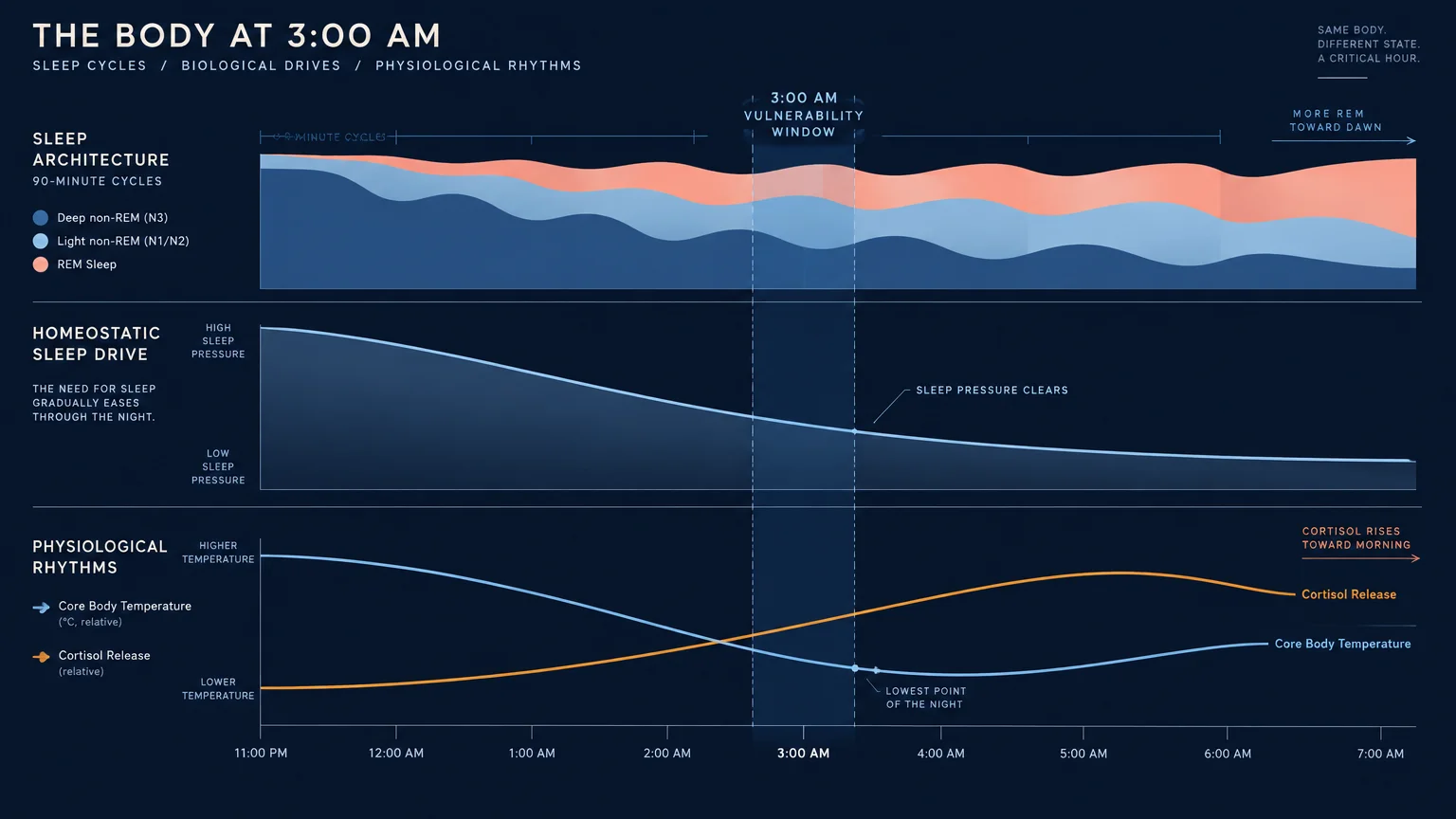
What Happens in Your Body at 3 A.M.
Your night consists of repeating ninety-minute cycles that alternate between deep non-REM sleep and rapid eye movement sleep. Most of your restorative deep sleep occurs during the first third of the night.
By 3 a.m., your homeostatic sleep drive—the biochemical pressure to sleep that accumulates across your waking hours—has largely cleared away.
At the same time, your core body temperature reaches its lowest nocturnal point, and your system begins producing trace amounts of cortisol. Research synthesized by the National Institute of Neurological Disorders and Stroke shows that these natural rhythms render early morning sleep exceptionally light.
Because you spend longer periods in lighter REM sleep toward dawn, minor internal or external disturbances easily jolt you into full wakefulness.
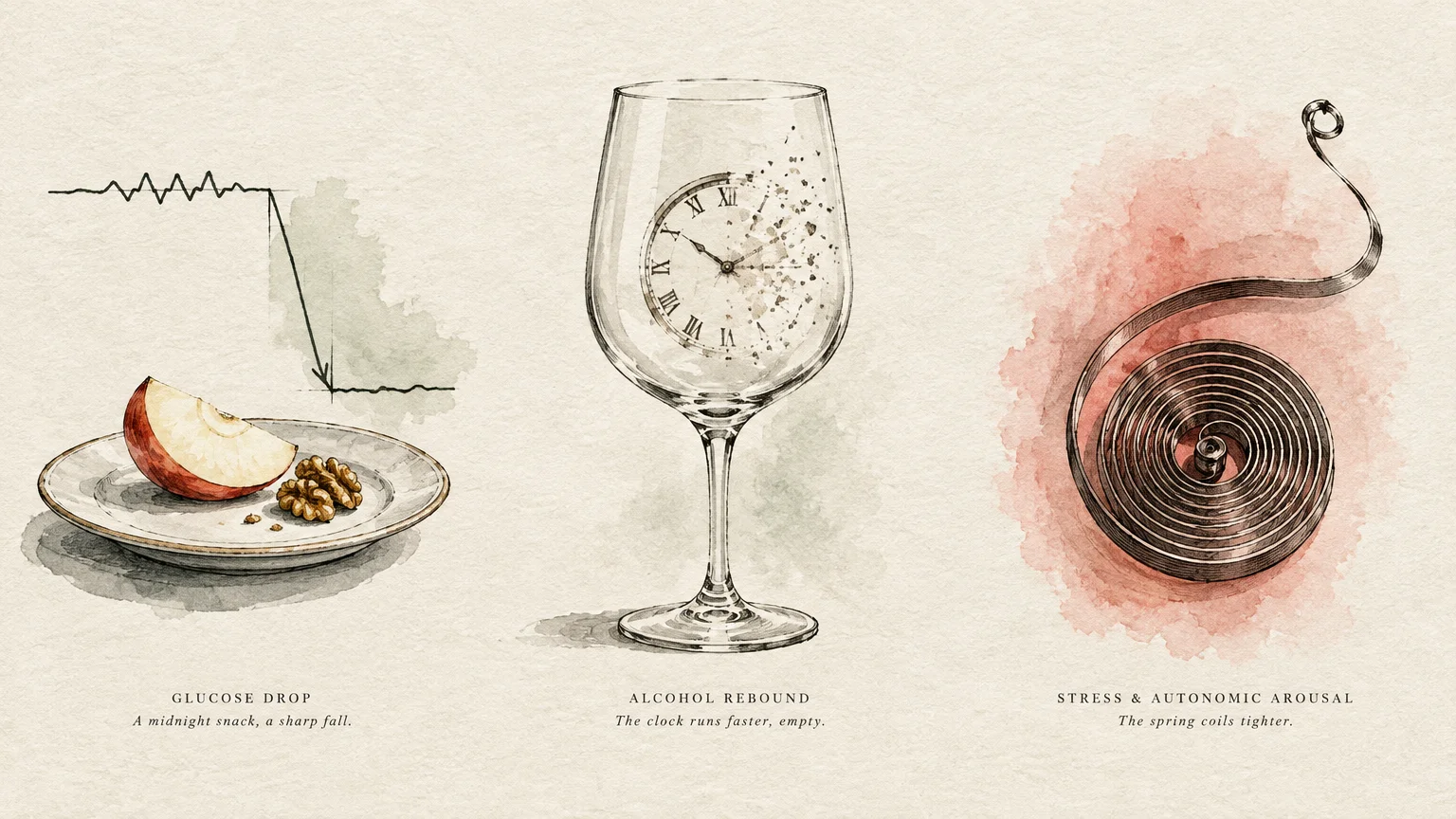
Common Triggers for Middle of the Night Waking
Blood Sugar Fluctuations
Consuming high-glycemic carbohydrates or sugary snacks shortly before bed triggers a rapid spike in blood glucose, followed by a steep drop. When glucose falls too low, your adrenal glands release cortisol and adrenaline to rescue energy levels, instantly arousing your brain.
A modest evening snack that pairs complex carbohydrates with healthy fat or protein stabilizes nocturnal glucose and prevents this hormonal surge.
Alcohol and the Rebound Effect
Alcohol serves as a central nervous system depressant that helps you fall asleep faster, but your liver metabolizes it rapidly over several hours.
As blood alcohol levels fall toward zero, your nervous system experiences a rebound excitation that fragments sleep architecture and triggers waking at 3am.
Finishing your last alcoholic drink at least four hours before bedtime allows your body to metabolize the alcohol before your head hits the pillow.
Stress and Elevated Cortisol
Chronic daytime stress keeps your sympathetic nervous system primed for danger long after you dim the lights. If you surface into light sleep, lingering stress hormones interpret quiet alertness as a crisis, immediately launching cyclical worries.
Carving out an intentional transition period between your workday and bedtime helps downshift your autonomic nervous system into a relaxed state.

What to Do When You Snap Awake
Apply the Twenty-Minute Rule
Tossing and turning in bed generates frustration and conditions your brain to associate your mattress with worry and vigilance.
If you cannot return to sleep within roughly twenty minutes, get out of bed and move to another dimly lit room.
Read a physical book or listen to calming music until your eyes feel heavy; then return to bed to sleep.
Hide the Bedroom Clock
Checking the clock triggers involuntary calculations about how much rest you are losing before your alarm sounds.
This mental arithmetic provokes anxiety, raises your resting heart rate, and makes falling back asleep considerably more difficult.
Turn your clock face toward the wall and store your phone face-down across the room to eliminate nocturnal time-checking entirely.
Use Controlled Breathing Techniques
Slow, paced breathing directly stimulates your vagus nerve to lower heart rate and calm an overactive nervous system.
Inhale through your nose for four seconds, pause for four seconds, and exhale steadily through your mouth for six seconds.
Practicing this breathing rhythm for five minutes eases physical tension and allows your body to surrender back into slumber.

Daytime Strategies to Prevent Nighttime Waking
Anchor Your Rhythm with Morning Sunlight
Your central circadian clock relies on early bright light exposure to synchronize your biological schedule and set evening melatonin timing.
Public health guidance from the Centers for Disease Control and Prevention highlights consistent light-dark routines as vital foundations for restorative rest.
Step outside within an hour of waking for fifteen minutes of natural sunlight to firmly lock in your daily sleep cycle.
Set an Early Caffeine Cutoff
Caffeine carries an average elimination half-life of five hours, meaning a significant dose continues blocking adenosine receptors well past midnight.
Even if you doze off easily, residual caffeine fragments your sleep continuity and triggers early morning awakenings.
Cease all caffeinated drinks at least ten hours before your intended bedtime to clear your system completely.
Cool and Darken Your Bedroom
Excessive ambient bedroom temperature disrupts your body’s nocturnal thermoregulation, causing brief awakenings throughout the night.
Guidance from the National Institute on Aging recommends maintaining bedroom temperatures between 60 and 67 degrees Fahrenheit to prevent sleep disruptions.
Install blackout curtains and run a continuous white noise machine to shield your senses from ambient streetlights and unexpected neighborhood noises.

When to Consult a Healthcare Professional
While occasional disruptions happen, persistent middle of the night waking can reflect an undiagnosed sleep disorder or chronic health issue.
If you wake choking, gasping for breath, or snore loudly, schedule an evaluation for obstructive sleep apnea promptly.
According to clinical guidelines from the NHS, sleep maintenance insomnia lasting three months or longer warrants professional medical attention.
Similarly, persistent physical discomfort, restless limb sensations, or frequent urges to urinate require targeted medical care rather than behavioral remedies alone.
The insights shared here provide health education and do not substitute for formal clinical diagnosis or personalized medical treatment.
Frequently Asked Questions
Why do I wake up at the exact same time every single night?
Your sleep architecture follows predictable ninety-minute cycles; going to bed at the same time lands you in light REM sleep at identical nocturnal intervals.
Predictable environmental sounds or subtle biological shifts, like bladder expansion or body temperature dips, then consistently wake you during these fragile moments.
Should I take a melatonin supplement if I wake up at 3 a.m.?
You should avoid taking melatonin in the middle of the night because it shifts your master clock and triggers grogginess tomorrow.
Melatonin functions primarily as an internal darkness signal that sets sleep timing rather than an immediate sedative.
Is brief middle of the night waking always a sign of insomnia?
Waking briefly for several seconds between sleep cycles is a normal biological phenomenon experienced by healthy sleepers.
It only becomes sleep maintenance insomnia when you struggle to fall back asleep for thirty minutes or more and experience daytime impairment.
Can an evening workout cause me to wake up during the night?
Vigorous exercise elevates your core body temperature and sympathetic nervous system activity for several hours after you finish.
Completing intense training at least three hours before bed ensures your heart rate and temperature normalize before sleep begins.
One Practical Change to Make Tonight
Before turning off your lights tonight, rotate your alarm clock toward the wall and leave your smartphone in another room entirely.
Removing the ability to check the time protects you from panic calculations, keeping your nervous system calm so you drift back to sleep naturally.