
Shifting an erratic sleep routine feels daunting, but you can realign your body clock within seven days using deliberate behavioral cues. Tonight, you can start by deciding your wake time for tomorrow morning.
A delayed or broken rhythm saps your daily focus and damages your physical health over time. Reclaiming control requires adjusting your daily habits rather than forcing yourself to sleep on demand.
By working with your biology instead of battling it, you can wake up refreshed and fall asleep naturally by the end of the week.
Understanding Your Body’s Internal Clocks
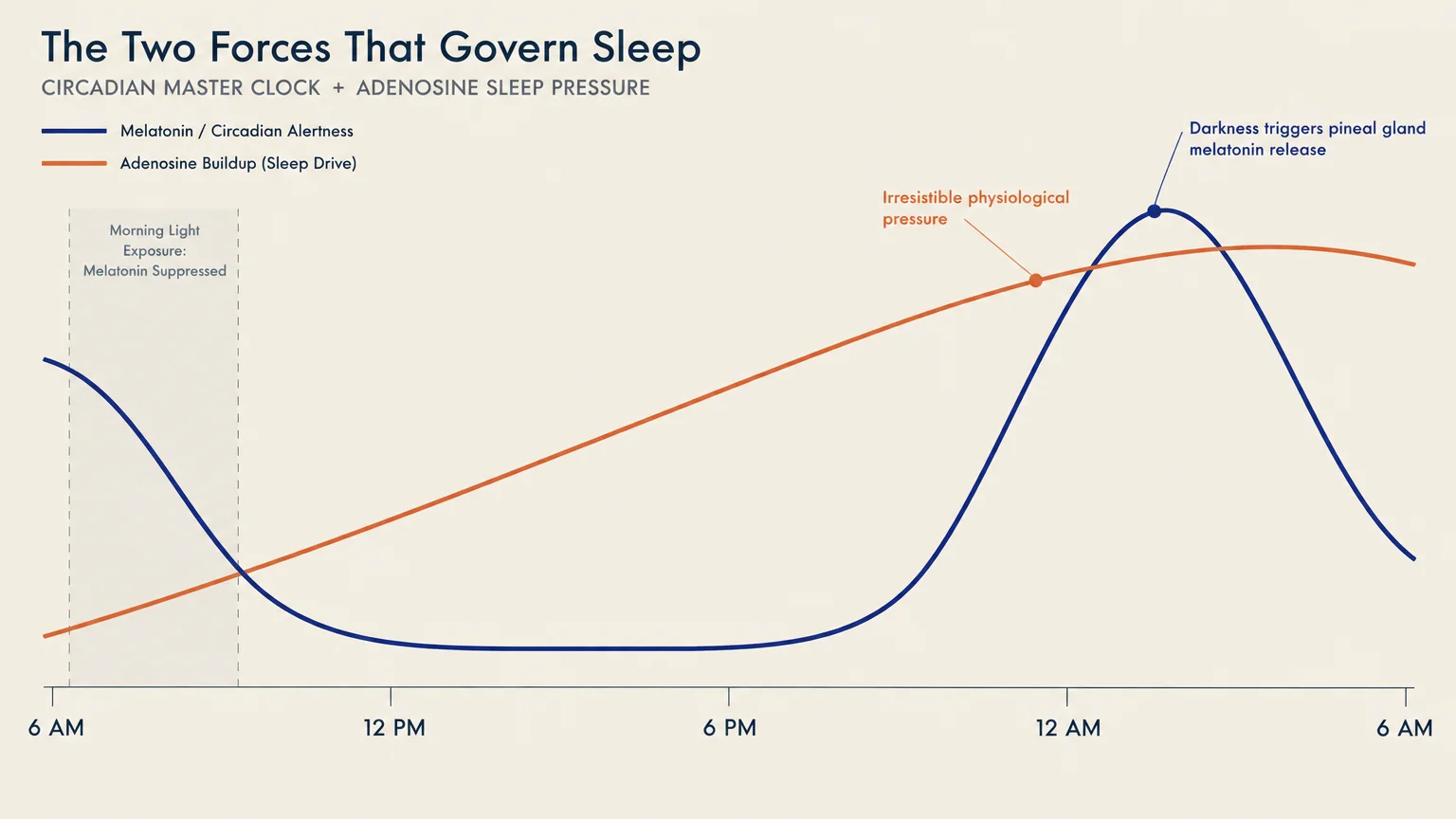
Two primary biological forces govern when you feel alert and when you feel drowsy. Understanding how they interact helps you direct them consciously throughout your reset week.
Your circadian rhythm operates as an internal 24-hour master clock located in your brain. According to the National Heart, Lung, and Blood Institute, this network responds strongly to environmental light and darkness.
When light hits your eyes, your brain suppresses melatonin, the chemical messenger that promotes rest. Darkness signals your pineal gland to release melatonin, preparing your tissues for restorative sleep stages.
Alongside your internal clock, a chemical called adenosine builds up in your brain while you remain awake. This process creates sleep drive—an irresistible physiological pressure that makes you crave rest after a long day.
Misaligning your schedule happens when you stay awake past natural tiredness or sleep late into the morning. Realigning requires pairing strong circadian light cues with adequate adenosine buildup.
The 7-Day Strategy to Shift Your Clock
Lock In a Consistent Wake Time
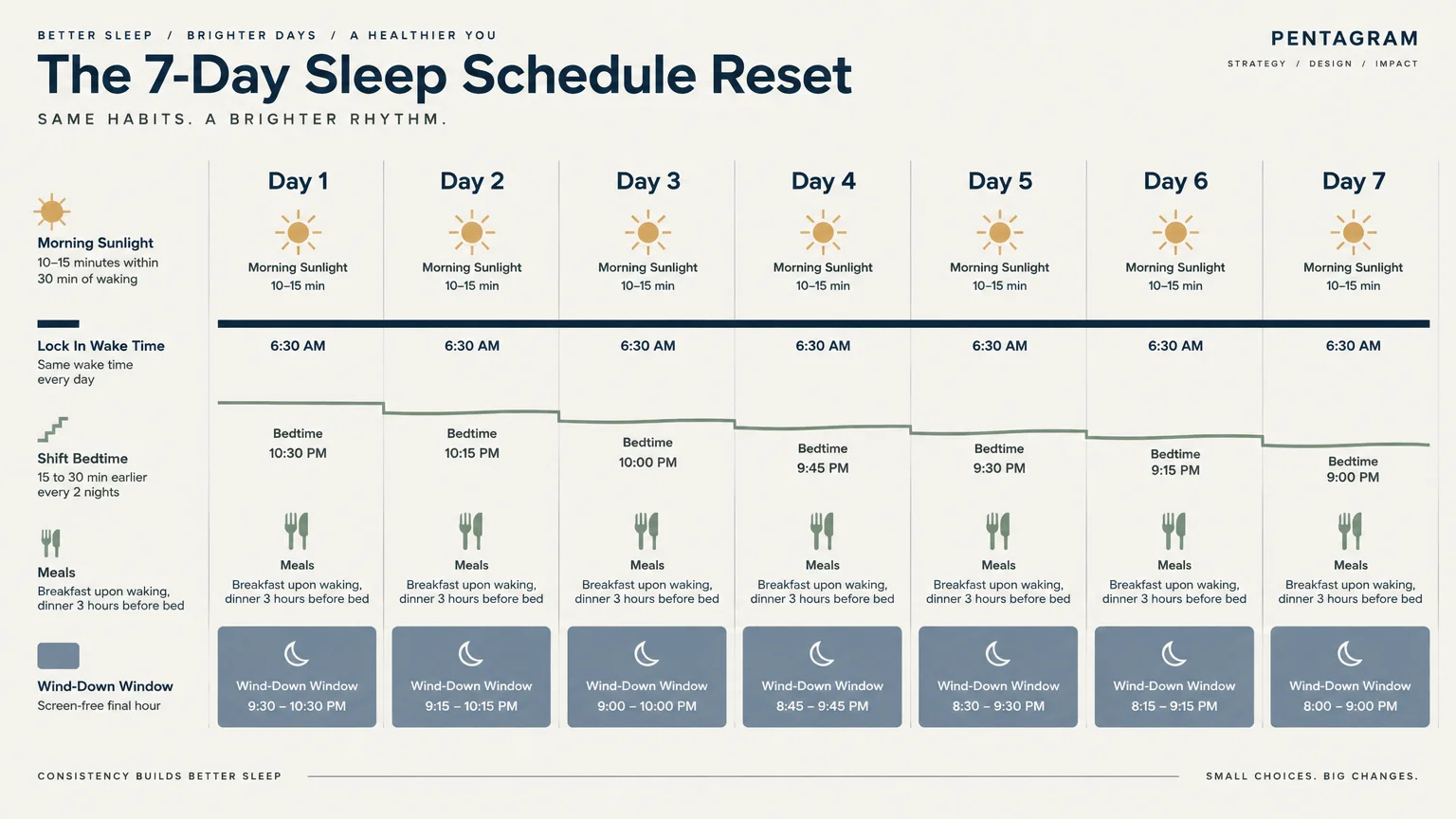
Your wake time anchors your entire biological rhythm. Choose an exact time you need to get up every day and commit to honoring it every morning without hitting snooze.
Waking up at the exact same hour establishes a dependable rhythm for the rest of your day. Guidelines from the Centers for Disease Control and Prevention emphasize that regular schedules preserve sleep quality over the long term.
Shift Your Bedtime in Small Increments
Do not attempt to jump four hours backward in a single evening; your nervous system will resist. Instead, move your target bedtime earlier by 15 to 30 minutes every two nights.
This gradual transition gives your circadian machinery time to synchronize without triggering prolonged tossing and turning. Small adjustments feel manageable and prevent the frustrating anxiety of forced sleep.
Harness Morning Light and Evening Darkness
Expose your eyes to bright, natural sunlight within 30 minutes of getting out of bed. Step outside for ten to fifteen minutes or sit next to a sunlit window while sipping water.
Early daylight immediately shuts down residual melatonin and starts a biological countdown toward evening tiredness. Conversely, dim your interior lights two hours before bed and keep electronic screens far away from your pillow.
Time Your Meals and Physical Activity
Peripheral clocks inside your liver and digestive tract synchronize directly with when you eat. Consume your breakfast soon after waking, and avoid heavy dinners within three hours of your planned bedtime.
Regular physical activity also deepens slow-wave sleep and expends physical energy. Schedule moderate exercise earlier in the day; vigorous workouts right before bed can raise your core body temperature and delay rest.
Protect Your Wind-Down Window
Transitioning from high daytime stimulation to quiet slumber requires deliberate decompression. Reserve the final hour of your evening for screen-free, restorative tasks like light reading, gentle stretching, or listening to calming audio.
Steer clear of stimulating conversations, work emails, and alcohol during this buffer period. While alcohol may cause rapid drowsiness, it severely fragments your sleep architecture and impairs deep sleep cycles.

Managing Realistic Expectations Throughout the Week
Shifting your sleep patterns takes consistent biological reinforcement. You will likely experience mild grogginess on days two and three as your sleep drive catches up to your new rising hour.
Push through this transient fatigue without relying on extra caffeine late in the afternoon. Stop drinking caffeinated beverages at least six to eight hours before bedtime to keep your adenosine receptors receptive.
Resist the urge to abandon your new timetable on the weekend. Sleeping in late creates a phenomenon known as social jetlag, which reverses the hard-won physiological gains you achieved during the week.

Recognizing Red Flags That Require Medical Care
Behavioral adjustments resolve many routine schedule disruptions, but persistent sleep problems demand professional attention. This article provides general wellness information and does not substitute for clinical medical evaluation.
Speak with your physician or a board-certified sleep specialist if you struggle with insomnia lasting longer than three months. The National Health Service outlines clear assessment pathways for chronic sleep disruption.
You must also seek prompt medical care if you snore loudly, wake up gasping for air, or experience unmanageable daytime sleepiness. These warning signs often indicate obstructive sleep apnea or other underlying medical disorders.
Frequently Asked Questions About Sleep Schedules
Can I take naps while resetting my schedule?
Limit naps during your transition week so you do not deplete your essential sleep drive. If fatigue overwhelms you, rest for no more than twenty minutes before 2:00 p.m.
Long or late afternoon naps diminish your adenosine accumulation; this leaves you wide awake when your target bedtime arrives.
What should I do if I lie awake unable to sleep?
Never stay in bed tossing and turning for more than twenty minutes. Remaining awake in bed trains your brain to associate your mattress with frustration and restless vigilance.
Move to a dimly lit chair in another room and engage in a quiet activity until genuine drowsiness returns. Once your eyelids feel heavy, return to bed and try again.
How do weekend plans affect my new routine?
Keep your wake time within one hour of your weekday target on Saturdays and Sundays. Sleeping in substantially destabilizes your master circadian pacemaker and makes Monday mornings miserable.
Maintain social plans during earlier evening hours whenever possible to protect your bedtime schedule. Consistency across all seven days solidifies your body’s predictable rhythm.
Does taking melatonin supplements quickly fix a shifted clock?
Melatonin supplements can support phase-shifting, but they do not replace foundational behavioral habits like light control. As the National Center for Complementary and Integrative Health notes, improper timing can actually worsen circadian disruption.
Consult your healthcare provider before introducing sleep supplements to discuss safe dosing and appropriate timing for your specific schedule.
Your First Step Tonight
You do not need to overhaul your entire lifestyle in a single evening. Tonight, set your morning alarm for a realistic target time and place your phone across the room.
When the chime sounds tomorrow morning, get up immediately, drink a glass of water, and step into the morning light. That single act starts the clock toward restorative, predictable sleep.