
A midday nap can restore sharp focus and energy, but sleeping too long leaves you groggy and disrupts your nighttime rest. You will learn the exact duration and timing to recharge your brain without wrecking your bedtime.
When you align your daytime rest with your biological clock, you wake up refreshed within minutes. You can test this straightforward routine today to boost your productivity immediately.
Understanding your body’s natural rhythms makes the difference between an energizing break and an afternoon fog. Here is how you can use daytime sleep as an intentional tool.
How Daytime Rest Affects Your Brain and Body
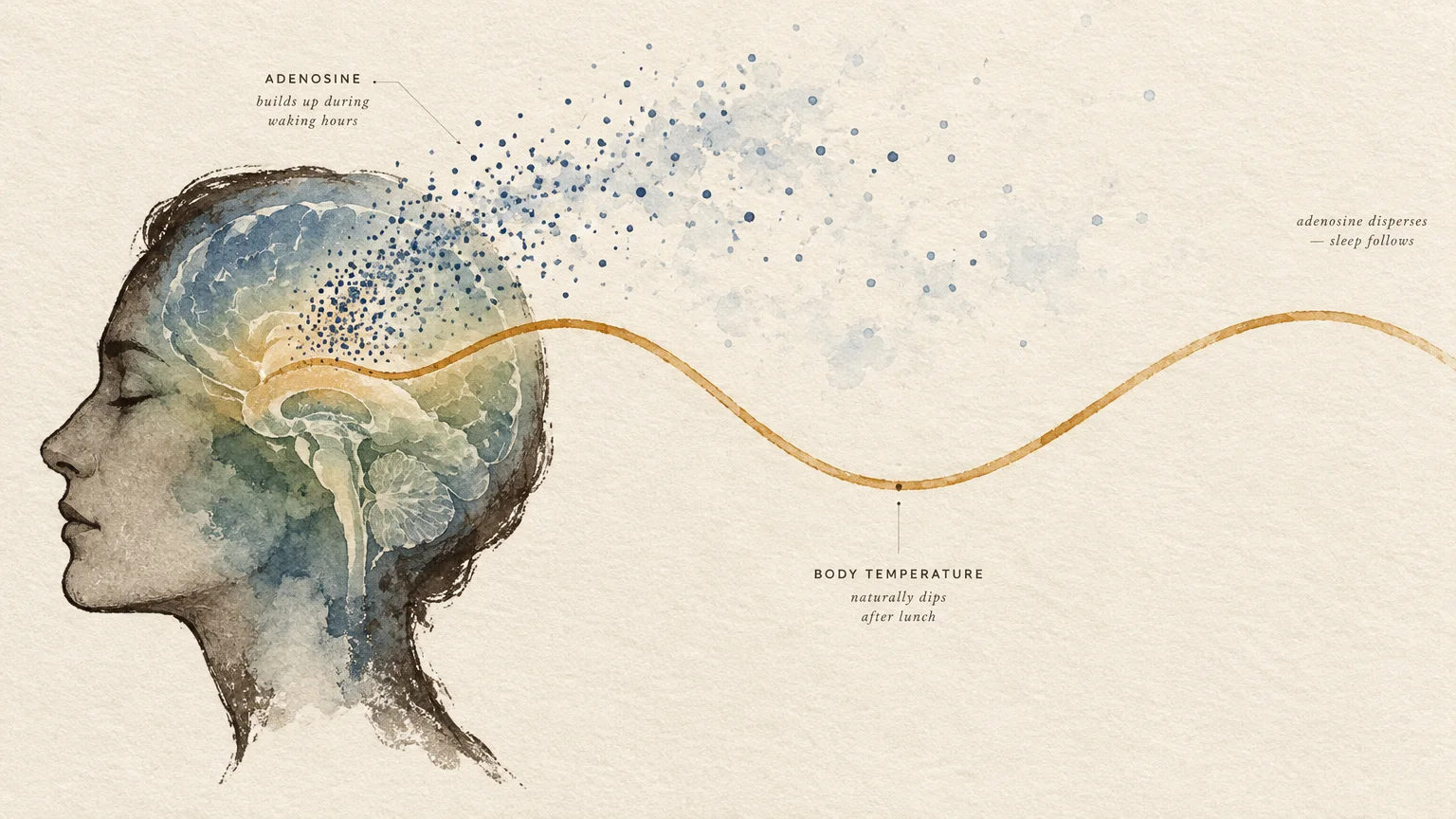
Your brain accumulates a chemical called adenosine while you stay awake throughout the day. This substance creates homeostatic sleep drive, which produces the natural sensation of tiredness.
A short period of sleep clears some of this adenosine accumulation. As a result, your brain resets alertness without wiping out the sleep pressure needed for the coming night.
Your internal clock also creates a natural dip in core body temperature and alertness in the early afternoon. According to the National Institute of Neurological Disorders and Stroke, your circadian rhythm regulates these fluctuations across every twenty-four-hour cycle.
This post-lunch dip happens regardless of whether you eat a heavy meal. Working with this biological rhythm makes resting during the early afternoon feel natural and restorative.
Entering deeper sleep stages during the day presents a challenge. If you wake up from slow-wave sleep, your brain struggles to transition back to active consciousness.
Clinicians call this disorienting sensation sleep inertia. Choosing the right nap length keeps you in lighter sleep stages and prevents that heavy, sluggish feeling.
How Long to Nap for Clear Thinking and Energy
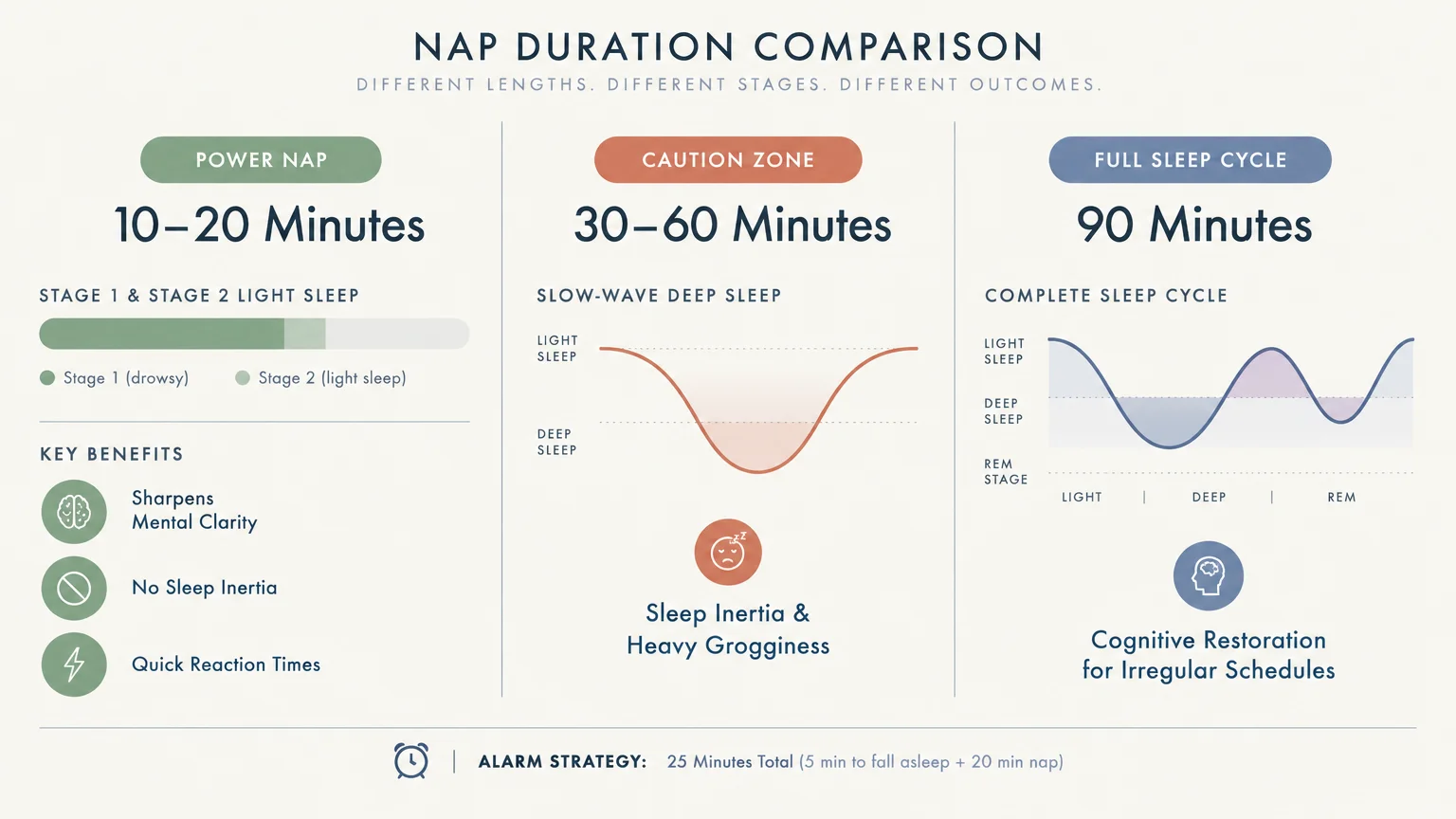
For most adults, the ideal power nap lasts between ten and twenty minutes. This duration keeps you in stage one and stage two light sleep.
Research demonstrates that a ten-minute nap provides immediate benefits without any grogginess. It sharpens mental clarity and stabilizes your energy levels right away.
You wake up easily because your body has not yet entered deep slow-wave rest. You gain immediate napping benefits, including improved alertness, quicker reaction times, and better mood.
Sleeping for thirty to sixty minutes often backfires. During this window, you drift into slow-wave deep sleep, making waking up feel jarring and exhausting.
If you have severe sleep deprivation, aim for a ninety-minute sleep cycle instead. This duration allows your brain to complete light, deep, and rapid eye movement stages.
The Centers for Disease Control and Prevention notes that full cycles support cognitive restoration when you manage irregular work hours. However, full ninety-minute rest periods require careful daytime timing to protect your nocturnal schedule.
Set an alarm on your phone for twenty-five minutes before closing your eyes. That buffer gives you five minutes to relax and twenty full minutes of actual slumber.
Using an eye mask or earplugs can help you fall asleep much faster in bright or noisy office environments. Eliminating sensory input prevents shallow, interrupted rest.

When to Schedule Your Midday Break
Timing matters just as much as duration when you plan a restorative rest. The ideal window falls between one and three in the afternoon for standard daytime schedules.
Resting during this window aligns perfectly with your post-lunch circadian dip. It also leaves enough waking hours to rebuild healthy sleep drive before bedtime.
Avoid sleeping after three in the afternoon under normal circumstances. Late rest steals the biological sleepiness you need to fall asleep easily at night.
Try to maintain the same nap schedule on weekends rather than taking long, irregular afternoon naps. Consistency keeps your circadian clock stable throughout the entire week.
If you work night shifts, adjust your schedule accordingly. Shift workers should rest shortly before starting their shift to maximize focus and safety during overnight hours.
Create a consistent environment by dimming the lights and keeping the room quiet. A dark, cool space signals your nervous system to relax quickly.
Expose your eyes to natural daylight and drink a glass of cold water immediately after waking up. These simple physical cues signal to your body that it is time to be active again.

When Daytime Exhaustion Warrants Medical Care
Napping should serve as a conscious performance tool rather than an emergency survival strategy. If you rely on daily rest just to function, you may have an underlying condition.
Frequent involuntary nodding off during conversations or while driving requires immediate clinical attention. These episodes can indicate severe sleep apnea, narcolepsy, or chronic sleep deprivation.
Loud snoring accompanied by gasping or choking sounds at night is another critical warning sign. This pattern often points to obstructive sleep apnea, which prevents restorative deep sleep.
The National Health Service recommends consulting a primary care doctor if chronic fatigue persists for several months despite lifestyle modifications. A physician can order diagnostic sleep studies to evaluate your nocturnal breathing patterns.
Older adults should also monitor sudden shifts in their daytime sleep patterns. According to the National Institute on Aging, changes in sleep architecture require medical evaluation to rule out medication side effects or systemic illness.
Remember that educational health guidance never replaces tailored medical advice. Always discuss chronic exhaustion with a qualified healthcare professional.
Frequently Asked Questions About Napping
Does drinking coffee before a nap actually work?
Consuming caffeine immediately before a twenty-minute rest—often called a coffee nap—can produce powerful alertness. Caffeine takes roughly twenty minutes to enter your bloodstream and block adenosine receptors.
As you wake up from light sleep, the caffeine kicks in simultaneously. This combination clears sleep inertia quickly, though you should avoid this technique late in the day.
Should you nap if you struggle with chronic insomnia?
Sleep specialists generally advise against daytime resting if you suffer from chronic insomnia. Napping reduces nighttime sleep drive, which makes falling asleep in bed significantly harder.
Skip midday sleep and focus on consolidating all your rest into a single nighttime window. Protecting your nocturnal sleep pressure helps reset your natural sleep-wake schedule.
Can daytime rest replace missed nighttime sleep?
A daytime rest reduces short-term fatigue, but it cannot fully replace high-quality nocturnal sleep. Your body performs essential hormonal and tissue repair primarily during sustained nighttime cycles.
Use short rests to sharpen alertness temporarily after a poor night. Treat them as a supportive buffer while you address the root causes of nighttime disruptions.
Why do some people wake up with a headache after napping?
Waking with a headache usually stems from waking mid-cycle during deep sleep or from mild dehydration. When blood vessels in the brain dilate during slow-wave sleep, sudden awakening can trigger vascular tension.
To prevent post-nap headaches, limit your rest to twenty minutes and hydrate before lying down. Sticking to lighter sleep prevents the sudden shifts in blood flow that cause discomfort.
One Simple Habit to Try Today
Set a recurring alarm on your phone for twenty minutes during your early afternoon slump. Keep the room quiet, dim the screen, and close your eyes without pressuring yourself to sleep.
Even brief quiet rest calms your central nervous system and restores mental stamina. Protect your upcoming bedtime by standing up immediately once that twenty-minute timer rings.