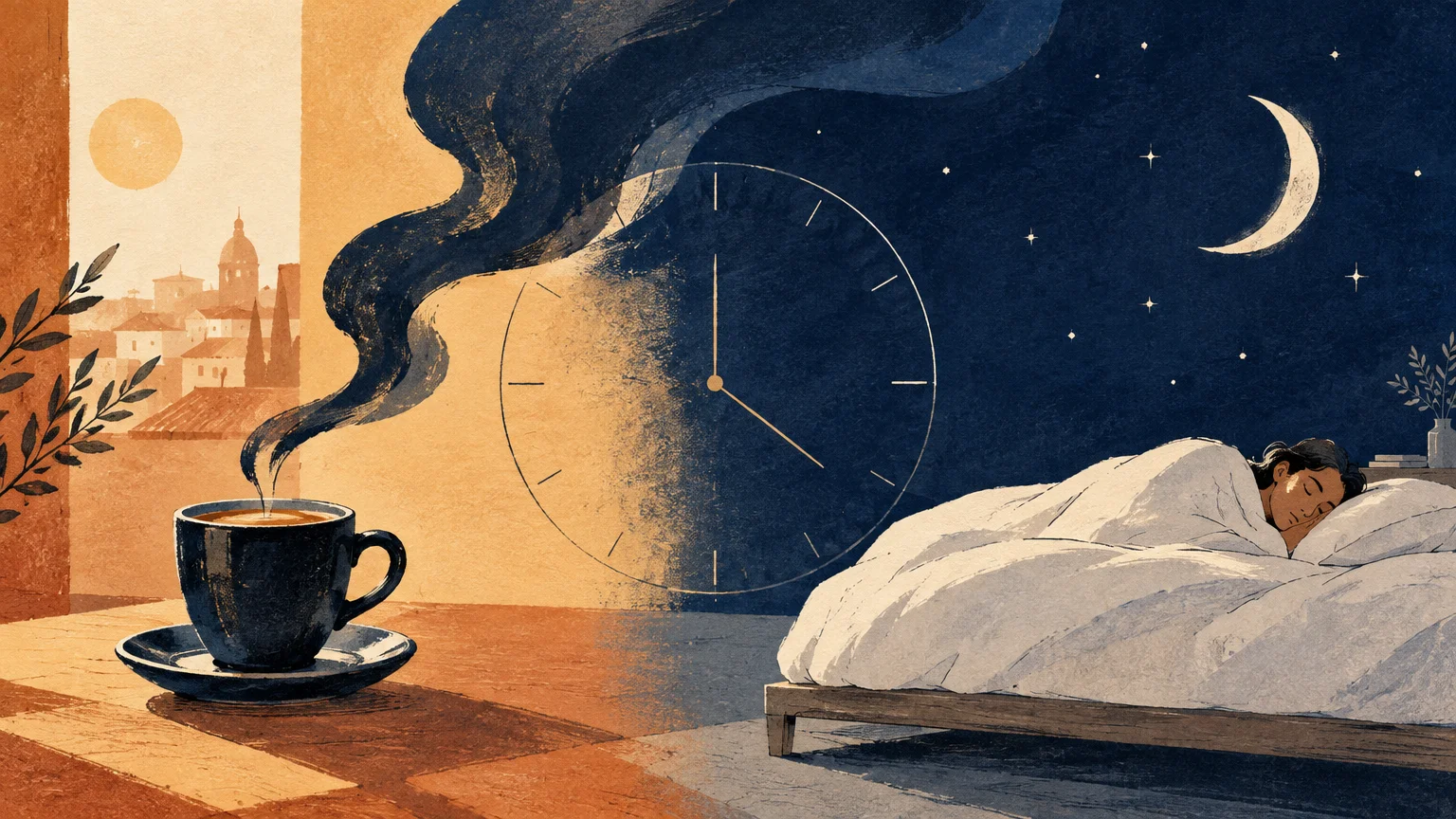
Setting your coffee cutoff time today can instantly give you nearly an hour of extra sleep tonight. That simple shift protects your restorative rest without requiring you to give up your favorite morning brew.
Roughly 80% of adults consume caffeine daily, yet most underestimate how long this stimulant lingers in the bloodstream. Understanding your body’s clearance rate helps you reclaim refreshing rest.
By learning how caffeine interacts with your brain’s sleep signals, you can pinpoint the ideal hour to switch to decaf or herbal tea.
How Caffeine Hijacks Your Sleep Chemistry
Throughout the day, your brain produces a chemical called adenosine that gradually builds your natural sleep drive. When adenosine binds to its cellular receptors, it signals your central nervous system that it is time to rest.
Caffeine possesses a molecular structure remarkably similar to adenosine; it slips into these same receptors and blocks them without activating them. Consequently, your brain misses the biological signal that you are exhausted.
While caffeine temporarily masks fatigue, adenosine continues to accumulate behind the pharmacological barricade. Once your liver finishes metabolizing the stimulant, that accumulated adenosine floods your receptors, causing a sudden and severe crash.
The Hidden Toll on Sleep Architecture
Caffeine does far more than keep you awake; it fundamentally degrades the structural quality of your sleep. Even if you fall asleep easily, lingering caffeine fragments your night.
According to a systematic meta-analysis in Sleep Medicine Reviews, mistimed caffeine consumption reduces total nightly sleep by an average of 45 minutes. It also delays falling asleep by 9 minutes.
The study revealed that caffeine increases nighttime awakenings by 12 minutes and causes an overall 7% drop in sleep efficiency. You spend more time tossing and turning without realizing why.
Crucially, caffeine robs you of 11.4 minutes of deep, slow-wave sleep across stages N3 and N4. That deep sleep stage is essential for physical recovery, cellular repair, and cardiovascular health.
Understanding the Caffeine Half-Life
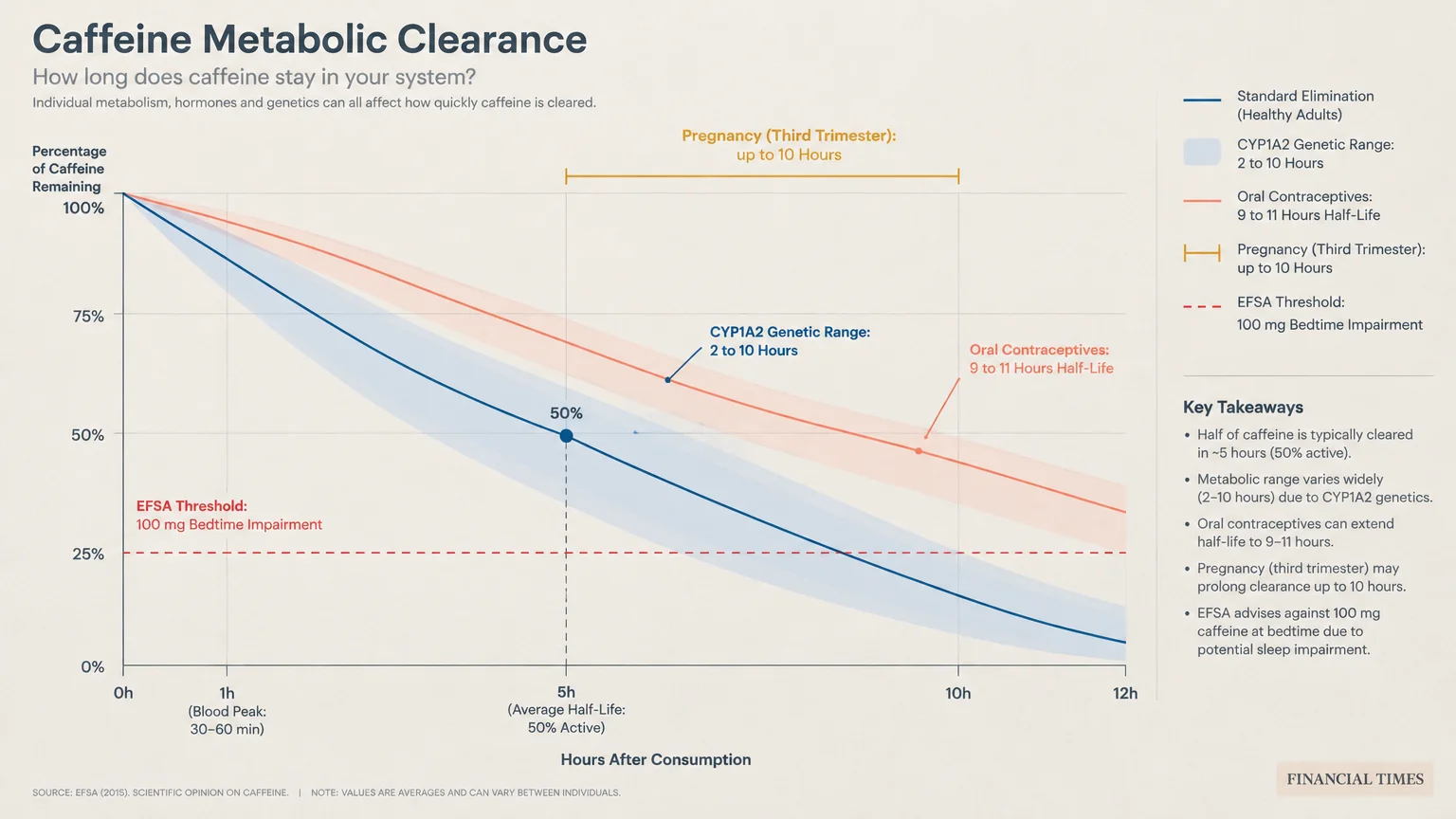
Caffeine reaches peak levels in your bloodstream within 30 to 60 minutes after consumption. However, removing it from your body takes far longer than most people realize.
The average elimination half-life of caffeine in healthy adults is roughly 5 hours. That means five hours after your last sip, half the caffeine remains active in your system.
Metabolic clearance rates vary dramatically from 2 to 10 hours based on your personal genetics, specifically the activity of the CYP1A2 liver enzyme. Your unique genetic profile dictates whether you clear caffeine quickly or slowly.
Certain biological factors drastically slow this process down. Research highlighted by the European Food Safety Authority shows that a single 100 mg dose near bedtime noticeably impairs sleep.
For example, taking oral contraceptives roughly doubles caffeine’s half-life, extending it to between 9 and 11 hours. Pregnancy can stretch the half-life up to 10 hours, particularly during the third trimester.
Calculating Your Daily Coffee Cutoff Time
To safeguard your rest, you must establish an intentional cutoff time based on your daily beverage choice and bedtime. Blanket rules do not account for varying concentrations of caffeine.
The American Academy of Sleep Medicine recommends stopping all caffeine consumption at least 6 hours before you plan to sleep. This baseline recommendation prevents the most severe nighttime disruptions.
Cutoff for Standard Doses
For a standard mug of brewed coffee containing roughly 107 mg of caffeine, clinical data advises a wider safety buffer. You should finish your cup at least 8.8 hours before turning out the lights.
If you aim to sleep at 10:00 p.m., finish your final standard coffee by 1:12 p.m. at the absolute latest. Giving your liver that processing window preserves your deep sleep architecture.
Cutoff for High-Dose Beverages
Pre-workout supplements and large specialty energy drinks frequently pack around 217.5 mg of caffeine or more. These potent drinks require an even stricter schedule.
Clinical reviews suggest cutting off high-dose caffeine products at least 13.2 hours before bedtime. An afternoon energy drink taken at 2:00 p.m. will disrupt sleep well past midnight.
Both the U.S. Food and Drug Administration and EFSA cite 400 mg daily as the safe upper limit for healthy adults. Staying under this threshold makes adhering to your cutoff time much easier.
Practical Steps to Adjust Your Routine Safely
Audit Your Hidden Caffeine Sources
Check your afternoon snacks and beverages for stealth stimulants. Dark chocolate, iced tea, protein bars, and certain headache medications all contain noticeable amounts of caffeine.
Swap your afternoon coffee for water, decaffeinated tea, or herbal infusions. Decaffeinated coffee still contains trace amounts, but rarely enough to derail your natural nighttime sleep drive.
Shift Your Intake Gradually
Never quit an afternoon caffeine routine abruptly, or you may trigger severe withdrawal headaches and sluggishness. Instead, pull your last cup forward by 30 minutes every two days.
Alternatively, mix half-caffeinated and half-decaffeinated beans for your post-lunch beverage. This simple transition satisfies your sensory habit while dropping your circulating stimulant load.
When Sleep Problems Warrant Medical Attention
While dialing in your caffeine habits solves many sleep complaints, lifestyle adjustments cannot resolve underlying medical disorders. This educational guidance does not replace professional clinical evaluation or treatment.
Consult a qualified physician if you experience loud snoring accompanied by gasping or choking sensations during the night. These symptoms often indicate obstructive sleep apnea, which requires targeted therapy.
You should also see a doctor if insomnia persists for months despite eliminating caffeine and practicing consistent sleep habits. Persistent sleep challenges often stem from metabolic, psychological, or neurological conditions.
Frequently Asked Questions
Can I drink coffee late if I fall asleep easily?
Yes, you might fall asleep quickly, but the caffeine still degrades your restorative deep sleep. You will likely wake up unrefreshed, confused as to why you feel exhausted after eight hours.
Does drinking water flush caffeine out faster?
Staying hydrated supports kidney function and general well-being, but it does not accelerate your liver’s metabolic breakdown of caffeine. Only time allows your CYP1A2 enzymes to clear the stimulant.
How does smoking affect caffeine clearance?
Tobacco smoke induces liver enzymes, which actually accelerates caffeine clearance. When smokers quit, caffeine stays in their systems much longer, requiring an immediate reduction in daily coffee intake.
Is decaf completely free of caffeine?
Decaf coffee is not entirely caffeine-free; a typical cup contains between 2 and 15 mg of caffeine. However, this negligible dose rarely disrupts sleep unless consumed in massive quantities right before bed.
One Small Change to Try Tonight
Take a look at the clock right now and calculate an 8.8-hour buffer before your planned bedtime. Commit to drinking nothing stronger than herbal tea once that specific hour arrives.
By protecting your natural adenosine drive today, you set the stage for deeper, uninterrupted sleep tonight. Your body and mind will thank you tomorrow morning.