
Uncomfortable creeping sensations in your legs can shatter your ability to rest, but specific evening adjustments can calm your nervous system tonight. You can break the cycle of nighttime pacing by targeting biological triggers right from home.
Restless legs syndrome creates an irresistible urge to move your limbs, peaking precisely when you lie down to sleep. Understanding these sensations allows you to protect your sleep drive and reclaim peaceful evenings.
Simple environmental shifts and targeted nutritional habits can quiet this nocturnal irritation before you turn off your lights. Here is what causes this disruptive condition and how you can find immediate and lasting comfort.
Why Restless Legs Peak at Bedtime
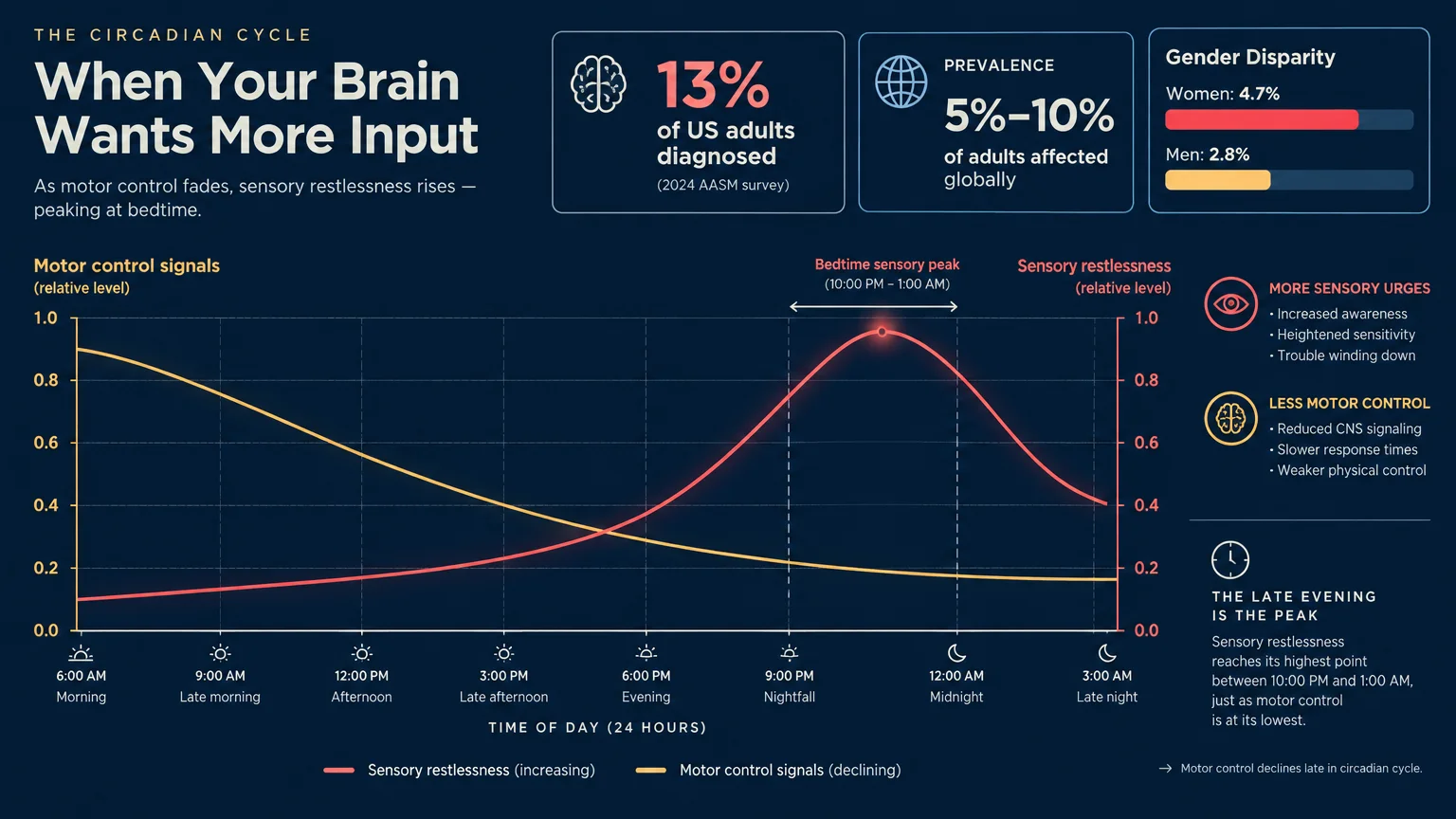
Restless legs syndrome, or RLS, affects between 5% and 10% of adults, disrupting normal rest across the globe. A 2024 survey by the American Academy of Sleep Medicine revealed that 13% of American adults have received an RLS diagnosis.
The condition displays a notable gender divide in clinical research. A comprehensive analysis across 97 studies showed that RLS occurs in 4.7% of women compared to 2.8% of men, with pregnancy serving as a common temporary trigger.
Your body operates on a natural 24-hour circadian clock that alters central nervous system chemistry as evening falls. Motor control signals decline late in the day, which causes tingling, crawling, or pulling sensations to intensify when you stay still.
This nocturnal spike directly sabotages sleep architecture. Because you must move your limbs to obtain temporary relief, you struggle to transition from light sleep into deep, restorative slow-wave stages.
Biological Drivers Behind Leg Discomfort
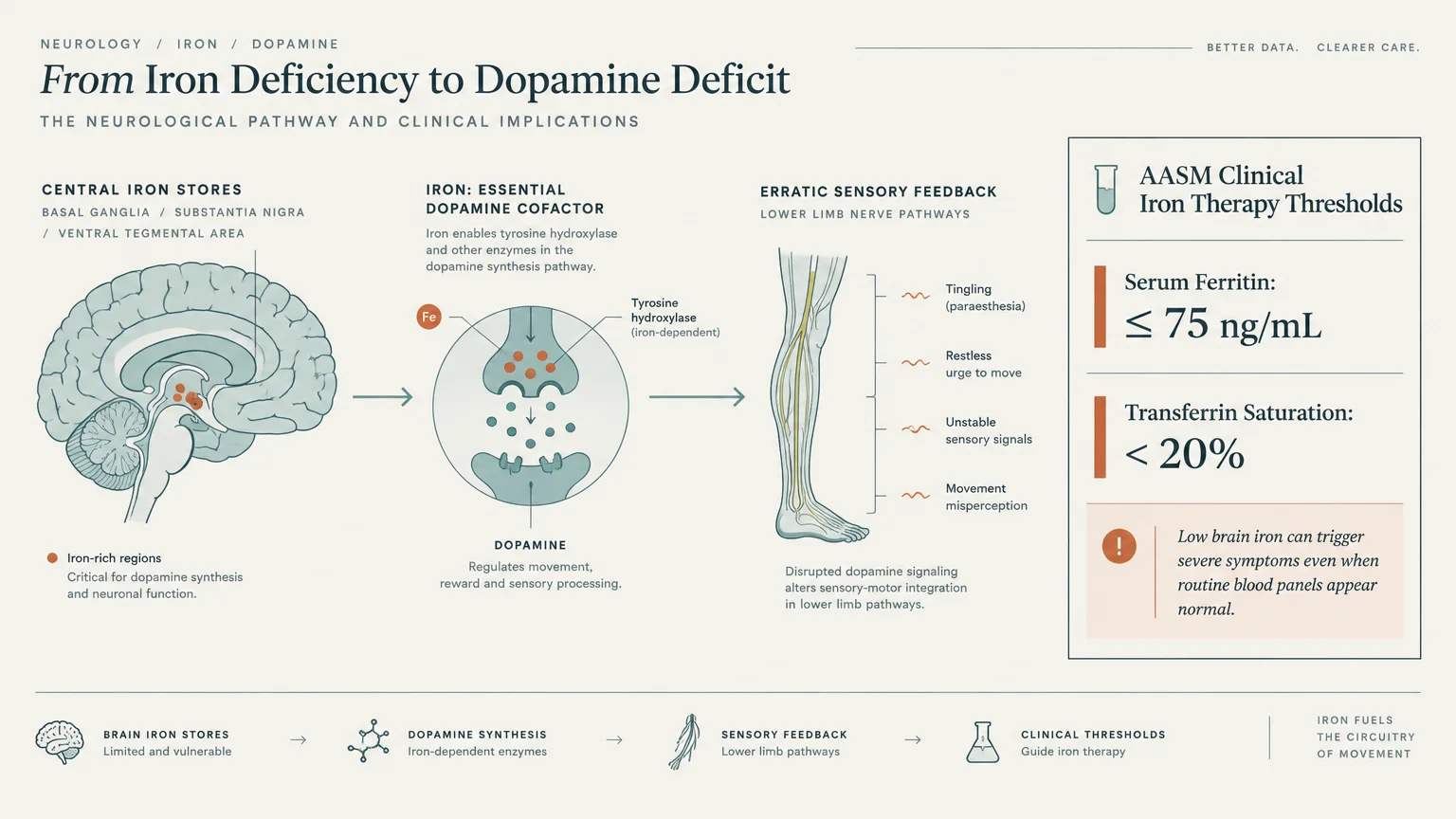
A primary root cause of this neurological disturbance involves iron regulation within the brain. Iron serves as an essential cofactor for producing dopamine, the neurotransmitter responsible for smooth muscle activity and motor coordination.
When central iron levels drop, dopamine signaling falters and produces erratic sensory feedback in your limbs. The National Institutes of Health emphasizes that low brain iron can trigger severe symptoms even when routine blood tests appear standard.
Clinical guidelines published by the American Academy of Sleep Medicine highlight serum ferritin as a crucial diagnostic marker. Physicians recommend clinical iron therapy whenever adult ferritin levels drop to 75 ng/mL or lower, or when transferrin saturation falls below 20%.
Untreated obstructive sleep apnea also aggravates limb restlessness by triggering frequent nocturnal awakenings. Interrupted oxygen delivery destabilizes your nervous system, amplifying underlying RLS at night.

Evening Habits to Ease Symptoms Tonight
You can adjust your evening schedule to quiet hyperactive nerves before heading to bed. Making deliberate choices several hours prior to sleep reduces the sensory spikes that disrupt your descent into deep rest.
Eliminate Common Chemical Triggers
Chemical stimulants drastically heighten restless legs at night by overexciting sensory pathways. Cut off caffeine consumption early in the day, as caffeine remains active in your bloodstream for several hours after consumption.
Alcohol also disrupts sleep stability and frequently provokes severe rebound symptoms during the second half of the night. Limiting evening cocktails prevents disruptive limb sensations from waking you.
Over-the-counter sleep aids often contain sedating antihistamines that block dopamine receptors. Avoid diphenhydramine and doxylamine, as these compounds routinely worsen leg discomfort sleep problems within minutes.
Apply Targeted Physical Techniques
Moderate physical activity earlier in the day encourages optimal blood flow and steady dopamine activity. Engaging in gentle evening stretches or a leisurely walk helps release muscular tension without overtaxing your limbs.
Avoid strenuous late-night workouts, which generate physiological stress and elevate systemic inflammation. Instead, take a warm bath before bedtime to soothe irritated nerve endings through thermal stimulation.
Alternating warm water with ice packs offers rapid counter-stimulation when acute sensations surge. These contrasting temperature signals divert sensory processing in your spinal cord, granting temporary calm.

Modern Medical Guidelines and Therapies
Medical approaches to restless legs syndrome experienced a profound shift in recent clinical guidelines. The American Academy of Sleep Medicine released updated standards in late 2024 that altered standard medication protocols.
For years, doctors routinely prescribed dopamine agonists such as pramipexole, ropinirole, and rotigotine. However, specialists now recommend against their standard long-term use due to a phenomenon known as augmentation.
Augmentation causes RLS symptoms to develop earlier in the afternoon, spread into the arms, and escalate in severity. Patients taking these older medications often experience worsening discomfort over extended timeframes.
Current guidelines strongly endorse alpha-2-delta ligand calcium channel blockers as the primary first-line medical therapy. Medications like gabapentin, gabapentin enacarbil, and pregabalin calm neural firing without triggering augmentation.
Physicians also utilize innovative non-pharmacological medical devices to interrupt erratic nerve signaling. Modern therapies now include wearable devices that deliver high-frequency bilateral peroneal nerve stimulation directly to lower leg nerves before sleep.

When to Consult a Physician
Occasional limb tiredness differs significantly from chronic neurological distress. If severe leg discomfort impairs your sleep multiple nights each week for months, you should arrange an evaluation with a healthcare provider.
The emotional toll of disrupted rest warrants immediate medical attention. Data from the Restless Legs Syndrome Foundation indicates that individuals with RLS face anxiety and depression at rates 4 times higher than the general public.
Inform your doctor if you experience loud snoring, gasping for air, or persistent daytime sleepiness alongside limb symptoms. Identifying coexisting sleep apnea or critical iron deficiencies allows for personalized medical intervention.
Always discuss your current prescriptions with your doctor before altering your medication routine. Antidepressants and anti-nausea medications frequently interact with dopamine pathways, requiring careful physician oversight.
Frequently Asked Questions
Does magnesium cure restless legs syndrome?
While magnesium supports general muscle relaxation, scientific evidence does not show it cures clinical RLS. However, addressing an underlying dietary magnesium deficiency may help relieve peripheral muscle tension before bed.
Why do allergy medications worsen my restless legs?
Most over-the-counter allergy pills rely on first-generation antihistamines that cross into the brain. These compounds suppress dopamine signaling, which directly triggers intense limb restlessness within an hour of ingestion.
How does RLS differ from nighttime leg cramps?
Leg cramps cause sudden, involuntary, and visibly painful muscle contractions that lock your muscles tight. Restless legs syndrome involves a persistent internal urge to move without painful mechanical knots.
One Action to Take Tonight
Tonight, take a 15-minute warm bath followed by five minutes of gentle calf and hamstring stretching right beside your bed. This easy habit engages sensory pathways and primes your nervous system for undisturbed sleep.