
Working the graveyard shift disrupts your biology, but you can build deep rest on any schedule. By synchronizing your light exposure and wind-down routine today, you can protect your daytime recovery starting after your next shift.
Nearly fifteen million Americans work night or rotating shifts, yet over sixty percent struggle to reach seven hours of rest. You do not have to settle for chronic exhaustion just because your career operates after dark.
Simple adjustments to your daily routine can restore deep sleep and daytime alertness. Here is how your body adapts to shift work sleep—and how you can reclaim restful recovery today.
Why Night Shifts Disrupt Your Circadian Rhythm
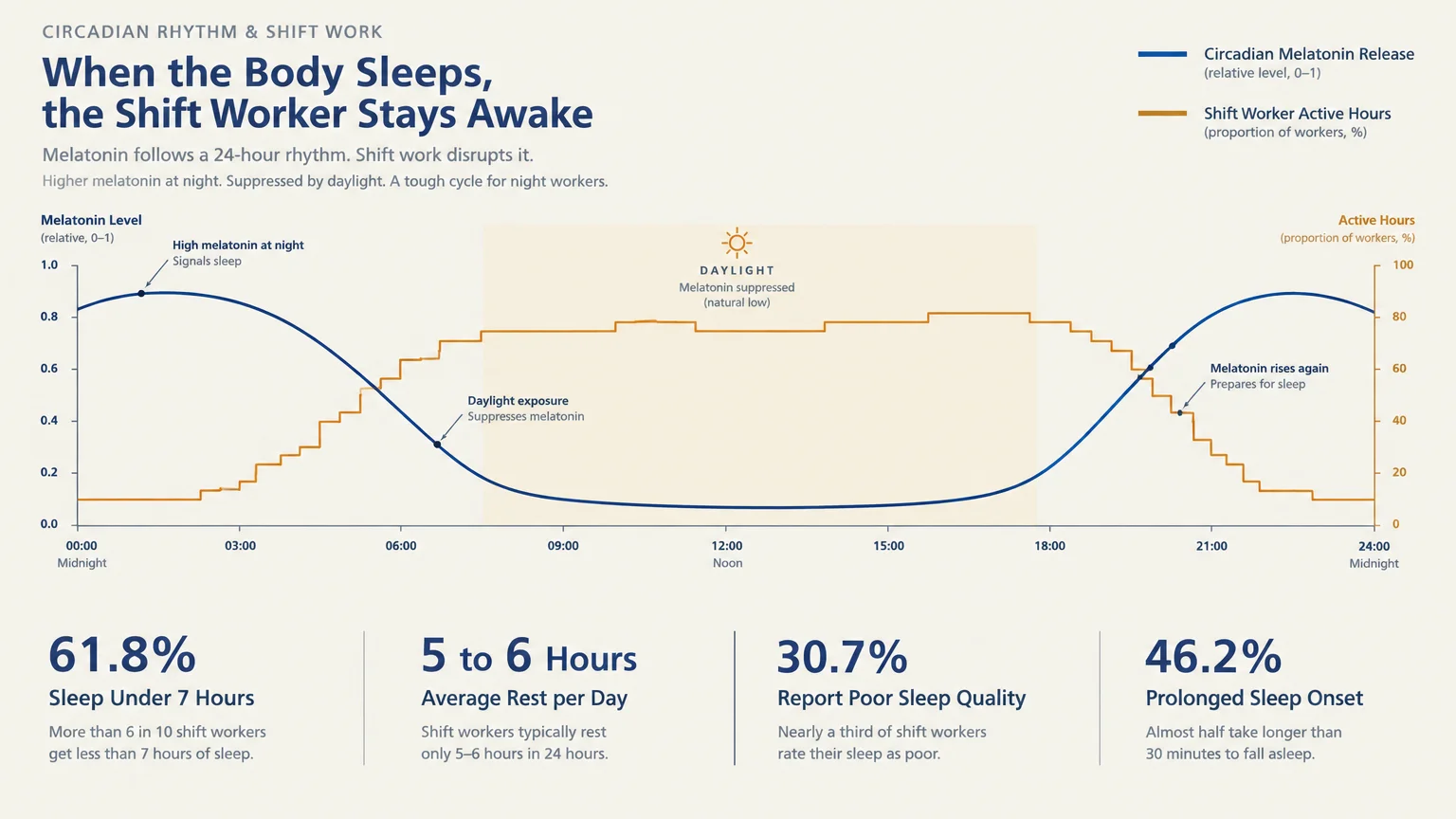
Your internal master clock—the suprachiasmatic nucleus—relies on morning sunlight to signal wakefulness and evening darkness to release melatonin. When you work at night, this system clashes with your work environment.
According to NIOSH research on shift work, 61.8% of night shift workers experience short sleep duration of fewer than seven hours. Most night workers average only five to six hours of rest per day.
This biological conflict shortchanges rapid eye movement (REM) and deep slow-wave sleep. Consequently, 30.7% of night workers report poor sleep quality, while 46.2% struggle with prolonged sleep onset.
Sleep drive—the physical pressure to rest that builds while you are awake—accumulates normally during your shift. Unfortunately, morning sunlight suppresses daytime melatonin, waking you up prematurely despite heavy exhaustion.
Evidence-Based Night Shift Sleep Tips
To outsmart circadian desynchrony, you must proactively manage environmental cues. These targeted strategies help you fall asleep faster and stay asleep longer during daylight hours.
Shield Your Eyes During the Morning Commute
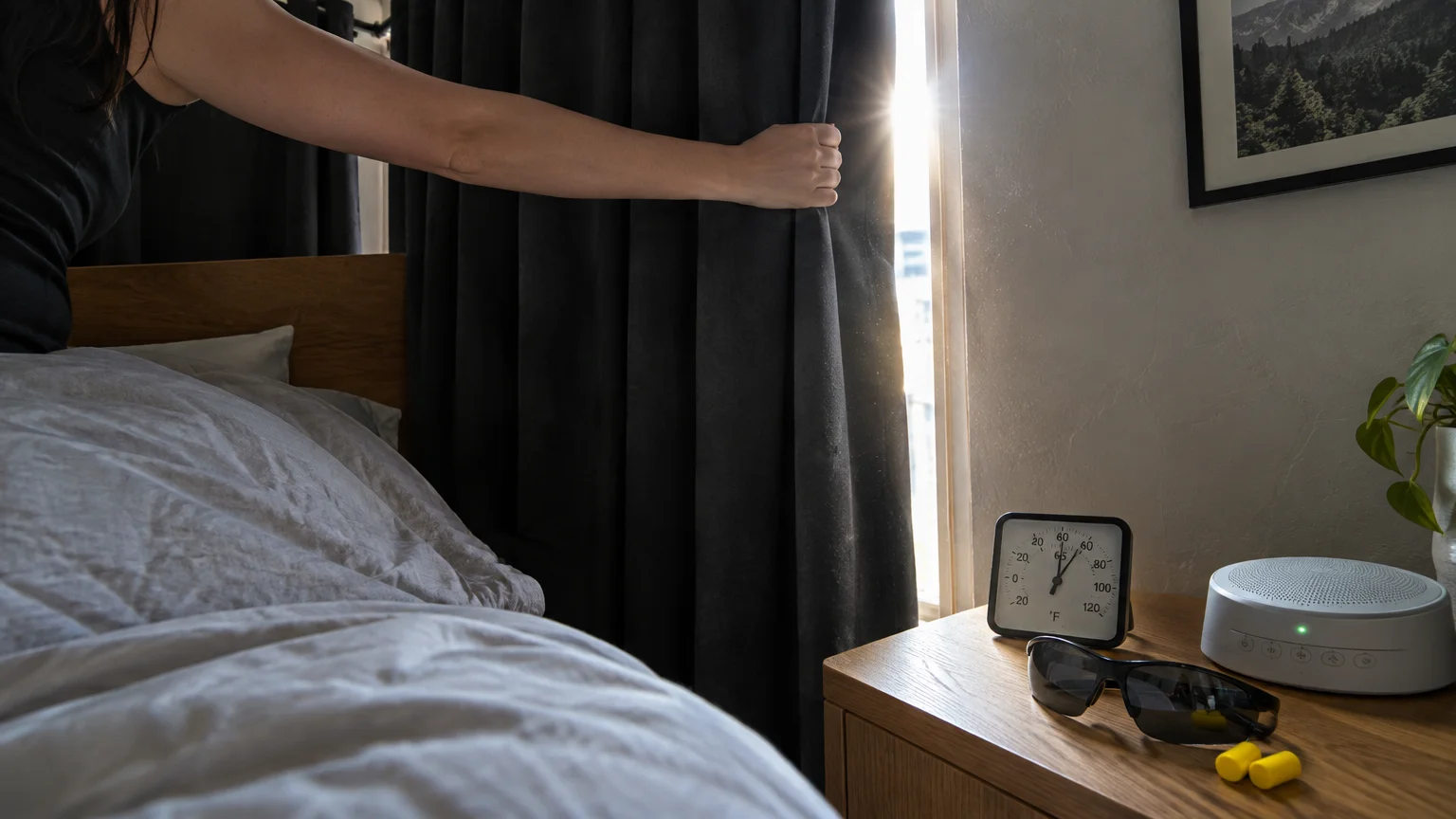
Morning sunlight hitting your retinas immediately suppresses melatonin production and tells your brain that daytime has begun. Put on dark, polarized sunglasses before walking out of your workplace to protect your internal sleep drive.
Head straight home after your shift rather than running daylight errands. Minimizing bright light exposure during this critical transition window preserves your body’s readiness for daytime slumber.
Create an Uncompromising Sleep Cave
Your bedroom must simulate the darkness and cool temperatures of midnight. Hang heavy blackout curtains or high-grade blackout shades to eliminate every ray of ambient daytime sun.
Keep your bedroom temperature between 60 and 67 degrees Fahrenheit; cooler environments trigger natural sleepiness. Add a continuous white noise machine or wear comfortable earplugs to drown out daytime neighborhood noise.
Anchor Your Sleep Schedule Consistently
Fluctuating wildly between daytime and nighttime sleeping patterns causes severe metabolic and neurological stress. Maintain a predictable core sleep window every day, even when you have scheduled days off.
If you must socialize on weekends, use a split-sleep strategy; rest for four hours in the morning and take a ninety-minute afternoon nap. This compromise preserves circadian stability without isolating you from family life.
Time Your Meals and Stimulants Wisely
Stop consuming caffeine at least six hours before your planned bedtime. While caffeine temporarily blocks adenosine receptors to keep you alert, its lingering presence fragments later sleep architecture.
Eat a balanced meal mid-shift, then consume only a light, protein-rich snack before bed. Digesting heavy carbohydrates or greasy foods elevates your core body temperature and triggers nighttime heartburn.
Circadian disruption carries serious occupational and physiological consequences. The Centers for Disease Control and Prevention advises adults to get seven to nine hours of sleep per 24-hour cycle.
Furthermore, NIOSH reports that nighttime shifts increase workplace error and accident risks by 28%. Long-term disruption also prompted the International Agency for Research on Cancer to classify night shift work as a Group 2A probable carcinogen.
Recognizing Shift Work Disorder
Persistent sleep struggles may indicate Shift Work Disorder (SWD), a recognized circadian rhythm sleep-wake condition. Meta-analyses indicate that 26.5% of all shift workers meet the clinical diagnostic threshold for this disorder.
In high-intensity professions such as healthcare, rates climb sharply; pooled data shows 45.5% of nurses suffer from SWD. For nurses working rotating three-shift patterns, the prevalence climbs to 61.7%.
According to the International Classification of Sleep Disorders, Third Edition (ICSD-3), diagnosis requires chronic insomnia or excessive daytime sleepiness directly tied to your work hours. Symptoms must persist for at least three consecutive months.
Physicians confirm this diagnosis by reviewing sleep logs or actigraphy data collected across at least 14 days. These records demonstrate significant sleep reductions across both work stretches and rest periods.

When to Consult a Medical Professional
While lifestyle adjustments help most night workers, certain symptoms demand clinical evaluation. Schedule a consultation with a physician or board-certified sleep specialist if severe insomnia persists beyond three months.
Seek medical care immediately if you experience frequent microsleeps while driving, chronic morning headaches, or loud snoring accompanied by choking or gasping. These warning signs frequently indicate obstructive sleep apnea rather than simple shift fatigue.
A medical specialist can evaluate you for prescription therapies or supervised light therapy regimens. Keep in mind that this educational guide provides general health information and does not substitute for individualized medical treatment.
Frequently Asked Questions About Night Shift Sleep
Should I stay awake all day on my days off?
Flipping your schedule completely on weekends creates severe social jetlag and weakens your immune system. Instead, shift your sleep window by just two to three hours or utilize scheduled midday naps.
Can melatonin supplements help me sleep after a night shift?
Low-dose melatonin taken thirty to sixty minutes before daytime bed rest can help signal sleepiness to your brain. Consult your healthcare provider regarding appropriate dosing, as timing remains critical for circadian alignment.
How dangerous is driving home tired after night work?
Driving while drowsy poses risks comparable to driving under the influence of alcohol. If you feel your eyelids drooping, pull over safely for a twenty-minute nap or arrange rideshare transportation.
How much sleep do night shift workers actually need?
Night workers need the exact same seven to nine hours of restorative rest as daytime workers. Research from the National Institutes of Health confirms that chronic sleep deprivation impairs cognitive and metabolic function regardless of schedule.
One Small Change to Try Tonight
Do not attempt to overhaul your entire lifestyle in a single day. Instead, pack a pair of dark sunglasses in your work bag right now.
Slip them on before leaving work tomorrow morning to shield your eyes from dawn sunlight. This simple action safeguards your melatonin levels and sets the stage for deeper, more restorative daytime sleep.