
If you wake up tired after tossing and turning, your blood nutrient levels may hold an important clue. A new study links low vitamin D levels to about 23 minutes less sleep each night in adults aged 40 and older.
Researchers found that people with lower vitamin D levels woke up more often and spent less time asleep. While low levels do not directly cause sleep loss, the connection offers valuable insights into your health.
Simple habits can support your sleep duration and help keep your bones strong. Understanding how your body uses nutrients helps you build a better nightly routine and protect your overall well-being.
The Science Connecting Vitamin D and Sleep Duration
A study published in The Journals of Gerontology examined how blood nutrients connect to sleep. Researchers from Johns Hopkins University and the National Institute on Aging evaluated 460 adults.
All participants were aged 40 or older, with an average age of 71 years. Each person wore a wrist activity tracker for seven days to measure sleep objectively.
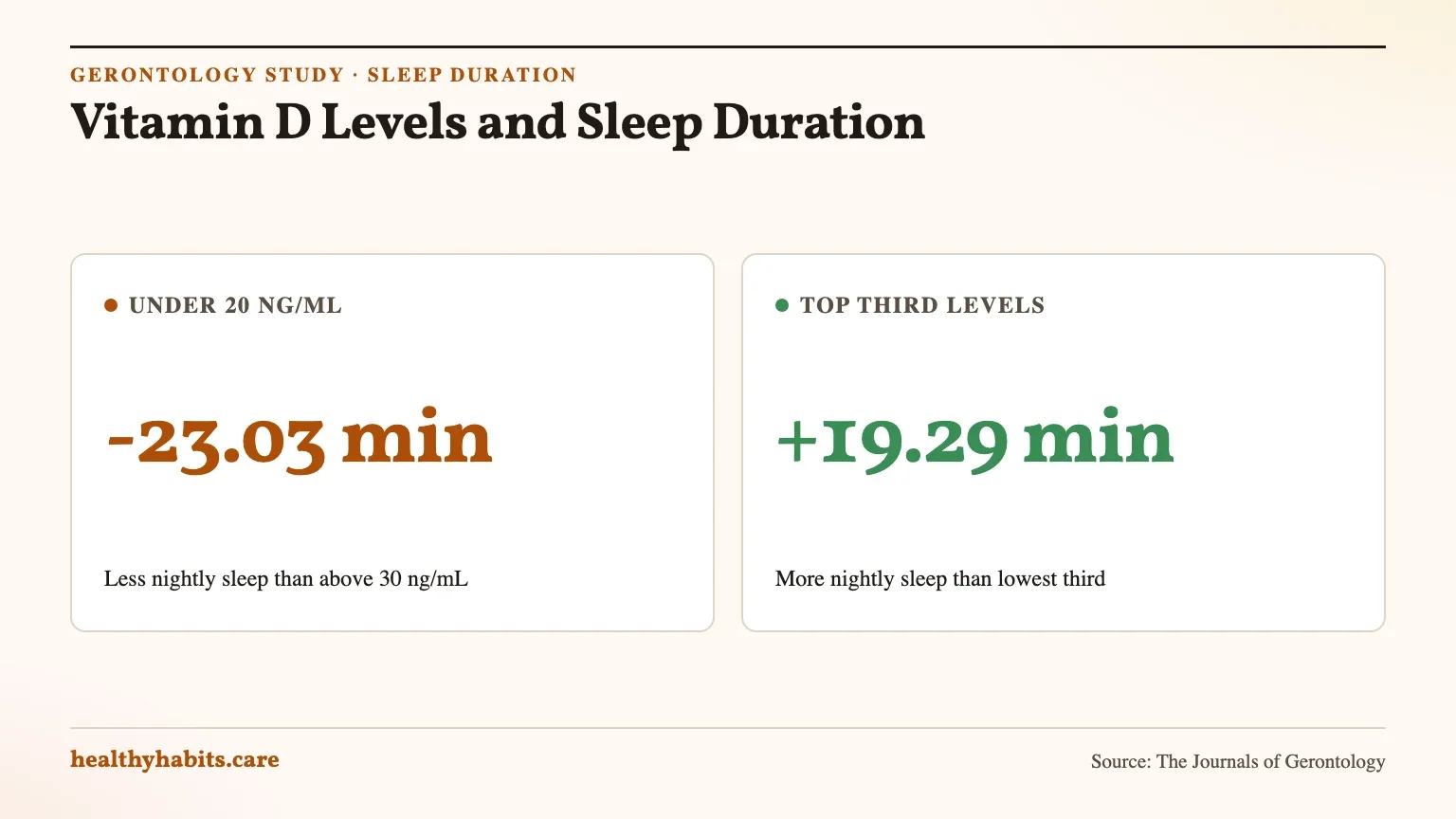
Adults with vitamin D levels under 20 ng/mL slept 23.03 minutes less per night than those above 30 ng/mL. In addition, the highest third slept 19.29 minutes longer than the lowest third.
Higher blood levels also corresponded to shorter waking bouts during the night. Participants with healthier levels settled back to sleep faster after waking up in the dark.
The relationship between vitamin levels and rest was even stronger among Black participants. However, the study authors emphasized that this racial subgroup finding was exploratory and requires further confirmation.
Key Study Findings and Real-World Limitations
It is critical to recognize that this research reveals an association rather than direct causation. The investigators evaluated blood samples and motion data gathered between 2012 and 2019.
Because the study was observational, it does not prove that low vitamin D causes sleep loss. Furthermore, the findings do not prove that taking supplements will lengthen your sleep duration.
Routine blood tests cannot determine whether vitamin D comes from sunlight, food, or commercial pills. Meanwhile, vitamin B12 levels showed no meaningful connection to sleep duration in the study cohort.
National Sleep Trends for Middle-Aged and Older Adults
Getting quality rest is an ongoing challenge for millions of families across the country. Federal data shows that insufficient sleep impacts adults of all backgrounds.
According to data from the National Center for Health Statistics, 30.5 percent of adults sleep under seven hours each night. That shortfall falls below national clinical recommendations.
Sleep loss peaks in midlife, affecting 34.5 percent of adults aged 50 to 64. That rate drops back to 27.2 percent among adults aged 65 and older.
Overall sleep quality also remains low for many households. Only 54.8 percent of American adults wake up feeling well-rested on most days or every day.
Roughly 18 percent struggle to stay asleep, while 15.4 percent have trouble falling asleep. As a result, nearly 13 percent of adults regularly use over-the-counter or prescription sleep aids.
Blood Thresholds and Clinical Supplement Guidelines
Understanding standard clinical targets helps you interpret lab results with your doctor. Federal health agencies define blood levels of 25-hydroxyvitamin D using specific numerical ranges.
The National Institutes of Health defines levels at or above 20 ng/mL as adequate for most healthy people. Levels between 12 and 20 ng/mL signal a risk of inadequacy.
Concentrations below 12 ng/mL indicate deficiency that requires medical care. Conversely, levels exceeding 50 ng/mL present real health risks, including hypercalcemia and kidney stone formation.
The recommended dietary allowance is 600 international units daily up to age 70, rising to 800 units for adults over 70. The safe upper intake limit is 4,000 international units daily.
The Endocrine Society updated its clinical guidance to advise against routine blood screenings for healthy adults under age 75. The group also withdrew its prior 30 ng/mL prevention target.
Avoiding excessive supplementation is vital because high blood levels have tripled in recent years. Among adults taking multiple supplements, nearly 31 percent developed blood concentrations that may be of concern.

Dietary Sources to Support Healthy Nutrient Levels
Wholesome meals provide a steady, safe supply of essential vitamins. Yet national surveys show that 94 percent of Americans fail to get adequate vitamin D from food alone.
Fatty fish like salmon, trout, tuna, and mackerel represent the richest natural sources. Small amounts also occur in egg yolks, beef liver, cheese, and UV-treated mushrooms.
Fortified foods supply the majority of vitamin D in American diets. Look for fortified dairy milk, plant milk alternatives, breakfast cereals, and select 100 percent fruit juices.
Check product labels during grocery shopping to ensure you meet daily nutritional goals. Combining these foods with healthy dietary fats supports proper nutrient absorption in your digestive tract.
Daytime and Bedtime Habits for Better Sleep
Daily routines work directly with your internal body clock to govern sleep cycles. Intentional daytime habits make it much easier to rest soundly at night.
Get 10 to 15 minutes of natural morning sunlight soon after waking up. Early daylight exposure sets your circadian rhythm and supports natural vitamin synthesis in your skin.
Maintain a consistent sleep schedule by going to bed and waking up at the same times. Keeping regular hours reinforces your body’s natural drive for restorative sleep.
Keep your sleep environment cool, quiet, and dark throughout the night. Discontinue using glowing phones, tablets, and computer screens at least one hour before lying down.
Avoid heavy late dinners, evening alcohol, and late afternoon caffeine. Relax your mind before bed with light reading, breathing exercises, or a warm bath.

When to Consult Your Healthcare Provider
Consult your doctor before adding new dietary supplements to your daily regimen. A healthcare provider can review your medical history and determine whether testing is truly warranted.
Share an updated list of all medications, herbs, and over-the-counter products you take. This disclosure prevents accidental double-dosing and protects against unwanted drug interactions.
Seek clinical care if you suffer from ongoing waking, chronic fatigue, or loud snoring. These symptoms may point to obstructive sleep apnea or other diagnosable sleep disorders.
Community Resources and Practical Support
You do not need to navigate sleep and nutrition questions on your own. Free resources from public health organizations can help guide your daily lifestyle choices.
The National Institute on Aging offers research-backed guides on healthy sleep patterns in older adulthood. These materials explain how rest naturally changes over time.
Local community health centers often provide wellness consultations and group nutrition classes. These programs connect you with registered dietitians who understand the unique needs of older adults.
Validated mobile sleep logs and wearable devices can help you track nightly waking patterns. Sharing this tracking data gives your doctor objective information during your wellness visits.
Frequently Asked Questions
Can taking vitamin D supplements cure chronic insomnia?
Vitamin D supplements cannot cure insomnia or replace targeted sleep medicine. Scientific studies show a clear statistical link with sleep duration, but pills do not resolve underlying sleep disorders.
If you struggle to fall or stay asleep, consult your primary care doctor. Proven approaches like cognitive behavioral therapy for insomnia offer reliable and lasting results.
How much vitamin D should adults over 40 consume?
Healthy adults between 40 and 70 need 600 international units each day. Adults aged 71 and older require 800 international units daily to support bone and muscle health.
Most individuals can meet these goals through a balanced diet and regular sun exposure. Never exceed the daily upper limit of 4,000 units without medical supervision.
Should I request a vitamin D blood test from my doctor?
Major medical organizations recommend against routine screening tests for healthy adults under age 75. Testing is generally reserved for people with specific clinical conditions like osteoporosis or malabsorption.
Speak with your physician about your individual risk factors before ordering laboratory work. Your provider will help you choose the most appropriate testing strategy.
What are the most effective dietary sources of vitamin D?
Fatty fish like salmon, trout, and tuna provide the highest natural amounts of vitamin D. UV-exposed mushrooms and egg yolks also supply modest quantities.
Fortified milk, plant milks, and breakfast cereals supply the bulk of vitamin D for Americans. These foods offer an easy and accessible way to fill dietary gaps.
Building a Foundation for Restorative Sleep
Restful sleep forms the cornerstone of everyday energy, clear thinking, and long-term health. While vitamin status matters, overall lifestyle habits drive your nightly rest.
Begin by introducing small, practical adjustments to your daytime routine this week. Stepping into the morning sun and eating nutrient-rich foods will support your body naturally.
Follow those daytime steps with a peaceful, tech-free wind-down routine every evening. Consistent personal habits will help you fall asleep easier and stay asleep longer.
Partner with your healthcare team to address persistent fatigue and protect your long-term vitality. Taking proactive, informed steps today ensures healthier nights and brighter mornings.