
If you routinely cut rest short during the workweek, sleeping in on weekends feels like an essential biological reward. Strategic extra rest can relieve immediate fatigue, but weekend lie-ins will not erase accumulated sleep debt.
Excessive morning slumber shifts your internal clock, compromises metabolic recovery, and triggers intense Monday morning grogginess. You can balance necessary rest with consistent timing to wake up energized.
Understanding how your sleep drive operates empowers you to repair your schedule without throwing your biology into chaos.
The Hidden Mechanics of Sleep Debt
Sleep debt represents the cumulative difference between the sleep your body requires and the amount you actually receive. The American Academy of Sleep Medicine recommends that adults sleep at least seven hours nightly to maintain optimal health.
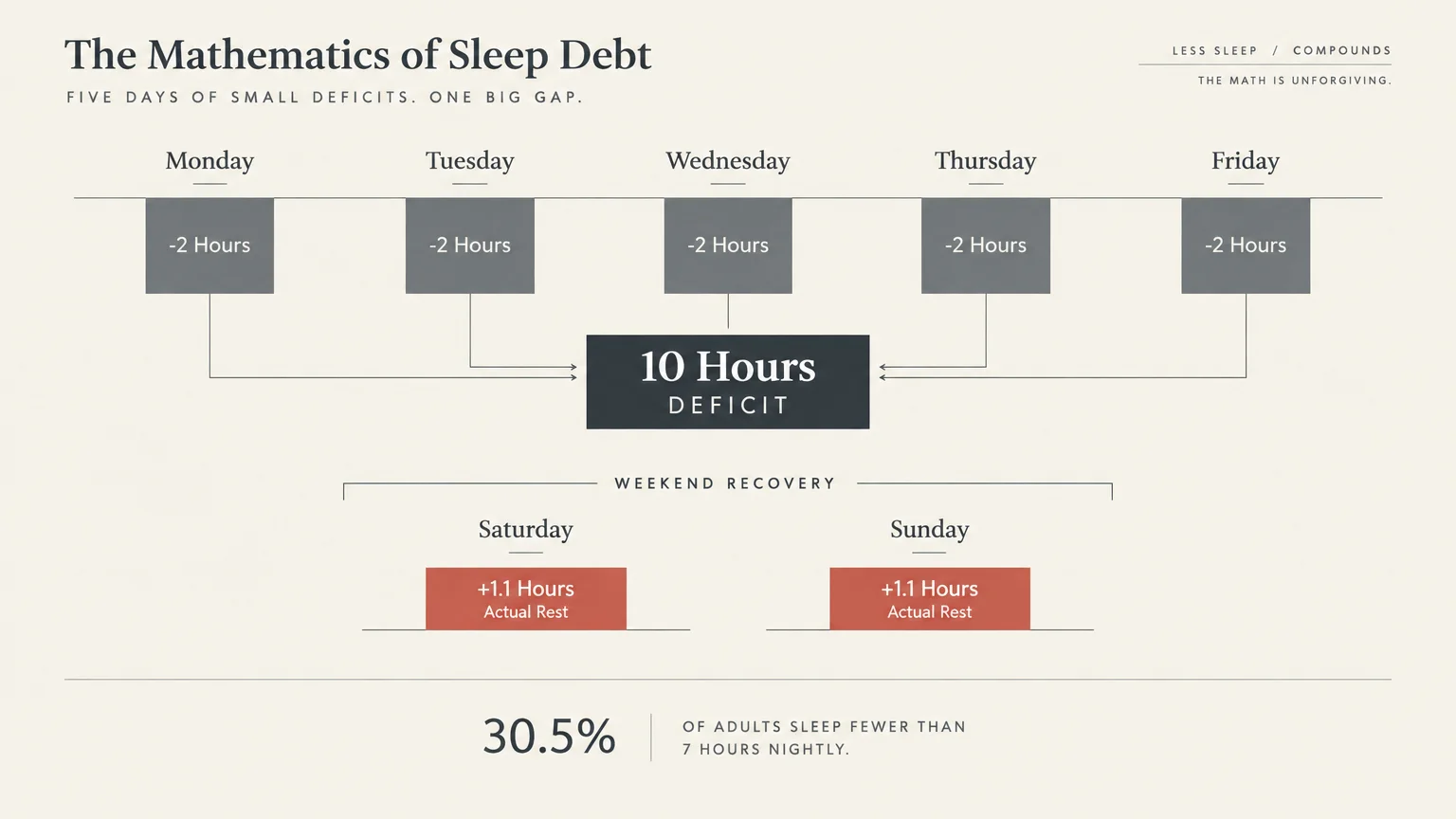
When you shortchange yourself by two hours every weekday, you accumulate ten hours of deficit by Saturday morning. According to data from the Centers for Disease Control and Prevention, 30.5 percent of American adults sleep fewer than seven hours nightly.
Your brain cannot wipe this deficit away during a single marathon weekend session. In landmark laboratory trials published in the journal Sleep, researchers restricted adults to six hours of rest for two weeks.
These participants suffered cognitive deficits equivalent to two full nights of total sleep deprivation, yet barely felt fatigued. Furthermore, three recovery nights of eight hours failed to restore their reaction times to baseline levels.
Physical systems struggle just as severely as mental faculties. A study in Current Biology showed that weekend recovery sleep netted participants only 1.1 extra hours of actual rest.
The trial revealed that weekend lie-ins failed to prevent insulin sensitivity declines and weight gain once weekday sleep restriction returned. Lost rest exacts an enduring biological toll that extra Saturday morning shut-eye cannot entirely erase.
Circadian Rhythms and the Danger of Social Jetlag
Your body runs on a master circadian clock in the brain, orchestrating hormone release, core temperature, and digestion. It relies on consistent morning light exposure to align these functions with your external environment.
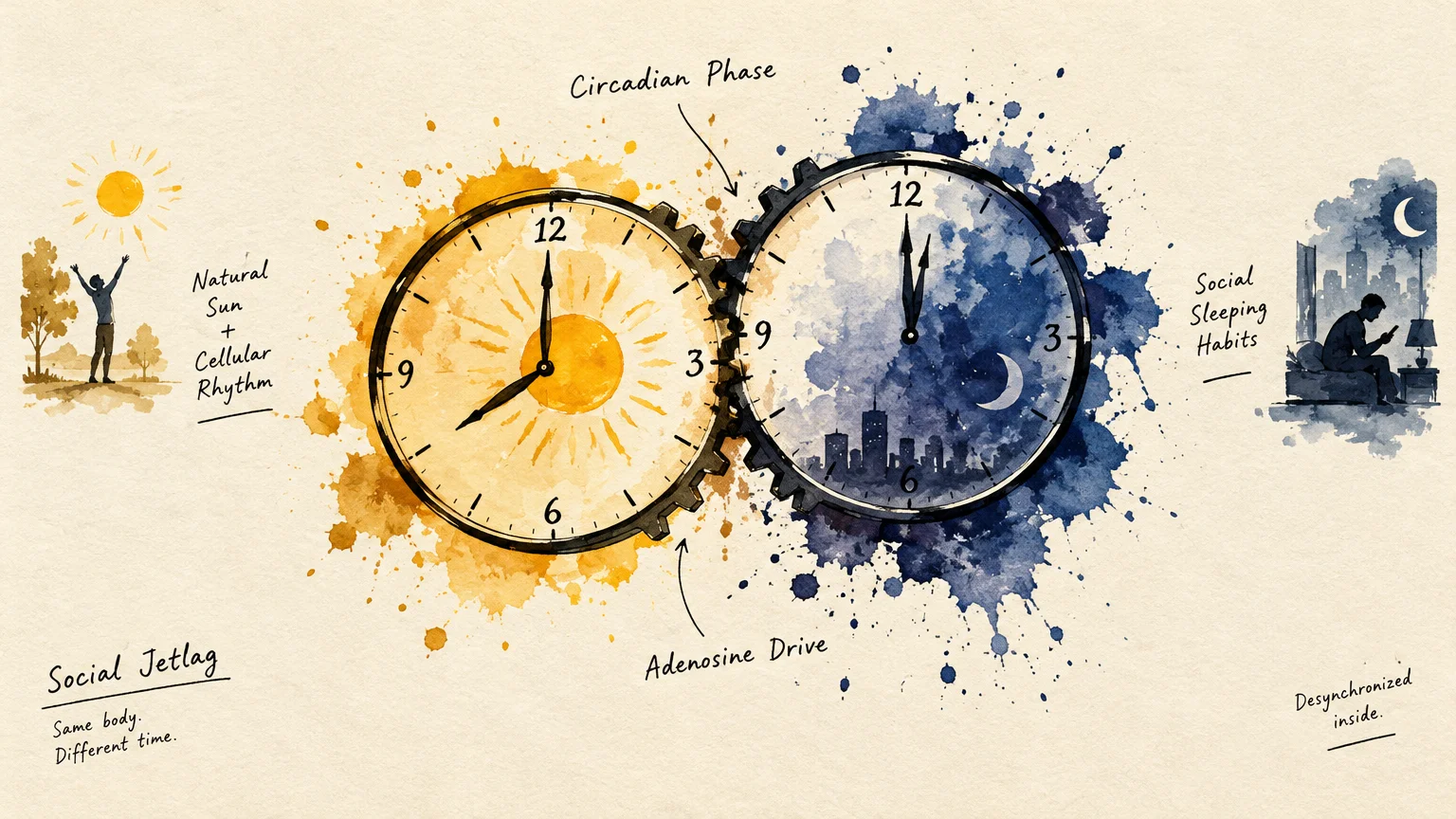
Sleeping until noon on Sunday delays your circadian phase and confuses cellular clocks. Scientists refer to this mismatch between internal biological timing and external social schedules as social jetlag.
Simultaneously, you alter your homeostatic sleep drive, which tracks the accumulation of adenosine in your brain. Waking up late prevents adequate adenosine buildup throughout Sunday, leaving you wide awake when your normal bedtime arrives.
The resulting Sunday night insomnia turns Monday morning into an exhausting battle. Maintaining consistent sleep timing matters far more for longevity than sporadic catch-up attempts.
A 2024 study in Sleep demonstrated that sleep regularity serves as a stronger predictor of all-cause mortality risk than sleep duration alone. Drastic swings in wake times undermine the vitality you hope to restore.
What Recent Science Says About Weekend Lie-Ins
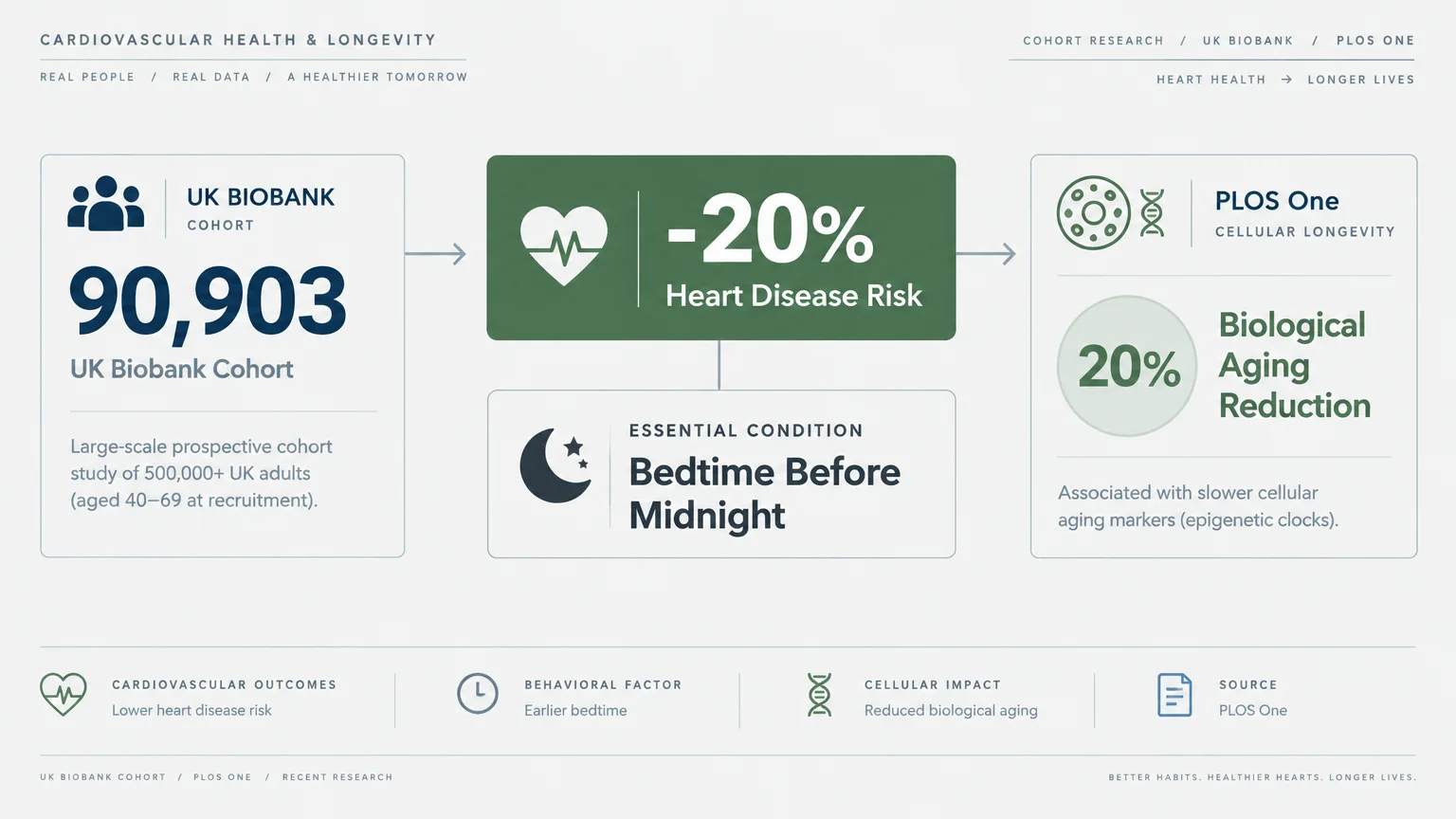
Despite metabolic limitations, researchers found that targeted catch-up sleep provides cardiovascular advantages. A 2024 UK Biobank analysis of 90,903 individuals linked compensatory weekend sleep to a 20 percent lower risk of developing heart disease.
Similarly, an October 2025 study in PLOS One found that weekend catch-up sleep reduced accelerated biological aging risks by 20 percent. However, those benefits occurred almost exclusively in adults who went to bed before midnight and limited extra rest.
Duration plays a critical role in whether extra rest protects or harms health. Research published in Frontiers in February 2025 demonstrated that moderate catch-up sleep under four hours significantly lowered hypertension risk.
Sleeping more than four extra hours offered no cardiovascular protection. Moderate, controlled sleep recovery can soothe your cardiovascular system without dismantling your master biological clock.

Practical Strategies to Recover Lost Rest Safely
Cap Your Extra Morning Sleep at Ninety Minutes
To protect your circadian rhythm, extend weekend morning sleep by no more than sixty to ninety minutes. This brief buffer allows an extra sleep cycle without delaying evening melatonin production.
Set a gentle alarm to prevent oversleeping, and get out of bed once it rings. Consistent rising anchors your circadian clock and preserves natural sleepiness for Sunday night.
Rely on Strategic Early Afternoon Naps
If you feel overwhelming fatigue on the weekend, schedule a mid-day nap instead of sleeping until midday. Rest for twenty to thirty minutes between 1:00 p.m. and 3:00 p.m. to clear adenosine without entering deep, groggy slow-wave sleep.
Avoid napping after 3:00 p.m. to ensure sleep drive remains robust for bedtime. Short afternoon rests rejuvenate cognitive attention while keeping your night routine intact.
Seek Bright Light Exposure Immediately After Waking
Step outside into natural light within thirty minutes of waking up on weekend mornings. Sunlight halts melatonin synthesis and signals your central circadian pacemaker that the active day has started.
Even fifteen minutes of outdoor sunlight helps lock biological rhythms into place; a quick walk outdoors provides combined benefits. This light signal ensures you feel sleepy at an appropriate hour on Sunday night.

When Chronic Exhaustion Warrants Medical Care
Occasional tiredness after an intense week is normal, but constant exhaustion indicates a need for professional evaluation. Sleep debt often disguises underlying, treatable sleep disorders that weekend lie-ins cannot fix.
Recent CDC health data shows that roughly 15 percent of adults struggle to fall asleep, while 18 percent struggle to stay asleep. Furthermore, 12.9 percent rely on sleep aids most days or every day.
Consult a physician or board-certified sleep specialist if you snore loudly, gasp for breath during sleep, or wake with headaches. Clinical guidance from the National Heart, Lung, and Blood Institute emphasizes that these symptoms frequently indicate obstructive sleep apnea.
Schedule an evaluation if insomnia or unrefreshing sleep persists for more than three months despite practicing strict sleep hygiene. The National Institutes of Health provides clinical directories to help patients locate qualified sleep medicine providers.
Remember that general wellness education supports healthy habits, but cannot replace formal diagnosis or clinical treatment from a qualified medical doctor.
Frequently Asked Questions
Why do I wake up with a headache after sleeping in?
Oversleeping alters serotonin neurotransmitter activity, triggers mild dehydration, and delays your usual morning caffeine intake. Furthermore, prolonged sleep disrupts cerebral blood flow, leaving you feeling sluggish and sore.
Can extra sleep on Sunday night cancel out a late Saturday?
Going to bed slightly earlier on Sunday supports physical recovery, but cannot reverse cellular inflammation from preceding sleep deprivation. Focus on establishing consistent daily hours rather than attempting retrospective correction.
How many days does it take to recover from one night of poor sleep?
Research indicates that recovering from a single night of sleep loss requires two to three consecutive nights of adequate, high-quality sleep. Consistent schedules allow your brain to cycle naturally through restorative deep and REM stages.
Your Action Step for Tonight
Rather than planning a two-hour weekend lie-in, shift your bedtime thirty minutes earlier tonight. Dim your household lights an hour before bed to stimulate natural melatonin production and quiet your mind.
Keep your bedroom dark, cool, and free from glowing digital devices to maximize sleep efficiency. Consistent, incremental improvements to your nightly schedule will always outperform sporadic weekend catch-up efforts.