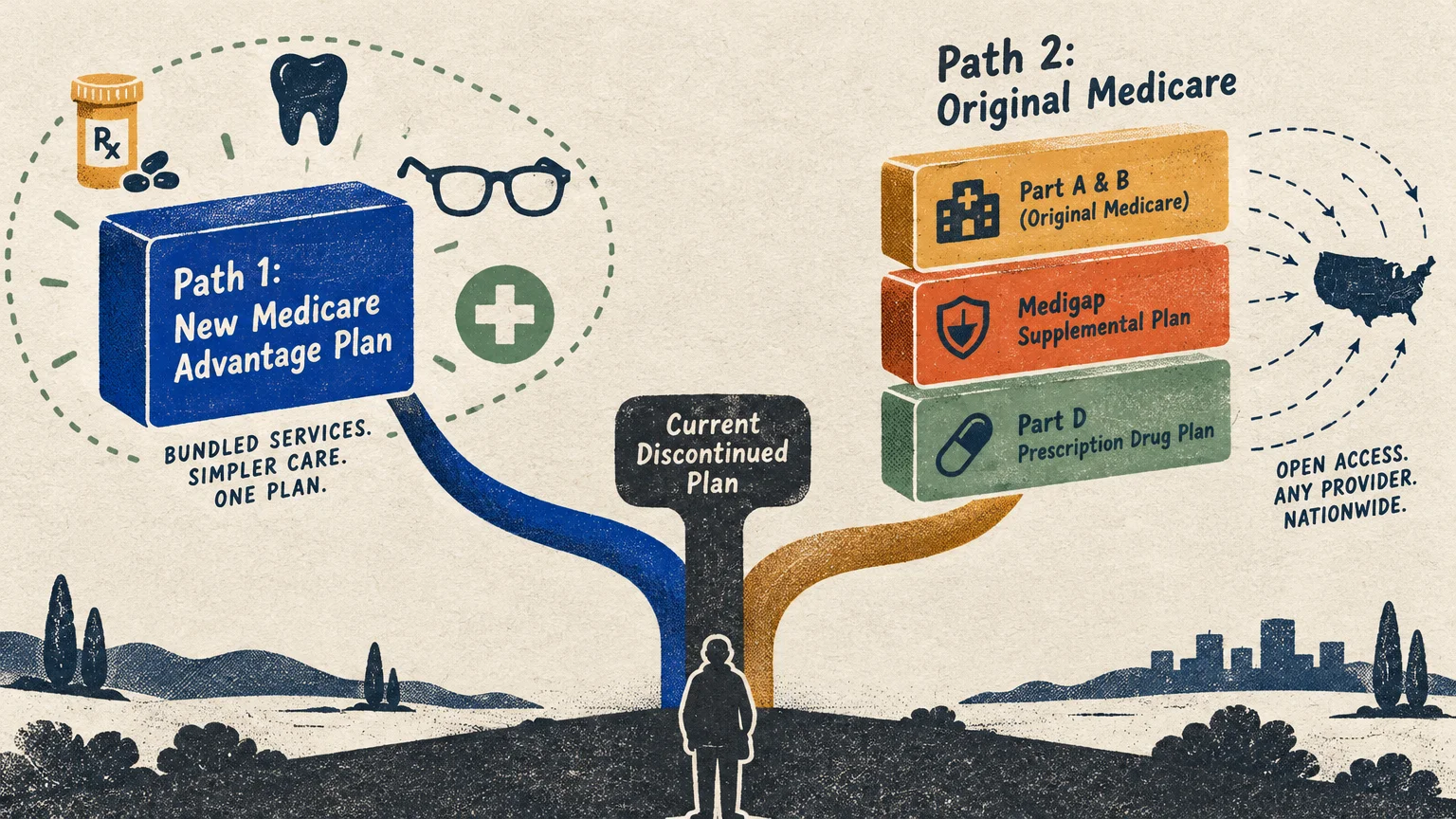
Your Two Main Paths: Another Advantage Plan or Original Medicare
Losing your plan forces a fundamental decision about your healthcare structure. You must decide whether to choose another Medicare Advantage plan or transition to traditional Original Medicare.
Path 1: Choosing a New Medicare Advantage Plan
Selecting another Medicare Advantage plan maintains bundled coverage in a single policy. Most plans combine hospital care, doctor visits, and prescription medications with supplemental dental or vision perks.
Before enrolling, verify that your preferred doctors and local hospitals participate in the new plan’s network. In-network provider participation can change significantly from one carrier to another.
You must also review the plan’s drug formulary carefully before selecting coverage. Check the tier placement and co-payment amounts for every prescription you take regularly.
Path 2: Returning to Original Medicare
Your second option is returning to Original Medicare, which includes Part A (hospital insurance) and Part B (medical insurance). This choice provides maximum provider flexibility nationwide.
Original Medicare allows you to visit any physician or hospital that accepts Medicare without specialist referrals. However, Original Medicare leaves you responsible for a 20 percent co-insurance without an out-of-pocket maximum.
Securing Standalone Prescription Drug Coverage
If you return to Original Medicare, you must actively enroll in a standalone Part D prescription plan. You have until February 28, 2027, to pick a plan under your SEP.
Skipping Part D coverage leaves you paying full retail price for medications. You will also accumulate permanent late enrollment penalties for every month you lack creditable drug coverage.
For the 2027 plan year, Medicare establishes an annual Part D out-of-pocket spending cap of $2,400. The maximum allowable Part D annual deductible for 2027 is $700.