Caring for someone with dementia can drain your energy and finances, but Medicare now covers professional caregiver support. Recent federal updates offer practical skills training, personalized care navigation, and funded respite breaks.
Through pilot programs and updated billing rules, Medicare recognizes that supporting unpaid caregivers directly protects patient health. You can now access services designed to reduce caregiver burnout and keep your loved one at home.
Whether you need hands-on instruction from a therapist or temporary relief from daily duties, Medicare programs now cover these services. Understanding these options helps your family claim available resources.
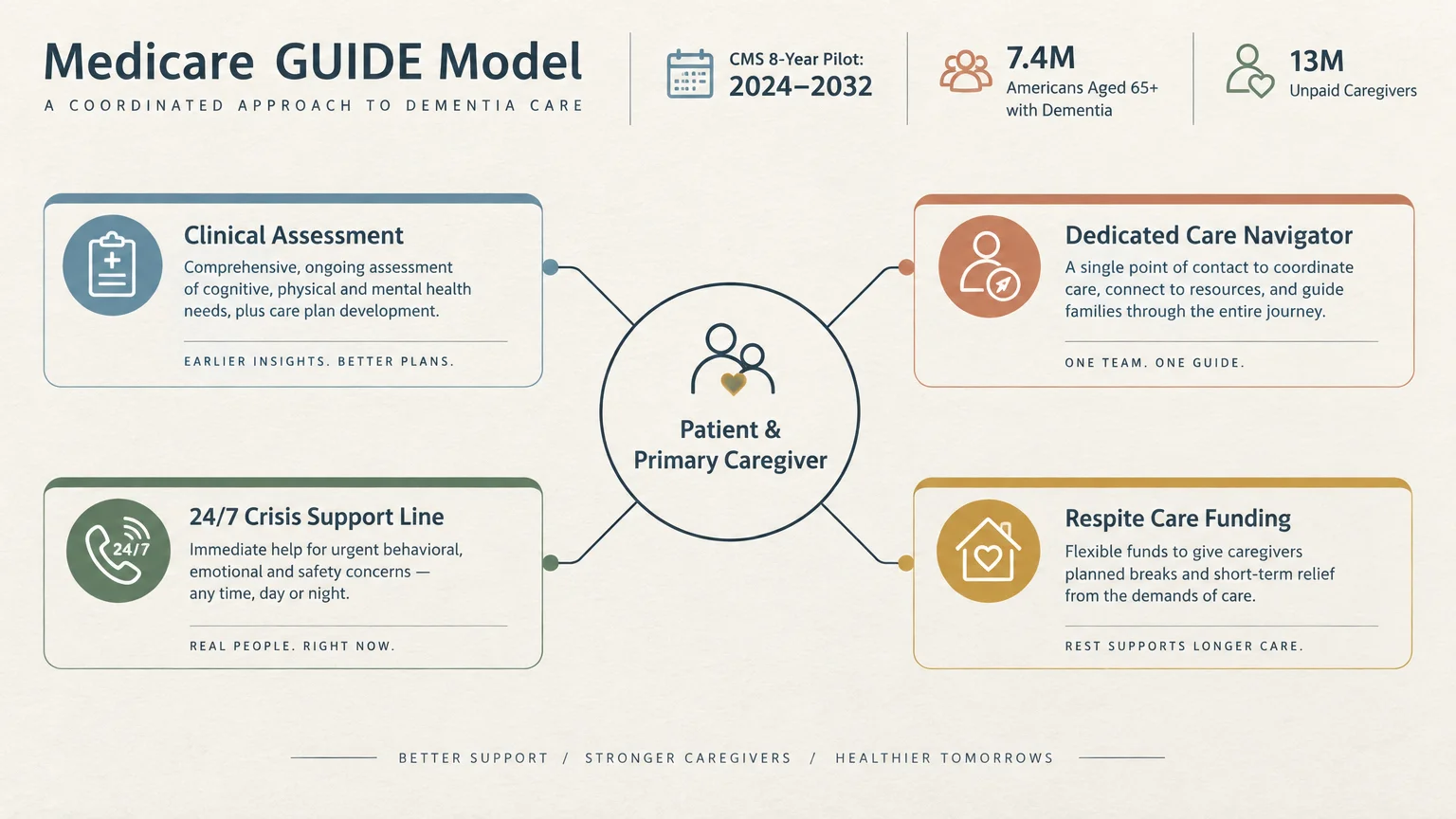
The Medicare GUIDE Model Explained
The Centers for Medicare & Medicaid Services (CMS) launched the Guiding an Improved Dementia Experience (GUIDE) model to reshape dementia care. This voluntary, eight-year nationwide pilot began on July 1, 2024, and runs through 2032.
While established programs started in 2024, a second group of providers began delivering services on July 1, 2025. This expansion allows thousands more families to participate through partner health systems.
Federal data highlights the urgent need for this initiative. According to the Alzheimer’s Association, an estimated 7.4 million Americans aged 65 and older live with clinical Alzheimer’s dementia.
That figure represents roughly 11% of older adults—about 1 in 9 seniors—and nearly two-thirds are women. Providing care for this population is projected to cost our nation $409 billion.
Nearly 13 million family members and friends provide unpaid assistance to loved ones with dementia. The GUIDE model addresses this burden by coordinating care around both the patient and the primary caregiver.
Core Services Provided by GUIDE
When you enroll in a participating provider’s GUIDE program, you receive a comprehensive clinical assessment. The care team evaluates your loved one’s cognitive condition, functional abilities, and home safety.
The team also evaluates your own stress, health needs, and caregiving duties. They use these insights to build an individualized, person-centered care plan designed around your daily challenges.
You also receive a dedicated Care Navigator who serves as your primary contact, helping you schedule medical appointments, order equipment, and connect with local support services.
Additionally, GUIDE provides 24/7 access to a clinical support line. You can reach a trained professional at any hour when unexpected behavioral crises or medication questions arise.